



Bridge Report:(2317)Systena the First Half of Fiscal Year Ending March 2026

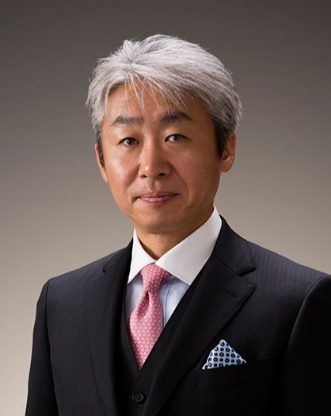 President Kenji Miura | Systena Corporation (2317) |
 |
Corporate Information
Exchange | TSE Prime |
Industry | Information and communications |
Representative Director & Chairperson | Yoshichika Hemmi |
President and Representative Corporate Officer | Kenji Miura |
Address | 14F・16FShiodome Building 1-2-20 Kaigan, Minato-ku, Tokyo |
Year-end | March |
URL |
Stock Information
Share Price | Shares Outstanding (Excluding Treasury Shares) | Total Market Cap | ROE (Actual) | Trading Unit | |
¥494 | 357,455,827 shares | ¥176,583 million | 24.0% | 100 shares | |
DPS (Estimate) | Dividend Yield (Estimate) | EPS (Estimate) | PER (Estimate) | BPS (Actual) | PBR (Actual) |
¥13.0 | 2.6% | ¥28.98 | 17.0x | ¥100.03 | 4.9x |
Consolidated Earnings Trends
Fiscal Year | Net Sales | Operating Income | Ordinary Income | Net Income | EPS (yen) | DPS (yen) |
March 2022 (Actual) | 65,272 | 9,106 | 8,578 | 5,992 | 15.47 | -(*) |
March 2023 (Actual) | 74,526 | 9,844 | 9,955 | 7,317 | 18.89 | 8.00 |
March 2024 (Actual) | 76,940 | 9,713 | 9,942 | 7,232 | 18.67 | 10.00 |
March 2025 (Actual) | 83,621 | 12,067 | 11,855 | 8,480 | 23.17 | 12.00 |
March 2026 (Estimate) | 90,200 | 14,500 | 14,900 | 10,360 | 28.98 | 13.00 |
This Bridge Report reviews the summary of the financial results of the first half of the fiscal year ending March 2026 and forecasts for the fiscal year ending March 2026 of Systena Corporation.
Table of Contents
Key Points
1. Company Overview
2. 1H of Fiscal Year Ending March 2026 Earnings Results
3. Fiscal Year Ending March 2026 Earnings Estimates
4. Conclusions
<Reference: Regarding Corporate Governance>
Key Points
- In the first half of the fiscal year ending March 2026, sales grew 17.1% year on year to 46,967 million yen and operating income increased 36.2% year on year to 7,593 million yen. The Next-generation Mobility Business, which contributed to business performance in the previous fiscal year, is continuously performing well, and the sales of both the Digital Integration Business and the Business Solution Business grew by double digits. In terms of profit, core businesses, mainly the Next-generation Mobility Business, achieved a significant sales growth, covering the sluggish performance of other businesses. In particular, the momentum of profit growth in the IT & DX Service Business and the Business Solution Business intensified in the first quarter.
- The full-year earnings forecast for the fiscal year ending March 2026 was upwardly revised at the time of announcement of financial results in the first quarter, but at the time of announcement of interim financial results, they revised the forecast again, raising the forecast sales from 89.6 billion yen to 90.2 billion yen, the forecast operating income from 13.5 billion yen to 14.5 billion yen, the forecast ordinary income from 13.5 billion yen to 14.9 billion yen, and the forecast net income attributable to shareholders of the parent company from 9.4 billion yen to 10.360 billion yen. The dividend forecast, too, has been revised upwardly, and they are expected to pay an interim dividend of 6 yen/share and a year-end dividend of 7 yen/share for 13 yen/share per year, up 1 yen/share from the previous fiscal year.
- Regarding the Next-generation Mobility Business, it was revealed at a briefing session that they received a request for development of SDVs from domestic automobile manufacturers and mega suppliers, so they expanded the range of support. Accordingly, the outlook for their performance improved (as almost all of automobile makers are their clients). In addition, it seems that they strive to avoid missing opportunities to receive orders by utilizing the resources of the corporate group, which is considered one of initiatives for realizing the keyword “ALL Systena” in this business. This is a positive factor. The reason why the outlook for this business in the second half of the fiscal year seems somewhat conservative is that they received orders from leading automobile makers later than assumed, and they are investing in team formation and developing a system to deal with the peak of order receipt that they believe will come.
1. Company Overview
Systena Corporation was founded, when System Pro Corp. absorbed Katena Corp., which was an equity-method affiliate, on April 1, 2010. It is cultivating new domains by operating the business that fuses the former System Pro’s technologies, know-how, and open technologies for designing, developing, and testing mobile terminals and the financial knowledge and infrastructure technologies of the former Katena Corp. It forms a corporate group with 8 consolidated subsidiaries and 4 equity-method affiliates.
[Management goal - To become one of Japan's leading IT companies and support the Japanese economy from the ground up!]
In order to attain this objective, the company pursues good balances between conflicting items, such as “destruction and creation”, “stability and growth,” and “maintenance and innovation” as its basic policy.
[Target management indicators]
The company sets stably high dividends, high return on equity and high operating income rate as target managerial indicators. To achieve these goals, the company aims to develop a highly profitable structure under its basic policy for business administration.
1-1 Business description
From the fiscal year ended March 2025, the business segments of Systena Corporation are Solution Design Business, Next-generation Mobility Business, Framework Design Business, IT & DX Service Business, Business Solution Business, DX & Subscription Business, and Other Businesses. In the fiscal year ending March 2026, part of the “Solution Design Business” was transferred and named the “Project Management Design Business,” and the segment name of the “Framework Design Business” was changed to the “Digital Integration Business.”
◆Next-generation Mobility Business
The business is mainly focused on providing the company's in-house services, such as engineering and MaaS, to the automobile industry, especially for vehicle manufacturers and suppliers. The company has built up many years of experience in development of open platforms such as Android and iOS for mobile phones/smartphones, and the mobile development with agile development methods and application frameworks has become necessary for SDV development, and as a tier 1 software supplier, it provides technical capabilities to various vehicle manufacturers and major suppliers.
◆Project Management Design Business
In this business, the company engages in planning, design, development, and verification support for Internet businesses, apps for business use, online services, social infrastructure-related systems, IoT, artificial intelligence, robot-related services as well as planning, design, development, and verification support for various products and telecommunications carrier services. With telecommunications carriers, telecommunications equipment manufacturers, and Internet business enterprises as its main customers, the company is growing in a wide range of fields, including social infrastructure such as electric power, disaster prevention, aviation, and transportation, as well as digital home appliances, home security, smart devices, and web services, leveraging its extensive know-how and track record cultivated through many years of mobile device development. The company's strength lies in comprehensive solutions, including planning, development, verification, IT consulting and IT service in all fields.
◆Digital Integration Business
In addition to developing mission-critical systems for the financial sector (non-life insurance, life insurance, and banking), industrial sector, public sector, and other sectors, the company develops infrastructure systems. In the development of financial systems that require high reliability, the company leverages its know-how, experience, and proven results accumulated over half a century to provide solutions even in industries other than the financial sector. Recently, the company has expanded its scope of operations from the development of core systems to supporting customers' business transformation through DX. The continuous receipt of orders for central government agency projects is another strength.
◆IT & DX Service Business
The company provides IT services, including IT project promotion, PMO, DX support, system development/operation, data entry, large-scale data output, software testing, and DX verification. As companies increasingly focus resources on core business activities, the company's strength lies in not just providing individual services, but also delivering comprehensive solution services through ALL Systena, enabling support for realizing IT strategies.
◆Business Solution Business
In this business, the company sells IT-related products, including servers, computers, computer peripherals, and software to enterprises. The company provides services relating to IT equipment, including infrastructure construction and virtualization, and robotic process automation (RPA) solutions.
◆DX & Subscription Business
The company provides its original services such as "Canbus.", "Cloudstep," and "Web Shelter." In addition, the company also provides such cloud-based services as "Google Workspace" and "Microsoft 365" and helps clients adopt them. The company provides “Canbus.Lab” as a PMO and direction service that supports clients in promoting digital transformation.
◆Other Businesses
Software development for in-vehicle cockpit information displays at automobile manufacturers, proof-of-concept development for business concepts of startups, and corporate DX promotion using the no-code tool Canbus. Additionally, development, manufacturing, and sale of IoT/M2M 5G gateways, LTE routers, DCM terminals, antennas for IoT/M2M, and 5G/LTE femto base stations. The company handles planning, development, and operation of social games for smartphones and PCs, as well as contract-based app and system development.
1-2 Group Companies
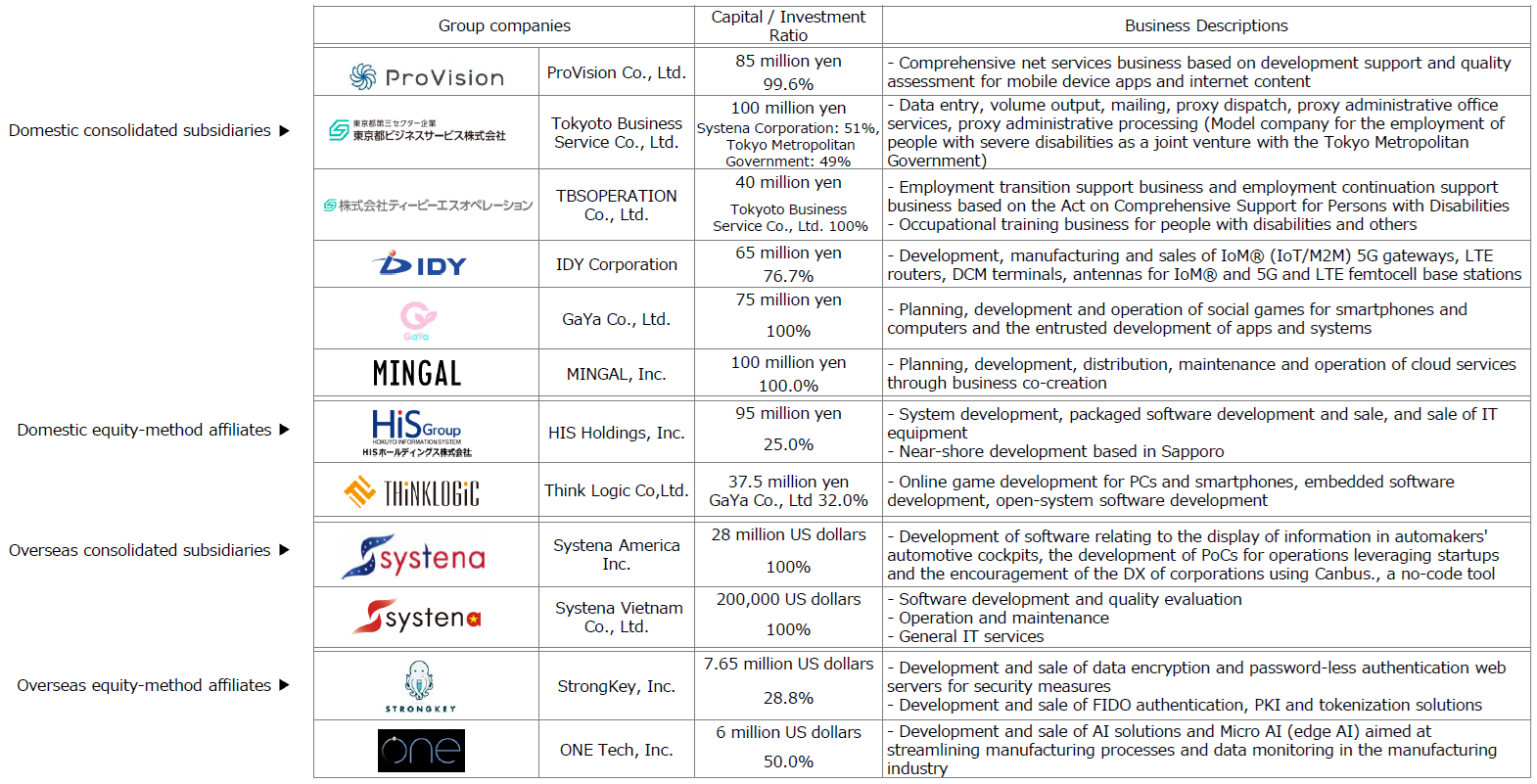
(Taken from the reference material of the company)
1-3 Medium-term management plan (FY 3/26-FY 3/28)
The company formulated a 3-year medium-term plan for the fiscal year ending March 2028. In the fiscal year ending March 2028, which is the final fiscal year of the medium-term plan, they aim to achieve sales of 102.7 billion yen, an operating income of 16 billion yen, and an operating income margin of 15.6%. In order to attain these goals, they plan to enhance marketing, enrich recurring-revenue business, invest in mainly growing domains, withdraw and rebuild existing businesses, and improve productivity by investing in human resources.
■ Details of the management policy
In order to complete the 3-year medium-term plan, they will cement the cooperation among departments across business segments, and concentrate on productivity improvement and the expansion of high value-added business with the “ALL Systena” system. In the Solution Design Business, whose growth is slowing down, they will keep pursuing each field, redeveloping each business domain, appoint specialists who possess technical knowledge in each industry for conventional specs determination and design processes, at which this business excels, and then expand the business domain, including the support in solving IT-related issues through the combination of overall project management and specs designing.
While the shortage of manpower is becoming serious in all industries, it is imperative for the corporate group to secure excellent personnel. They will keep improving the treatment of employees and raising wages, and actively recruit engineers with advanced skills, look for subcontractors, and invest in recurring-revenue business for securing revenues. In addition to productivity improvement, they will concentrate on the expansion of high value-added businesses, such as the consulting business for supporting DX in software development, and project management office (PMO)-related projects in order to pass on increased costs to prices as soon as possible.
■ Management indicators on which they put emphasis and goals for FY 3/28
| Results in FY 3/25 | Forecast for FY 3/26 | Forecast for FY 3/27 | Forecast for FY 3/28 |
Sales [million yen] | 83,621 | 90,200 | 94,700 | 102,760 |
Operating income [million yen] | 12,067 | 14,500 | 13,800 | 16,000 |
Operating income margin | 14.4% | 16.1% | 14.6% | 15.6% |
2. 1H of Fiscal Year Ending March 2026 Earnings Results
2-1 Consolidated business performance
| FY 3/25 1H | Ratio to net sales | FY 3/26 1H | Ratio to net sales | YoY |
Net sales | 40,092 | 100.0% | 46,967 | 100.0% | +17.1% |
Gross profit | 9,952 | 24.8% | 12,205 | 26.0% | +22.6% |
SG&A expenses | 4,378 | 10.9% | 4,611 | 9.8% | +5.3% |
Operating income | 5,573 | 13.9% | 7,593 | 16.2% | +36.2% |
Ordinary income | 5,410 | 13.5% | 7,927 | 16.9% | +46.5% |
Profit Attributable to Owners of Parent | 3,726 | 9.3% | 5,502 | 11.7% | +47.7% |
*Unit: Million yen
Sales grew 17.1% year on year, and operating income increased 36.2% year on year.
The Japanese economy kept recovering gently, thanks to the pickup in consumer spending due to the gradual diffusion of effects of the wage raise in the spring and the healthy demand from foreign visitors to Japan. On the other hand, the record yen depreciation is lingering and the prices of oil and resources are fluctuating due to geopolitical risks, including the growing tension in the Middle East, so there is growing concern over the possibility that imported commodity prices will affect corporate earnings and the real purchasing power of households. In addition, the outlooks for the financial policies of major countries, including the U.S., amid the lingering inflation, and the global supply chain restructuring remain uncertain. Under these circumstances, the Systena Group made efforts to reallocate managerial resources and improve productivity in order to swiftly respond to changes in the external environment. In order to fortify the revenue base, they kept concentrating on recurring-revenue business for stable earnings. For their software development business, they actively engaged in the expansion of high value-added domains, including the utilization of generative AI, the support for DX in enterprises, and project management office (PMO) projects where advanced project management skills are required. Regarding personnel development, they brushed up their organizational capability through continuous on-the-job training, optimized staffing for assigning respective employees to appropriate workplaces, and developed a structure for operating business more aggressively.
Sales grew 17.1% year on year to 46,967 million yen. This fiscal year, they reshuffled “the segments to be reported” while renaming some segments like in the previous fiscal year. The Next-generation Mobility Business, which contributed to business performance in the previous fiscal year, is continuously performing well, and the sales of both the Digital Integration Business and the Business Solution Business grew by double digits.
In terms of profit, the DX & Subscription Business, etc. struggled, but core businesses, mainly the Next-generation Mobility Business, achieved a significant sales growth, covering the sluggish performance of the other businesses. In particular, the momentum of profit growth in the IT & DX Service Business and the Business Solution Business intensified in the first quarter. As a result, operating income grew 36.2% year on year to 7,593 million yen. Gross profit margin improved 1.2 points year on year to 26.0%. The ratio of SGA declined 1.1 points year on year to 9.8%.
2-2 Trends by segment
| FY 3/25 1H | Composition ratio/Income margin | FY 3/26 1H | Composition ratio/ Income margin | YoY |
Next-Generation Mobility | 2,447 | 6.1% | 3,606 | 7.7% | 47.3% |
Project Management Design | 7,756 | 19.3% | 7,834 | 16.7% | 1.0% |
Digital Integration | 4,201 | 10.5% | 4,938 | 10.5% | 17.5% |
IT & DX Service | 10,073 | 25.1% | 10,917 | 23.2% | 8.4% |
Business Solution | 13,878 | 34.6% | 18,066 | 38.5% | 30.2% |
DX & Subscription Business | 1,494 | 3.7% | 1,609 | 3.4% | 7.7% |
Other | 428 | 1.1% | 328 | 0.7% | -23.4% |
Adjustment | -188 | -0.5% | -334 | -0.7% | - |
Consolidated Sales | 40,092 | 100.0% | 46,967 | 100.0% | 17.1% |
Next-Generation Mobility | 893 | 36.5% | 1,511 | 41.9% | 69.1% |
Project Management Design | 1,178 | 15.2% | 1,698 | 21.7% | 44.2% |
Digital Integration | 875 | 20.8% | 1,205 | 24.4% | 37.7% |
IT & DX Service | 1,302 | 12.9% | 1,510 | 13.8% | 15.9% |
Business Solution | 1,092 | 7.9% | 1,566 | 8.7% | 43.4% |
DX & Subscription Business | 224 | 15.0% | 134 | 8.3% | -40.2% |
Other | 6 | 1.4% | -32 | - | - |
Consolidated Operating Income | 5,573 | 13.9% | 7,593 | 16.2% | 36.2% |
*Unit: Million yen
Next-generation Mobility Business - Sales: 3,606 million yen (up 47.3% YoY), Operating Income: 1,511 million yen (up 69.1% YoY)
They started direct transactions with new major automobile makers in Japan, in addition to the existing major clients. In addition, their subsidiary in the U.S. started direct transactions with domestic automobile manufacturers, reinforcing the base for generating transactions in the North American market. Currently, the automobile industry is shifting to design and development under the assumption of software defined vehicles (SDVs), so the demand for development of software in the fields of cockpits (IVI*1/HUD*2/CDC*3) and back-end systems (HVAC*4/ADAS*5) is growing. Grasping this trend, they stabilized order receipt and business operation by applying and utilizing their advantages in UX design and agile development, which were nurtured in the mobile device field, in this business. Furthermore, they were involved in the development of new vehicles, such as planning and determination of requirements, from the most upstream stage at automobile makers, and developed a system for continuously and seamlessly supporting processes from upstream ones to integration ones in response to the shift of the development process in OEMs to the one assuming SDVs. Considering the tier-1 roles of mobility software, they plan to strengthen systems and processes, promote collaboration inside and outside Japan, and then expand the scope of services in this business.
*1 IVI: In-Vehicle Infotainment (an integrated in-vehicle system for offering both information and entertainment)
*2 HUD: Head-Up Display (a device for superimposing information on the human field of view so that it blends into the landscape)
*3 CDC: Cockpit Domain Controller (an electronic control unit that has integrated various functions of a cockpit)
*4 HVAC: Heating, Ventilation, and Air Conditioning (which means the entire air-conditioning system of an automobile)
*5 ADAS: Advanced Driver-Assistance Systems (functions to reduce the risk of accidents during driving and the burden of driving, by utilizing sensors, cameras, etc. mounted on an automobile)
Project Management Design Business - Sales: 7,834 million yen (up 1.0% YoY), Operating Income: 1,698 million yen (up 44.2% YoY)
Some businesses of the former Solution Design Business segment were transferred to this segment, in which they expanded the project supporting system in their priority fields, that is, next-generation telecommunication and AI, and reallocated resources for strengthening the system for executing projects. In the telecommunication field, they supported the development of new services, defined requirements for upgrading the system infrastructure base, managed the progress of each project, surveyed technologies, and supported migration in a seamless manner. In the AI field, they made more deals for supporting management at the time of redeveloping a platform and launching a new service by utilizing generative AI, and got more involved with the upstream processes, such as the discussion on application of AI and the proof of concept (PoC). In the mobility field, too, the start of support for PMO contributed to the increase in orders received.
Digital Integration Business - Sales: 4,938 million yen (up 17.5% YoY), Operating Income: 1,205 million yen (up 37.7% YoY)
The former Framework Design Business was renamed the Digital Integration Business. In this business, the number of orders received in the financial field, especially the fields of insurance and Internet banks, is increasing, driving the growth of business. In the public field, projects related to the central government ministries and agencies for the social security and tax number system progressed steadily, and they are expanding business in a broad range of fields, including the refurbishment of systems and the development, operation, and maintenance of infrastructure. Local governments are promoting DX more actively, so the public sector remains one of pillars in this business. In particular, DX projects for education and improving clerical work for local governments have increased recently. For corporate clients, they concentrate on swift technical support services utilizing low-code development tools and receiving orders for system development projects that would accelerate DX in client companies. Their seamless support in processes from planning to operation and management of systems after development is highly evaluated by clients. This enhances their competitiveness. Regarding the utilization of generative AI, there are growing needs for AI-driven development aimed at not only streamlining business operations, but also improving development productivity. In this business, they are promoting the improvement of technical skills by actively investing in personnel training.
IT & DX Services Business - Sales: 10,917 million yen (up 8.4% YoY), Operating Income: 1,510 million yen (up 15.9% YoY)
As each enterprise has grown its willingness to invest in IT for digital business, they keep receiving business inquiries about the refurbishment and installation of systems in a broad range of fields, and in particular, the demand for “optimization (standardization or automation) of business processes” and “utilization and operation of tools after adoption” has been growing in recent years. Under these circumstances, they concentrated on the further expansion of “hands-on PMO services,” including the support in adopting tools, the promotion of utilization after adoption, and the redevelopment of business processes, after grasping the IT investment plan of each client. In the DX verification service business, they are shifting their focus to clients in the enterprise field, by utilizing the knowledge in the Internet business and video game fields. Enhancing the optimization of staffing and the procurement of talent who can engage in actual tasks immediately, they are cementing the relationships with existing clients and increasing new clients. For the business service of a special subsidiary in Tokyo, they proceeded with the establishment of a system for assisting respective disabled people in brushing up their skills and developing their careers. Through this effort, they further optimized staffing for assigning respective employees to appropriate workplaces, and received orders for a wide array of services, mainly BPO services.
Business Solution Business – Sales: 18,066 million yen (up 30.2% year on year), Operating income: 1,566 million yen (up 43.4% year on year).
While there are still uncertainties due mainly to the weakened yen and soaring prices of raw materials and commodities, the number of orders that it received for projects aimed at digitalization through DX and AI, productivity enhancement, cost reduction, and competitiveness improvement have been raising. In detail, they received many orders for cloud-related system integration, increasing projects for the lift & shift migration to the cloud and the utilization of cloud systems, and managed services. They also received many business inquiries about the development, maintenance, and operation of systems for digitalization utilizing robotic process automation (RPA) and data linkage tools, security and support services, and received more orders. Regarding the client business, replacement projects increased significantly in the wake of termination of support for Windows 10 in Oct. 2025.
DX & Subscription Business - Sales: 1,609 million yen (up 7.7% YoY), Operating income: 134 million yen (down 40.2% YoY)
In particular, they receive a healthy number of inquiries about the adoption of “Canbus.” from leading companies. In order to meet such demand, they plan to accelerate the enhancement of the functions of “Canbus.” and systems for development and support. As a new initiative, they started receiving orders for the package for the medical industry, and expanded the range of solutions of the “Canbus.” Series. They will keep cementing the cooperation in business, including the entry to other fields, such as the mobility industry, and alliances, and concentrate on the fortification of the recurring-revenue business base. While they support the streamlining of business operations, they receive an increasing number of requests for proposals for AI-based proposal, so they have increased the investment in product development using AI. In addition, they continue active investment for expanding recurring-revenue business further, including the increase of sales partners and the enhancement of planning of events, such as exhibitions, to expand sales channels, so profit is stagnant.
Other Businesses - Sales: 328 million yen (down 23.4% YoY), Operating loss: 32 million yen (a profit of 6 million yen in the previous fiscal year)
Regarding the smartphone game “Horse racing Legend PRIDE,” they added the new level-boosting element “Intensive Training” as part of the campaign for commemorating the third anniversary of its release, they implemented measures for vitalizing the trend inside the game. In commissioned development or system engineering services, they support the PMO for game development and conduct overall man-hour management, operation, maintenance, and development. Going forward, they plan to promote the initiatives for applying the know-how nurtured through game development to the gamification field, etc.
2-3 Financial Conditions
◎ BS
| March 2025 | September 2025 |
| March 2025 | September 2025 |
Cash and deposits | 21,860 | 24,656 | Trade payables | 9,063 | 8,049 |
Trade receivables | 18,605 | 18,187 | Accounts payable and accrued expenses | 2,530 | 2,532 |
Merchandise | 2,053 | 1,231 | Income taxes payable | 2,167 | 2,580 |
Current assets | 44,184 | 45,935 | Provision for bonuses | 2,068 | 1,810 |
Tangible Assets | 1,321 | 1,417 | Interest-Bearing Liabilities | 1,550 | 1,550 |
Intangible Assets | 169 | 152 | Liabilities | 18,812 | 17,928 |
Investments and Others | 6,087 | 6,651 | Net assets | 32,950 | 36,228 |
Noncurrent assets | 7,578 | 8,221 | Total Liabilities and Net Assets | 51,762 | 54,157 |
*Unit: Million yen. Trade receivables are the sum of notes, accounts receivable and contract assets.
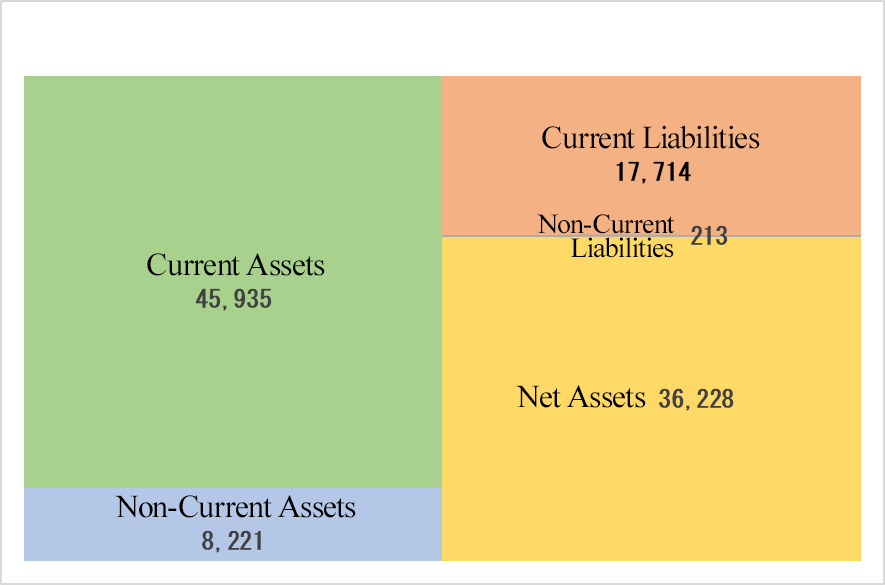
*Produced by Investment Bridge Co., Ltd. with reference to the material of the company.
The total assets as of the end of September 2025 stood at 54,157 million yen, up 2,395 million yen from the end of the previous fiscal year. In the side of assets, notes, accounts receivable, contract assets, and merchandise decreased in the section of current assets. Liabilities decreased 884 million yen from the end of the previous fiscal year to 17,928 million yen, mainly due to the decrease in accounts payable and provision for bonuses. Net assets increased 3,278 million yen from the end of the previous fiscal year to 36,228 million yen. Equity ratio was 66.0%, up 3.3 points from the end of the previous fiscal year.
Cash Flow (CF)
| FY 3/25 1H | FY 3/26 1H | YoY | |
Operating CF (A) | 3,457 | 5,922 | 2,465 | 71.3% |
Investing CF (B) | -305 | -287 | 18 | - |
Free CF (A + B) | 3,152 | 5,635 | 2,483 | 78.8% |
Financing CF | -11,541 | -2,157 | 9,384 | - |
Balance of cash and cash equivalents as of the end of the period | 21,681 | 24,942 | 3,261 | 15.0% |
*Unit: Million yen.
In terms of cash flows, investment cash flow was almost unchanged, but operating cash flow increased year on year significantly, so free cash flow, too, expanded. Meanwhile, the cash outflow from financial activities shrank, mainly because the company acquired treasury shares in the same period of the previous year. As a result, cash and cash equivalents at the end of the fiscal year increased 15.0% from the previous fiscal year.
2-4 Recent Topics
(1) Joint exhibition at the 8th Nagoya Automotive World—Advanced Automotive Technology Exhibition with Supermicro and AMD Japan
Exhibited products jointly with Supermicro Inc. (hereinafter “Supermicro”) and AMD Japan Inc. (hereinafter “AMD”) at the 8th [Nagoya] Automotive World—Advanced Automotive Technology Exhibition, held over three days from Wednesday, October 29, to Friday, October 31, 2025, at Port Messe Nagoya.
In recent years, the transition to SDVs in automotive development has advanced, and the importance of software has increased tremendously. In response to this trend, and in order to expand the scope of development and offer more advanced solutions, the three companies have decided to jointly participate in this exhibition. At this exhibition, the company exhibited services for enhancing in-vehicle system development efficiency using AI, while Supermicro and AMD showcased high-performance computing servers designed to maximize operating system utilization. By combining the latest technologies in each field, the company is aiming to strongly advance the development of next-generation in-vehicle systems featuring highly integrated software and hardware and to offer customers innovative and diverse development options.
(2) Exhibition of “Canbus.” at the 5th Digitalization & DX Promotion Expo (Osaka Venue)
On Thursday, October 30, 2025, and Friday, October 31, 2025, the company exhibited their product at the “AI Utilization Support EXPO,” a specialized exhibition within the “Digitalization and DX Promotion Exhibition” held at INTEX Osaka. The Digitalization & DX Promotion Exhibition is a B2B event for local governments aiming to advance digitalization and for companies seeking to strengthen their sales organizations and management foundations, improve back-office operational efficiency, and implement work-style reforms through DX initiatives. The event includes the AI Utilization Support EXPO, which supports companies promoting DX through AI utilization, which consists of 10 specialized exhibitions showcasing solutions utilizing digital technology.
◆Highlights of the Exhibition
The barriers many companies face when promoting DX: “We want to promote DX, but we don’t know what to do,” “We lack IT personnel,” and “We adopted tools, but they are not used enough in the company.” The root cause lies in the lack of awareness of the current challenges. To overcome these barriers, the company provides a solution combining its no-code platform, “Canbus.,” with consulting support, along with in-house development assistance. This enables customers to drive their own digital transformation and create an organization capable of operating independently. At this exhibition, they introduced “Canbus.,” which is focused on the manufacturing industry and the automobile industry, and a variety of solutions combined with AI.
(3) Certified as a Core Business Partner under NTT DATA's new partner program
NTT DATA Corporation (Headquarters: Koto-ku, Tokyo; Representative Director and President: Masanori Suzuki; hereinafter referred to as “NTT DATA”) has certified the company as a “Core Business Partner” under its new partner program, through which NTT DATA certifies key domestic partner companies with whom it expects continuous collaboration for further business expansion. It is one of the ten companies that have been certified this time. The company will continue to further refine the technical capabilities it has cultivated until now and aims to strengthen its partnership with NTT DATA even further.
(4) Strengthening Collaboration with SB C&S to Expand Sales of SaaS Products
To accelerate the entry into the rapidly growing Software as a Service (SaaS) market, the company will leverage the base of its collaboration with SB C&S Corp. (Head office: Minato-ku, Tokyo; Representative Director, President and CEO: Kazuya Kusakawa; hereinafter referred to as “SB C & S”) to further strengthen its collaborative structure.
As an IT distributor, SB C&S has established a specialized SaaS team called “CloudService Concierge” to respond to the expanding SaaS market, promoting marketing and sales support for SaaS products. Furthermore, SB C&S offers “ClouDX,” a platform for sales partners for managing subscription contracts and renewals, enabling collective management of SaaS products with different contract types. Going forward, the company aims to strengthen its support system by combining its sales capabilities with the SaaS business expertise cultivated by SB C&S and deepening collaboration to provide comprehensive support from proposal for SaaS products to their installation.
3. Fiscal Year Ending March 2026 Earnings Estimates
3-1 Consolidated Earnings Estimates
| FY 3/25 Results | Ratio to net sales | FY 3/26 Estimates | Ratio to net sales | YoY |
Net sales | 83,621 | 100.0% | 90,200 | 100.0% | +7.9% |
Operating income | 12,067 | 14.4% | 14,500 | 16.1% | +20.2% |
Ordinary income | 11,855 | 14.2% | 14,900 | 16.5% | +25.7% |
Profit Attributable to Owners of Parent | 8,480 | 10.1% | 10,360 | 11.5% | +22.2% |
*Unit: Million yen
The full-year forecasts have been revised upward again. Expecting sales to grow 7.9% year on year and operating income to increase 20.2% year on year.
The full-year earnings forecast for the fiscal year ending March 2026 was upwardly revised at the time of announcement of financial results in the first quarter, but at the time of announcement of interim financial results, they revised the forecast again, raising the forecast sales from 89.6 billion yen to 90.2 billion yen, the forecast operating income from 13.5 billion yen to 14.5 billion yen, the forecast ordinary income from 13.5 billion yen to 14.9 billion yen, and the forecast net income attributable to shareholders of the parent company from 9.4 billion yen to 10.360 billion yen. The company plans to strengthen cross-departmental collaboration more than ever without being constrained by existing business segments under the “ALL Systena” framework. The focus will be on improving productivity and expanding higher value-added businesses, aiming to promote the newly announced three-year medium-term management plan. By reallocating managerial resources dynamically, they became able to shift managerial resources to growing businesses, and raised the average spending per contract. In addition, the increase in the number of orders for projects with high added value contributed, leading to the upward revision to the forecast.
While the shortage of manpower is becoming more serious in all fields, it is imperative also for the Systena Group to secure excellent personnel, so they will continue measures for improving the treatment of employees, raising wages further, etc. Regarding the recruitment policy, they will focus on the recruitment of experienced workers, to streamline education and training and reduce the mismatch between demanded talent and actually hired workers. Operating income margin was first projected to be 14.3%, almost unchanged from the previous fiscal year, but the forecast was revised upwardly to 16.1%.
The dividend forecast, too, has been revised upwardly, and they are expected to pay an interim dividend of 6 yen/share and a year-end dividend of 7 yen/share for 13 yen/share per year, up 1 yen/share from the previous fiscal year.
3-2 Efforts for each segment
(1) Next-generation Mobility Business
Policy: With the shift toward SDVs (Software Defined Vehicles) in the automotive industry, the company aims to leverage its experience in mobile and mobility technologies to expand into new business areas as a tier-one software supplier.
1. Focus on SDV Development Utilizing Mobile Technology
・By utilizing their know-how for UI/US, design, and development, which has been polished through mobile system development, they are deeply involved in the development of software in the in-vehicle cockpit field (including IVI, HUD, and CDC), and offer high added value.
2. Strategic Emphasis on In-Vehicle Communication Leveraging Expertise in the Communications Domain
・They will apply the knowledge of network control, the protocol stack, and security, which has been used for telecommunications carriers, to the field of in-vehicle telecommunication systems with connectivity.
3. To fuse the telecommunication technology and mobile system development in the age of SDVs, and support the sophistication of brand experiences
・In order to realize “connecting experience,” which is demanded in the age of SDVs, they support UX design while fusing telecommunication and mobile technologies. They assist automobile makers in designing experiences for each brand, such as smartphone linkage, digital keys, and integration into a portal site. In addition to the provision of functions, they support the production of prototypes, evaluation, and design for creating the “experience of choice” in a seamless manner.
(2) Project Management Design Business
Policy: They take measures by utilizing their development capacity and aim to create a business domain with high added value through execution-oriented project management.
1. Active Expansion into Growing Areas
・They proceed with the selection of growing areas and the concentration on them, and focus on the management of projects in the domains of next-generation communication technologies, AI and mobility.
2. Strengthening Organizational Capabilities
・Based on “execution-oriented project management,” which is the forte of this business, which combined development and management skills, they invested in the recruitment and training of personnel in order to not only formulate and manage plans, but also manage progress and quality and deal with issues in an integrated manner.
3. Cooperation with the Next-generation Mobility Business
・They will enrich the support domain through the synergy with the Next-generation Mobility Business, in the management of large-scale projects related to SDVs of automobile makers, including development and evaluation, and the management of DX-related projects for streamlining on-site business operations.
(3) Digital Integration Business
Policy: To grasp the needs for digital transformation in business system development and provide integration services that support client growth.
1. Thorough Strengthening of the Customer Base
・By identifying customer needs for the full-scale adoption of digital transformation, the company aims to drive ongoing business growth and strengthen its customer base.
2. Shift to High Value-Added Business
・Enhance development productivity by fully utilizing generative AI to strengthen competitiveness in system development.
・Expand services that support digital transformation advancement, including low-code development and digital transformation solutions.
3. Transformation of the Business Model
・Convert system development expertise into assets to drive a shift toward a proactive business model in which the company itself delivers value to clients.
(4) IT & DX Services Business
Policy: Rather than simply responding to customer needs with proposals; the company aims to strengthen comprehensive services by visualizing (assessing) customers' latent issues.
1. Focus on Providing Services for Clients' Digital Business
・Further expand hands-on PMO services that support customers throughout processes such as tool implementation, post-implementation utilization, and business process reengineering.
2. Promotion and Enhancement of Service Packages
・Propose optimal service packages by combining services, products, and expertise to support the enhancement of client enterprise value.
3. Expansion of Risk Management Services
・Understand and predict service-related risks facing clients and enhance service operations across all phases, from consulting to testing, to provide solutions.
(5) Business Solution Business
Policy: To shift focus from the business of products to the business of services
1. To invest for expanding the solution domain
・To enrich the menu of services and conduct marketing targeted at profit-earning sections
2. To enhance initiatives for the hybrid environment
・To enhance initiatives for the hybrid environment and alliances with cloud service producers
・To strengthen the infrastructure business after Win10EOL (End Of Life)
3. To expand DX-related services
To improve the business of rebuilding an app under the multi-cloud while developing systems
4. To improve profitability by expanding the range of services
・To offer all services of ALL Systena in a one-stop manner
(6) DX & Subscription Business
Policy: To actively conduct upfront investment in in-house services, mainly “Canbus.,” with the aim of operating business in the DX field
1. Packaged plan of Canbus. dedicated to a specific industry
・To enhance the activities for proposing packages for the manufacturing/healthcare industry, and also support integration at the time of installation
2. To improve the popularity of Canbus.
・To conduct a variety of advertisement activities, including exhibiting it at events, holding joint events with business partners, and marketing through social media
3. To enhance the hands-on support for DX/AI
・To offer a series of hands-on services, including the support of the system division and the DX promotion division, the selection of cases of AI utilization, the support for PoC, and company-wide installation.
4. Conclusions
Regarding the Next-generation Mobility Business, it was revealed at a briefing session that they received a request for development of SDVs from domestic automobile manufacturers and mega suppliers, so they expanded the range of support. Accordingly, the outlook for their performance improved (as almost all of automobile makers are their clients). In addition, it seems that they strive to avoid missing opportunities to receive orders by utilizing the resources of the corporate group, which is considered one of initiatives for realizing the keyword “ALL Systena” in this business. This is a positive factor. The reason why the outlook for this business in the second half of the fiscal year seems somewhat conservative is that they received orders from leading automobile makers later than assumed, and they are investing in team formation and developing a system to deal with the peak of order receipt that they believe will come. They said that their organizational restructuring (reform) was almost completed in the interim period, so it is noteworthy whether they can maintain or increase momentum in all business segments.
<Reference: Regarding Corporate Governance>
◎Organization type, and the composition of directors and auditors
Organization type | Company with corporate auditors |
Directors | 11 directors, including 4 outside ones |
Auditors | 4 auditors, including 4 outside ones. |
◎Corporate Governance Report (Updated on June 20, 2025)
Basic policy
The Company intends to enhance corporate governance with the aim of responding to rapid changes in the business climate, to promote management emphasizing speed based on promote decision-making to increase management efficiency, to work toward sustainable growth of the business, increasing shareholder value and continuous shareholder returns, to harmonize the interests of shareholders, customers, business partners, employees, local communities and other stakeholders (interested parties) and to maximize general benefits as a whole while endeavoring to secure soundness in management and full regulatory compliance. To archive this, the Company intends to take very seriously the advice and suggestions of external experts (audit firms, lead underwriters, lawyers, social insurance and labor consultants, judicial scriveners, etc.) and stakeholders and will work to enhance the fairness and transparency of management, to build systems appropriate to the size of the Company using its inherent mobility, to further promote self-improvement as a listed company in full awareness of stakeholders, to enhance corporate governance and to disclose information in a timely and appropriate manner.
<Reasons for Non-compliance with the Principles of the Corporate Governance Code>
[Principle 2-4. To secure diversity inside the company by facilitating women’s participation]
[Supplementary Principle 2-4-(1) Ensuring Diversity in the Promotion of Core human Resources, etc.]
The Company promotes employees to management positions regardless of attributes such as gender, age, race, nationality or whether they were hired mid-career or as a new graduate. The Company’s policy is to treat employees according to their abilities and to assign the right people to the right positions. Please refer to the Company’s website for further details.
“Policy for Securing the Diversity of Central Personnel”
https://www.systena.co.jp/sustainability/esg_society/
[Principle 3-1. Enrichment of information disclosure]
[Supplementary Principle 3-1-3 Approaches to Sustainability]
The Company’s initiatives on sustainability are described on the webpage below. Here, the Company explains its disclosures based on the TCFD recommendations or an equivalent framework, which is mandatory only for companies listed on the Prime Market. The Company engages in the business of providing IT service, and does not operate any business with high environmental impact, such as the manufacturing of goods. Accordingly, at present the climate change problem is not expected to affect the Company’s business significantly. However, the Company began to acquire ISO 140001 certification in 2004 and has since been striving to reduce resource consumption and waste emissions based on its understanding that the global environment is an asset held by all of mankind that is valuable and must be preserved for future generations. In addition, all IT-related climate change measures taken by companies are in the Company’s business domain. The increase of the Company’s helps increase the efficiency of customers' business and leads to their reduction of resources they consume and the waste they emit, which contributes to the protection of the global environment. Therefore, the Company believes that its growth leads to the ability to control climate change. The Company plans to start initiatives for measuring Scope 1, 2, and 3 GHG emissions in the fiscal year ending March 2025, and launch projects to achieve a target reduction amount of GHG emissions by the end of the fiscal year ending March 2026, while considering the disclosure based on the TCFD or the like when necessary. The Company’s environmental initiatives are described on the webpage below.
“The Company’s Sustainability Initiatives”
https://www.systena.co.jp/sustainability/
“The Company’s Environmental Initiatives”
https://www.systena.co.jp/sustainability/esg_environment.html
[Principle 4-1. Roles and duties of the board of directors (1)]
[Supplementary Principle 4-1-3 Succession plan for the CEO and others]
Our company established a nomination and remuneration committee, enhancing the independence and objectivity of functions and accountability of the board of directors regarding the nomination, remuneration, etc. of directors (including the plan for successors), but has not formulated a plan for successors. We will consider this matter in the future as necessary.
[Supplementary Principle 4-3-3 Establishment of an objective, timely and transparent procedures for CEO dismissal]
As the founder and owner of the company, Representative Director & Chairperson steers the company in a major management direction as CEO and leads the company through appropriate evaluation of business performance. In addition, the Company structure is such that the Representative Director is kept in check by eight Outside Officers (four Outside Directors and four Outside Audit & Supervisory Board Members) who each meet the requirements of independent offices, and the Company believes that if a situation which might involve the dismissal of the Representative Director & Chairperson arose, the Board of Directors would come to a decision through discussion based on recommendation of the Independent Officers and would be able to deal with the situation. Accordingly, the Company has not, at present, established an objective, timely and transparent procedure for CEO dismissal. The Company will consider the matters where necessary in the future.
<Disclosure Based on the Principles of the Corporate Governance Code>
[Principle 1-4 Strategically held shares]
In principle, our company will not hold any shares in a listed company strategically. However, if strategically important cooperation or transactions could be maintained or developed for improving our corporate value, the board of directors will discuss the purposes, meanings, etc. of shareholding for each stock, and decide whether or not to hold shares.
[Principle 3-1 Enhancement of information disclosure]
(1) Management philosophy, management strategies and management plans of the Company
We have formulated and disclosed our management philosophy, management strategies, and medium-term management plan. For details, please refer to our website.
“Management Philosophy and Code of Conduct”
https://www.systena.co.jp/about/idea.html
“Management Goals and Basic Management Policies”
https://www.systena.co.jp/ir/management/business_plan.html
“Medium-term Management Plan”
https://www.systena.co.jp/ir/management/business_plan.html
(2) Basic Concepts and Policies Regarding Corporate Governance(As stated in “I.1. Basic Policy” of this report).
(3) Board policies and procedures in determining the remuneration of the senior management and directorsAs stated in “II. 1. [Directors' Remuneration]” of this report.
(4) Board policies and procedures for the appointment/dismissal of senior executives and the nomination of candidates for directors and corporate auditors
For selecting and nominating candidate directors, the chairperson of the nomination and remuneration committee submits a proposal to the nomination and remuneration committee after comprehensively considering the track record, personality, insight, abilities, etc. of each candidate, and the nomination and remuneration committee selects adequate candidates so that the board of directors will be composed of directors who can make appropriate decisions swiftly, control risks properly, and oversee business execution, and expresses relevant opinions to the board of directors. In the event of circumstances requiring the dismissal of a director, corporate auditor, or executive officer, the Board of Directors shall deliberate on the matter and decide on the proposed dismissal of said director or corporate auditor, or the dismissal of the executive officer, respectively. Dismissal of directors and corporate auditors shall be conducted in accordance with the provisions of the Companies Act. In selecting and nominating candidates for corporate auditors, the President & Representative Director proposes candidates to the Board of Directors based on a comprehensive evaluation of their performance, personality, insight and ability, and the Board of Directors selects candidates based on a balance of their knowledge of finance, accounting or law, and experience in management oversight. In addition, the Board of Corporate Auditors are required to consent to the nomination of candidates for corporate auditors.
(5) Explanations with respect to the individual appointments/dismissals and nominations of candidates for directors and corporate auditors by the Board of Directors based on (4)
Reasons for the selection, dismissal and nomination of candidates for outside directors and outside corporate auditors, as well as their brief CV, positions and responsibilities of other directors and corporate auditors are disclosed in the Notice of Convocation of the General Meeting of Shareholders and in the Annual Securities Report. For details, please refer to the company’s website. In the event that circumstances necessitate the dismissal of an executive officer, the reason for such dismissal will be stated in the timely disclosure material.
“Reference Material Related to General Meetings of Shareholders”
https://www.systena.co.jp/ir/library/general_meeting.html
“Annual Securities Report and Interim Reports”
https://www.systena.co.jp/ir/library/securities.html
(6) Measures for realizing business administration conscious of capital cost and share price
The Corporate Group considers that business administration conscious of capital profitability is essential for achieving sustainable growth and improving corporate value in the medium/long term. The Company will allocate managerial resources appropriately, by implementing some measures, including the investment in human capital and the reform of the business portfolio. In addition, the Company aims to improve corporate value in the medium/long term, by achieving a good balance among growth potential, capital profitability, and financial soundness and optimizing the balance sheet.
[Principle 4-10. Utilization of discretionary systems]
[Supplementary Principle 4-10-1 Establishment of independent advisory committees, such as a discretionary nomination or remuneration committee]
Our company established a discretionary nomination and remuneration committee as an advisory organ for the board of directors. The details are as mentioned in the supplementary explanation of “II-1 Status of establishment, member composition, and attributes of the chair of a discretionary committee regarding the institution composition, organizational operation, etc.” in this report.
[Supplementary Principle 4-11-3: Analysis and Evaluation of Effectiveness of Board of Directors as a Whole, and Summary of the Results]
The Company's Board of Directors is composed of 15 members who attend Board meetings, of whom eight are Outside Directors or Outside Audit & Supervisory Board Members who are Independent Officers in accordance with the provisions of the Tokyo Stock Exchange. To conduct an analysis/evaluation of the effectiveness of the Board of Directors, the Company uses a "Questionnaire Survey for Evaluation of the Board of Directors" and all Directions and Audit & Supervisory Board Members conduct self-evaluations of the composition and operations of the Board of Directors and the results of analysis of this survey are discussed at a meeting of Outside Officers consisting of the Outside Directors and Outside Audit & Supervisory Board Members.
The results of analysis of self-evaluations based on the questionnaire survey and the results of discussion at the meeting of Outside Officers confirmed that the Company’s Board of Directors leverages the knowledge, experience and insights of each offices to engage in discussions which contribute to the sustainable growth and enhancement of shareholder value from a medium-to-long term perspective and that sufficient discussions for the supervision of management are held, and the Company, therefore, concluded from these findings that the effectiveness of the Board of Directors is ensured.
With reference to the self-evaluations of the Directors and Audit & Supervisory Board Members, the Company conducts an analysis and evaluation of the effectiveness of the Board of Directors every year, in principle, to maintain effectiveness and also pursues further improvement to ensure that effective discussions are held.
[Principle 5-1 Policy on Constructive Dialogue with Shareholders]
The Company establishes and discloses a disclosure policy to encourage constructive dialogue with shareholders. Please refer to the Company’s website for further details.
“Disclosure Policy” https://www.systena.co.jp/ir/management/disclosure.html
Please refer to "2. Status of IR Activities" in "III. Implementation Status of Measures for Shareholders and Other Stakeholders" in this Report for information about the development of a framework and initiatives for this.
This report is not intended for soliciting or promoting investment activities or offering any advice on investment or the like, but for providing information only. The information included in this report was taken from sources considered reliable by our company. Our company will not guarantee the accuracy, integrity, or appropriateness of information or opinions in this report. Our company will not assume any responsibility for expenses, damages or the like arising out of the use of this report or information obtained from this report. All kinds of rights related to this report belong to Investment Bridge Co., Ltd. The contents, etc. of this report may be revised without notice. Please make an investment decision on your own judgment. Copyright(C) Investment Bridge Co., Ltd. All Rights Reserved. |