



Bridge Report:(3937)Ubicom the Fiscal Year ended March 2026

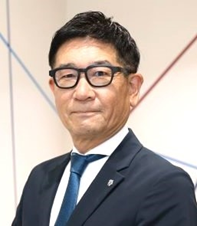 President Masayuki Aoki | Ubicom Holdings, Inc. (3937) |
 |
Company Information
Exchange | TSE Standard Market |
Industry | Information and communications |
CEO | Masayuki Aoki |
HQ Address | 7th floor of Ichibancho Tokyu Bldg., 21 Ichibancho, Chiyoda-ku, Tokyo |
Year-end | End of March |
Homepage |
Stock Information
Share Price | Shares Outstanding (Term-end) | Market Cap. | ROE (Act.) | Trading Unit | |
¥933 | 12,123,241 shares | ¥11,310 million | 15.4% | 100 shares | |
DPS (Est.) | Dividend Yield (Est.) | EPS (Est.) | PER (Est.) | BPS (Act.) | PBR (Act.) |
- | - | ¥87.11 | 10.7x | ¥496.46 | 1.9x |
*The share price is the closing price on June 11. Figures are based on the financial results for the fiscal year ended March 2026. ROE and BPS are the results in the previous fiscal year. The number of outstanding shares excludes the number of treasury shares. DPS (Est.) is undetermined.
Earnings Trends
Fiscal Year | Net Sales | Operating Income | Ordinary Income | Net Income | EPS | DPS |
March 2023 (Act.) | 5,246 | 1,011 | 1,004 | 573 | 48.68 | 11.00 |
March 2024 (Act.) | 5,942 | 1,072 | 935 | 526 | 44.73 | 13.00 |
March 2025 (Act.) | 6,340 | 1,315 | 1,341 | 858 | 71.13 | 40.00 |
March 2026 (Act.) | 5,992 | 1,304 | 1,287 | 891 | 73.56 | 40.00 |
March 2027 (Est.) | 7,383 | 1,511 | 1,520 | 1,056 | 87.11 | - |
*Unit: million yen, yen. Forecasts are those of the company. The definition for net income means net income attributable to owners of parent.
This Bridge Report overviews the financial results of Ubicom Holdings, Inc. for the fiscal year ended March 2026.
Table of Contents
Key Points
1. Company Overview
2. Fiscal Year ended March 2026 Earnings Results
3. Fiscal Year ending March 2027 Earnings Forecasts
4. Conclusions
<Reference: Regarding Corporate Governance>
Key Points
- In the fiscal year ended March 2026, sales decreased 5.5% year on year to 5,992 million yen. While the Medical Business recorded double-digit sales growth, the Technology Consulting Business saw a decline in sales. Operating income decreased 0.9% year on year to 1,304 million yen. Gross profit margin improved from 39.6% in the previous fiscal year to 42.2%, and although SG&A expenses increased, operating income margin rose from 20.7% to 21.8%. While each kind of profit fell slightly short of the company’s forecast, it exceeded expectations when one-time expenses related to M&A are excluded. The company plans to pay an annual (year-end) dividend of 40.00 yen per share, like in the previous year.
- For the fiscal year ending March 2027, sales are expected to increase 23.2% year on year to 7,383 million yen, operating income is forecast to rise 15.9% year on year to 1,511 million yen, and ordinary income is projected to grow 18.1% year on year to 1,520 million yen. In the Medical Business, the company will continue to expand sales of its flagship products, primarily the “MightyChecker® EX” and “Mighty QUBE® Hybrid,” and aims to expand its customer base and increase recurring revenue through the launch of the new product “MightyChecker® Cloud X.” Additionally, Radianceware Inc., which became a consolidated subsidiary in April 2026, will contribute to these results. In the Technology Consulting Business, the company aims to shift the AI-driven development initiative into the implementation phase and begin in earnest the expansion of these solutions into full-scale production projects and monetization through horizontal deployment. This will accelerate the transition from the conventional “person-month” business model to a high value-added business model, thereby improving profitability.
- The assumptions for the forecast for the fiscal year ending March, 2027 include: (1) expectations for further expansion of the revenue base in the Medical Business and contributions to earnings from new subsidiaries acquired through M&A. (2) The forecast includes an increase in depreciation expenses related to the new product “MightyChecker® Cloud X,” as well as goodwill amortization associated and one-time integration-related expenses associated with M&A. (3) From a conservative standpoint, revenue contributions from AI-driven development projects in the Technology Consulting Business that have progressed to full-scale operation are not included in this earnings forecast at this time. (4) Regarding the impact of geopolitical risks, such as the situation in the Middle East, the company does not anticipate any significant impact on earnings.
- Sales and profit declined slightly in the fiscal year ended March 2026. This was partly due to a strategy prioritizing profitability in the Technology Consulting business and the recording of M&A-related expenses in the Medical business. However, these measures are all expected to contribute to future revenue growth and improved profit margins. As the effects of these measures are expected to contribute to sales, a significant 23.2% increase in sales is predicted for the fiscal year ending March 2027. However, at the beginning of the fiscal year, it may be difficult to gauge the impact of these measures, excluding the effects of M&A. The forecast for the fiscal year ending March 2027 appears to hold significant potential.
- While the company is achieving stable growth in its Medical Business, it appears that its Technology Consulting Business is approaching full-scale growth. However, stock price is fluctuating, and the valuation remains low. Given that a solid dividend yield is expected, the stock appears to be attractive.
1. Company Overview
Ubicom Holdings is a one and only business innovation company that creates IT solutions to social issues, such as the shortage of manpower and a medical crunch. It recognizes the medical, financial/public, automotive, manufacturing, and real estate sectors, as strategic markets, and offers a broad range of IT solutions and services utilizing AI and IoT.
1-1 Corporate History
Mr. Masayuki Aoki, who had entrepreneurial ambition all along, took the position of President and CEO at WCL Co., which was a new business subsidiary of WORLD CO., LTD. in March 2005, and then found out that there are many young talented engineers who work vigorously in the Philippines when he visited there during his domestic and international search for seeds of various new businesses. As the adoption of IT on internal operations of companies progressed in Japanese companies, he thought that conducting the system development in the Philippines will open the possibilities to offer a wide array of system solutions globally at high performance and capture the demand and decided to commercialize the idea. In December 2005, He founded Advanced World Solutions, Ltd. (currently: Ubicom Holdings, Inc.)
Following the trend of ICT adoption, the increase of new clients progressed well, and the business expanded thanks to the competitive advantage of having a development center in the Philippines, which possesses many capable top-class engineers. In 2012, the company acquired AIS Co., Ltd., which is the largest company in the field of systems for medical claims, as a subsidiary. In June 2016, the company was listed on Mothers of Tokyo Stock Exchange. After it changed its name to Ubicom Holdings, Inc. in July 2017, it was listed on the First Section of the Tokyo Stock Exchange in December of the same year. In April 2022, the company got listed on the Prime Market of TSE after the restructuring of the market. The company got listed on the Standard Market of TSE in February 2026.
1-2 Corporate Ethos and Vision
The company advocates the following three management visions as the one and only business innovation company that creates innovative IT solutions combining people and technology.
1. Unique beyond comparison To remain a one-of-a-kind business innovation company that looks ahead to the future and creates IT solutions to social issues |
2. Go Global To use the business scheme of the Ubicom group globally mainly in the U.S. and Asian countries |
3. Win-Win To increase the “fellows” of the Ubicom group, by prospering together with customers, collaboration partners, and all other stakeholders |
Based on five core assets: technology, human resources, intellectual property (IP), foresight, and partnerships, the company creates business innovations aimed at solving issues such as Japan’s aging society, healthcare strain, a lack of IT personnel, and digital transformation (DX), which it sees as its social responsibility and raison d’être.
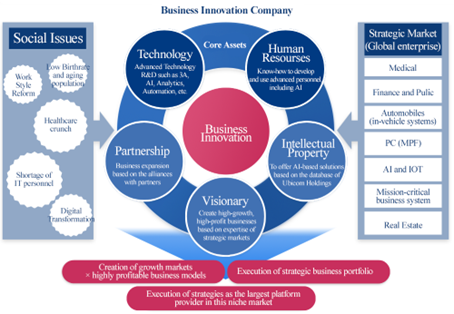
(From the company’s website)
1-3 Business Description
1-3-1 Overview
As a leading company offering IT solutions for supporting the management of medical institutions, Ubicom Holdings operate the two core businesses: the medical business, in which they develop and sell software for healthcare information systems, undertake development projects, analyze medical data, and offer consultation services for medical institutions, such as hospitals, and related facilities, and the technology consulting business, in which they offer a variety of IT solutions in the fields of healthcare, finance, the public sector, automobiles (EV), mobile devices, real estate, etc., which are their strategic markets, from mainly Japan and the Philippines. By reestablishing their businesses in a scrapping-and-building manner, they have established a profitable business model. Furthermore, they will promote a win-win investment model for accelerating business growth through the strategic alliances and M&A with leading companies and growing enterprises, and aim to establish new businesses with different approaches from the existing businesses, such as the platform business.
1-3-2 Business model
Considering the changes in social structures, including globalization, the declining birthrate, and the aging population, and technological innovation in the fields of medicine, life science, robots, and artifical intelligence as chances to create new businesses and positioning the core solutions evolved and advanced based on “3As: automation (automation of execution and management of software tests, etc.), analytics (big data and analysis), and AI (artificial intelligence)” for the fields of healthcare, finance, the public sector, automobiles, mobile devices, real estate, etc., which are their strategic markets, as next-generation solutions, they apply their business model. In the “financial field,” they support the development of applications for business operations mainly for financial institutions and the development for meeting the demand for migration to new systems for the fintech age. In the “healthcare field,” they have established a system in which they develop and sell software for medical information systems and actively implement business model strategies centered around the analysis of medical data, mainly through AIS Co., Ltd., which develops software for inspecting medical claims taking the central role in the healthcare business.
| Medical business | Technology consulting business |
Missions | To reform the workstyles of healthcare workers To increase the revenues of medical institutions To improve the safety and quality of healthcare | To enhance the development of AI engineers at the Phillipines bases against the backdrop of a shortage of 3,260,000 AI and robotics engineers, which is projected in 2040 |
Business models | AI × a subscription model | Ubicom Holdings began preparations for setting up an AI center with the aim of establishing an AI-driven development system. The Ubicom group employs over 900 excellent young engineers. |
Strengths | Healthcare database developed for over 40 years Owning a lot of AI engines | Trust and a track record of offshore development, which was conducted for over 30 years Partnership for lab-based development Consulting for the shift to offshore development |
Clients | Approximately 23,000 medical institutions, healthcare-related business operators, etc. | ■Technology: AI, IoT, etc. ■Strategic markets: healthcare, finance, the public sector, automobiles, PCs, IT devices, real estate, energy, infrastructure, etc. |
(1) Nationwide promotion of digitalization、Worsening labor shortage in the IT field
With the government's flag-waving for digitization in full swing, according to “Survey on the demand and supply of IT personnel” published by the Ministry of Economy, Trade and Industry in 2019, it is important to secure IT personnel who can contribute to the improvement in productivity by creating added value and streamlining business operations in an innovative fashion, but it is difficult to secure them, due to the declining birthrate and the aging population. It is estimated that Japan will be 790,000 engineers shortage in 2030.
(2) Augmentation of national medical expenditure and tightening of examination of Medical Claims, Strain in medical institution management, work-style reforms for healthcare providers
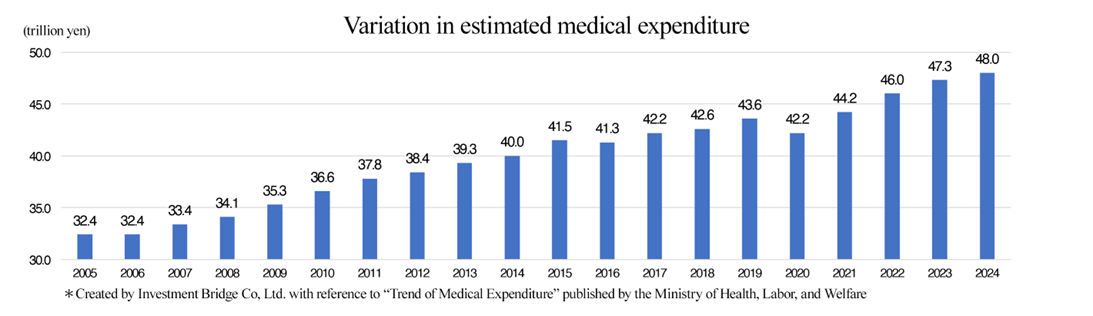
The estimated medical expenditure (excluding expenses such as workers’ accident compensation insurance and payments when the full payment is covered with own expenses. It accounts for about 98% of the national medical care expenditure, which is the overall estimate of all expenses required for treating injuries or diseases after examinations by doctors in medical institutions) has marked a record high in 2024 at 48.0 trillion yen.
Medical expenses are in an increasing trend due to the progression of the aging population, so the financial situation of each health insurance is worsening. In order to reduce insurance costs, the national government is implementing a measure for rationalizing medical expenses by tightening the examination of Medical Claims,etc.
(What are the medical claims?)
Under the current system of health care services provided by health insurance, medical institutions receive up to 30% from patients and the other 70% or more from the health insurance association, mutual aid associations, city or ward offices, etc.
Medical institutions define the detailed statement of diagnosis and treatment, which is required to claim the amount covered by insurance from these public institutions, a Medical Claim; and the tasks performed to issue the Medical Claim are a very important procedure, which makes up most of the revenue of medical institutions.
The submitted Medical Claims are meticulously scrutinized by the Examination and Payment institutions. In case there is a mistake in its content, the Medical Claim may be sent back (returned) by the Examination and Payment institution, or the scores of medical fees may be reduced. In case the Medical Claim is returned, it must be carefully examined, revised, and resubmitted. Submitting appropriate Medical Claims is an extremely important task for the efficient management of medical institutions.
In 2009, medical institutions were obligated to make online requests for Medical Claims, as a general principle.
(Workstyle reform for doctors, etc.)
While Japan's medical needs are rapidly expanding, diversifying, and becoming more sophisticated with the progress of a super-aging society, the problems of shortage and uneven distribution of medical doctors and workloads such as long working hours are becoming apparent.
In order to alleviate the ever-increasing burden on doctors and promote reforms in the way doctors work in the medical field, a cap on overtime work for doctors with penalties will come into effect in April 2024. As a result, medical institutions are faced with the urgent task of streamlining and optimizing the work of doctors and others.
The strain in medical care provision systems and deterioration of hospital management caused by the COVID-19 pandemic are serious social issues. Against this backdrop, examination and payment institutions are moving to tighten the examination of medical claims, and work-style reforms are in progress for health care providers. Accordingly, it is now essential for the management of medical institutions to improve revenues through better operational efficiency for medical claim checks, etc., ensure the safety and quality of medical care, and deal with work-style reforms.
(3) Medical cloud market is expected to grow rapidly
Thanks to the notice of the Ministry of Health, Labor and Welfare titled “Regarding places for storing medical records” partially revised in February 2010, it became possible to store medical information at data centers owned by private enterprises, which made it easier for private enterprises to offer medical cloud services.
It is expected that application platforms and cloud services in which servers exist in networks will be utlized in the medical field for electronic medical record, medical image management systems, regional medical cooperation systems, and various services for home care support, remote image diagnosis, clinical trials, and dispensaries.
Especially, as the volume of data in today’s medical instiutions increased steeply and networks are used more widely, expectations toward medical cloud services are growing, as cloud services have merits, such as “It is easy to cooperate with other facilities,” “It is unnecessary to maintain and manage data by yourself,” and “They are inexpensive,” and they turned out to be useful for anti-disaster measures after many medical records were lost in areas devastated by the Great East Japan Earthquake in March 2011. Furthermore, the medical strain due to the spread of COVID-19 made us strongly aware of the necessity of online diagnosis and electronic records.
Some point out the problem of safety from the viewpoint of protection of personal information, but the medical cloud market is expected to grow considerably for offering solutions to social issues while keeping a balance between the tightening and easing of regulations.
1-3-3 Segments
They have two business segments to be reported: the medical business for helping solving problems with the management of medical institutions and promoting the digital transformation (DX) of healthcare mainly by developing and selling software for medical information systems, undertaking development projects, and offering consultation services; and the techology consulting business, in which the company develops systems for mainly global enterprises inside and outside Japan primarily by utilizing the overseas subsidiaries, which are Advanced World Systems, Inc. and Advanced World Solutions, Inc. in the Philippines, and AWS (Beijing), Ltd. and AWS (Kunshan), Ltd. in China.
In both of the businesses, the company will promote alliances, partnerships, and M&A with leading companies and growing companies and accelerate the growth of its businesses.
Regarding the development of new businesses, it intends to establish businesses that have a higher growth potential and are highly profitable with an eye on the next generation.
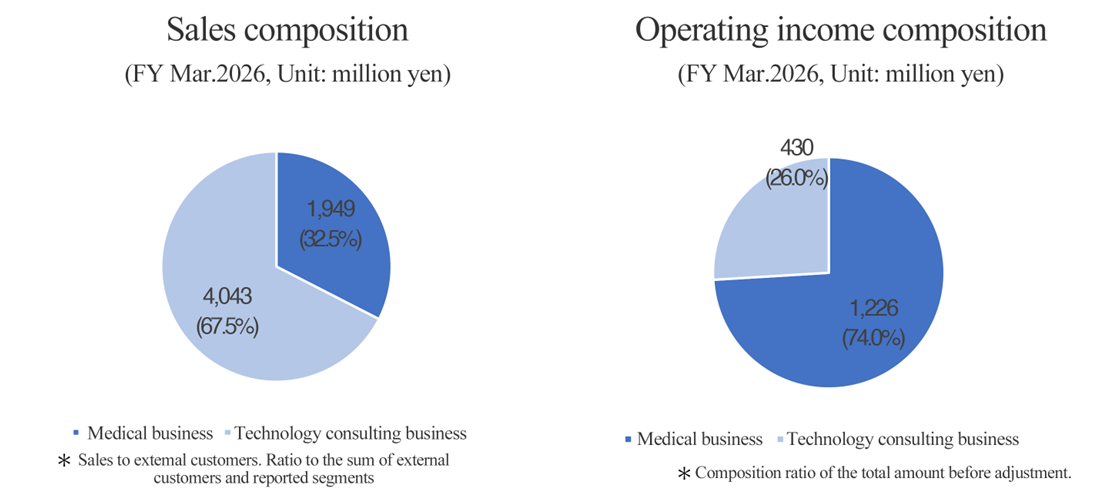
(From the company’s website)
(1) Medical business
① Overview
As a leading company that offers solutions for supporting business administration of medical institutions, Ubicom Holdings provides medical IT solutions, such as medical claims inspection, medical safety support, data analysis, cloud services, development support, and consulting. Through these services, the company helps reform working practices through streamlining of operations in the medical industry, improve business administration of medical institutions, and enhance the safety and quality of medical services.
The “Mighty Series,” which improves the management quality and increases the work efficiency in medical fields, is well-received thanks to its abundant and useful functions. Due to the impact of work style reforms, which became applicable to doctors in April 2024, and revisions to medical treatment fees, DX investment by medical institutions is accelerating. While they are focusing on the switching by existing users, the number of new users is steadily increasing. As of the end of March 2026, the Mighty series occupied the top market share and was being used by approximately 49% of hospitals with a patient capacity of 20 or more (3,925 facilities), and 18% of clinics with a patient capacity of less than 20 (18,987 facilities), for a total of 22,912 facilities.
The company supports the reform of workstyles of medical doctors by providing these products and solutions, and based on transactions with some of the largest medical institutions in Japan, the company promotes a new platform business, with the aim of creating a new market based on intellectual property.
They will earn significant revenues stably based on the profitable subscription model of this series.
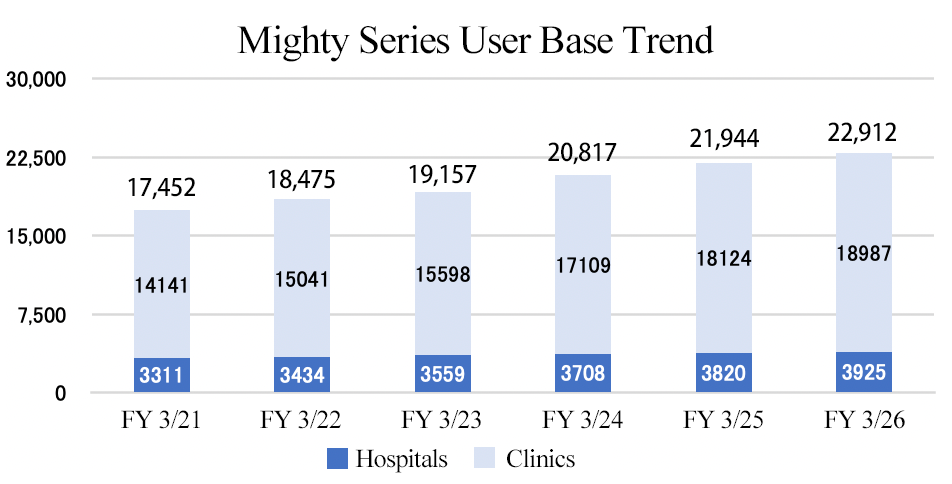
In addition, the company newly focuses on the knowledge platform business that is targeted at the insurance industry.
② Core Products
The core products of the Mighty series that realizes streamlined business operations for medical institutions by utilizing AI are listed below.
The Mighty series, a solution to business administration improvement for medical institutions, is not just an IT tool, but it dramatically improves the revenue structure for hospitals. It is a one-of-a-kind solution that helps achieve medical safety, workstyle reform, streamlined business administration, as well as cost reduction.
<Mainstay products of the Mighty series and their characteristics>
[For medical doctors] AI-based system that helps medical doctors input disease names to electronic medical records and check the records upon input | |
Mighty QUBE® Hybrid | ・Being linked with electronic medical records, this system uses AI for retrieving potential disease names from the information on the orders of prescriptions, medicines injected, and clinical laboratory tests, which medical doctors input at the time of medical examinations, based on the medical database built up for over 30 years. ・This system contributes to workstyle reform for medical doctors, medical safety, cost reduction at hospitals, and reduction in working hours and labor for medical doctors, pharmacists, and staff working at medical affairs sections by preventing in real time such errors as administration of wrong medicines and failure in inputting disease names at the time of medical examinations. ・The return on investment is 1,154% (e.g. sales increase at a medium-sized hospital with 300 beds: about 62 million yen/year). |
[For medical affairs sections] AI-based next-generation software for medical claims inspection | |
MightyChecker® EX | ・Being linked with the computer used to inspect medical claims, this software helps streamline medical staff’s duties with AI-based inspection of medical claims. ・This software helps improve revenue at hospitals by preventing billing errors and omission in billing. ・The return on investment is 411% (e.g. sales increase at a medium-sized hospital with 300 beds: about 9 million yen/year). |
How sales are posted
The company adopted the installment method for the license revenue from the Mighty series. Sales grow steadily on a monthly basis and revenue stabilize as contracts increase in number.
A business model that combines AI and subscription has enabled the company to form a sustainable growth foundation.
③ Market environment: Tailwind created by social issues and policies
Structural issues facing medical institutions and growth opportunities
■ Widening deficit at medical institutions: The business performance of medical institutions is declining more seriously. There is an urgent need to re-establish a sustainable medical structure because about 70% of medical institutions post a deficit in medical operating income.
■Year-by-year increase in the adoption rate of electronic medical records: The number of medical institutions that adopt electronic medical records is on the rise owing to “Medical DX Reiwa Vision 2030” and digitalization of medical services. An environment for making the most of medical data is being developed.
■ Business domains that match the government’s priority policies: Considering its priority policies are to structurally reduce social security costs and promote digital transformation of medical services, Ubicom Holdings promotes streamlining and standardization in the medical field.
The Mighty series has a strong affinity with the policies on digital transformation of medical services and productivity enhancement pursued by the government and is in the field where solutions to social issues and improvement in business administration of medical institutions are finely balanced.
The Medical Business is intended to promote a business that changes social issues to growth opportunities.
④ Promotion of M&A strategy
The company aims to increase the ratio of direct sales by its corporate group by conducting M&A of 8 to 10 companies in total for the five years between 2025 and 2030.
Effects brought by M&A
Increased unit price | ☆Addition of profit from agencies to the corporate group’s revenue ☆Shift to the new product, Mighty Checker® EX, and cross-selling of Mighty CUBE® Hybrid |
Improved retention rate | Prevention of cancellations by reflecting feedback from medical institutions and enhancing customer support services (The retention rate for the Mighty series is already at a high level at 99.6%, and the company will maintain the current level through the measures above.) |
Rationalized CAC (*) | Obtaining the existing customer bases (medical institutions), medical networks, and sales channels (human resources) of acquired agencies |
*CAC: customer acquisition cost
Target KPIs of Ubicom Holdings
KPI | 2025 | Targets in 2030 | Supplementary note |
Corporate group’s direct sales ratio | 4.8% | 35% | A sales model will be shifted from sales mainly by agencies to a hybrid model including direct sales. |
Life time value (LTV) | 1,280,000 | 1,970,000 | LTV will be increased toward the cross-selling and unit price enhancement. |
CAC | - | ▲15% | The channels already acquired will be utilized. |
LTV/CAC ratio | 9.3 | 14.2 | Efficiency will be further boosted. |
(2) Technology consulting business
◎ Overview
In this business, Ubicom Holdings provides such services as the development of embedded software and applications, and testing, quality assurance, maintenance, and 24-hour support thereof by using the development bases in areas including the Philippines in order to solve the shortage of IT engineers and promote digital transformation in Japan. In addition, the company is developing its own advanced solutions with cutting-edge technologies including AI, analytics, and automation (3A).
◎ Clients
Their client enterprises are in a broad range of fields, including healthcare, finance, the public sector, automobiles, mobile devices, and real estate.
As mentioned above, in addition to the worsening IT personnel shortage, there have been strong needs for the reduction of costs for development and operation, but the company, which has about 900 IT person who are proficient in Japanese and English, is steadily meeting such needs.
On top of that, the rich experience of development for numerous big domestic clients over many years has further earned their trust and built its reputation.
◎ Adoption of IBM’s AI platform to its AI-driven development model
In AI-based models, the development process is being automated, which results in a significant reduction in the development period. This makes a scalable growth possible, which was impossible in the conventional model that is expressed in the unit of the number of staff × hours (man-month). While using an AI platform offered by International Business Machines Corporation (IBM) (watsonx) as the core platform, Ubicom Holdings is establishing an AI-driven development system by utilizing IBM Bob and multiple generative AI technologies.
watsonx is a business AI platform provided by IBM, which allows companies to adopt and operate foundation models of generative AI safely and efficiently. It consists of three elements, which are a model development environment (watsonx.ai), a data integration foundation (watsonx.data), and an AI governance function (watsonx.governance). It is an AI foundation that is designed for companies and finely balances safety and flexibility based on the design for protecting data in a closed environment and preventing information from being leaked to external models.
Based on this global track record, the company will promote the establishment of an AI center in the Philippines as a strategic partner of IBM Japan. Furthermore, by utilizing the excellent English proficiency of Filipino engineers and rapidly absorbing cutting-edge technologies from Western countries, the company will build an AI-driven development framework optimized for the domestic Japanese market. Through this approach, the company will lead the productivity transformation of Japanese enterprises utilizing AI.
◎ New value created by the secondment-based lab-type development and differentiation strategy
When a company opens an offshore base, (1) a large amount of cost will be required to open the base, (2) miscommunication may occur due to linguistic or cultural differences, and (3) infrastructure may be cut off or a project may be delayed due to changes in the political situation. When a company entrusts some tasks to another company, (1) the entrustor will not be able to develop technology or skill and (2) miscommunication may occur due to linguistic or cultural differences.
The secondment-based lab-type development can eliminate such risks and concerns posed by offshore development.
Strengths of the secondment-based lab-type development
☆Seamless services can be offered offshore from upstream to downstream development processes.
☆The executive candidates are seconded, and they can develop know-how of offshore development and have opportunities to gain experience of development with engineers with foreign nationality.
☆Swift development will be realized through smooth communication.
The secondment-based lab-type development will help form a win-win relationship between Ubicom Holdings and its clients.
With over 30 years of experience of offshore development, Ubicom Holdings supports offshore development for its client companies. It aims to realize stable and continuous businesses by establishing partnerships with major companies.
1-4 ROE analysis
| FY 3/18 | FY 3/19 | FY 3/20 | FY 3/21 | FY 3/22 | FY 3/23 | FY 3/24 | FY 3/25 | FY 3/26 |
ROE(%) | 17.7 | 24.7 | 27.3 | 24.2 | 24.6 | 14.5 | 12.0 | 16.8 | 15.4% |
Net Income to Sales Ratio (%) | 6.63 | 10.37 | 13.21 | 14.86 | 17.61 | 10.94 | 8.85 | 13.54 | 14.88% |
Asset Turnover Ratio (x) | 1.36 | 1.27 | 1.17 | 1.02 | 0.94 | 0.91 | 0.93 | 0.86 | 0.76 |
Leverage (x) | 1.96 | 1.87 | 1.76 | 1.60 | 1.49 | 1.46 | 1.45 | 1.44 | 1.37 |
*The asset turnover ratio and leverage are calculated with the average amount between the beginning and the end of the term. Calculated by Investment Bridge Co, Ltd. based on annual securities reports and brief financial statements.
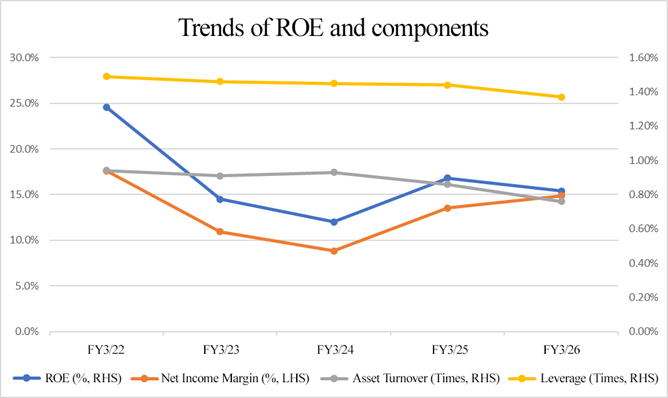
*Created by Investment Bridge Co., Ltd. based on disclosure material.
The ROE in the fiscal year ended March 2026 was almost unchanged from the fiscal year ended March 2025.
Although asset turnover ratio is on a downward trend, we expect it to exceed 20% again by improving both asset efficiency and profitability.
1-5 Shareholder Return
In the fiscal year ended March 2026, the performance of Ubicom Holdings did not reach the earnings forecast due to the temporary fluctuation in its business performance resulting from the growth investment and the business portfolio optimization; however, the company has been making steady progress with the enhancement of the revenue basis in its mainstay Medical Business. In the Technology Consulting Business, a shift to a highly productive model with high added value, including utilization of AI, is going smoothly, which has allowed the company to make steady progress with foundation development toward growth in the fiscal year ending March 2027 and subsequent fiscal years.
Given these circumstances, the amount of dividends for the fiscal year March 2026 is kept unchanged at 40 yen per share.
The company will aim to pay over 40 yen per share by comprehensively taking into account the trends in its business performance and the financial conditions and adding performance-based dividends while paying dividends based on a stable dividend that is 25 yen. It will clarify a stance on sharing stable and continuous interest returns and the fruit of its business growth with shareholders. It strives for a payout ratio of 50% or higher for the medium/long term and considers sustainable shareholder returns to be one of the most important policies of its business administration.
In order to enhance shareholder return, the company adopted a “stable dividend” and a “commemorative dividend” in the fiscal year ended March 2025, and a “stable dividend” in addition to a “performance-linked dividend” in the fiscal year ended March 2026.
1-6 ESG-related initiatives
The company believes that it has a social responsibility and raison d'etre to create business innovation based on its five core assets: technology, human resources, intellectual property, foresight, and partnerships, and solve issues such as the declining birthrate and aging population, the shortage of medical care, the depletion of IT human resources, and DX.
Ubicom Holdings’ initiatives regarding ESG are as follows:
E | ・Reduction in CO2 emissions ・Global partnership | ・To use renewable energy for all the electricity consumed at its head office ・To make capital investment in the subsidiaries in the Philippines |
S | ・Measures for diversity | ・To appoint three female officers ・To raise the ratio of female employees at managerial positions to 28.5% ・To increase the number of employees taking the childcare and maternity leaves ・To raise the ratio of employees with foreign nationality |
G | ・Enhancement of the governance framework | ・To ensure information disclosure and transparency ・To ensure diversity in the officers ・To disclose commitments of the top executives ・To employ and develop competent personnel |
1-7 Promoting Group Initiatives Rooted in Social Significance
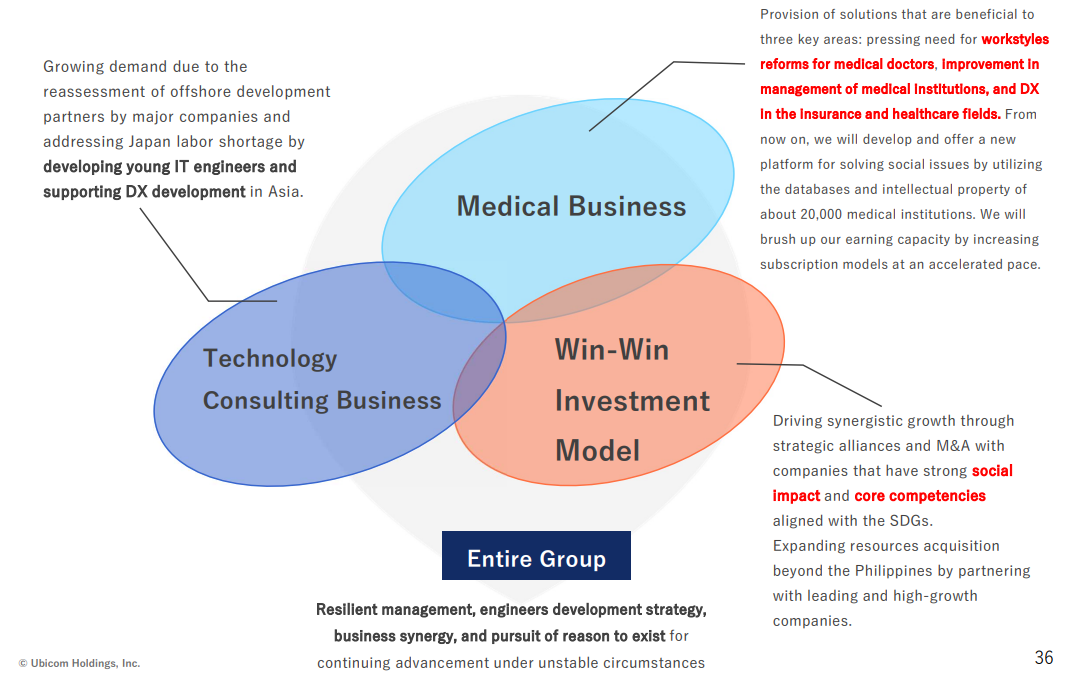
(From company’s document)
2. Fiscal Year ended March 2026 Earnings Results
2-1 Earnings Trends
| FY 3/25 | Ratio to sales | FY 3/26 | Ratio to sales | YoY | Forecasts by the company | Ratio to forecasts |
Net Sales | 6,340 | 100.0% | 5,992 | 100.0% | -5.5% | 6,572 | -8.8% |
Gross profit | 2,510 | 39.6% | 2,531 | 42.2% | +0.8% | - | - |
SG&A | 1,195 | 18.9% | 1,227 | 20.5% | +2.7% | - | - |
Operating Income | 1,315 | 20.7% | 1,304 | 21.8% | -0.9% | 1,351 | -3.5% |
Ordinary Income | 1,341 | 21.2% | 1,287 | 21.5% | -4.0% | 1,364 | -5.6% |
Net Income | 858 | 13.5% | 891 | 14.9% | +3.9% | 948 | -5.9% |
*Unit: million yen.
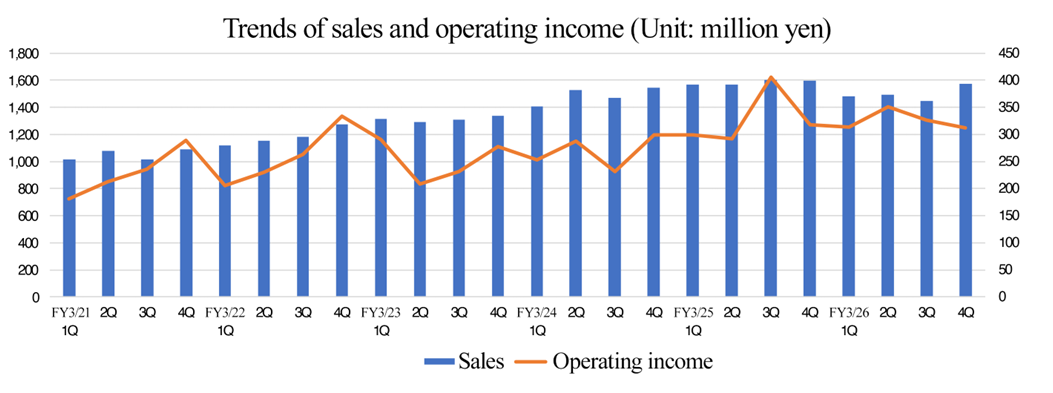
Sales and profit decreased. Net income hit a record high.
Sales decreased 5.5% year on year to 5,992 million yen. While the Medical Business recorded double-digit sales growth, the Technology Consulting Business saw a decline in sales.
Operating income decreased 0.9% year on year to 1,304 million yen. Gross profit margin improved from 39.6% in the previous fiscal year to 42.2%, and although SG&A expenses increased, operating income margin rose from 20.7% to 21.8%.
Ordinary income decreased 4.0% year on year to 1,287 million yen. Non-operating revenues, such as exchange gain, decreased, while non-operating expenses, such as paid interest on leases, increased. Net income grew 3.9% year on year to 891 million yen, as a gain on sale of investment securities was posted.
While sales and each kind of profit fell slightly short of the company’s forecast, it exceeded expectations when one-time expenses related to M&A are excluded.
The company plans to pay an annual (year-end) dividend of 40.00 yen per share, like in the previous year.
2-2 Trend of Segments
| FY 3/25 | Composition ratio | FY 3/26 | Composition ratio | YoY |
Medical Business | 1,723 | 27.2% | 1,949 | 32.5% | +13.1% |
Technology Consulting Business | 4,617 | 72.8% | 4,043 | 67.5% | -12.4% |
Consolidated Sales | 6,340 | 100.0% | 5,992 | 100.0% | -5.5% |
Medical Business | 1,128 | 65.5% | 1,226 | 62.9% | +8.7% |
Technology Consulting Business | 562 | 12.2% | 430 | 10.7% | -23.4% |
Adjustment | -374 | - | -353 | - | - |
Consolidated Operating Income | 1,315 | 20.7% | 1,304 | 21.8% | -0.9% |
*Unit: million yen. Sales is the sales toward external customers. Composition ratio in Operating Income is profit margin.
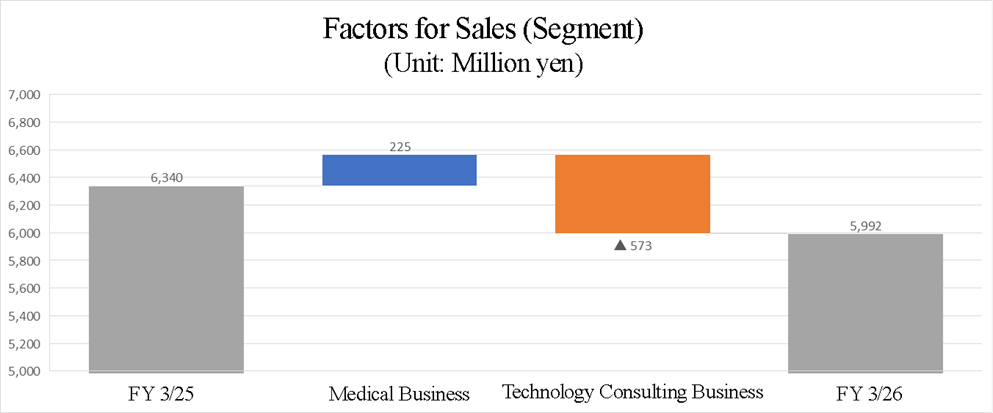
*Created by Investment Bridge Co., Ltd. based on disclosure material.
(Medical Business)
Sales and profit increased.
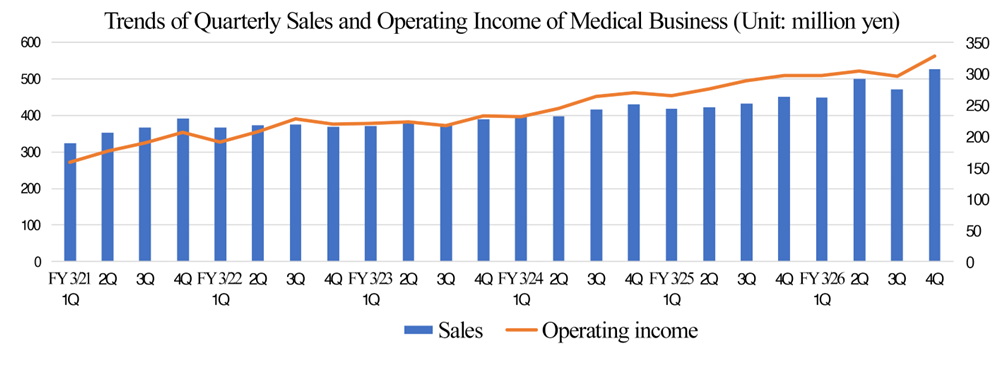
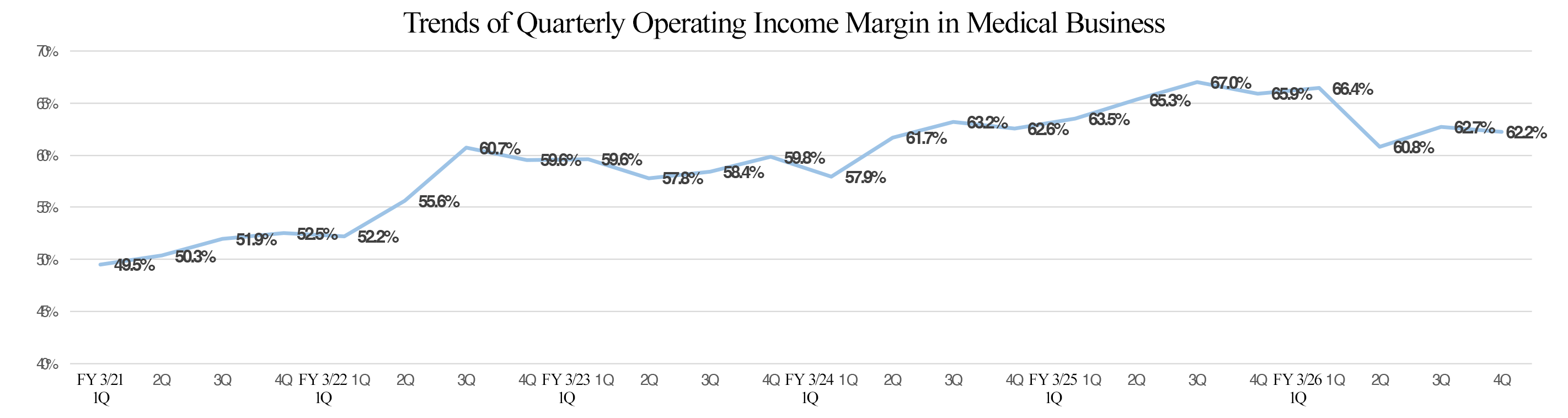
Sales increased 13.1% year on year to 1,949 million yen, and operating income increased 8.7% to 1,226 million yen. Both figures hit a record high.
While approximately 70% of medical institutions are reporting a deficit in “medical practice profit” (that is, operating income of a medical institution), progress is being made in developing an environment for the utilization of medical data and promoting the adoption of electronic health records. The “Mighty” series is highly aligned with these policy priorities and continues to grow steadily. The number of users reached 22,912, and demand for the flagship products “MightyChecker® EX” and “Mighty QUBE® Hybrid” remained strong. Furthermore, the company is working to strengthen its revenue base by continuing to acquire direct accounts (direct sales) through website-based marketing and support, promoting cross-selling of solutions (to increase average revenue per customer), and implementing price optimization based on the benefits of implementation.
In terms of profit, operating income margin has temporarily declined because ISM, which has become a subsidiary, has a relatively low profit margin due to the nature of the agency business.
(Technology Consulting Business)
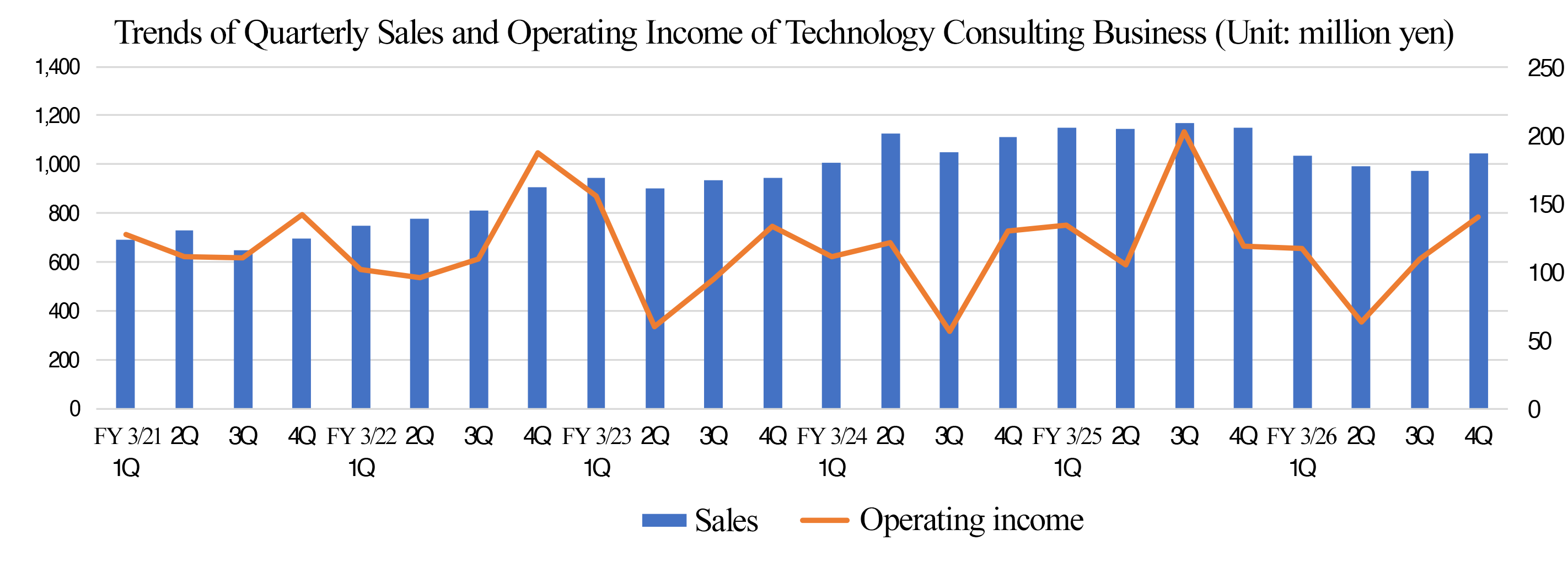
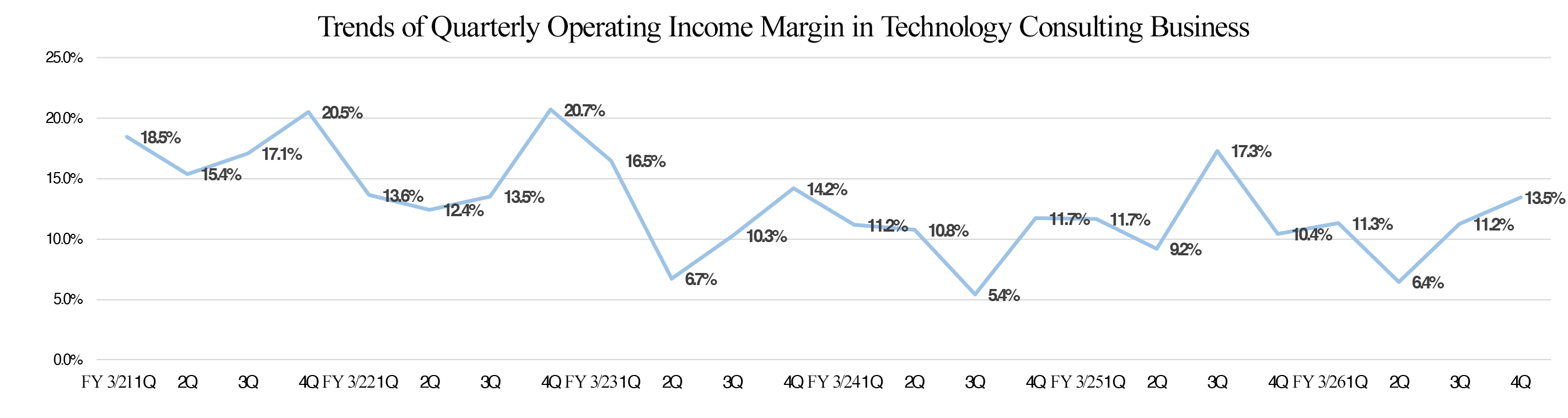
Sales and profit declined.
To facilitate the transition to future high value-added, high-productivity models, the company is promoting a shift toward business models that deliver new value to clients through AI, in addition to leveraging AI to enhance development and operational efficiency. As part of this effort, while establishing a framework to secure full-scale AI project orders, the company reduced its acceptance of small-scale, short-term, and low-margin projects. As a result, both revenue and profit declined.
Meanwhile, at our Philippine subsidiary, revenue declined only slightly due to the expansion of direct-contract projects and progress in cost structure reforms, while operating income improved significantly. As a result, the transition from the conventional man-month (number of employees × hours) based model to a high value-added business model leveraging AI is progressing steadily, and the profitability of our core business is improving.
2-3 Financial position and cash flow
◎ Main Balance Sheet
| End of 3/25 | End of 3/26 | Increase /Decrease |
| End of 3/25 | End of 3/26 | Increase /Decrease |
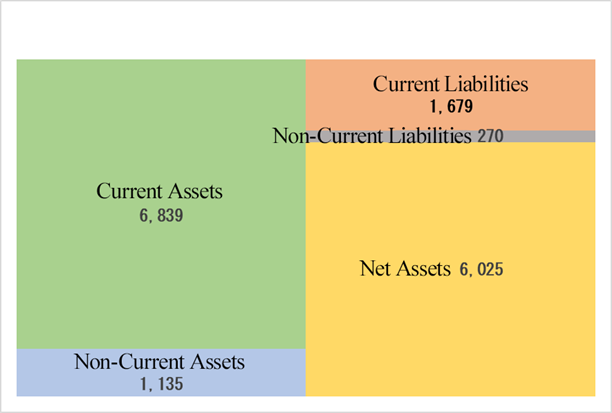
Current Assets | 6,604 | 6,839 | +235 | Current liabilities | 1,771 | 1,679 | -92 |
Cash and Deposits | 4,860 | 5,166 | +305 | ST Interest Bearing Liabilities | 100 | 100 | +0 |
Receivables | 1,533 | 1,449 | -83 | Contract liability | 783 | 798 | +14 |
Noncurrent Assets | 1,266 | 1,135 | -130 | Noncurrent liabilities | 497 | 270 | -226 |
Tangible Assets | 117 | 111 | -5 | Liabilities | 2,268 | 1,950 | -318 |
Intangible Assets | 342 | 268 | -73 | Net Assets | 5,601 | 6,025 | +423 |
Investment, Others | 807 | 754 | -52 | Retained earnings | 3,838 | 4,245 | +406 |
Total assets | 7,870 | 7,975 | +104 | Total Liabilities and Net Assets | 7,870 | 7,975 | +104 |
*Unit: million yen. Accounts receivable include contract assets.
Totals assets increased 104 million yen from the end of the previous fiscal year to 7,975 million yen due to an increase in cash
and deposits, etc.
Total liabilities decreased 318 million yen year on year to 1,950 million yen due to the decrease in lease obligations, etc.
Net assets increased 423 million yen year on year to 6,025 million yen due to a growth in retained earnings.
Consequently, equity ratio rose 5.1 points from the end of the previous fiscal year to 75.5%.
*Created by Investment Bridge Co., Ltd. based on disclosure material.
◎ Cash flow
| FY 3/25 | FY 3/26 | Increase/ Decrease |
Operating cash flow | 930 | 984 | +53 |
Investing cash flow | 18 | -57 | -76 |
Free cash flow | 949 | 926 | -23 |
Financing cash flow | -126 | -627 | -500 |
Cash, equivalents | 4,860 | 5,166 | +305 |
*Unit: million yen
The surplus in free cash flow decreased. The cash position increased.
2-4 Topics
① Launch of the new product “MightyChecker® Cloud X”
The company launched its new product, “MightyChecker® Cloud X,” in April 2026. Existing customers’ migration has been promoted and scheduled for completion by October 2026. Going forward, the company will focus on the market for small hospitals with fewer than 100 beds, which account for approximately 40% of all hospitals in Japan (about 3,000 facilities), specifically targeting the 2,000 facilities that have not yet adopted the Mighty series. The company aims to expand its revenue base by strengthening direct sales and promoting upselling to existing customers.
Features of “MightyChecker® Cloud X”
Improved Operational Efficiency Through UI/UX Redesign: Significantly improved usability
Expanded Target Market: To support clinics and small hospitals with less than 100 beds
All Products are Equipped with Management Analysis Functions: To visualize claims data to support data-driven management decisions
Advanced Security: To comply with the guidelines of the Ministry of Health, Labour and Welfare (MHLW) and support multi-factor authentication (MFA).
② Building an AI-Driven Development Framework
As a strategic partner of IBM Japan, the company is driving a transformation toward high value-added, high-productivity models by leveraging IBM Bob and multiple generative AI technologies, with the enterprise AI platform (watsonx) serving as the core foundation. Additionally, the company is establishing an AI center at their facility in the Philippines to shift to a business model that delivers new value to clients through AI.
By promoting development and business transformation through the use of AI, we are moving away from conventional development structures that relies on man-months and shifting toward a business model that creates value through the use of AI.
This will enable the company to position itself not as a party merely affected by advancements in AI, but as a party that captures the expanding revenue opportunities arising from the use of AI.
3. Fiscal Year ending March 2027 Earnings Forecasts
Earnings Forecasts
| FY 3/26 | Ratio to sales | FY 3/27 Est. | Ratio to sales | YoY |
Net Sales | 5,992 | 100.0% | 7,383 | 100.0% | +23.2% |
Operating Income | 1,304 | 21.8% | 1,511 | 20.5% | +15.9% |
Ordinary Income | 1,287 | 21.5% | 1,520 | 20.6% | +18.1% |
Net Income | 891 | 14.9% | 1,056 | 14.3% | +18.4% |
*Unit: million yen. The forecasted values were provided by the company.
Sales and profit are expected to grow by double digits.
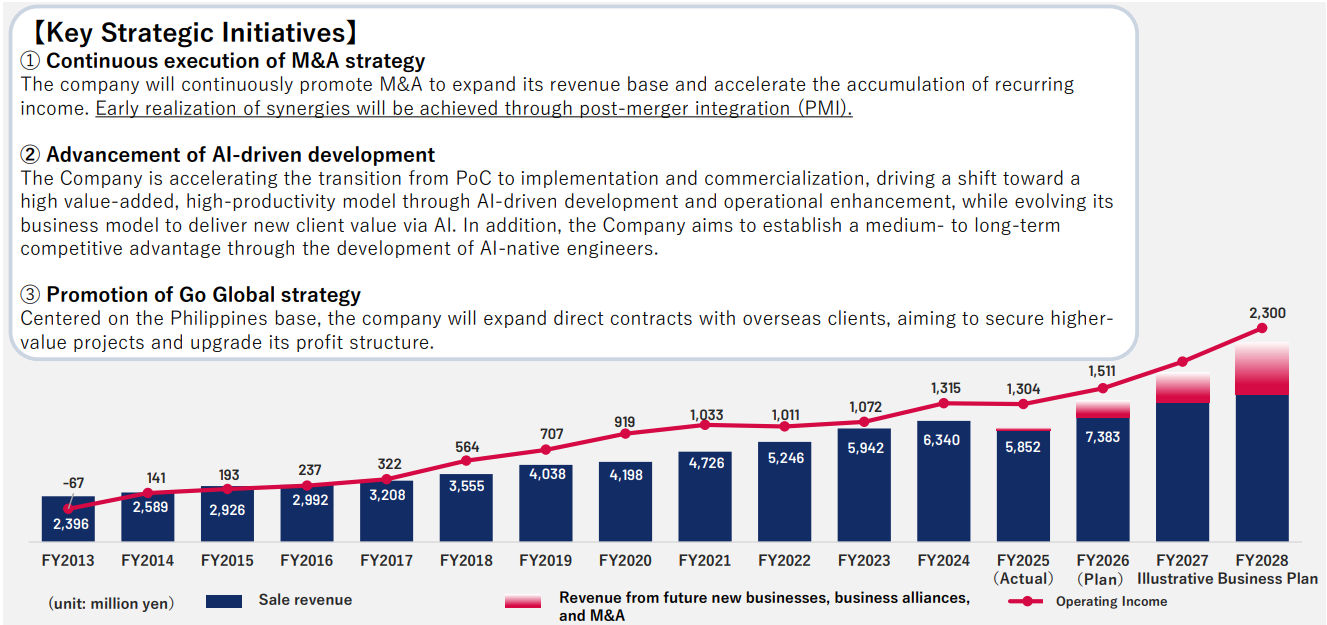
For the fiscal year ending March 2027, sales are expected to increase 23.2% year on year to 7,383 million yen, operating income is forecast to rise 15.9% year on year to 1,511 million yen, and ordinary income is projected to grow 18.1% year on year to 1,520 million yen.
In the Medical Business, the company will continue to expand sales of its flagship products, primarily the “MightyChecker® EX” and “Mighty QUBE® Hybrid,” and aims to expand its customer base and increase recurring revenue through the launch of the new product “MightyChecker® Cloud X.” In addition, the revenue base is expected to be fortified further, as the performance of Radianceware Inc., which was included in the scope of consolidation in April 2026, will contribute to financial results from the following consolidated fiscal year. Furthermore, they will promote the adoption of “Insurance Knowledge Platform” and the cross-selling of additional options, to develop it as a new source of revenue.
In the Technology Consulting Business, the company aims to shift the AI-driven development initiative into the implementation phase from the fiscal year ending March 2027, and begin in earnest the expansion of these solutions into full-scale production projects and monetization through horizontal deployment based on the results of PoC. This will accelerate the transition from the conventional “person-month” business model to a high value-added business model, thereby improving profitability.
Assumptions for Earnings Forecasts
① Further expansion of the revenue base in the Medical Business and contributions to earnings from new subsidiaries acquired through M&A are anticipated.
② In addition to the increase in depreciation expenses related to the new product “MightyChecker® Cloud X,” goodwill amortization associated with M&A and one-time integration-related costs have already been taken into consideration.
③ Currently, from a conservative perspective, this earnings forecast does not include revenue contributions from AI-driven development projects progressing to full-scale operation within the Technology Consulting Business.
④ The company does not currently anticipate any significant impact of geopolitical risks such as the situation in the Middle East on its business performance.
Earnings Forecasts and Earnings Trends
(From company’s document)
4. Conclusions
Sales and profit declined slightly in the fiscal year ended March 2026. This was partly due to a strategy prioritizing profitability in the Technology Consulting business and the recording of M&A-related expenses in the Medical Business. However, these measures are all expected to contribute to future revenue growth and improved profit margins. As the effects of these measures are expected to contribute to sales, a significant 23.2% increase in sales is predicted for the fiscal year ending March 2027. However, at the beginning of the fiscal year, it may be difficult to gauge the impact of these measures, excluding the effects of M&A. The forecast for the fiscal year ending March 2027 appears to hold significant potential.
While the company is achieving stable growth in its Medical Business, it appears that its Technology Consulting Business is approaching full-scale growth. However, stock price is fluctuating, and the valuation remains low. The company aims to achieve a payout ratio of 50% or higher, and a solid dividend yield is expected, the stock appears to be attractive.

<Reference: Regarding Corporate Governance>
◎ Organizational structure and composition of directors and corporate auditors
Organizational structure | Company with corporate auditor |
Directors | 5, out of which 3 are outside directors. (including 3 independent executives) |
Corporate auditors | 3, out of which 2 are outside auditors. (including 2 independent executives) |
◎ Corporate Governance Report
Last updated: June 27, 2025
*Basic Policy
The corporate ethos of our company is “to remain a one and only business innovation company,” “global business operation,” and “co-prosperity based on a win-win model.” We recognize that it is essential to enrich and tighten our corporate governance, in order to improve our corporate value and maintain our global competitiveness under this ethos. In detail, our basic policy is “to aim to enhance our profitability and maximize the profits for shareholders by conducting more efficient, sound business activities” and put importance on compliance. Under this policy, we strive to strengthen our corporate governance, while considering that it is essential to fulfill our social responsibilities toward all kinds of stakeholders, including shareholders, employees, business partners, and local communities, and achieve sustainable growth and expansion.
<Reasons for Non-compliance with each Principles of the Corporate Governance Code (Excerpts)>
Principle | Reasons for not following |
[Supplementary Principle 4-1-3 Succession Plan for the CEO and others] | The Board of Directors is not currently specifically overseeing succession planning for the CEO and others. The person to be appointed as President and Representative Director, who will become the CEO, will be selected based on knowledge, experience, and ability, and on the circumstances surrounding the company and the issues that need to be addressed at the time. In the future, we will also consider formulating a succession plan. |
[Supplementary Principle 4-2-1 Executive Compensation and Incentives] | Since the term of office of the directors is one year, their compensation is reviewed annually based on the previous year's performance. However, we have not established a compensation system that is linked to medium to long-term performance or a compensation system based on treasury shares. We recognize the need to add incentives to compensation for the management in a manner that reflects our company’s medium to long-term performance and potential risks and contributes to the development of a healthy entrepreneurial spirit, and will continue to consider appropriate methods. |
<Disclosure Based on each Principles of the Corporate Governance Code (Excerpts)>
Principles | Disclosure contents |
[Principle 1-4 The strategically held shares] | Our company may hold shares strategically, if they are considered to contribute to the enhancement of the value of our corporate group from the mid/long-term viewpoint. Our policy is to hold such shares, as long as we can secure the rationality of shareholding purposes, such as the maintenance and cementing of transaction relations through business alliance, collaboration, etc. For exercising the voting rights of the shares, we discuss whether or not a bill is consistent with our shareholding policy. Moreover, there are no strategically held shares as of the day of the submission of this report. |
[Supplementary Principle 2-4-1 Ensuring Diversity in the Appointment of Core Personnel] | (1) Approach to ensuring diversity The corporate group's policy regarding human resources development, including ensuring diversity in the workforce, and the in-company environment are as follows. We are expanding our business by hiring people based on their experience, ability, etc. regardless of gender or nationality. Therefore, we have not set any policies or goals for the promotion of people to managerial positions that are specific to “women,” “foreigners,” or “mid-career hires.” In addition, our company currently has three female directors, including a director (foreign national) of a subsidiary outside of Japan. We intend to continue to promote diverse human resources with excellent character, insight, and management skills, regardless of gender or nationality, and will consider human resources strategies to enhance corporate value over the medium to long term, including a human resources development policy and a company environment improvement policy aimed at ensuring further diversity.
<Human Resources Development Policy> The basic policy for human resources development is as follows: 1. Strengthening recruitment 2. Retraining on new skills 3. Leadership training 4. Pooling of resources (maximizing utilization ratio through collaboration between businesses)
<Engineer training in the global business> Our training and education systems, which develop our engineers into true top engineers who can contribute to the business, are strong differentiating factors that other companies cannot easily beat. Our self-developed training program at our “ACTION” training center in the Philippines consists of four categories: Basic IT concepts, advanced technology, interpersonal soft skills, and the Japanese language, and aims to help students pass the PhilNITS (Philippine National IT Standards Examination) and Level 4 of the Nihongo Kentei (Japanese Language Examination). After finishing their training, the trainees announce the results to management executives and undergo an interview and assessment. Only then they can participate in a project. Even for talented students, the path to being entrusted with actual work is not an easy one, but those who overcome these hurdles and graduate from the program have advanced technical skills and the ability to carry out work in a Japanese environment, demonstrating an overwhelming advantage in the Japanese IT market and becoming a powerful engine for our company's growth.
<Improvement of the in-company environment> In order to ensure diversity, we implement and promote the following measures under our in-company environment improvement policy, which is to create a system, an environment, and a culture that allow diverse human resources to choose their own working style according to their individual personalities and changing life stages. ・Adoption of a reemployment system that treats post-retirement employees according to their performance ・Adoption of a system for working from home
(2) Measurable voluntary goals and progress of activities for ensuring diversity Our corporate group uses the following indicators in its basic policy for human resources development to ensure diversity as described in (1) above, and the targets for these indicators are as follows. ・Indicato Planned annual number of hires in the technology consulting business ・Target: To hire 86 or more people per year from fiscal year ending March 2026 However, in case the utilization rate improves, we are planning to newly recruit additional candidates. |
[Supplementary Principle 3-1-3 Sustainability Initiatives] | We are strongly aware of our corporate responsibility to realize a sustainable society, and in order to work with all stakeholders to solve social issues and continuously improve our corporate value, we have established a basic sustainability policy and set forth the issues to be solved in the areas of environment, society, and governance, as well as our efforts to achieve them.
(1) Basic Sustainability Policy Our management philosophy is “to remain a one-of-a-kind business innovation company that creates IT solutions that contribute to solving social issues,” “global business operation,” and “co-prosperity based on a win-win model.” In addition, we will be one of the first to focus on changes and issues in the social structure, such as climate change, declining birthrates and an aging population, and medical issues, and will pursue the realization of a sustainable society and the improvement of the Ubicom Group's corporate value by providing IT solutions that contribute to solving social issues and taking appropriate risk reduction initiatives.
(2) Environmental, Social and Governance Initiatives The following is a description of the issues we need to resolve and our efforts to address them. 1) Environment: To achieve carbon neutrality ・Promoting the saving of resources (without using paper) within our company and our clients ・Relocation to environmentally friendly offices that use renewable energy only ・By adopting the “MightyChecker Series,” which is the mainstay product of our medical business, overall working hours at medical institutions are reduced by about 390,000 hours per month, contributing to the reduction of about 7,800,000 liters of CO2 emissions. 2) Society: Resolving customer issues by providing solutions ・Support for DX: Reforming clients' operations through advanced technology support ・Further upgrading and strengthening of solution development capabilities at the Advanced Technology Development Center ・Improving Japan's global competitiveness by supporting the globalization of domestic companies ・Developing solutions to reduce medical costs ・Reforming doctors' work styles 3) Governance: Realizing fair and transparent management ・Strengthening compliance and risk management systems based on the Basic Sustainability Policy ・Establishing a governance system that emphasizes diversity |
[Principle 5-1 Policy for constructive dialogue with shareholders] | We positively respond to shareholders’ application for dialogue. The Corporate Planning Division is in charge of our IR activities, and have developed an IR system based on their daily close cooperation, so that they can accept the phone interviews from investors, small meetings, etc. In addition, we hold a result briefing session involving the representative director and distribute a result briefing video twice or more times every year. In addition, our company discloses information and manages insider information in accordance with our disclosure policy (https://www.ubicom-hd.com/ja/ir/policy.html). |
[Action to Implement Management That is Conscious of Cost of Capital and Stock Price] | We engage in management that places importance on ROE (return on equity) as a management indicator in order to work toward the elevation of profitability and capital efficiency. As an appropriate and reasonable calculation of performance forecast is difficult in the rapidly changing business environment, we have not set concrete numerical targets. However, we continuously explain the trends concerning performance and future policies through financial result briefings, information disclosure on our website, etc., and will engage in initiatives that allow shareholders and investors to sufficiently deepen their understanding. |
This report is not intended for soliciting or promoting investment activities or offering any advice on investment or the like, but for providing information only. The information included in this report was taken from sources considered reliable by our company. Our company will not guarantee the accuracy, integrity, or appropriateness of information or opinions in this report. Our company will not assume any responsibility for expenses, damages or the like arising out of the use of this report or information obtained from this report. All kinds of rights related to this report belong to Investment Bridge Co., Ltd. The contents, etc. of this report may be revised without notice. Please make an investment decision on your own judgment. Copyright(C) Investment Bridge Co., Ltd. All Rights Reserved. |