



Bridge Report:(4549)EIKEN CHEMICAL the Fiscal Year Ended March 2026

 President Yuji Segawa | EIKEN CHEMICAL CO.,LTD.(4549) |
 |
Company Information
Exchange | TSE Prime |
Industry | Pharmaceuticals (manufacturing and sales) |
President and CEO, COO | Yuji Segawa |
HQ Address | 20th floor, Ochanomizu sola city, 4-6 Kanda-Surugadai, Chiyoda-ku, Tokyo |
Year-end | End of March |
Homepage |
Stock Information
Share Price | Share Outstanding | Market Cap. | ROE (Act.) | Trading Unit | |
2,689 yen | 34,541,438 shares | 92,881 million yen | 8.5% | 100 shares | |
DPS (Est.) | Dividend Yield (Est.) | EPS (Est.) | PER (Est.) | BPS (Act.) | PBR (Act.) |
58.00 yen | 2.2% | 62.79 yen | 42.8 times | 1,333.07 yen | 2.0 times |
* Share price is as of the end of June 1. All figures are from the fiscal year ended March 2026 financial settlement report.
Business Performance Trends
Fiscal Year | Net Sales | Operating Income | Ordinary Income | Net Income | EPS | DPS |
March 2023 Act. | 43,271 | 7,457 | 7,568 | 5,736 | 155.17 | 51.00 |
March 2024 Act. | 40,052 | 3,377 | 3,568 | 2,634 | 71.69 | 51.00 |
March 2025 Act. | 40,539 | 2,999 | 3,198 | 2,228 | 64.82 | 53.00 |
March 2026 Act. | 41,899 | 2,919 | 2,844 | 3,708 | 112.52 | 58.00 |
March 2027 Est. | 42,000 | 3,070 | 2,900 | 2,070 | 62.79 | 58.00 |
* Unit: Million-yen, Yen. The definition for net income means net income attributable to owners of parent.
This Bridge Report presents EIKEN CHEMICAL’s earnings results for the fiscal year ended March 2026, overview of the "Management Plan 2030," and the interview with President Segawa, etc.
Table of Contents
Key Points
1. Company Overview
2. Fiscal Year Ended March 2026 Earnings Results
3. Fiscal Year Ending March 2027 Earnings Estimates
4. Management Plan 2030
5. Interview with President Segawa
6. Conclusions
<Reference 1:“EIKEN VISION 2030”>
<Reference 2: Regarding Corporate Governance>
Key Points
- In the fiscal year ended March 2026, sales grew 3.4% year on year to 41.8 billion yen. The performance in Japan was robust, and outside Japan, fecal immunochemical test reagents and medical devices sold well. Operating income decreased 2.7% year on year to 2.9 billion yen. Gross profit declined 2.0% year on year, as the cost of sales increased for distribution and procurement of raw materials although sales grew and SGA decreased 1.9% year on year. Net income increased 66.5% year on year to 3.7 billion yen. A gain from transfer of equity interests in a Chinese consolidated subsidiary amounting to 2 billion yen was posted as an extraordinary income. Both sales and profit fell below the forecasts, as the financial aid for supporting measures against infectious diseases, such as tuberculosis, shrank in the wake of the closure of US Agency for International Development (USAID), which managed overseas aid, and the sales of reagents for microbiological testing were smaller than assumed.
- For the fiscal year ending March 2027, sales and operating income are expected to grow. It is forecast that sales will increase 0.2% year on year to 42 billion yen and operating income will rise 5.2% year on year to 3 billion yen. It is projected that the performance in Japan will be almost unchanged from the previous year, but overseas performance will continue to improve thanks to fecal immunochemical test reagents, etc. As they will strive to improve profitability, operating income margin is expected to rise 0.3 points year on year. They plan to pay a dividend of 58.00 yen/share like in the previous fiscal year. The expected payout ratio is 92.2%.
- In the fiscal year ending March 2026, which is the first year of the medium-term management plan, sales and profit (net income) were forecast to grow, but both sales and profit fell slightly below the forecasts. Taking this result seriously, they judged that it is necessary to review and rationalize their management plan under the current execution system, while the external environment, including the situation in Iran, is changing significantly. Then, they redesigned a path toward “EIKEN Vision 2030,” which is an ideal state of the company in “Management Plan 2030” for the five years until FY 2030. They aim to achieve “sales of over 50 billion yen, a ratio of overseas sales of over 35%, an operating income of over 7 billion yen, an operating income margin of over 14%, an ROE of over 10% and an ROIC of over 10%” by FY2030. Neither new business performance nor discontinuous growth is taken into account in the above forecast, but they are considered as positive factors.
- We interviewed the President and CEO, COO Yuji Segawa about the background of formulation of “Management Plan 2030,” issues, his message toward shareholders and investors, etc. He said, “Under the new management execution system, our new management structure has achieved tangible results over the past nine months, including faster decision-making, the rigorous implementation of ROIC-based management, and the enhancement of employee engagement and motivation. Under our newly formulated “Management Plan 2030,” we will work swiftly and positively toward management transformation. We hope you will continue to support us in our future development and growth.”
- In “Management Plan 2030,” they aim to achieve “sales of over 50 billion yen, a ratio of overseas sales of over 35%, an operating income of over 7 billion yen, an operating income margin of over 14%, an ROE of over 10% and an ROIC of over 10%” by FY2030. In order to achieve these targets, it is essential to increase the fecal immunochemical test (FIT) and operate business focused on stool collection devices. Needless to say, the FIT market is expected to grow further, through the shift from guaiac-based testing to immunochemical testing, the expansion of the subject age range of colorectal cancer screening around the world, etc. In addition, their stool collection devices can be used not only for colorectal cancer, but also for gastrointestinal cancers and so on broadly in the healthcare field. This is a remarkable strength and feature, so stool collection devices are considered as a strong growth driver for achieving the goal in FY 2030. In “Management Plan 2030,” they plan to release new products in a broad range of fields, so we have high expectations for its progress.
1. Company Overview
Eiken Chemical is a general maker of clinical reagents, and operates business in a broad range of fields, including immunity, microorganisms, biochemistry, urine, and molecular testing. They also handle testing devices. Holding a domestic share of over 60% in the market of fecal immunochemical tests, they also have a high market share in the market of urine and microbiological testing. They aim to operate business globally, by taking advantage of the “LAMP method,” a gene amplification technology developed in house.
1-1 History
Founded in 1939. In 1949, they released Japan’s first medium for bacteria tests. In 1961, they started the research and development of clinical reagents. In 1989, they released the world’s first fully-automated equipment for fecal immunochemical tests, occupying a large market share. In 1998, they developed the LAMP method, and made a foray into the molecular testing field. From the 2000s, they enhanced international collaboration in treating tuberculosis, malaria, etc. and in 2020, they released coronavirus testing reagents.
*For the details of the LAMP method, see “1-5 Characteristics and Strengths (1) Focusing on research and development.”
1-2 Management Philosophy
“Management Philosophy”: Protect the health of the public through health care services.
“Management Vision”: EIKEN group is dedicated to leveraging expertise as a medical testing pioneer to increase corporate value by protecting the health of the public with products and services that customers can trust.
“Motto”: We EIKEN provide trustworthy quality and develop with technology.
EIKEN group formulates “EIKEN WAY” as its attitude toward each stakeholder, centering these philosophy vision, and motto.
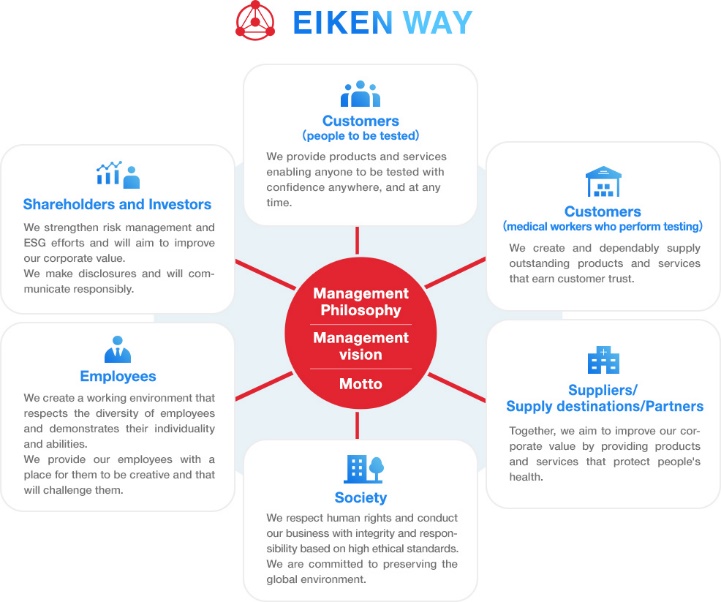
(Source: EIKEN CHEMICAL)
1-3 Market Environment
Domestic Market
The Japanese market of clinical reagents is a medical infrastructure market with a certain degree of stability, whose scale is said to be around 800 billion yen when the markets of devices and research are included, according to the statistical data of Japan Association of Clinical Reagents Industries (JACRI).
There has been a decline of demand due to the subsiding of novel coronavirus-related demand, but the number of tests is increasing in the medium/long term as the aging of the population progressed and preventive medicine (cancer screening and specific health checkups) advanced. On the other hand, unit prices tend to decline due to the price curtailment through the revision to medical treatment fees and the intensification of competition.
Each clinical test item requires expertise, and enterprises specialize in respective items, making competition dispersive, so a remarkable reform or natural selection of surviving enterprises does not occur easily in this market, although the market is growing slowly at an annual rate of 1-2%.
Overseas Market
It is said that the scale of the global market of in-vitro diagnostics was 80 to 100 billion dollars between 2024 and 2025, and the U.S. market is the largest. (Survey results by Eiken Chemical Co., Ltd.)
The overseas market is over 10 times larger than the domestic market. In developed countries, the number of tests is increasing as aging of population progresses. Furthermore, in emerging countries, the needs for medical services are expanding because of economic and income growth. As a result, the annual growth rate of overseas market is expected to be 5-6%.
However, main players are world-class companies, such as Roche, Abbott, Siemens, and Danaher, so it is indispensable to differentiate their products based on their unique technologies.
Fecal immunochemical test market
The global market for cancer diagnosis is expanding due to the global increase in the elderly population and the rise in the prevalence of cancer. The cancer diagnosis market is worth approximately 124.3 billion dollars, of which the colorectal cancer diagnosis market is worth approximately 16.3 billion dollars and the fecal immunochemical testing market is worth approximately 170 million dollars.
In addition to “lack of testing capacity due to a shortage of endoscopists,” “recognition of the high medical economic value of FIT,” and “increased recognition of the importance of health checkups (medical examinations) in emerging countries,” it is expected that the age range subject to a cancer screening test will broaden further in advanced countries.
The company provides colorectal screening tests in 56 countries around the world and already occupies 70% of the global market. The company has advantages such as “abundant evidence,” “development of excellent stool collection containers,” “hemoglobin stability,” “high accuracy control in fecal immunochemical tests,” and “provision of comprehensive support services based on extensive experience.”
In March 2026, the Ministry of Health, Labour and Welfare announced that the method of sampling feces once for a fecal immunochemical test in colorectal cancer screening will improve the ratio of people who undergo screening more than the method of sampling feces twice, and laid out a policy for switching from the method of sampling feces twice to the method of sampling feces once.
The company is examining its impact, but they plan to take some measures for improving the ratio of people who undergo screening, such as the increase of mail-based screening.
1-4 Business Description
1. What are Clinical Tests?
One type of clinical tests is the “Biological test” that directly examines the body using medical equipment such as X-ray, CT, MRI, electrocardiogram, and ultrasound. Another type of clinical tests is the “Laboratory test” that examines biological samples (specimens) obtained from people such as blood, urine/feces, and cells.
The company manufactures and sells reagents for the latter, supporting the diagnoses of infectious diseases, cancer, etc.
2. Major Products
EIKEN CHEMICAL mainly manufactures and sells the following types of reagents and medical devices.
As they deal with a wide range of reagents, they not only sell their in-house products but also purchase and sell products from other companies. The sales ratio of in-house products to other companies’ products is approximately 60:40. The gross profit margin is approximately 55% for in-house products and approximately 35% for other companies’ products.
Product Group | Sales | Sales Proportion |
Fecal immunochemical test (FIT) reagents | 13,470 | 32.1% |
Immunological and serological reagents (excluding FIT reagents) | 9,816 | 23.4% |
Urinalysis test strips | 4,623 | 11.0% |
Microbiological test reagents | 4,284 | 10.2% |
Clinical Chemistry test reagents | 579 | 1.4% |
Equipment/food and environment-related | 1,818 | 4.3% |
Molecular test-related (including devices) | 1,957 | 4.7% |
Medical devices and others (excluding Molecular test-related devices) | 5,348 | 12.8% |
Total sales | 41,899 | 100.0% |
*Results for the fiscal year ended March 2026. Unit: Million Yen
 | Fecal immunochemical test (FIT) reagents Fecal immunochemical test reagents and stool collection devices used for colorectal cancer screening Fecal immunochemical test reagents are their core products for which they secured a competitive advantage by developing fully automated analysis equipment based on immunological method for the first time in the world. |
 | Immunological and serological reagents (excluding FIT reagents) Reagents used for infectious diseases, hormone measurement, risk-stratified stomach cancer screening, etc. |
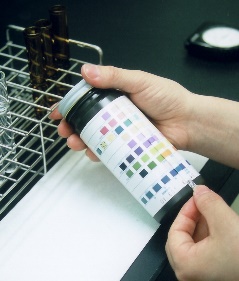 | Urinalysis test strips Reagents for urine test strips for examining multiple items, etc. Outside Japan, they formed a business alliance with Sysmex in 2017. |
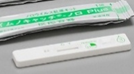 | Microbiological test reagents Reagents useful for diagnosis and treatment of infectious diseases caused by microorganisms, such as media and reagents for quick tests
|
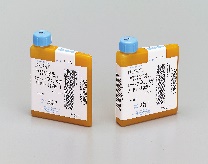 | Clinical Chemistry test reagents Reagents for automatic analysis equipment for measuring serum and urine components |
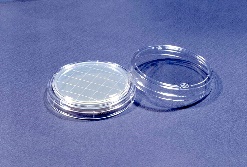 | Equipment/food and environment-related Devices and materials for tests for microorganisms that cause food poisoning and tests for grasping the pollution of the working environment, etc. |
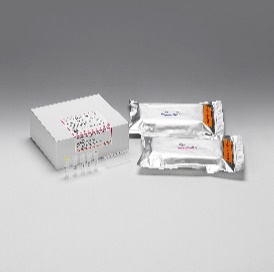 | Molecular test-related (including devices) Reagents for molecular testing based on the LAMP method, which was developed in house. The tuberculosis testing reagent based on the LAMP method (TB-LAMP) is recommended by WHO.
|
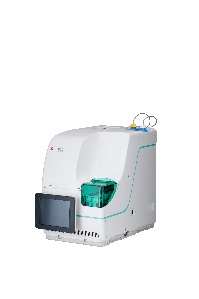 | Medical devices and others (excluding Molecular test-related devices) Automatic analysis equipment. The manufacturing of dedicated equipment using in-house reagents is outsourced. |
3. Sales structure
In Japan: They sell products via medical wholesalers to medical institutions. (Number of sales staff members in Japan is around 150.)
Overseas: They sell products via agencies to medical institutions.
1-5 Characteristics and Strengths
1) Focusing on research and development
About 200 R&D staff members concentrate on the development of products based on the technologies that have been accumulated for many years.
They boast the development capability, which allowed them to invent the gene amplification technology “LAMP method,” which is simple and speedy compared with the conventional PCR method.
By using this technology, they developed test agents for COVID-19 early, contributing to healthcare.
While putting importance on customer needs, they take measures for reducing burdens in healthcare services.
*Gene amplification technology
Since the number of genes found in a molecular test sample is extremely small, to detect genes, the targeted gene must be amplified first. Gene amplification technology, therefore, is crucially important for molecular testing.
2) Development of various types of products in various fields through alliance strategy
Clinical reagents are used for diverse diseases and items, so it is difficult for a single company to cover all of them. While most competitors concentrate on technologies and products at which they excel, but Eiken Chemical earn revenues stably and meet customer needs through the strategy of alliances with other companies as a general maker of clinical reagents.
1-6 ROE Analysis
| FY 3/17 | FY 3/18 | FY 3/19 | FY 3/20 | FY 3/21 | FY 3/22 | FY 3/23 | FY 3/24 | FY 3/25 | FY 3/26 |
ROE(%) | 10.0 | 8.3 | 10.3 | 9.9 | 12.9 | 14.3 | 12.1 | 5.6 | 5.0 | 8.5 |
Net Profit Margin | 8.77 | 7.45 | 9.64 | 9.67 | 13.04 | 14.46 | 13.26 | 6.58 | 5.50 | 8.85 |
Asset Turnover Ratio | 0.80 | 0.78 | 0.77 | 0.75 | 0.73 | 0.73 | 0.67 | 0.63 | 0.65 | 0.67 |
Leverage | 1.43 | 1.43 | 1.38 | 1.36 | 1.35 | 1.36 | 1.36 | 1.35 | 1.40 | 1.43 |
*Unit: %, times, x
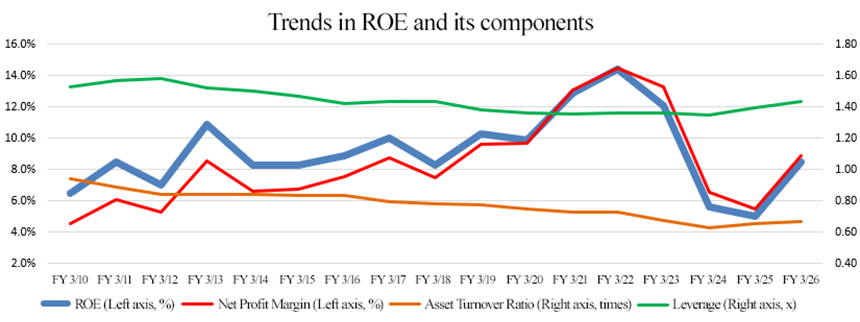
The ROE in FY 3/2026 exceeded 8%, which is generally said to be the value that should be targeted by Japanese enterprises, mainly due to the rise in the net profit margin through the posting of an extraordinary income. The net profit margin in FY 3/2027 is projected to be 4.9%, falling below 8% again. In order to maintain or increase ROE, it is indispensable to improve total asset turnover, which has been declining, while developing high value-added products, creating new businesses and markets, raising profit margin by reducing the ratios of cost of sales and SG&A expenses, and improving productivity.
1-7 Adopting a management approach that is conscious of the cost of capital and stock price
(1)Analysis of the current situation
As shown in [1-6 ROE Analysis], the company's ROE had been above 8% until the fiscal year ended March 2023, but ROE was less than 8% for 2 consecutive fiscal years in the fiscal year ended March 2024 and 2025. In the fiscal year ended March 2026, ROE exceeded 8%, but this is due to a temporary factor. Considering this situation and based on the fact that P/B ratio has temporary declined to the low 1x range, the Board of Directors is conducting an assessment of the current situation and discussing policies and specific initiatives for improvement.
(2)Efforts
1) Improvement of capital profitability
In order to improve their earning capacity and capital profitability, they will conduct ROIC-oriented business administration thoroughly, fortify their management system, and carry out capital measures for improving corporate value.
2) Return of earnings to shareholders
Positioning the return of earnings to shareholders as one of the most important management objectives, the company’s basic stance is to implement a stable dividend policy in consideration of strengthening the financial position and enriching internal reserves necessary for active business development.
In order to further enrich the return to shareholders, they aim to achieve “a total payout ratio of 50% or higher.”
3) Cash Allocation
Based on mainly the cash inflow from operating activities, they conduct strategic investment for enhancing their technological capability and accelerate inorganic growth, excluding M&A, and the reform of their product portfolio.
2. Fiscal Year Ended March 2026 Earnings Results
2-1 Overview of consolidated results
| FY 3/25 | Share | FY 3/26 | Share | YoY | Compared with the forecasts |
Sales | 40,539 | 100.0% | 41,899 | 100.0% | +3.4% | -0.7% |
Domestic | 29,829 | 73.6% | 30,442 | 72.7% | +2.1% | +1.0% |
Overseas | 10,710 | 26.4% | 11,457 | 27.3% | +7.0% | -4.9% |
Gross profit | 16,512 | 40.7% | 16,175 | 38.6% | -2.0% | -5.1% |
SG&A | 13,512 | 33.3% | 13,255 | 31.6% | -1.9% | -3.9% |
Operating income | 2,999 | 7.4% | 2,919 | 7.0% | -2.7% | -10.2% |
Ordinary income | 3,198 | 7.9% | 2,844 | 6.8% | -11.1% | -8.3% |
Net income | 2,228 | 5.5% | 3,708 | 8.8% | +66.5% | -1.6% |
*Unit: million yen.
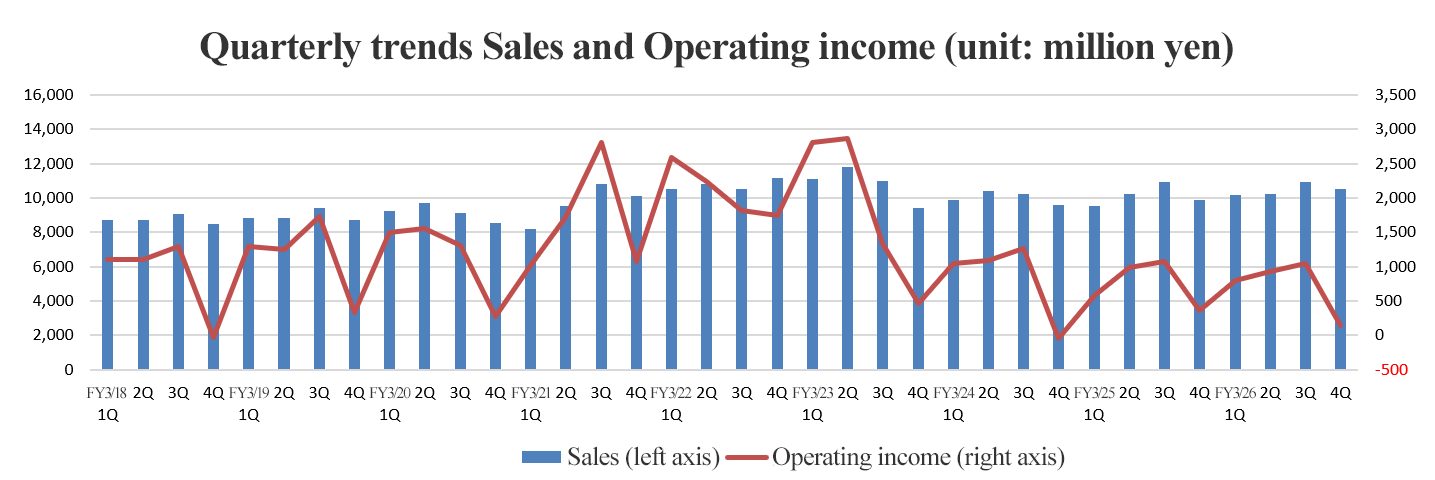
Sales grew but operating income decreased. Both sales and profit fell below the forecasts.
Sales grew 3.4% year on year to 41.8 billion yen. The performance in Japan was robust, and outside Japan, fecal immunochemical test reagents and medical devices sold well.
Operating income decreased 2.7% year on year to 2.9 billion yen. Gross profit declined 2.0% year on year, as the cost of sales increased for distribution and procurement of raw materials although sales grew and SGA decreased 1.9% year on year. Net income increased 66.5% year on year to 3.7 billion yen. A gain from transfer of equity interests in a Chinese consolidated subsidiary amounting to 2 billion yen was posted as an extraordinary income.
Both sales and profit fell below the forecasts, as the financial aid for supporting measures against infectious diseases, such as tuberculosis, shrank in the wake of the closure of USAID, which managed overseas aid, and the sales of reagents for microbiological testing were smaller than assumed.
(1) Sales by product group
| Product Group | FY 3/25 | FY 3/26 | YoY | Forecast ratio |
(a) | Fecal immunochemical test (FIT) reagents | 12,941 | 13,470 | +4.1% | -1.2% |
(b) | Immunological and serological reagents (excluding FIT reagents) | 9,599 | 9,816 | +2.3% | +1.4% |
(c) | Urinalysis test strips | 4,620 | 4,623 | +0.1% | -2.5% |
(d) | Microbiological test reagents | 4,501 | 4,284 | -4.8% | -12.6% |
(e) | Biochemical test reagents | 573 | 579 | +1.1% | -5.1% |
(f) | Equipment/food and environment-related | 1,960 | 1,818 | -7.2% | -2.3% |
(g) | Molecular test-related (including devices) | 1,980 | 1,957 | -1.2% | -19.8% |
(h) | Medical devices and others (excluding Molecular test-related devices) | 4,362 | 5,348 | +22.6% | +23.5% |
| Total sales | 40,539 | 41,899 | +3.4% | -0.7% |
*Unit: million yen.
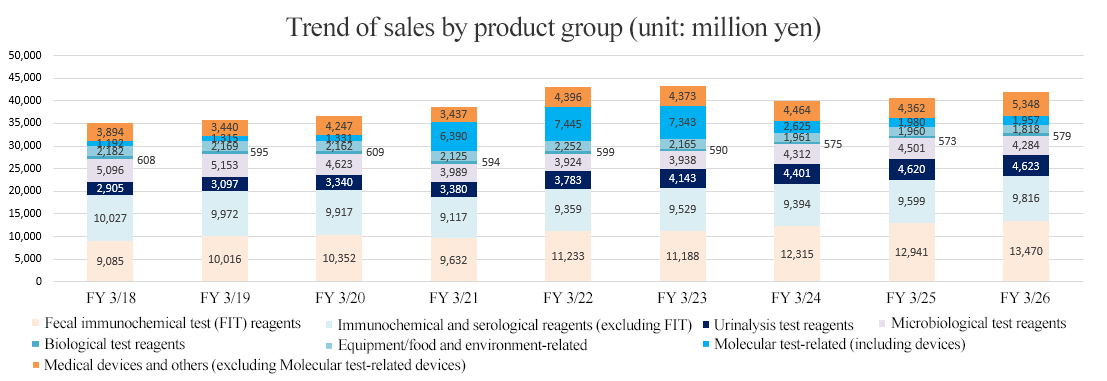
<Increased in sales>
・Fecal immunochemical test (FIT) reagents
・Immunochemical and serological reagents (excluding FIT)
・Urinalysis test reagents
・Biological test reagents
・Medical devices and others (excluding Molecular test-related devices)
The sales of fecal immunochemical test reagents grew inside and outside Japan. The sales of medical devices increased by double digits, exceeding the forecast significantly, thanks to the good performance of equipment for urine examination, fecal immunochemical tests, and immunoserological tests.
<Decreased in sales>
・Microbiological test reagents
・Equipment/food and environment-related
・Molecular test-related (including devices)
Regarding reagents for microorganism tests, the sales of POCT products and reagents for drug susceptibility tests declined, falling below the forecast. In the device and food environment-related business, they refrained from releasing unprofitable testing devices.
In the gene-related business, they received temporary patent fees in the first half of the fiscal year, but the sales of reagents for tuberculosis screening (TB-LAMP) for Nigeria decreased, falling below the forecast, due to the closure of USAID.
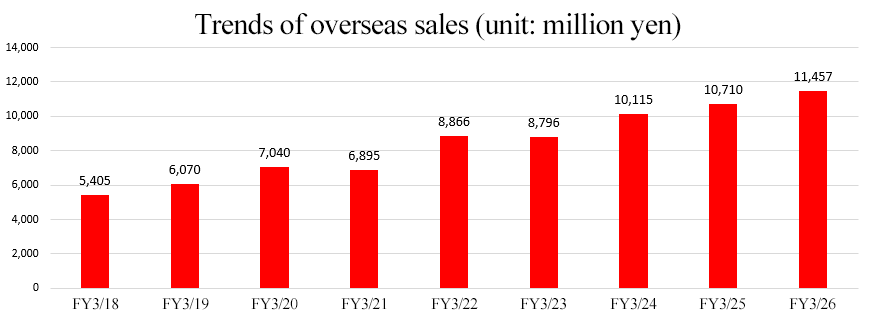
(2) Overseas trends
| FY 3/25 | FY 3/26 | YoY | Compared with the forecasts |
Overseas sales | 10,710 | 11,457 | +7.0% | -4.9% |
Americas | 2,430 | 2,516 | +3.6% | -0.6% |
EMEA | 4,282 | 4,774 | +11.5% | -9.2% |
APAC | 3,997 | 4,165 | +4.2% | -2.2% |
*Unit: million yen.
* Americas
Sales grew, but fell below the forecast.
Despite a temporary decline in shipment due to the timing of replacement of equipment, etc., there remains an upward trend of demand thanks to the widening of the subject age range of fecal immunochemical tests, the popularization of endoscopic triage, and the shift from guaiac-based testing to immunochemical testing.
*EMEA
Sales grew, but fell below the forecast.
The sales of fecal immunochemical test reagents and devices increased.
They received repeat orders for national colorectal cancer screening with fecal immunochemical tests in England and France. In England, the screening is scheduled to be started in July 2026. In France, it was started in January 2026. In Italy, too, sales increased due to the widening of the subject age range. In South Africa, too, sales grew as they received an order from a leading testing center. On the other hand, the sales in Israel dropped due to the worsening of the Middle East situation. The sales of TB-LAMP decreased due to the closure of USAID.
*APAC
Sales grew, but fell below the forecast.
The sales of fecal immunochemical test reagents increased.
In South Korea, they saw a recovery from the strike of medical doctors in the previous fiscal year. The sales of urine test reagents for overseas dropped, but the sales of equipment for urine tests increased.
2-2 Financial position
◎ Major BS
| End of March, 2025 | End of March, 2026 | Increase/ Decrease |
| End of March, 2025 | End of March, 2026 | Increase/ Decrease |
Current assets | 31,532 | 32,040 | +508 | Current liabilities | 14,376 | 14,636 | +260 |
Cash and deposits | 9,873 | 10,943 | +1,070 | Notes and accounts payable trade | 8,489 | 7,460 | -1,029 |
Notes and accounts receivable-trade | 11,741 | 11,399 | -342 | Noncurrent liabilities | 4,397 | 3,986 | -411 |
Inventory | 8,500 | 7,991 | -509 | Long-term interest-bearing debt | 3,000 | 2,650 | -350 |
Noncurrent assets | 30,840 | 30,616 | -224 | Total liabilities | 18,773 | 18,622 | -151 |
Property, plant and equipment | 22,121 | 23,338 | +1,217 | Net assets | 43,598 | 44,034 | +436 |
Intangible assets | 670 | 332 | -338 | Retained earnings | 34,700 | 30,884 | -3,816 |
Investment and other assets | 8,048 | 6,945 | -1,103 | Treasury stock | -6,756 | -2,242 | +4,514 |
Total assets | 62,372 | 62,657 | +285 | Total liabilities and net assets | 62,372 | 62,657 | +285 |
*Unit: million yen. Accounts receivable includes electronically recorded monetary claims, and accounts payable includes electronically recorded debt.
Total assets grew 200 million yen from the end of the previous fiscal year to 62.6 billion yen, as cash and deposits increased and property, plant and equipment increased through the construction of new research buildings, while investments and other assets, including long-term deposits, decreased.
Total liabilities declined 100 million yen from the end of the previous fiscal year to 18.6 billion yen.
Net assets rose 400 million yen from the end of the previous fiscal year to 44.0 billion yen due to a decrease in retained earnings and treasury stock, etc.
As a result, equity ratio increased 0.8 points from the end of the previous fiscal year to 70.1%.
2-3 Topics
◎ Regarding the change in the interval of fecal immunochemical tests conducted by the Ministry of Health, Labour and Welfare
On March 23, 2026, the Ministry of Health, Labour and Welfare released a document titled “Regarding Colorectal Cancer Screening” after holding sessions for discussing ideal cancer screening.
The following findings were mentioned in the section “Items to discuss: the interval of fecal immunochemical tests and the number of times of sampling feces (scientific knowledge evaluated in the guidelines).”
〇 Regarding the number of times of sampling feces for fecal immunochemical tests
・In the meta-analysis of sensitivity and specificity of the screening for Advanced Neoplasia (AN), which is a general term for cancer and malignant polyps, and colorectal cancer, there was no statistically significant difference between the method of sampling feces once and the method of sampling feces twice.
・In the study comparing the method of sampling feces once and the method of sampling feces twice in the ratio of subjects who have submitted a sample (directly or by mail to a medical institution), the method of sampling feces once showed a significantly higher ratio.
Accordingly, the ministry gave a proposal for switching from the method of sampling feces twice and the method of sampling feces once.
They are carefully discussing the impact of this direction on their business. Any clear guidelines have not been issued, but when guidelines are issued, they will compare them with simulation results, and report their appropriate measures, business outlook, etc. The Ministry of Health, Labour and Welfare announced the above-mentioned policy while emphasizing that the method of sampling feces once improved screening rate (submission rate) significantly. Since the rise in screening rate is an important goal for the company, too, so they will make efforts to diffuse and expand mail-based screening, etc.
3. Fiscal Year Ending March 2027 Earnings Estimates
3-1 Estimate of consolidated results
| FY 3/26 | Share | FY 3/27 (Est.) | Share | YoY |
Sales | 41,899 | 100.0% | 42,000 | 100.0% | +0.2% |
Domestic | 30,442 | 72.7% | 30,210 | 71.9% | -0.8% |
Overseas | 11,457 | 27.3% | 11,790 | 28.1% | +2.9% |
Gross profit | 16,175 | 38.6% | 16,350 | 38.9% | +1.1% |
SG&A | 13,255 | 31.6% | 13,280 | 31.6% | +0.2% |
Operating income | 2,919 | 7.0% | 3,070 | 7.3% | +5.2% |
Ordinary income | 2,844 | 6.8% | 2,900 | 6.9% | +2.0% |
Net income | 3,708 | 8.8% | 2,070 | 4.9% | -44.2% |
*Unit: million yen.
Sales and operating income are expected to grow.
It is forecast that sales will increase 0.2% year on year to 42 billion yen and operating income will rise 5.2% year on year to 3 billion yen.
It is projected that the performance in Japan will be almost unchanged from the previous year. Regarding overseas performance, sales of fecal immunochemical test reagents are expected to continue to grow. As they will strive to improve profitability, gross profit margin and operating margin are expected to rise 0.3 points year on year.
They plan to pay a dividend of 58.00 yen/share like in the previous fiscal year. The expected payout ratio is 92.2%.
3-2 Estimate of sales
(1) Outlook for sales of each product group
Product Group | FY 3/26 | FY 3/27 (Est.) | YoY |
Fecal immunochemical test (FIT) reagents | 13,470 | 14,220 | +5.6% |
Immunological and serological reagents (excluding FIT reagents) | 9,816 | 10,000 | +1.9% |
Urinalysis test strips | 4,623 | 4,650 | +0.6% |
Microbiological test reagents | 4,284 | 4,580 | +6.9% |
Biochemical test reagents | 579 | 640 | +10.4% |
Equipment/food and environment-related | 1,818 | 1,620 | -10.9% |
Molecular test-related (including devices) | 1,957 | 1,680 | -14.2% |
Medical devices and others (excluding Molecular test-related devices) | 5,348 | 4,610 | -13.8% |
Total sales | 41,899 | 42,000 | +0.2% |
*Unit: million yen.
Fecal immunochemical test reagents kept selling well. The sales of medical devices, which grew significantly in the previous fiscal year, dropped.
4. Management Plan 2030
In the fiscal year ended March 2026, the first year of the medium-term management plan, the company achieved both sales and profit growth (net income), but the company sincerely acknowledges that both sales and profit fell slightly short of the target. Furthermore, given the significant changes in the external environment, including the situation in Iran, the current management determined that it was necessary to review and refine the existing management scheme, “EIKEN ROAD MAP 2030.”
Consequently, the company has re-established the roadmap for achieving “EIKEN Vision 2030,” which represents the company’s desired long-term vision, in “Management Plan 2030” for the five-year period until the fiscal year 2030.
4-1 Results Under the Current Executive Structure
The current executive structure, which was introduced in the fiscal year ended March 2026, has sought to accelerate decision-making by expanding and delegating the authority of executive officers and restructuring the management decision-making process.
Under this structure, the reorganization of the product portfolio has moved into the implementation phase, and the company has concentrated its investments on its core product group, profitable product group, and promising product group. In addition, the company is advancing evaluations and decisions aimed at “improving ROIC,” one of the key priorities of the current management, as well as progress management for ROIC-based management.
In addition to focusing on organizational and cultural reforms through initiatives such as the President’s Caravan and exchange events, as well as revitalizing the workforce by revising human resource systems, the company has worked to enhance market awareness and brand competitiveness by strengthening external communications and fully implementing brand development initiatives.
The company believes that, over the course of approximately nine months, it has successfully shifted its management approach toward the one that ensures plans are carried out thoroughly.
4-2 The Role of the 2030 Management Plan
Guided by its corporate philosophy, “EIKEN WAY,” which states, “Protect the health of the public through health care services,” the company upholds “EIKEN Vision 2030,” which represents their aspirations.
While there are no changes to “EIKEN Vision 2030” or the direction of its business domains and strategies, the company has reformulated its management plan for the five years until the fiscal year 2030 as “Management Plan 2030.” Going forward, the company plans to thoroughly review the following fiscal year's plan only after successfully achieving its annual targets each year.
*For details on “EIKEN Vision 2030,” please refer to “Reference 1: ‘EIKEN Vision 2030’.”
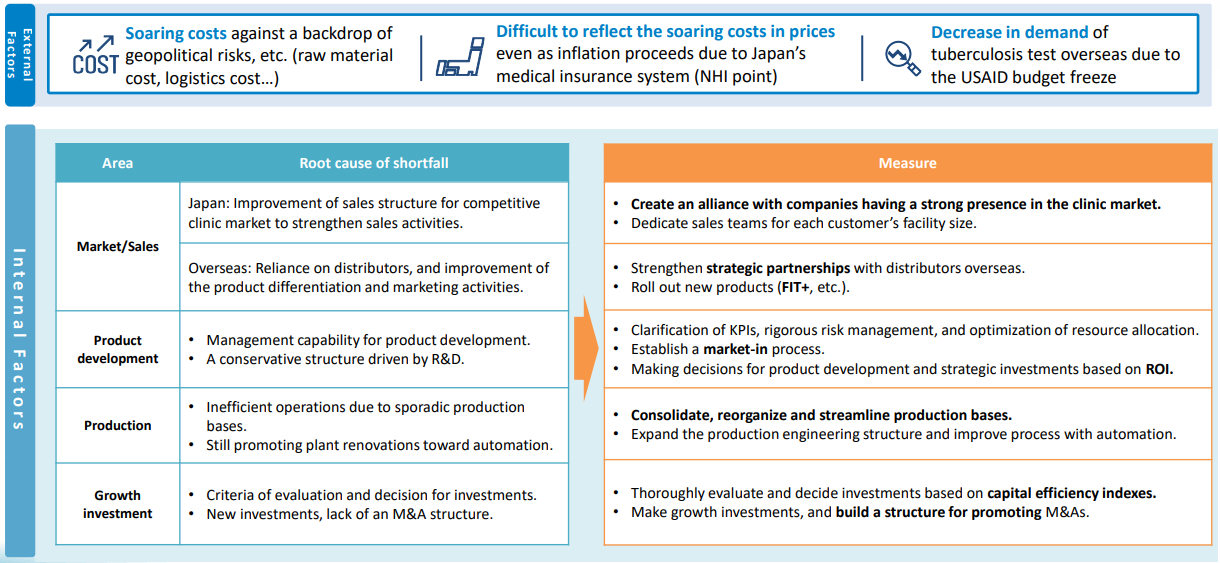
4-3 Background, Challenges, and Countermeasures for the Revised Management Plan
The company has classified the background for the revision of its management plan into external and internal factors.
In particular, it identified and analyzed the internal factors as the root causes of the failure to meet its previous targets.
The company has identified key challenges, including its sales structure for the domestic clinic market, its dependence on distributors in overseas markets, weaknesses in product development management capabilities, inefficient production systems, and criteria for making growth investment decisions, and has outlined specific measures to address these issues.
(Source: EIKEN CHEMICAL)
4-4 Key Strategies
To achieve sustainable growth and improved profitability, the company has identified the following as its key strategies: “strengthening the profitability of domestic businesses, accelerating the growth of overseas businesses, and achieving inorganic growth through alliances and M&A.”
(1) Strengthening the Profitability of Domestic Businesses
This is viewed as the foundation for improving ROIC. Specific measures are as follows:
・Promoting the sales of high-margin products
・Organizing low-margin products
・Concentrating R&D investment on high-profitability and high-growth areas
As part of its efforts to restructure its product portfolio, the company has classified its products into four quadrants based on two criteri market growth potential and business profitability. While it will concentrate investment on its core, profitable, and promising products to strengthen its profitability, it will proceed with the “review and organization” of its low-profitability products.
.
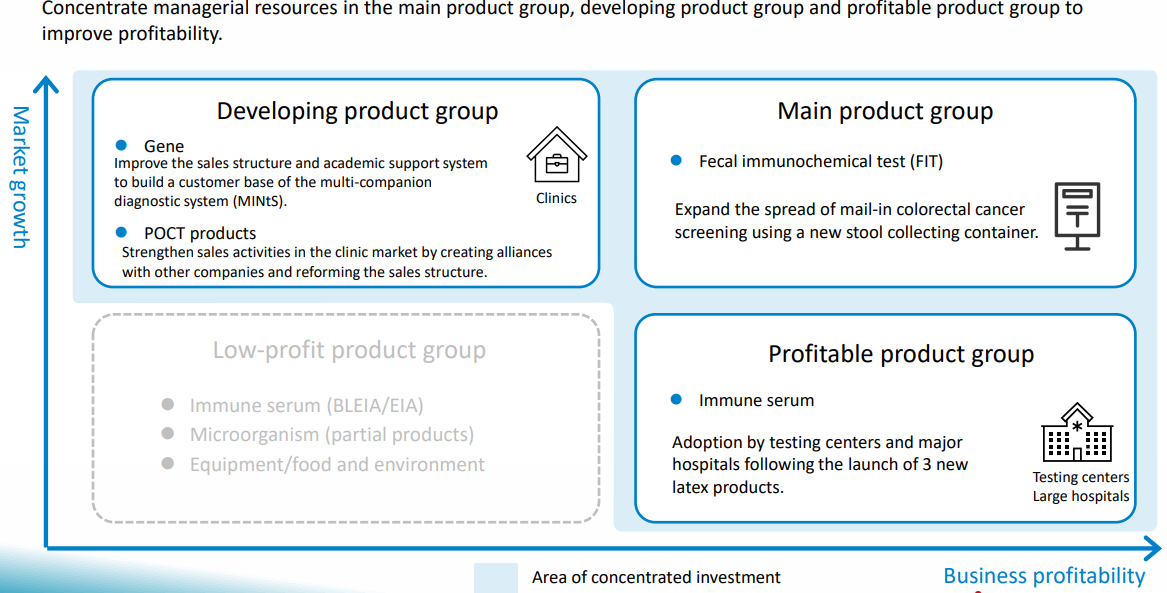
◎Core Products
For fecal immunochemical testing (FIT), the company aims to promote the adoption of mail-in screening for colorectal cancer and improve screening rates by utilizing a new stool collection container designed to withstand all-year-round weather conditions and adapt to transportation requirements.
◎Promising Products
In the genetic field, the company will strengthen its sales and academic support structures to build a customer base for “MINtS,” a multi-companion diagnostic system.
For POCT products, they will pursue alliances with other companies and improve our sales capabilities to the clinic market by revamping and strengthening the sales system.
◎ Profitable Products
For immuno-serological testing reagents, the company aims to secure adoption by testing centers and major hospitals through the launch of three new latex-based products.
2) Accelerating Growth of Overseas Business
This will be the core of their sustainable growth. Key initiatives are as follows:
・Market expansion through the utilization of FIT
・Strengthening sales promotion in the veterinary diagnostics market for immune-serological reagents and developing new markets through the introduction of new products
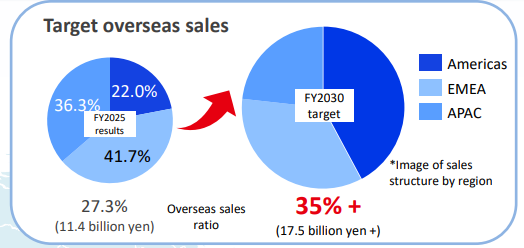
The current overseas sales ratio is 27.3%. The company aims to increase this to 35% or higher by the fiscal year 2030.
The Americas will serve as the primary driving force for growth. The company will work on revising the pricing structure for FIT through its regulatory strategy and continuing to expand FIT into South America. In EMEA, the company will focus on developing the FIT market in major European countries and conducting tuberculosis screening in Africa by visiting each site.
In the APAC region, the company will continue to strengthen its infrastructure development. In addition to gathering data on market needs in China, the company is considering establishing a representative office in Southeast Asia. It will work to build relationships with local KOLs (Key Opinion Leaders: physicians and experts with high levels of expertise in specific medical or scientific fields who have significant influence on decision-making in clinical settings, academia, and the pharmaceutical industry) and develop markets in collaboration with local distributors.
The company will strengthen its three overseas bases, EIKEN Medical America, its European branch, and Eiken Pharmaceutical, to advance its globalization efforts.
(Source: EIKEN CHEMICAL)
4-5 Development Pipeline
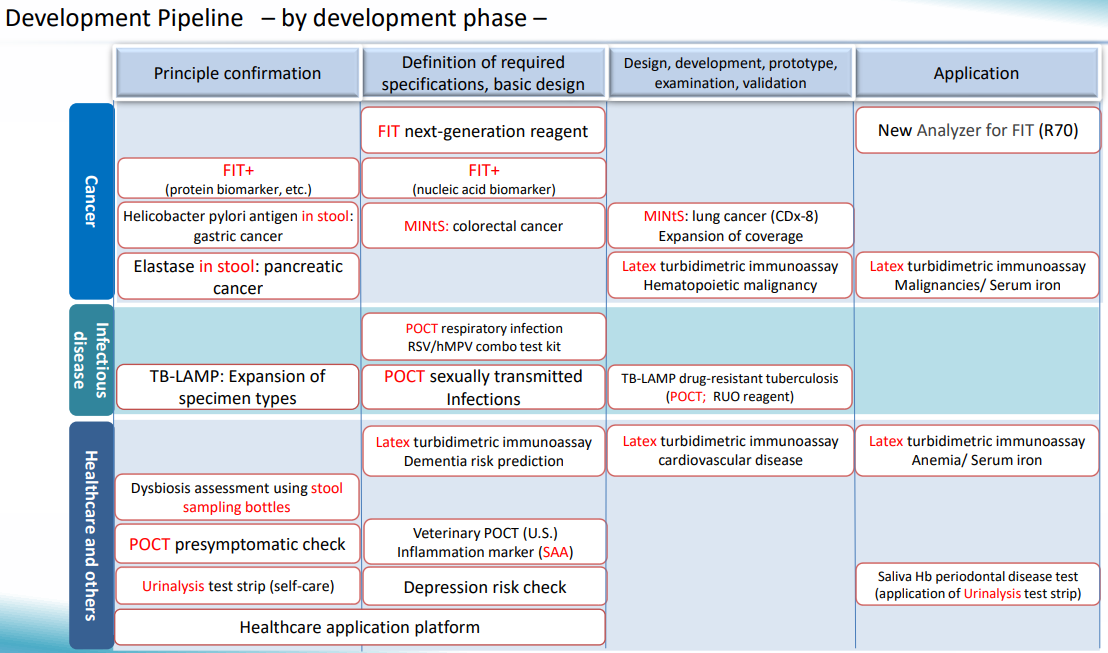
A robust development pipeline is essential for the promotion of key strategies.
Particularly important are “fecal immunochemical test FIT+,” “Stool cancer markers,” “MINtS,” “latex reagents,” and “POCT products.”
By applying these technologies, the company is investing to expand into new areas within the healthcare sector, such as “dementia risk diagnosis," "pre-symptomatic health monitoring," and "depression risk screening."
(Source: EIKEN CHEMICAL)
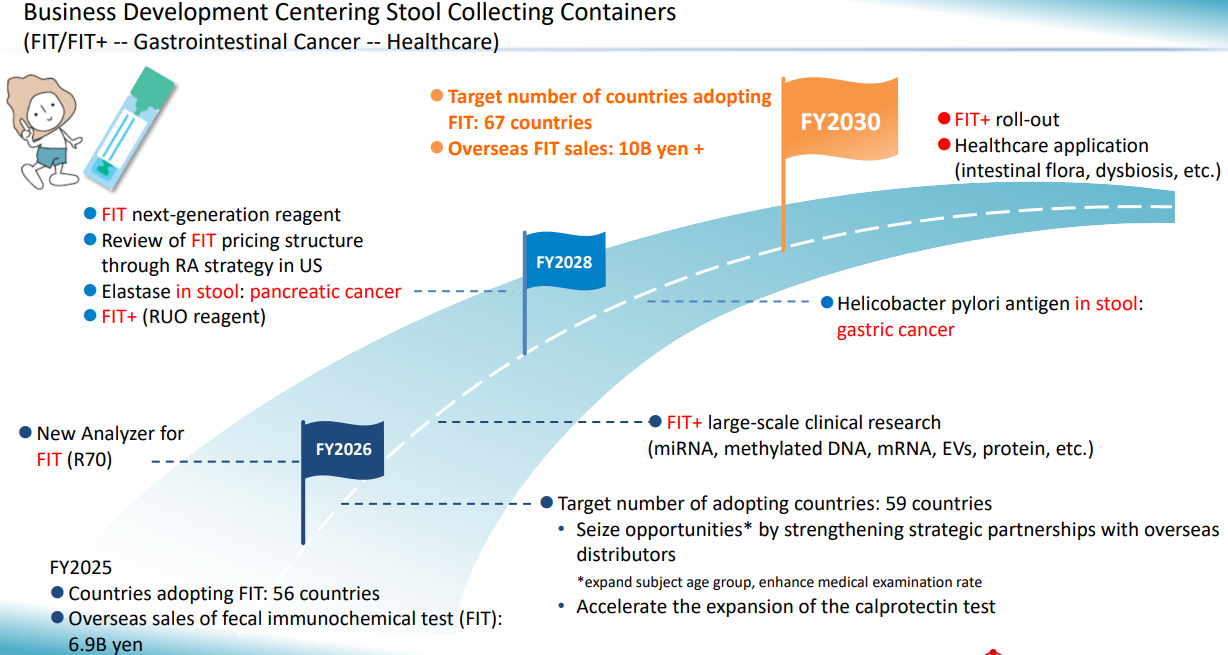
While FIT remains the company’s main product pipeline, the stool collection containers developed using its core technology can be applied not only to colorectal cancer, but also to a wide range of areas, including gastrointestinal cancers and other healthcare fields. As a result, the company plans to expand its business with these stool collection containers as its core product.
The company aims to expand from “56 countries adopting FIT and overseas FIT sales of 6.9 billion yen” in fiscal 2025 to “67 countries adopting FIT and overseas FIT sales of over 10 billion yen” by fiscal 2030.
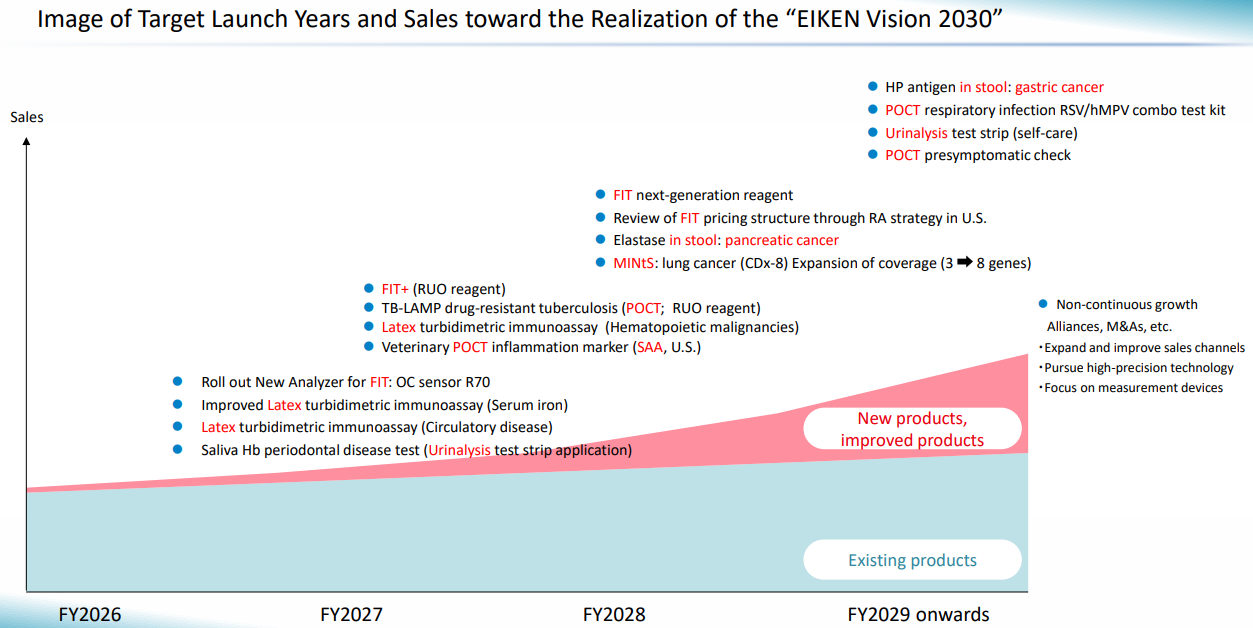
Starting with the “OC Sensor R70” fecal immunochemical testing device scheduled for launch in the fiscal year 2026, the company will work on launching next-generation FIT reagents, revising the FIT pricing structure through regulatory strategies in the U.S., and detecting cancer using stool markers.
While steadily building on their existing product lineup, the company will significantly increase sales of these new and improved products. In addition, it will pursue “discontinuous growth through alliances and M&A,” which is one of its key strategies.
 |
 |
(Source: EIKEN CHEMICAL)
4-6 Capital Policy (Cash Allocation)
As part of the cash allocation plan for the five years until the fiscal year 2030, the company will use mainly the cash inflow from operating activities to make strategic investments aimed at strengthening its technological capabilities, thereby accelerating non-linear growth excluding M&A and the transformation of its product portfolio.
The total payout ratio for shareholder returns will continue to be targeted at 50% or higher.
Capital investments aimed at supporting sustained growth—such as factory consolidation—have largely been completed by the fiscal year 2025, and going forward, they will focus on steady, routine investments centered on equipment maintenance and replacement.
4-7 ROIC Management
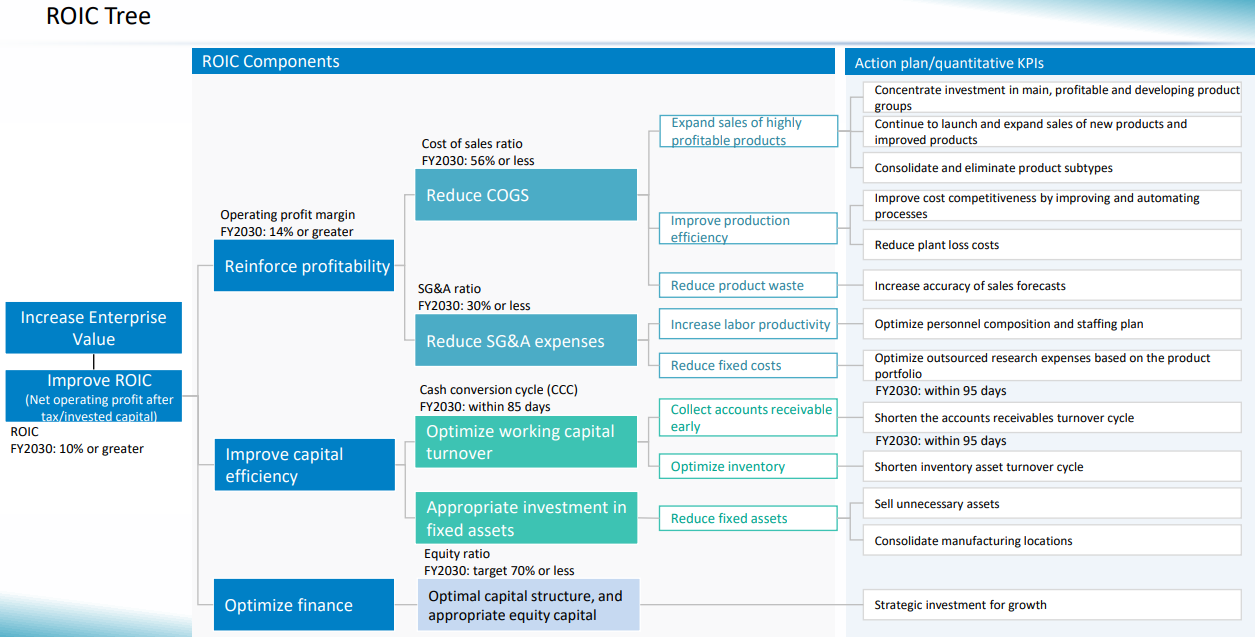
Regarding ROIC, one of the most critical KPIs, they target an ROIC of “10% or higher by the fiscal year 2030,” and will continue to rigorously pursue ROIC-driven management to achieve this goal.
The ROIC tree has been created, with its components clearly defined and broken down into action plans and quantitative KPIs. With understanding from all employees, it is being operated as part of the goal management system.
(Source: EIKEN CHEMICAL)
4-8 Financial KPIs
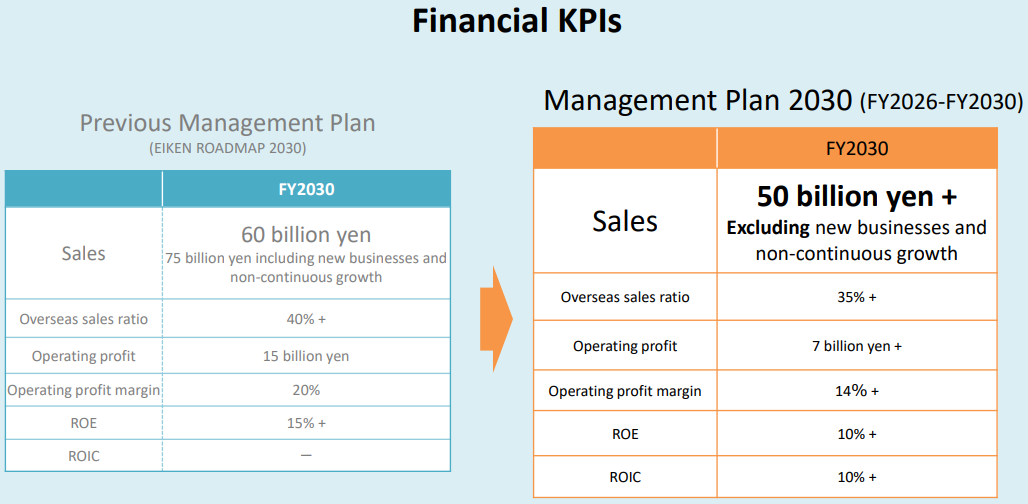
Under the previous business plan, the company aimed to achieve “sales of 60 billion yen, or 75 billion yen including new businesses and inorganic growth,” but has revised this to “sales of 50 billion yen or more.” This figure does not include new businesses or non-linear growth, which the company views as potential drivers for exceeding the forecast.
Other targets include “an overseas sales ratio of 35% or higher, an operating income of 7 billion yen or more, an operating margin of 14% or higher, an ROE of 10% or higher and an ROIC of 10% or higher.”
While these targets include some challenging goals, they are set at levels that allow for steady progress toward achievement.
(Source: EIKEN CHEMICAL)
4-9 Promotion of Sustainability Strategy
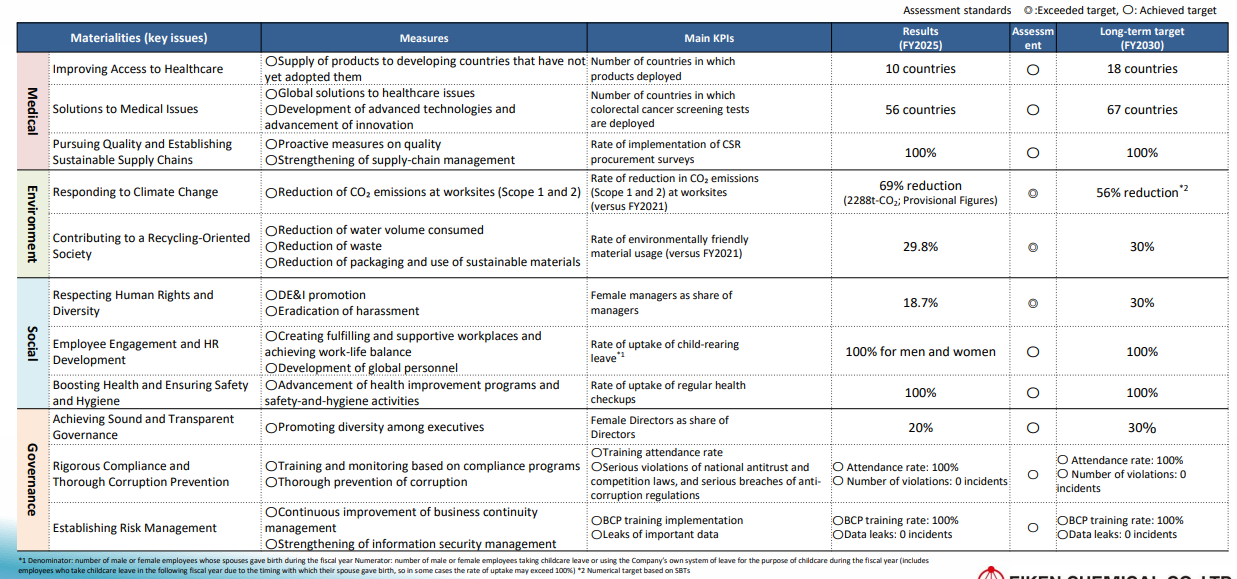
In the areas of healthcare, environment, society, and governance, the company has defined its vision, material issues, and KPIs, aiming to contribute to solving social issues and achieving sustainable growth by meeting these targets.
(Source: EIKEN CHEMICAL)
5. Interview with President Segawa
We interviewed the President and CEO, COO Yuji Segawa about the background and challenges surrounding the formulation of the “Management Plan 2030,” as well as his message to shareholders and investors.
Q: Please explain the background behind the formulation of the new “Management Plan 2030.”
As a result of various initiatives we have implemented over the past nine months under our new management execution structure, we believe we have achieved positive results and have generally met our targets.
At the same time, significant changes have occurred in the external environment, including the closure of USAID due to a policy change by the U.S. government, the situation in Iran, and the resulting increase in various costs. In addition, internal challenges have emerged, such as the fact that the development of the clinic market did not proceed as anticipated.
Therefore, in order to achieve our vision, “EIKEN Vision 2030,” we determined that it is necessary to revise the management plan announced four years ago and chart a new course under the current executive structure. Consequently, we have formulated the “Management Plan 2030.”
Q: You have listed measures aimed at resolving issues arising within the company. Please explain a few of them.
In terms of sales, we aim to penetrate the domestic clinic market by forming alliances with other companies. Additionally, we will implement a more tailored sales approach by assigning dedicated sales representatives based on facility size.
In terms of product development, we will shift our focus from a technology-driven approach to prioritizing market needs, and enhance profitability through ROI-conscious investments.
Q: Could you please explain the numerical targets set in the “Management Plan 2030”?
The previous business plan set a goal of achieving “sales of 60 billion yen, or 75 billion yen including new businesses and inorganic growth”; however, due to significant changes in the external environment, we have revised this to “sales of 50 billion yen or more.” We have not included figures that account for new businesses or inorganic growth, as we view these as potential drivers for exceeding the forecast in the future.
In addition, we aim to achieve “an overseas sales ratio of 35% or higher, an operating income of 7 billion yen or more, an operating income margin of 14% or higher, an ROE of 10% or higher and an ROIC of 10% or higher.” While these targets include some challenging goals, these are numerical targets that we can steadily work toward achieving.
The key to achieving these numerical targets lies in expanding the FIT product line and developing our business with a focus on stool collection containers.
The stool collection container developed using our core technology is a major strength and key feature of our company, as it can be widely applied not only to colorectal cancer, but also to gastrointestinal cancers and a wide range of applications in the healthcare sector. The explanatory materials of “Management Plan 2030” outline our roadmap toward 2030, and we hope you will certainly understand the direction we are pursuing.
(Source: EIKEN CHEMICAL)
Q: Finally, could you please provide a message to shareholders and investors?
As President, my mission is to transform our company into an organization that fosters a culture of embracing challenges, and to enhance our profitability and corporate value through ROIC-based management involving all staff. Under this mission, our new management structure has achieved tangible results over the past nine months, including faster decision-making, the rigorous implementation of ROIC-based management, and the enhancement of employee engagement and motivation.
Under our newly formulated “Management Plan 2030,” we will work swiftly and positively toward management transformation.
We hope you will continue to support us in our future development and growth.
6. Conclusions
In “Management Plan 2030,” they aim to achieve “sales of over 50 billion yen, a ratio of overseas sales of over 35%, an operating income of over 7 billion yen, an operating income margin of over 14%, an ROE of over 10% and an ROIC of over 10%” by FY2030. In order to achieve these targets, it is essential to increase the fecal immunochemical test (FIT) and operate business focused on stool collection devices. Needless to say, the FIT market is expected to grow further, through the shift from guaiac-based testing to immunochemical testing, the expansion of the subject age range of colorectal cancer screening around the world, etc. In addition, their stool collection devices can be used not only for colorectal cancer, but also for gastrointestinal cancers and so on broadly in the healthcare field. This is a remarkable strength and feature, so stool collection devices are considered as a strong growth driver for achieving the goal in FY 2030.
In “Management Plan 2030,” they plan to release new products in a broad range of fields, so we have high expectations for its progress.
<Reference 1:“EIKEN VISION 2030”>
In “EIKEN Vision 2030,” they defined their ideal state in 2030.
(1)-1 Business strategy: the priority business fields
While the current domain remains as its core business, the company has also set three focus business areas: 1) Contribution to cancer prevention and treatment, 2) Contribution to the eradication and control of infectious diseases, and 3) Provision of products and services useful for health care.
1) Contribution to cancer prevention and treatment
The company has focused more on prevention and early detection so far, contributing to the reduction of mortality and the suppression of medical expenses.
On the other hand, selecting appropriate treatment is essential due to the significant medical expenses of cancer treatments. In addition to the prevention and early detection of cancer, to respond to these medical issues, the company aims to further reduce the mortality rate from cancer by developing and providing a testing system that covers the selection of therapeutic drugs and the determination of treatment efficacy.
2) Contribution to the eradication and control of infectious diseases
As the countermeasures against threatening infectious diseases, the company will boost its product line-up and develop global molecular testing systems for tuberculosis, malaria, etc. In addition, by developing a simpler, faster, and more accurate infectious disease diagnosis system that can be used by anyone anywhere, the company wants to contribute to increasing access to medical care.
3) Provision of products and services useful for health care
To extend healthy lifespan expectancy, the company will expand remote clinical system and at-home self-testing areas and develop them into healthcare using mobile devices.
(1)-2 Advancement of Sustainable Management
The company will promote sustainable strategies on business activities in harmony with the global environment and a vibrant corporation making use of employee’s talent.
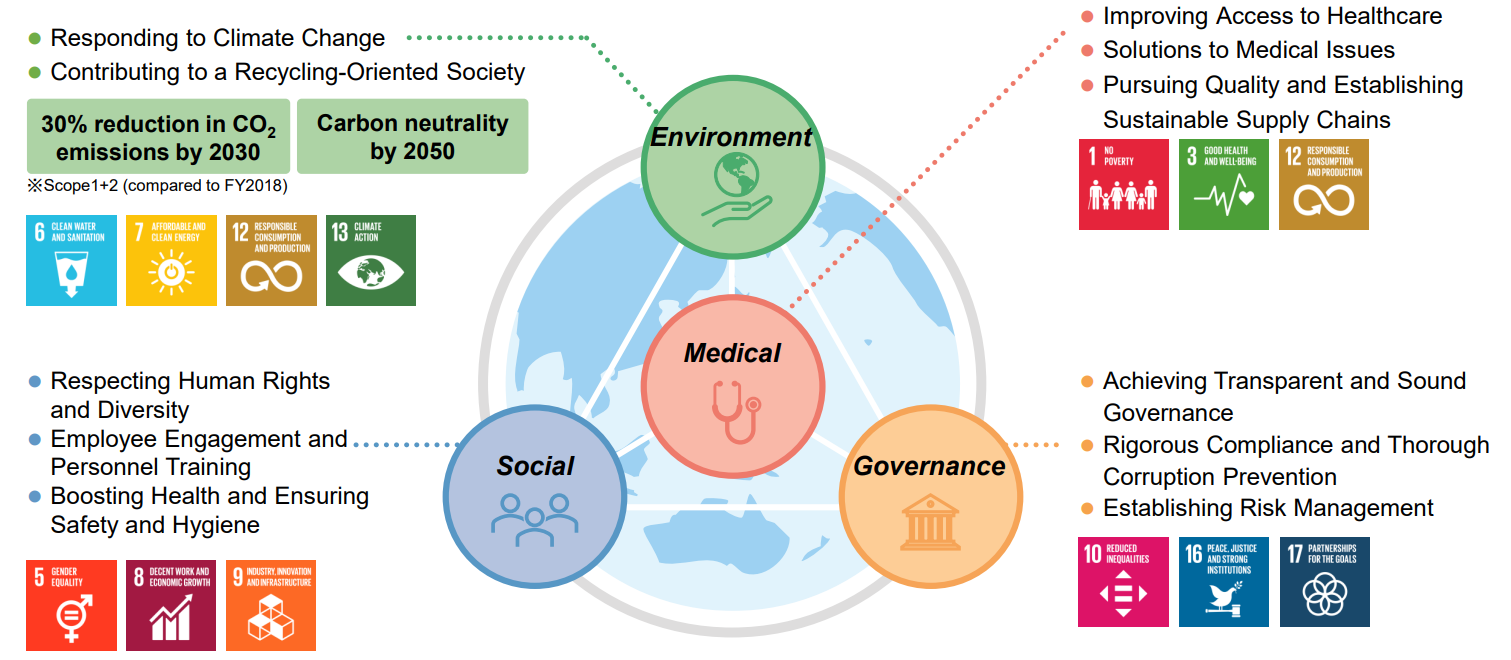
To realize a sustainable society, 11 materialities to be prioritized were identified, and specific action plans were disclosed. Through resolving social issues, the company will aim to achieve the further enhancement of corporate value and the realization of a sustainable society.
Materialities and KPI in detail: https://www.eiken.co.jp/sustainability/eiken#03
(Source: EIKEN CHEMICAL)
<Reference 2: Regarding Corporate Governance>
◎ Organization type, and the composition of directors and auditors
Organization Type | Company with a nominating committee and others |
Directors | 10, including 7 outside ones (Including 2 females) |
Nominating Committee | 3, including 3 outside ones |
Compensation Committee | 3, including 3 outside ones (Including 1 female) |
Audit Committee | 4, including 4 outside ones (Including 2 females) |
◎ Corporate Governance Report
Last updated: submitted on June 25, 2025
<Basic Policy>
Our policy for corporate governance is based on our management philosophy, management vision, and motto.
*Management philosophy
We protect the health of people through healthcare services.
*Management vision
In order to protect the health of people, EIKEN Group offers reliable products and services as a pioneer in checkups, to improve its corporate value.
*Motto
“EIKEN” winning trust with quality and growing with technology
To improve our corporate value by enhancing the soundness, speed, and transparency of our business administration, we are enriching our corporate governance while emphasizing the viewpoint of shareholders and recognizing it as an important managerial mission.
Our company has adopted a corporate structure that has a nominating committee, separating the business execution function and the supervisory function of the management. Important items regarding the basic policy for business administration are determined through the deliberation of the board of directors, and business execution is conducted swiftly and smoothly under the appropriate chain of command, in accordance with our in-company regulations and rules.
<Reasons for Non-compliance with the Principles of the Corporate Governance Code (Excerpts)>
The company has implemented every principle detailed in the Corporate Governance Code.
Disclosure Based on Each Principle of the Corporate Governance Code (Excerpts)
Principles | Disclosure content |
[Principle 1-3 Objective of Capital Policy] | In order to ensure the sustainable maintenance and enhancement of shareholder value, our company has a basic capital policy of improving capital efficiency and providing stable shareholder returns. When implementing capital policies that may result in changes in controlling interest or large-scale dilution, the Board of Directors will thoroughly deliberate their necessity and rationality, ensure proper procedures are followed, and provide full explanations to shareholders and investors. Regarding shareholder returns, our management objectives include fortifying our financial structure and achieving sustainable improvements in corporate value through proactive strategic investments and business development aimed at growth. As providing continuous profit returns to our shareholders is one of our most important management policies, we strive to improve the efficiency of invested capital while being mindful of the capital cost. Based on these policies, we pay dividends of surplus twice a year, that is, an interim dividend and a year-end dividend, and aim for a "total return ratio of 50% or higher" with the goal of improving shareholder returns. |
[Principle 1-4 Strategically Held Shares] | 1. Policies on Strategic Holding of Listed Stocks Our basic policy is to hold shares of business partners only when we deem it reasonable to do so for the smooth promotion of business activities, maintenance of business relationships, business affairs, and capital alliances, and to continue to strategically hold these shares as long as we judge that they will contribute to the development of our business. To assess the value of holding these shares, the Board of Directors discusses annually whether the return (based on quantitative factors such as dividends and trading conditions, as well as a comprehensive assessment of importance in terms of management strategy and business relationships) is commensurate with the risk, in light of the cost of capital. We will sell off stocks that are deemed to have little benefit in holding, taking into consideration stock price trends and other factors. As for listed stocks, in the fiscal year 2024, the Board of Directors decided to sell shares in two companies at its meeting on May 9, 2024, and further decided to acquire shares in one company at its meeting on March 17, 2025. 2. Standards for Exercising Voting Rights for Strategically Held Stocks Our company exercises the voting rights for strategically held shares based on a comprehensive judgment of factors such as the state of corporate governance of the company concerned, whether the proposal contributes to improving shareholder value, and the impact on our company. |
[Supplementary Principle 3-1(iii) Sustainability Initiatives] | The company has been striving to solve various social issues through its business activities based on its management philosophy of “Protecting people's health through healthcare.” In order to more proactively promote sustainability throughout the Group, the company has formulated a Sustainability Policy and established a Sustainability Committee, chaired by the President and composed of executive officers in charge of each function and business group, to promote sustainability activities. The contents of the Sustainability Committee are reported to and supervised by the Board of Directors. Under the “EIKEN ROAD MAP 2030,” EIKEN identifies material issues and develops specific action plans to realize a sustainable society, and monitors the progress of these plans by setting indicators (KPIs) through the Sustainability Committee.. Information on the company's approach to sustainability, its policies, promotion system, and initiatives is disclosed on the company's website. (https://www.eiken.co.jp/sustainability/) Recognizing the risks posed by climate change to the financial market, the company endorsed the recommendations of the TCFD (Task Force on Climate-related Financial Disclosures) in February 2023 and has identified the risks and opportunities posed by climate change based on that framework. The company has also conducted scenario analyses of the financial impacts of the risks and opportunities identified and is furthering efforts to cope with climate change and disclosing information in line with the TCFD recommendations. (https://www.eiken.co.jp/sustainability/environment/weather/) Regarding investment in human capital, the company will promote personnel-focused management, create an environment that increases employees' motivation and fulfillment at work to let them bring forth their innovation, with the aim of achieving sustainable growth and steady profitability. Details are available on the company's website. (https://www.eiken.co.jp/sustainability/social/engagement/) Regarding investment in intellectual property, the company will steadily grow its existing businesses and allocate management resources to expanding the company's core technologies into peripheral businesses and developing new businesses through open innovation with external parties. Details are available on the company's website. (https://www.eiken.co.jp/rd/) |
[Principle 5-1 Objective Regarding Constructive Dialogue with Shareholders] | Our company has established a Disclosure Policy approved by the Board of Directors, which discloses basic policies, information to be disclosed, information disclosure methods, the quiet period, etc. Our company has dialogues with shareholders to a reasonable extent to contribute to sustainable growth and medium/long-term improvement of corporate value. We have established a system in which the Sustainability Promotion Department manages IR, and the General Manager of the Corporate Administration Division who oversees the Sustainability Promotion Department, has been placed in the role of executive officer in charge of IR in an earnest effort to gain understanding and trust through dialogue with our shareholders and investors. The General Manager of the Corporate Administration Division concurrently oversees the Corporate Planning Department, the Accounting and General Affairs Department, the Human Resources Department, and other departments related to IR, and ensures close information sharing and collaboration among these departments. In terms of dialogue with shareholders, our company periodically holds a briefing session for analysts and institutional investors, at which the Representative Director and President provides explanations and has dialogues with shareholders, and the video of the briefing session and materials used in the briefing session are available on the company’s website. Individual meetings with shareholders and investors are handled by the Sustainability Promotion Department. Senior executives of the management team and outside directors are also available for interviews as necessary to a reasonable extent. Key opinions of shareholders and investors obtained through dialogue are regularly reported to the Board of Directors by the executive officer in charge of IR. Our company conducts dialogues with shareholders and investors in accordance with its Disclosure Policy, and in addition to taking sufficient care not to include insider information, our company has established internal rules in accordance with applicable laws and regulations, and manages information appropriately based on these rules. |
[Actions to achieve management conscious of cost of capital and stock price] [English version available] | The company has set sales, overseas sales ratio, operating profit margin, and ROE as important management indicators in its management vision “EIKEN ROAD MAP 2030.” For details of our measures for realizing business administration conscious of capital cost and share price, please refer to the material for the session for briefing results in fiscal year ended March 2025, which was disclosed on May 13, 2025. |
[Status of Dialogue with Shareholders, etc.]
| In accordance with “Principle 5-1: The policy for constructive dialogue with shareholders,” the company holds semi-annual financial results briefings attended by the President and Chief Executive Officer and the relevant executive officer in charge, and the IR staff conduct a total of approximately 100 individual meetings per year with analysts and institutional investors in Japan and overseas. The main topics of dialogue with the shareholders include medium to long-term growth strategies and management conditions with an awareness of capital efficiency, in addition to a summary of financial results and earnings forecasts, and these topics are regularly reported to the Board of Directors by the executive officer in charge of IR. The company will strive to further enhance its corporate value by appropriately and effectively reflecting the knowledge gained through the above efforts in its management policies. |
[Measures to achieve management that takes into account the capital cost and stock price] | In our management vision, "EIKEN ROAD MAP 2030," we have designated sales revenue, overseas sales ratio, operating income margin, and ROE as key management indicators. For details on measures to realize management that takes capital costs and stock prices into consideration, please refer to the new medium-term management plan material disclosed on May 13, 2025 |
This report is not intended for soliciting or promoting investment activities or offering any advice on investment or the like, but for providing information only. The information included in this report was taken from sources considered reliable by our company. Our company will not guarantee the accuracy, integrity, or appropriateness of information or opinions in this report. Our company will not assume any responsibility for expenses, damages or the like arising out of the use of this report or information obtained from this report. All kinds of rights related to this report belong to Investment Bridge Co., Ltd. The contents, etc. of this report may be revised without notice. Please make an investment decision on your own judgment. Copyright(C) Investment Bridge Co., Ltd. All Rights Reserved. |
With “We aspire to solve all social issues together with investors and companies and create a bright and prosperous future” as its social mission (purpose) of the company, Investment Bridge Co., Ltd. provides various services, including the creation of Bridge Reports, as a bridge connecting investors and companies.
We advocate Supportive Investment™ in which investors and companies work together to create a bright and prosperous future.
The back issues of Bridge Report (EIKEN CHEMICAL : 4549) and the contents of Bridge Salon (IR seminar) can be found at : www.bridge-salon.jp/ for more information.