


Bridge Report:(4762)XNET the Fiscal Year ended March 2026

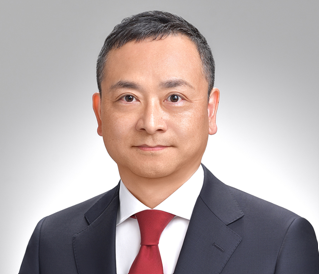 Tsuyoshi Niijima, President | XNET Corporation (4762) |
 |
Company Information
Market | TSE Standard |
Industry | Information and Communication |
Chairman | Takehiko Motani |
President | Tsuyoshi Niijima |
HQ Address | Sumitomofudosan-building 4th Floor 13-4 Araki-cho Shinjuku-ku Tokyo, Japan |
Year-end | March |
Homepage |
Stock Information
Share Price | Shares Outstanding (Term-end) | Total Market Cap | ROE Act. | Trading Unit | |
¥1,558 | 8,261,600 shares | ¥12,871 million | 17.6% | 100 shares | |
DPS Est. | Dividend Yield Est. | EPS Est. | PER Est. | BPS Act. | PBR Act. |
¥70.00 | 4.5% | ¥107.66 | 14.5x | ¥779.57 | 2.0x |
* The share price is the closing price on June 18. All figures are taken from the brief report on financial results for the fiscal year ended March 2026. DPS is composed of the base dividend of 50.00 yen/share and the extra dividend of 20.00 yen. For details, see the “shareholder return policy” in this report.
Earnings Trend
Fiscal Year | Sales | Operating Income | Ordinary Income | Net Income | EPS | DPS |
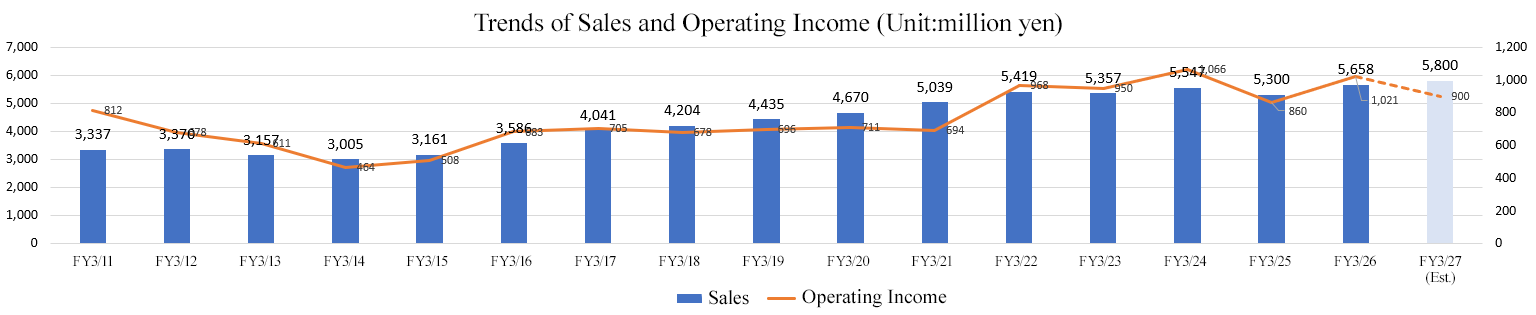
March 2023 Act. | 5,357 | 950 | 985 | 694 | 84.00 | 30.00 |
March 2024 Act. | 5,547 | 1,066 | 1,101 | 741 | 89.74 | 30.00 |
March 2025 Act. | 5,300 | 860 | 849 | 581 | 128.74 | 45.00 |
March 2026 Act. | 5,658 | 1,021 | 1,011 | 542 | 129.89 | 47.50 |
March 2027 Est. | 5,800 | 700 | 700 | 450 | 107.66 | 70.00 |
*Unit: million yen. Estimates are those of the company. The breakdown of the dividend per share (DPS) for the fiscal year ending March 2027 consists of a base dividend of 50.00 yen/share and the extra dividend of 20.00 yen. For details, see the “shareholder return policy” in this report.
This report outlines XNET Corporation's financial results for the fiscal year ended March 2026 and the Medium-Term Management Plan: Next Step 2029.
Table of Contents
Key Points
1. Company Overview
2. Medium-Term Management Plan: Next Step 2029
3. Fiscal Year ended March 2026 Earnings Results
4. Fiscal Year ending March 2027 Earnings Forecasts
5. Conclusions
<Reference: Regarding Corporate Governance>
Key Points
- In the fiscal year ended March 2026, sales and profit grew, exceeding the revised forecasts. The sales stood at 5,658 million yen, up 6.7% year on year, as application services performed steadily, and the performance of AMO and SO services was also favorable. Operating income reached 1,021 million yen, up 18.7% year on year. Gross profit grew 18.7% year on year due to price revision, the withdrawal from spot projects concerning AMO services with low profitability, etc. Gross profit margin rose 3.1 points, offsetting the augmentation of SG&A expenses (up 18.8% year on year) caused by the increase in personnel costs and the provision for stock-based remuneration of executives in step with the adoption of the Employee Stock Ownership Plan (J-ESOP). Net income was 542 million yen, down 6.6% year on year. The provision for stock-based remuneration of 122 million yen was posted as an extraordinary loss.
- The fiscal year ending March 2027 is forecast to see an increase in sales and a decline in profit, as sales are expected to grow 2.5% year on year to 5.8 billion yen and operating income is projected to decrease 31.5% year on year to 700 million yen. Both core and spot sales are expected to grow due to the healthy performance of each service. In terms of profit, profit and profit margin are projected to decline, as they plan to actively conduct additional investment in human resources, etc. In the new medium-term management plan, they decided to adopt adjusted operating income, which is calculated by adding the investment in human resources (personnel expenses) and the investment in systems (depreciation) to operating income as a management indicator. The adjusted operating income in the fiscal year ending March 2027 is expected to be 3.5 billion yen, up 2.4% year on year. The company plans to pay a dividend of 70.00 yen/share, up 22.50 yen/share from the previous fiscal year. It will be composed of the base dividend of 50.00 yen/share and the extra dividend of 20.00 yen/share. The expected payout ratio is 65.0%. For details, see the “shareholder return policy” in this report.
- In June 2026, they formulated and announced the “Medium-Term Management Plan: Next Step 2029,” which will end in the fiscal year ending March 2030. For achieving the purpose, they aim to be an enterprise that will be selected continuously in the three markets: the customer market (financial market), the human resources market (recruitment and employees), and the capital market (investors). In addition, in order to become a company that generates profit in the long term, they will actively invest in human resources and systems and carry out strategic shareholder return based on the balance sheet (BS) management in the coming 4 years. The goal for the fiscal year ending March 2030 is to achieve “core sales of 5.6 billion yen, an adjusted operating income of 3.8 billion yen, and an ROE of 15.0%.”
- In the period of the previous medium-term management plan, core sales were 4.93 billion yen, slightly below the target: 5 billion yen, but operating income margin and ROE exceeded the targets significantly. They recognize some issues, but it can be said that the previous medium-term plan progressed as assumed. In the new medium-term plan, they aim to achieve “core sales of 5.6 billion yen, an adjusted operating income of 3.8 billion yen, and an ROE of 15.0%” in the fiscal year ending March 2030. We would like to pay attention to measures of the company, which aims to achieve core sales of 10 billion yen and an ROE of 20% in the long term, while taking advantage of the capability of providing high-level “applications,” “know-how,” and “support” seamlessly while occupying an outstanding market share, and the progress of the measures.
1. Company Overview
The company operates the “XNET Service,” which mainly provides securities management systems to more than 180 institutional investors, including life and non-life insurance companies, investment trust advisors, trust banks, and banks, for a monthly usage fee. Since its establishment, the company has led the industry as the de facto standard, holding a market share of around 90% in the life and non-life insurance industry in Japan. Currently, in addition to its securities business, it is expanding its management targets to include individual trusts and loans. It is also actively offering “SO service,” in which it not only provides systems, but also undertakes accounting and other tasks, aiming to further expand its business operations.
[1-1 Corporate History up to stock listing]
The company was established in June 1991 and began offering “XNET Service,” its current mainstay service. In October of the same year, Nippon Life Insurance Company adopted the “XNET Service” for its middle-office operations, which was the first major order received by the company. Based on this achievement, it expanded its service domain to include back-office services for life and non-life insurance companies. The convenience and economic benefits of these services were highly evaluated, due to which the number of clients using it increased at leading firms in the asset management industry, resulting in the expansion of its business. It was listed on NASDAQ Japan of Osaka Exchange in June 2000, and on the First Section of the Tokyo Stock Exchange in March 2004.
In April 2022, it got listed on the standard market of Tokyo Stock Exchange due to market restructuring.
In March 2009, NTT DATA, Inc. conducted a tender offer for shares in XNET Corporation, and the company became a consolidated subsidiary of NTT DATA, but in May 2024, the contract for capital and business alliances expired, and the company started its business as a “newborn XNET.”
[1-2 Corporate Philosophy]
The company aims to be an “eXcellent Company” that can continue to grow while collaborating with its clients.
Its objectives as an “eXcellent Company” are as follows.
1.Become a “One-Stop Solution Company for Asset Management.” |
2.Continue to make efforts to bring smiles to clients' faces by transforming “Impossible” into “Possible.” |
3.Create a better society by developing “new frameworks” and “new value.” |
4.Implement management practices while being mindful of the well-being of employees and their families and the profit returns to shareholders. |
In addition, the company aims to become “an ecosystem orchestrator* in the asset management industry” by “becoming a master of asset management industry operations” and “further reducing costs associated with the asset management industry,” with the mission of “contributing to building Japanese people's overall assets.”
Furthermore, its vision is to achieve “Four-Way Satisfaction,” i.e., “Good for the Buye the asset management industry as a client,” “Good for the Selle the company,” “Good for the Society: The Japanese economy and people,” and “Good for the Future: Three-Way Satisfaction.”
(*) Ecosystem Orchestrator
It is a role to create an ecosystem (a structure to create significant value through symbiosis) in the asset management industry. For this, it is necessary to become familiar with all information and elements related to asset management. The company aims to create a symbiotic environment by connecting it with any service or system that the customer requires without owning all the solutions.
In June 2024, the company announced its “Purpose” of existence, which serves as the foundation for the above mission and vision.
Purpose: “Create new value for the asset management industry to support society today and tomorrow.”
As a unique organization in the asset management industry, they aim to build a better foundation for society and further develop it. By incorporating the expression of creating new value that aligns with their corporate philosophy, they reaffirmed their purpose to consistently contribute to the asset management industry.
[1-3 Business Environment]
The amount of money management in Japanese asset management companies is on an increasing trend. As a result of the " Asset Management Nation" concept discussed below, the company's client market is expected to continue to expand steadily.
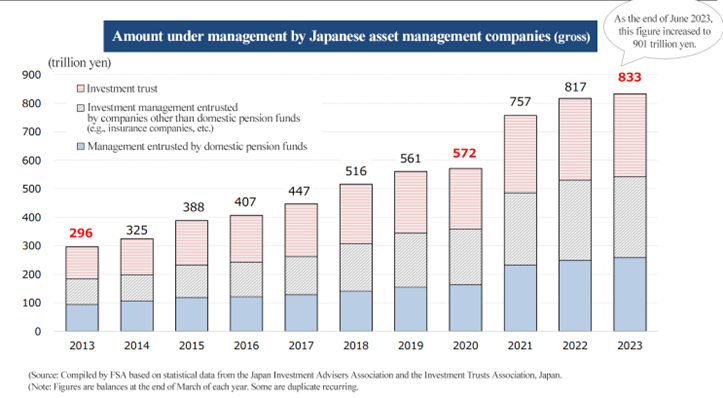
(From "Basic Data on Asset Management Nation (October 4, 2023)," Cabinet Secretariat)
Meanwhile, the company's clients are being affected by shifts in the business environment and facing resource shortages while being forced to focus on their core businesses, resulting in growing needs for below-mentioned services of undertaking tasks such as AMO and SO services as well as a growing market for these services.
Life & Non-Life Insurance | With the advancement of information technology, the demand for developing advanced insurance-related services is increasing. The company would like to focus its resources on developing these services more than operation. |
Investment Trust Advisors | Making profits with conventional management methods is becoming increasingly challenging, and the business volume for Investment Trust Advisors is increasing due to the expansion of investments in alternative assets, etc., and compliance with new financial regulations. |
Local Banks | The environment with extremely low interest rates continues, making it increasingly difficult to earn profits from providing loans, which is the core business of banks. The top priority is to increase profits through securities investment to compensate for this, however, there is a shortage of appropriate personnel, and the administrative burden is increasing. |
The Japanese government's " Asset Management Nation" concept is also likely to be a tailwind for the company's business.
In the Big-boned Policy 2023, approved by the Cabinet in June 2023, the government clearly stated that it will realize an Asset Management Nation that contributes to sustainable growth by releasing 2,000 trillion yen in household financial assets.
The goal is to redirect household savings to investment, leading to "an increase in financial asset income" and "supplying high-risk high return funds to support corporate growth."
The main points of the "Basic Data on the Asset Management Nation" (October 4, 2023), prepared by the Administration Office for the Realization of New Capitalism, Cabinet Secretariat, are as follows.
◎ Asset Income Doubling Plan
Target | (1) Doubling the total number of NISA accounts (regular and savings) from 17 million to 34 million and doubling the amount of NISA purchases (from 28 trillion yen to 56 trillion yen) in 5 years (2) Subsequently, the goal is to double the amount invested by households (total balance of stocks, investment trusts, bonds, etc.). Through achieving these goals, the long-term objective is to double the asset management income itself. |
Seven Pillar Initiatives | Pillar 1: Fundamentally promoting the expansion and permanent utilization of NISA to shift household financial assets from savings to investments Pillar 2: Reform the iDeCo system, for example, by raising the age of membership Pillar 3: Establish a mechanism to encourage the provision of neutral and reliable advice to consumers Pillar 4: Strengthen asset accumulation for employers Pillar 5: Enhance financial and economic education to promote the importance of stable asset formation Pillar 6: Creation of an international financial center that is open to the world Pillar 7: Ensure customer-oriented business operations |
◎ Lecture by Prime Minister Kishida, hosted by the Economic Club of New York (September 21, 2023), Related part (extract)
① | Funds managed by the asset management sector in Japan are 800 trillion yen and have surged 1.5-fold over the past three years. Aiming to improve this performance, we will promote the sophistication of investment management and encourage new entrants. First, we will correct Japan's unique business practices, eliminate barriers to entry, and develop support programs for new entrants. In addition, deregulation will be implemented to allow outsourcing of back-office operations. |
② | In order to promote the entry of foreign investors, we will create a special zone for asset management, and we will reform regulations so that administrative actions can be completed only in English and focus on improving the business and living environment. In order to promote reforms in line with the needs of investors worldwide, we would like to establish an asset management forum based in Japan and the U.S., with your participation. |
◎ Household Financial Assets
① | From 2002 to the end of 2022, household financial assets (cash, deposits, bonds, stocks, etc.) in the U.S. and the U.K. have grown 3.3 times and 2.3 times, respectively, while in Japan they have increased only 1.5 times through June this year. |
② | In Japan, cash and deposits account for a large share of household financial assets. Therefore, there is room for further asset management growth through the reform of the asset management industry and the promotion of new entrants and competition. |
◎ Asset Management Companies
① | The amount under management (gross) by Japanese asset management companies is approximately 800 trillion yen. It has been increasing every year, and at present, after bottoming out due to the novel coronavirus, it has increased 1.5 times in 3 years. It has also increased 2.8 times in 10 years. |
② | If we look at the number of asset management companies in Japan in recent years, we will see that the number has hardly changed, and new entrants into the investment trust management business have been limited. |
③ | In Japan, there is a unique practice (double calculation) in which an asset management company and a trust bank each calculate the NAV of an investment trust and reconcile them daily. This is pointed out as a factor of high costs and barriers to entry in the asset management business, such as the introduction of investment trust accounting systems by asset management companies. In Europe and the United States, on the other hand, double calculation is rare, and in many cases, trust banks and specialized firms are responsible for this practice. |
◎ Promoting New Entry and Competition
① | In Japan, there is a unique practice (double calculation) in which an asset management company and a trust bank each calculate the NAV of an investment trust and reconcile them daily. This is pointed out as a factor of high costs and barriers to entry in the asset management business, such as the introduction of investment trust accounting systems by asset management companies. In Europe and the United States, on the other hand, double calculation is rare, and in many cases, trust banks and specialized firms are responsible for this practice. |
② | The public sales network through which asset management companies exchange daily information on investment trusts with distributors is operated by a small number of system vendors, each with its own specifications, and in some cases, requires manual work and multiple terminals for information exchange due to incompatibility in data linkage. An oligopoly is also developing for the investment trust accounting system used to calculate NAVs of investment trusts by offering the system as a package with terminals. |
③ | The Financial Services Agency/Finance Bureau provides prior consultation, registration procedures, and post-registration supervision in English for the registration of foreign asset management companies newly entering the Japanese market, and the Support Office for Establishing Bases in Japan was opened on January 12, 2021, to provide comprehensive services for these operations. To date, 27 business registrations and notifications have been completed. |
④ | In June 2021, Japan launched a project to provide free, comprehensive information, consultation, and support in terms of business start-up and daily life in English for foreign financial businesses (investment management companies, investment advisors/agents, etc.) that are establishing a base in Japan. A total of 35 businesses have been selected for support under the project so far, 15 of which have completed business registration and notification. |
The increase in assets under management and the rise in the number of new asset management companies are entirely positive factors for the company's business.
As the number of assets under management grows, the diversification of assets under management, such as alternative investments, is also expected to increase. As asset management firms seek to focus their resources more than ever on improving their operational capabilities, task undertaking services are expected to provide them with more opportunities to meet such needs.
Regarding new entrants, in addition to foreign-affiliated asset management companies, an increase in the number of start-up asset management companies is also expected in Japan.
The company has already built up a significant track record by providing start-up support services in cooperation with external partners in areas such as legal aspects, which is another positive factor.
The above abolition of double calculation and elimination of oligopoly in the public sales network are also noteworthy.
It is expected that NAV calculations for investment trusts will be performed by trust banks, and daily investment trust information exchange with distributors will be performed by trust banks. Trust banks are currently outside the framework of the public sales network. This is an opportunity to point out issues such as the lack of easy connections, and there are strong calls for a review of the public sales network, which has become an oligopoly.
The market share of the top vendors of the investment trust accounting system is about 70%. The company also provides accounting management services for investment trusts, but its market share is not large. The elimination of double calculation and the revision of the public sales network are expected to lead to share fluctuations, and for the company, the impact of these changes may be more positive than negative.
As described above, the Asset Management Nation may work positively for the company in macroeconomic terms, and it can also benefit from the actual policy management.
[1-4 Business Description]
The company provides “XNET Service,” a specialized asset management system developed by the company, to over 180 institutional investors, including life and non-life insurance companies, investment trust companies, investment advisors, trust banks, and banks.
It has a single business segment, the XNET service business. The services can be categorized into “XNET Service” and “Equipment Sales.” However, “Equipment Sales” service is provided to clients who wish to install computers and other equipment while adopting “XNET Service” and accounts for about 0-1% of total sales.
◎ XNET Service
(1) Clients' Situation
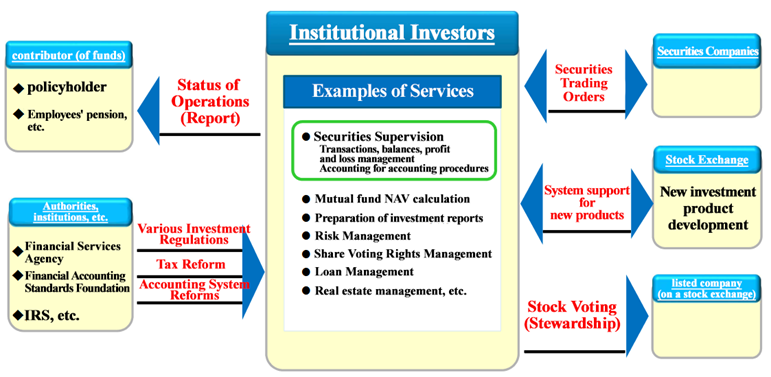
The institutional investors who are the company's clients invest in thousands of securities, including stocks and bonds, and have invested in various high-cost systems to manage their securities, including transactions, balances, profits/losses, and accounting processes.
(Taken from the company’s documents)
Many Japanese companies have conventionally built such systems and used them exclusively in-house. In cases of system outsourcing, where development and management are outsourced to an external company, the system is often the company-specific system, with all development and maintenance costs borne by the company.
In response to this situation, the company developed its own information system since its foundation and came up with a unique business model, which it named “XNET Service,” to offer this system to multiple clients for a monthly fee only.
It also provides comprehensive support for asset management operations from front to back office, including providing the stock information.
The company currently has approximately 180 clients.
(2) Main Service Lineup
①Front Office for Securities | A service for institutional investors and securities companies to provide functions related to placing and receiving orders for securities. |
②Middle Office for Securities | A service to provide performance analysis, reporting to beneficiaries, and other functions for financial products invested by institutional investors. |
③Back Office for Securities | A service to provide management functions such as journal entries, deposits, withdrawals, and actual item storage for financial products invested by institutional investors. |
④Back Office for IM | A service to provide investment trust advisory companies with functions for investment trust accounting operations (calculating base prices of investment trusts and creating management reports and other forms). |
⑤Center-type Indicative STP | A service allowing investors to electronically send trust instructions to a managing trust bank. |
⑥Disclosure of Trust-linked Data | A service allowing users to receive portfolio data (transactions, balances, portfolio attributes) in XNET format for special funds, fund trusts, etc., which are re-trusted by the managing trust bank. |
⑦Loan Management | A service that offers functions to manage all loan-related operations, including primary, secondary, syndicated, and mortgage loans, on a uniform platform regardless of the loan type. |
⑧Stewardship Solutions | A service providing functions to support the administrative operations of shareholder voting rights. |
⑨Report Manager | Support services for preparing external forms required in the investment trust and investment advisory business. In addition to providing application service (basic service), it offers data creation support (optional service) services. |
⑩XNET-AMO (Application Management Outsourcing) Service
| A service in which dedicated CEs provide comprehensive support from “installation” “operation /maintenance” to “design/development” related to XNET application use from the customer's perspective, supporting the business operation of XNET applications suitable for the clients. |
⑪SO (Smart Outsourcing) Service | A service using XNET services (back-office, middle-office, investment trust, etc.) to execute work duties, such as accounting and producing reports, in place of clients. |
⑫Remuneration Management Service | Support services for managing operations related to remuneration for investment advisory companies. |
⑬Trust Management for Individuals | It is possible to provide “beneficial interest management” and “jointly managed money trust/investment account management” for a representative trust for wills. It can be used independently by a trust bank or by a trust bank in partnership with a local financial institution as an agent. |
⑭Support Service for Investment Trust Management Business | Comprehensive support services for launching an investment trust management business, starting from establishing a company and preparing investment applications to starting the business. |
⑮Support Service for Discretionary Investment Business | Comprehensive support services for launching a discretionary investment business, starting from establishing a company and preparing investment applications to starting the business. |
In addition to providing software customized to customer needs, the company is focusing on expanding its outsourced system management and business process services, including “10) XNET-AMO Service” and “11) Smart Outsourcing (SO) Service.”
By having the company's professional human resources undertake front, middle, and back-office operations, clients are able to focus their resources on other tasks.
In particular, the “SO Service” provides users with the following advantages: “reducing administrative and system costs,” “securing support staff and outsourcing administrative processing,” “access to benefits of industry-standard services based on standardized business flows and administrative handling manuals,” and “flexible support to financial product accounting and various system changes specific to insurance companies.”
The company views SO services as their second pillar, following application services.
(3)Business Model: Adopting a subscription model
Since its launch in 1991, the “XNET Service” has been offering its services on a subscription model, receiving a fixed monthly subscription fee on a continuous basis.
It is a pioneer in the “subscription” business model, an innovative business model distinct from the “in-house development type,” in which SI vendors and software houses develop software on contract, and the “package type,” in which package vendors provide packages.
In the “in-house development type,” all costs are borne by the ordering company, and the risk of unsuccessful development is borne solely by one company.
In the “package type,” it is cheaper to install a pre-existing system, but the cost of modification and additional development is high.
In contrast, the “XNET Service,” developed under the concept of “collaboration with clients,” differs significantly from the “in-house development” and “package type” services. The reason for this is that after the launch, it is improved and refined with clients, with no initial cost and additional investment required.
The company owns the copyrights to the application and provides it to other users, thereby increasing profitability as the number of users grows.
In addition, a major advantage for both the clients and the company is that all the know-how accumulated through collaboration with multiple clients can be stored in the XNET application to facilitate knowledge sharing.
Merits for users | * No initial investment required * Quick installment period * No additional investment required * Overall cost is low because many users pay for one system * Incorporate ideas from many users so advanced know-how can be shared (knowledge sharing) * Constantly updated so the system does not get outdated |
Merits for the company | * Stable revenue due to monthly fees, unlike selling the entire system outright. * Discontinuation of the service is difficult * High profitability due to collaborative use of the same application |
Another feature of the “XNET Service” is the low number of service cancellations owing to the fact that users are unlikely to switch to another company's system due to the significant burden of transferring historical data once the XNET system has been installed.
[1-5 Features, Strengths, Competitive Advantages]
(1)Largest Market Share
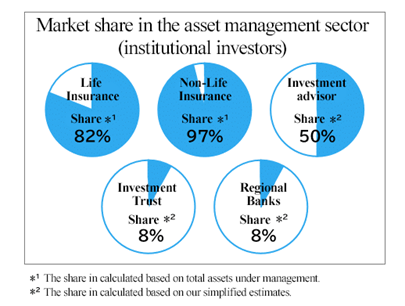
XNET utilization accounts for 82% of the total amount of securities under management for all companies affiliated with The Life Insurance Association of Japan and 97% of non-life insurance.
The convenience and economic advantages of the comprehensive XNET service are evaluated highly, and the track record of the company's asset management system, including front, middle, and back-office services, is ranked predominantly No. 1 in the life and non-life insurance industry.
(Taken from the company’s documents)
The source of this competitive advantage is extensive information on securities and applications updated constantly to reflect the information and know-how.
In addition to revising rules and systems in the securities investment and management industry, it is necessary to stay updated on new investment targets, such as cryptocurrencies. Additionally, it is essential to incorporate the information into logic and reflect it in the application rather than simply having it as information.
The “XNET System” incorporates not only the information and know-how accumulated by the company, but also the know-how acquired by its clients through securities management into the application, making it the best and most up-to-date application that accumulates a variety of know-how at any time.
(2)Provide High-added Value
The company creates high-added value by providing high-level “applications,” “know-how,” and “support” as an integrated package.
(3)Stable Profit Structure
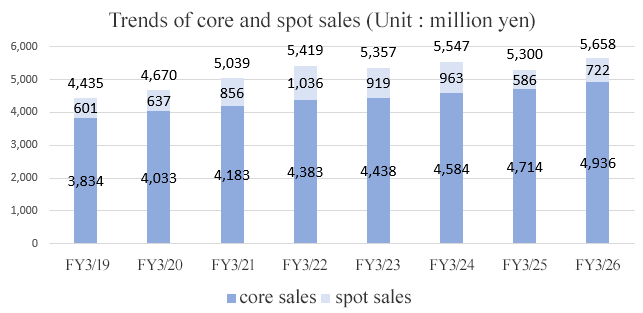
Core sales account for about 80% of the company's sales. It is striving to establish a stable revenue base by expanding its core sales.
The Medium-Term Management Plan: Next Step 2029 targets core sales of 5.6 billion yen for the fiscal year ending March 2030.
Sales Type | Summary | Target Service |
Core | Stable sales through a subscription model | Application, AMO (monthly), SO |
Spot | Sales from one-time transactions only, although necessary to maintain core | AMO (spot) *New installation and platform renewal |
(4) Intangible assets that generate cash flow
The company’s “XNET service” is an application service with a fixed monthly fee and no additional charges. It is a pioneering subscription model and an advanced business model, distinct from the services of other companies.
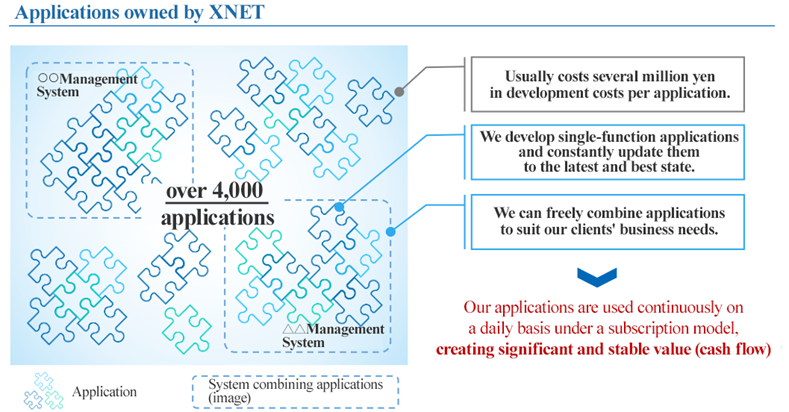
The company currently has approximately 4,000 applications. It possesses the latest and best applications by accumulating know-how over the applications it develops. The development cost per application is typically 2-3 million yen, but the value of each application goes beyond this amount, when it is considered that it is the latest application with accumulated know-how.
The 4,000 high-value-added applications generate stable high value or cash flow through the subscription model.
(Taken from the company’s documents)
[1-6 Value creation process]
By investing in human resources and systems, they expand and accelerate their roles as an infrastructure provider in the asset management industry, create value for customers, human resources, shareholders, and society, and return earned profit as the fund for further growth.
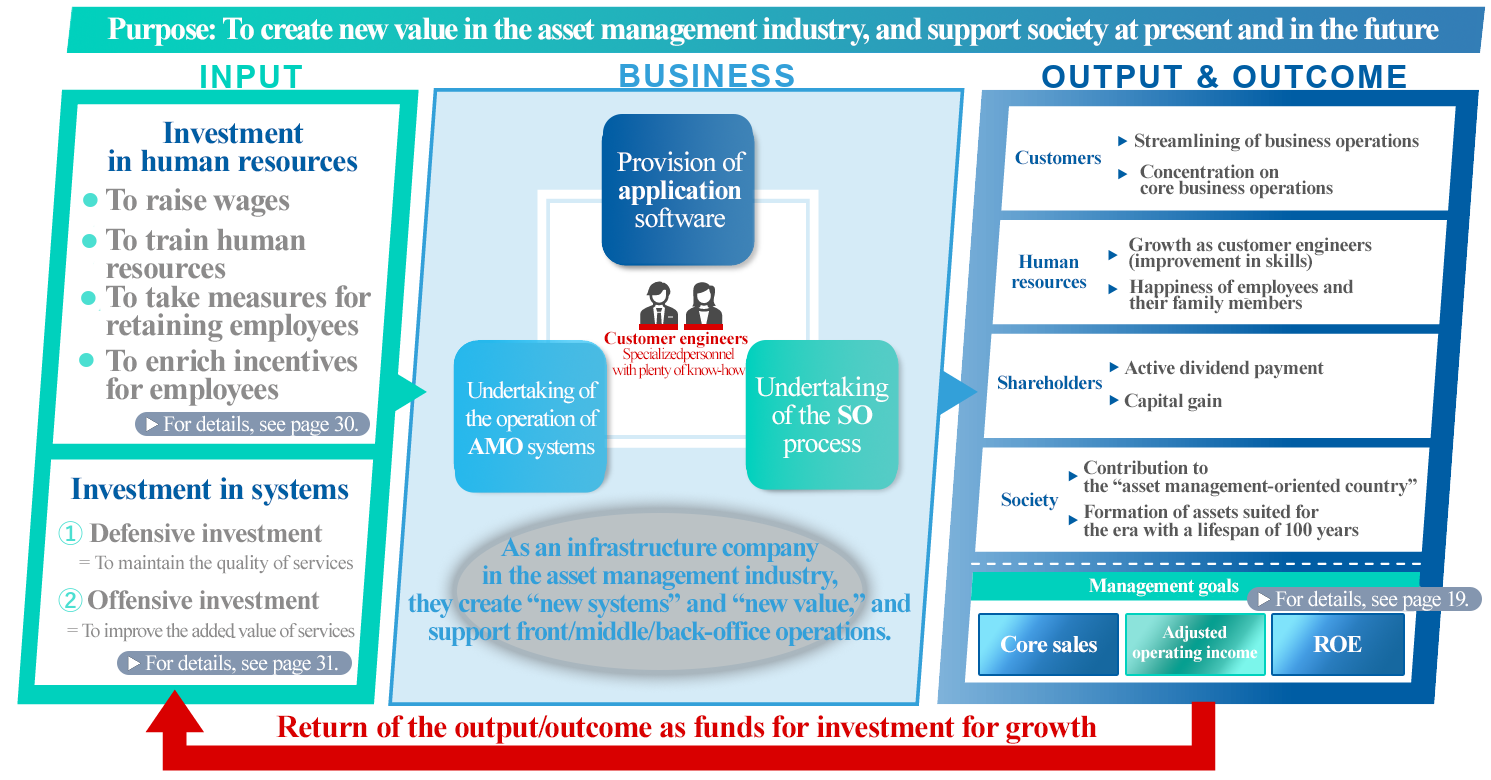
(Taken from the company’s documents)
[1-7 ROE Analysis]
| FY 3/18 | FY 3/19 | FY 3/20 | FY 3/21 | FY 3/22 | FY 3/23 | FY 3/24 | FY 3/25 | FY 3/26 |
ROE (%) | 7.7 | 7.7 | 7.8 | 8.3 | 9.8 | 8.9 | 9.0 | 10.2 | 17.6 |
Net income margin (%) | 11.08 | 10.94 | 11.04 | 11.44 | 13.25 | 12.95 | 13.36 | 10.97 | 9.59 |
Total asset turnover (times) | 0.60 | 0.60 | 0.61 | 0.63 | 0.63 | 0.59 | 0.58 | 0.64 | 0.88 |
Leverage (x) | 1.15 | 1.17 | 1.17 | 1.17 | 1.17 | 1.17 | 1.16 | 1.45 | 2.07 |
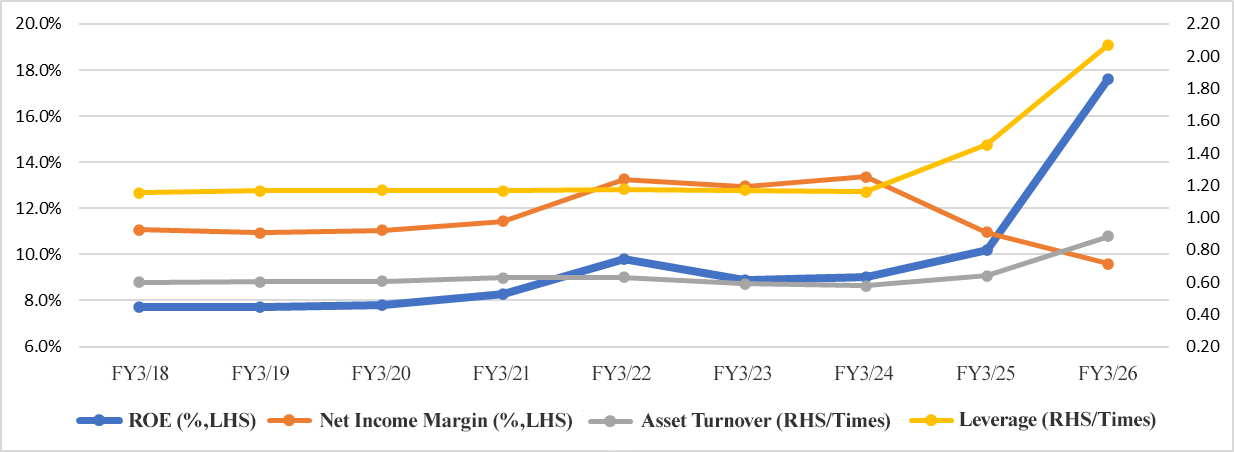
*Prepared by Investment Bridge Co., Ltd. based on disclosed material.
In the fiscal year ended March 2026, ROE rose significantly, mainly because financial leverage increased due to the significant decreases in total assets and shareholders’ equity in the wake of the dissolution of the capital alliance with NTT DATA. ROE is projected to be around 13% in the fiscal year ending March 2027.
[1-8 Shareholder return]
Their dividend policy has been stable, proactive shareholder return as “a company that does not decrease the dividend amount,” but in the new medium-term management plan, they have set a new shareholder return policy, while withdrawing the dividend policy as “a company that does not decrease the dividend amount.”
<Points of the new shareholder return policy>
* They announced a goal of achieving a payout ratio of 50-100% for the first time.
* They return profit to shareholders with two kinds of dividends, that is, a base dividend and an extra dividend. They conduct stable shareholder return with a base dividend, and also pay an extra dividend, which changes every fiscal year according to the performance in each fiscal year, to return funds to shareholders as much as possible.
* Early dividend payment: A year-end dividend is not discussed at a general meeting of shareholders, but determined at a meeting of the board of directors, and paid swiftly.
* Prior announcement of dividends: They announce the amounts of the interim and year-end dividends before the last trading day for receiving dividends and shareholder benefits. Investors can trade shares after confirming the dividend amounts. In particular, investors can check the extra dividend, which will change, in advance.
* Shareholder return: They will keep returning profit to shareholders in the period of the new medium-term plan, like in the previous medium-term plan period. They present the prepaid card to eligible shareholders (500-yen Quo Card to shareholders holding 100 or more shares) under the same conditions as before. In order to achieve early distribution, they will enclose the card determined at the end of March with the convocation notice to be sent in early June.
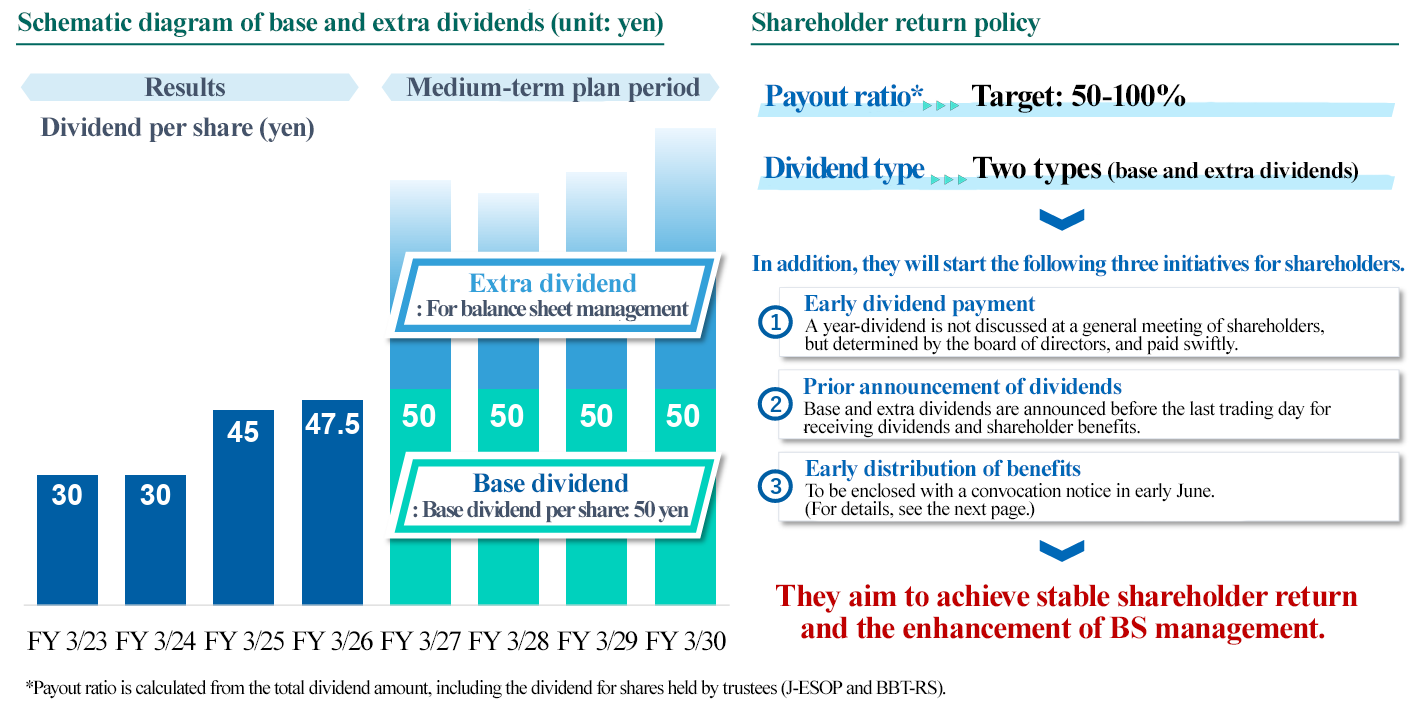
(Taken from the company’s documents)
2. Medium-Term Management Plan: Next Step 2029
In June 2026, the company formulated and released its "Medium-Term Management Plan: Next Step 2029," which will end in the fiscal year ending in March 2030.
[2-1 Review of the Previous Medium-Term Management Plan]
(1) Key initiatives
1. Medium/long-term service expansion | Introduced the task-undertaking service to the fourth life and non-life insurance company. Expanded target assets in other business categories. |
2. Application service expansion | Launched multiple services in collaboration with other companies, in addition to individual services. Commenced the provision of To NtSaaS linkage*1 and OmegaFS linkage*2 in the fiscal year ending March 2026. |
3. To boost core sales | Started providing various services to existing and new customers. Core sales increased by about 550 million yen during the period of the plan. |
4. Human resources strategy | Continued to focus on human resources development while improving compensation by increasing salaries and adopting a stock-based compensation plan. |
5. Investment in systems | The OS was upgraded, and the user interface (UI) was updated. |
*1: To NtSaaS linkage
A service to efficiently link the data of XNET's securities management service "XNET Service" with the risk management system "NtSaaS ® for Market Risk" provided by Numerical Technologies Incorporated. Users can quickly develop the system at low cost by entrusting XNET with sophisticated product mapping. Additionally, it will significantly reduce the amount of maintenance work required once actual operation begins.
*2: OmegaFS linkage
A service that provides a function to directly and electronically integrate "OmegaFS Series," a comprehensive securities service offered by Japan Information Processing Service Co., Ltd., with "Back Office for IM," an investment trust accounting service offered by XNET. Investment trust management companies that engage in direct sales of investment trusts can improve operational efficiency by seamlessly integrating data on subscriptions and redemptions, net asset value, and dividends.
(2) Projected figures
Core sales were 4.93 billion yen, slightly below the target for the fiscal year ending March 2026; however, operating income margin and ROE significantly exceeded the targets.
Item | Target | Actual Results |
Core Sales | 5 billion yen | 4.93 billion yen |
Operating Income Margin | 15.0% | 18.0% |
ROE | 8.0% | 17.6% |
(3) Challenges
The company acknowledges further improvement in capital efficiency and recruitment of human resources as key challenges.
[2-2 Medium-Term Management Plan: Next Step 2029]
(1) Concept
The company aims to be consistently chosen in the three markets – the customer market (financial market), the human resources market (recruitment and employees), and the capital market (investors) – to realize its purpose. Furthermore, in order to become a company that generates profits over the long term, it will actively promote investment in human resources and systems over the next four years and strategically return profits to shareholders based on the balance sheet (BS) management.
Market | Necessary measures |
Customer market | Providing applications to enhance operational efficiency within the company. Developing highly specialized and reliable CE professionals. |
Human resources market | Creating an environment that fosters continuous professional growth. An attractive compensation system. |
Capital market | Pursuing capital efficiency. Continuously investing in operating capital. |
(2) Growth strategy
① Further growth in core sales
To continue to focus on increasing core sales to achieve stable growth and expand the sources of high investment efficiency.
② Further expansion of applications, AMO and SO
To actively explore untapped areas in the banking, life/non-life insurance, and asset management industries.
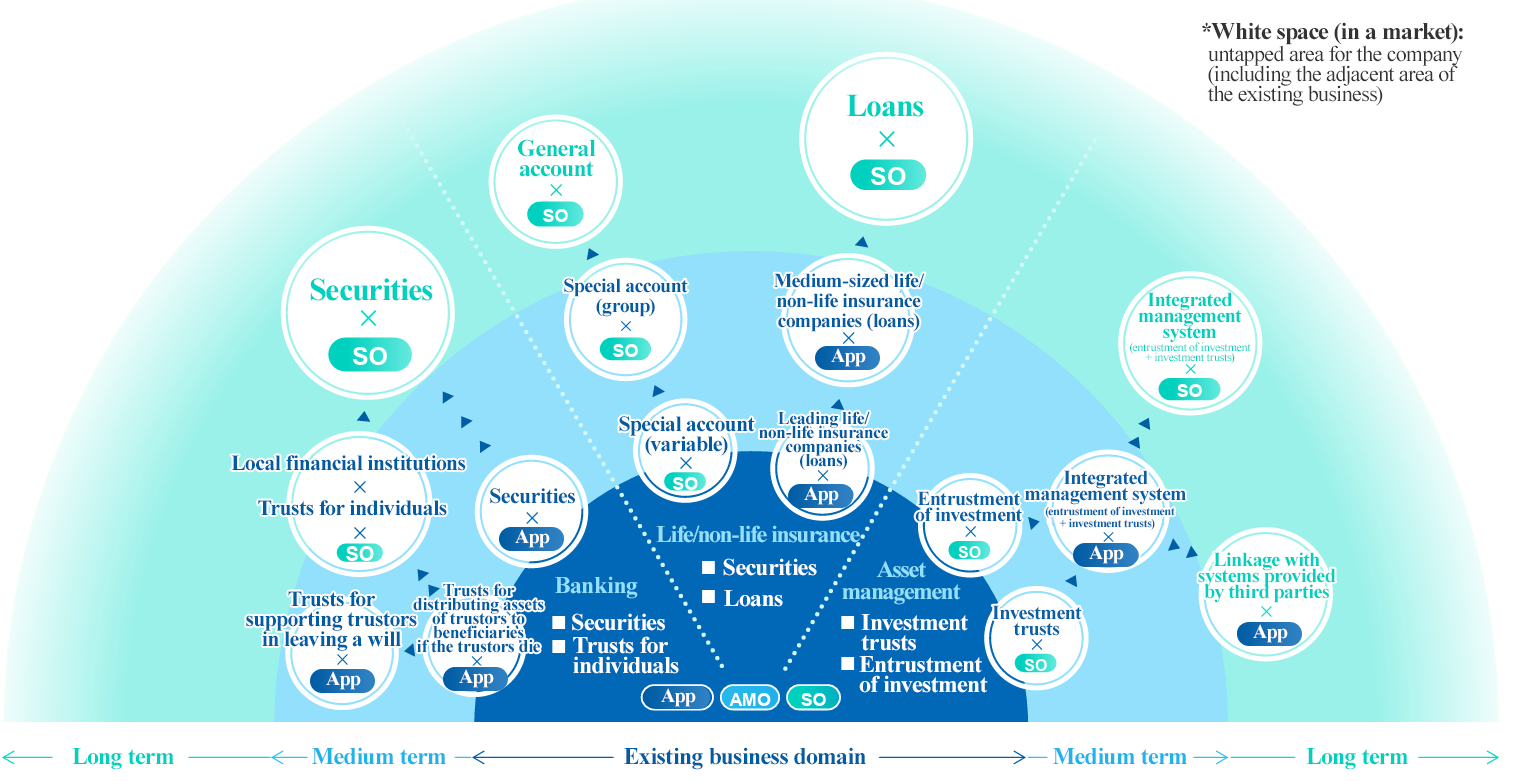 |
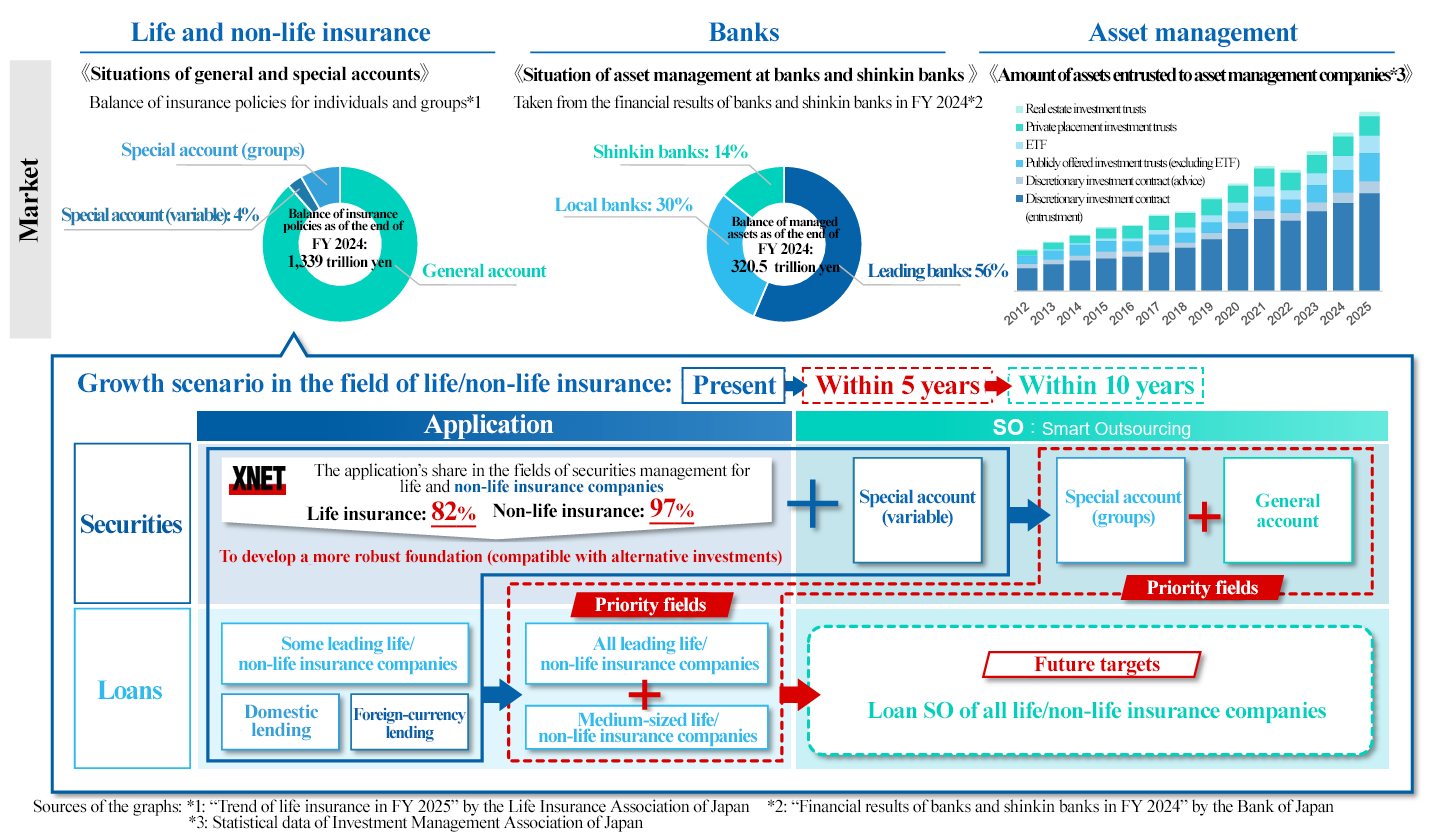 |
(Taken from the company’s documents)
(3) Investment strategy and dividend policy
The company will focus on “proactive investment in human resources and systems” and “strategic shareholder returns through BS management,” as mentioned earlier.
① Proactive investment
◎ Investment in human resources
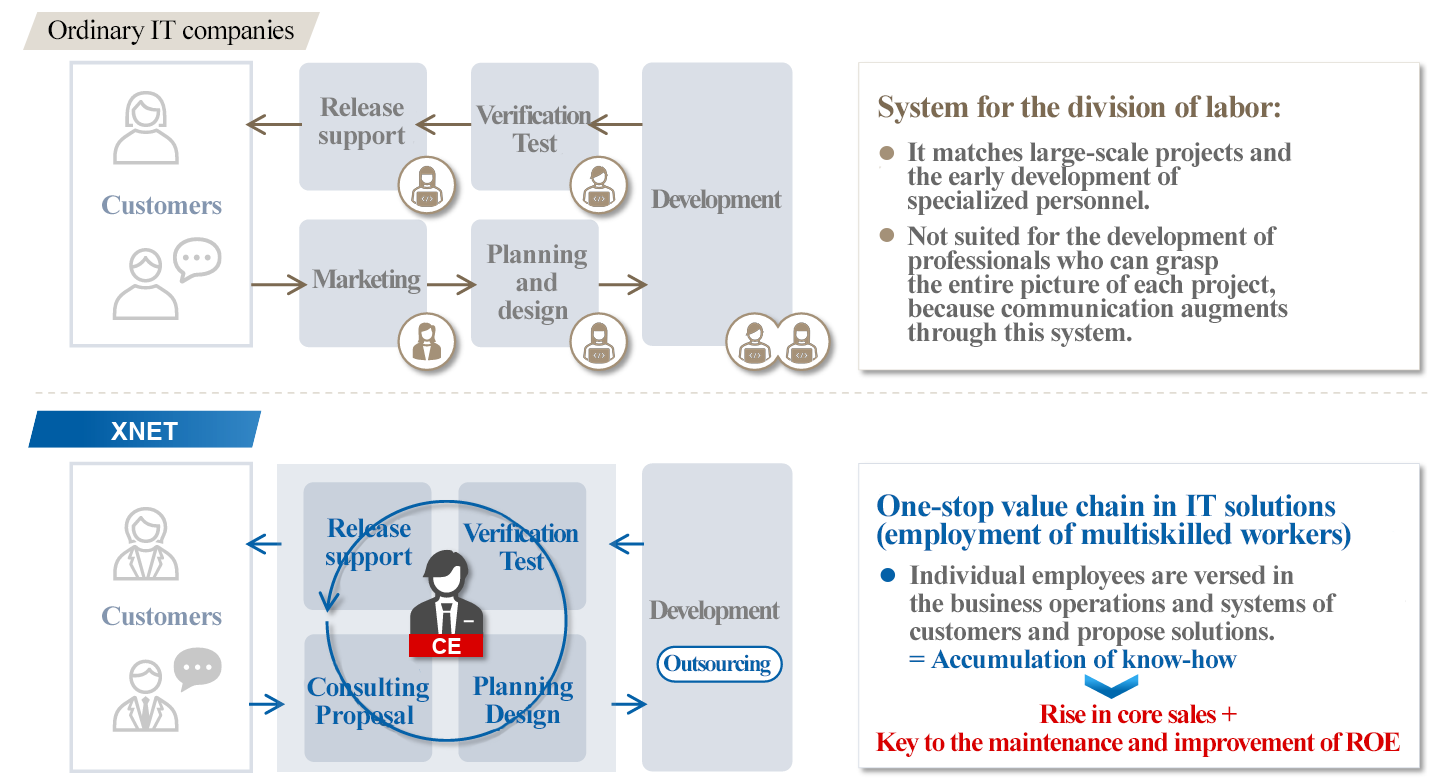
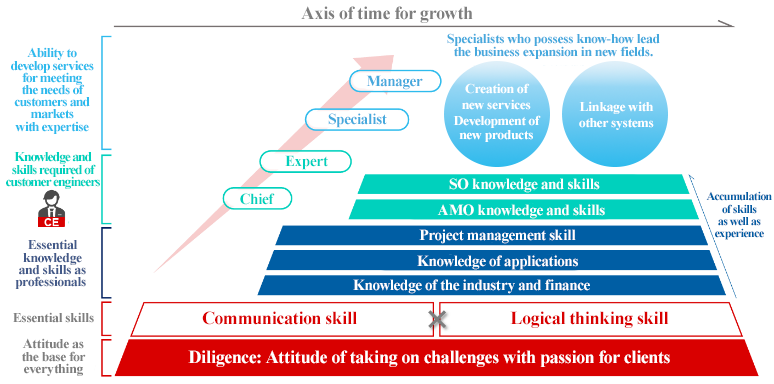
IT enterprises often have a system of specialization; however, the company's customer engineers (CEs) are multiskilled professionals with a “one-stop value chain” where each person has a thorough understanding of the client's systems and operations in order to propose solutions for their challenges. This is a source of competitive advantage that will boost ROE and expand core sales.
It takes a certain amount of time to develop CEs, as they have to cultivate a wide range of skills and interpersonal abilities by working on numerous projects. Therefore, the company will continue to focus on three basic policies: (I) recruitment, (ii) training, and (iii) retention initiatives. The J-ESOP (Employee Stock Ownership Plan), introduced in August 2025, will help accelerate efforts to boost employee motivation and morale.
 |
 |
(Taken from the company’s documents)
* Strengthening recruitment
In addition to raising the overall base pay, the company will improve employee compensation by revising the management system. It will also actively recruit candidates with industry experience and make active use of recruitment websites.
* Training
For on-the-job training (OJT), collaboration between in-house veterans and CEs will be promoted. For off-the-job training (OFF-JT), collaboration between external experts and CEs, external and internal training programs, etc. will be implemented.
* Retention initiatives
To encourage the use of the Employee Stock Ownership Plan (wherein the company contributes 20% of personal expenses); implement various life-stage-specific initiatives; promote the health of employees; and carry out various measures to address health issues unique to women.
◎ Investment in systems
The company will focus on both “proactive investment” and “defensive investment” by relentlessly pursuing the use of the latest technologies.
* [Proactive investment]
By investing in the modification and improvement of existing applications, which are the source of the company's service capabilities, the company will aim to enhance value-added services and improve customer convenience.
* [Defensive investment]
The company will steadily implement system updates associated with OS upgrades.
② Strategic shareholder returns through BS management
Dividends are classified into base dividends (standard dividends) and extra dividends (additional dividends), as mentioned in “1. Company Overview 1-8 Shareholder Return,” with the concurrent goals of boosting BS management and achieving steady shareholder returns. Shareholder benefits will be continued.
(4) Target figures
For the fiscal year ending March 2030, the company has set the following targets: “Core sales of 5.6 billion yen, an adjusted operating income* of 3.8 billion yen, and an ROE of 15.0%.”
*Adjusted operating income
Calculated by adding the amount invested in human resources (salaries) and systems (depreciation) to operating income.
Item | FY3/26 Actual | FY3/30 Target | CAGR |
Core sales | 4.93 billion yen | 5.6 billion yen | +3.2% |
Adjusted operating income | 3.46 billion yen | 3.8 billion yen | +2.4% |
ROE | 17.6% | 15.0% | - |
*CAGR calculated by Investment Bridge Co., Ltd.
In the fiscal year ended March 2026, ROE rose significantly from 10.2% in the fiscal year ended March 2025 due to an increase in leverage primarily resulting from a significant decrease in total assets and shareholders' equity following the termination of the capital alliance with NTT DATA. ROE for the fiscal year ending March 2027 is expected to be around 13%.
[2-3 Long-term vision (Core 100)]
By steadily implementing the Medium-Term Management Plan: Next Step 2029, the company aims to realize core sales of 10 billion yen, twice that of the fiscal year ending March 2026, and an ROE of 20% in the future (15-20 years from now).
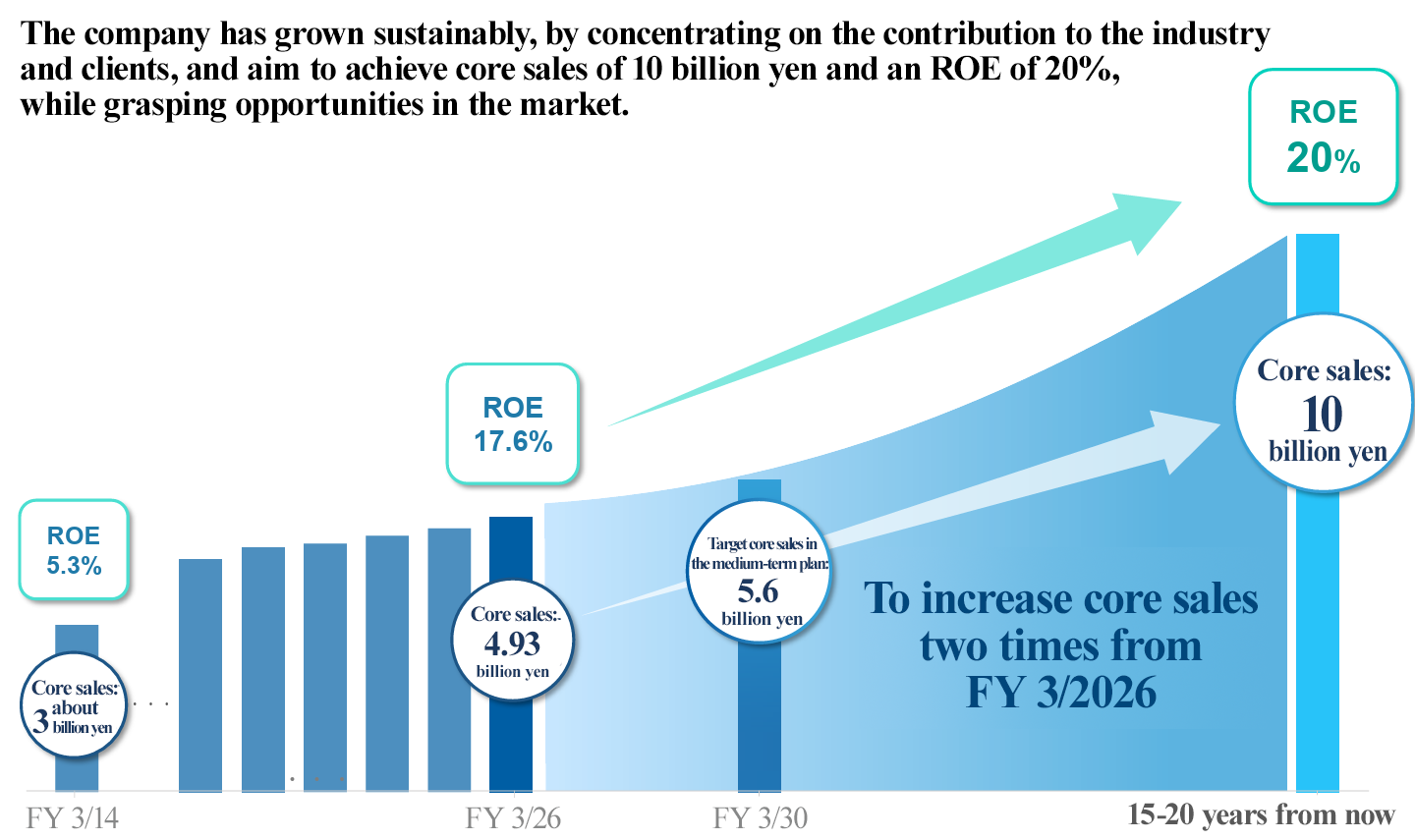
(Taken from the company’s documents)
3. Fiscal Year ended March 2026 Earnings Results
[3-1 Overview of Financial Results]
| FY 3/25 | Ratio to sales | FY 3/26 | Ratio to sales | YoY | Compared with revised forecast |
Sales | 5,300 | 100.0% | 5,658 | 100.0% | +6.7% | +1.0% |
Gross Profit | 1,503 | 28.4% | 1,784 | 31.5% | +18.7% |
|
SG&A | 642 | 12.1% | 763 | 13.5% | +18.8% |
|
Operating Income | 860 | 16.2% | 1,021 | 18.0% | +18.7% | +2.1% |
Ordinary Income | 849 | 16.0% | 1,011 | 17.9% | +19.2% | +2.2% |
Net Income | 581 | 11.0% | 542 | 9.6% | -6.6% | +4.4% |
*Unit: million yen. The revised forecast ratio is the ratio to the earnings forecast announced in January 2026.
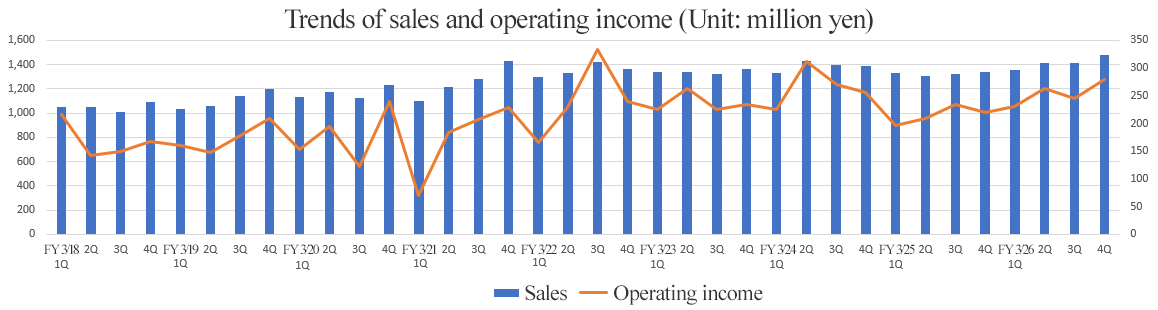
Sales and profit grew, exceeding the revised forecasts.
The sales stood at 5,658 million yen, up 6.7% year on year, as application services performed steadily, and the performance of AMO and SO services was also favorable.
Operating income reached 1,021 million yen, up 18.7% year on year. Gross profit grew 18.7% year on year due to price revision, the withdrawal from spot projects concerning AMO services with low profitability, etc. Gross profit margin rose 3.1 points, offsetting the augmentation of SG&A expenses (up 18.8% year on year) caused by the increase in personnel costs and the provision for stock-based remuneration of executives in step with the adoption of the Employee Stock Ownership Plan (J-ESOP). Net income was 542 million yen, down 6.6% year on year. The provision for stock-based remuneration of 122 million yen was posted as an extraordinary loss.
Both sales and profit exceeded the revised forecasts.
[3-2 Trend of each service]
| FY 3/25 | Composition ratio | FY 3/26 | Composition ratio | YoY |
XNET services | 5,297 | 99.9% | 5,650 | 99.9% | +6.7% |
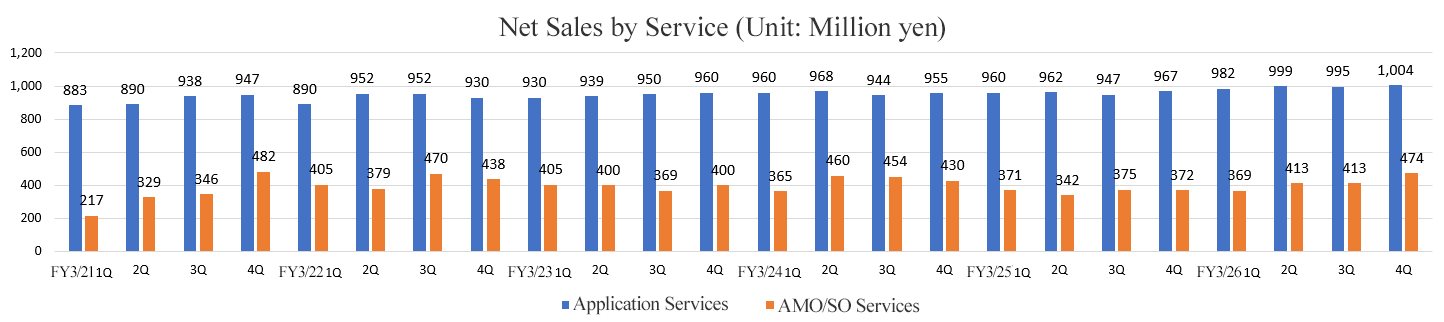
Application services | 3,836 | 72.4% | 3,980 | 70.3% | +3.8% |
AMO/SO service | 1,460 | 27.5% | 1,669 | 29.5% | +14.3% |
Equipment sales, etc. | 3 | 0.1% | 7 | 0.1% | +156.8% |
Total sales | 5,300 | 100.0% | 5,658 | 100.0% | +6.7% |
*Unit: million yen.
◎ Application services
Sales grew. Overall performance was stable, and the revision to usage fees in response to the augmentation of procurement costs contributed, in some services where market data, etc. are procured.
The securities management system, which is the mainstay, has been improved and updated as a system that supports the practice of securities management of institutional investors, and offers services stably. In parallel, they actively link this system with other companies’ systems as “an ecosystem orchestrator in the asset management field,” and constantly create new services. Through this, their services are increasingly adopted in not only the industries of consulting for investment in investment trusts and life/non-life insurance, but also local banks and Shinkin banks. The performance of the securities management system remains healthy as a main service, as there are few existing customers who have cancelled it. In parallel with the market expansion due to the aging of the population, trust products of financial institutions, such as local banks, have been diversified and functions have been enriched, regarding trust management systems for individuals, including trusts for distributing assets of trustors to beneficiaries if the trustors die. The company has established a position as a system vendor in this market, but the pace of increasing new customers slowed down somewhat. However, the scale of services is expanding, through the operation of optional services, including trust management with restrictions on cancellation, for existing customers. Regarding the loan management system, it is increasingly adopted in the life/non-life insurance industry, and also in local banks. In parallel with the recent change in the interest environment, loans have become more important as a means for asset management of institutional investors, and the business scale of loan management systems is expected to grow further in the fields of life/non-life insurance and banking.
◎ AMO services
Sales grew. As institutional investors, which are their clients, suffered from the shortage of IT personnel, the knowledge and supporting skills related to financial systems, which have been accumulated for many years, were highly evaluated, and continuous maintenance projects (monthly-charged AMO services), which generate core sales, kept growing. They withdrew from less profitable spot projects, but they received orders for multiple system installation projects that are relatively large (spot AMO services), and revised prices for offsetting the augmentation of costs through the investment in human resources, etc., which contributed to the sales growth.
◎ SO services
Sales grew. The services for investment trust companies and investment advisory companies kept performing well, and the scale of the services gradually increased in the life/non-life insurance industry. Regarding the SO services in the life/non-life industry, they are preparing for offering the SO services to multiple companies.
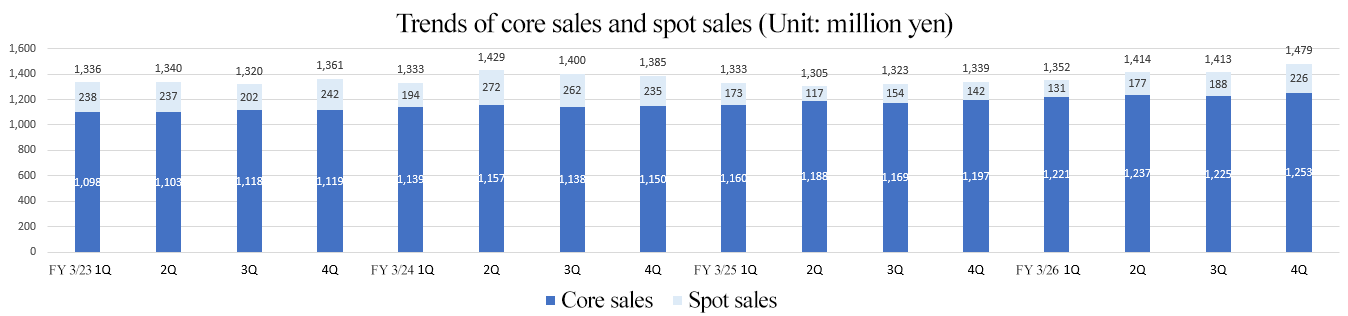
◎ Regarding core sales
Core sales grew 4.7% year on year to 4,936 million yen. They aimed to achieve core sales of 5 billion yen in the fiscal year ended March 2026, which is the final fiscal year of the medium-term management plan, but actual core sales were slightly less than the target, that is, 98.7% of the target. The ratio to total sales is still high, being 87.2%.
[3-3 Financial Standing and Cash Flows]
◎ Main Balance Sheet
| End of March 2025 | End of March 2026 | Increase/ Decrease |
| End of March 2025 | End of March 2026 | Increase/ Decrease |
Current assets | 2,220 | 1,772 | -448 | Current liabilities | 3,126 | 2,093 | -1,032 |
1,456 | 1,188 | -267 | Short-term borrowings | 2,500 | 1,200 | -1,300 | |
Securities | 300 | - | -300 | Payables | 319 | 330 | +11 |
Non-current assets | 4,460 | 4,347 | -112 | Non-current liabilities | 633 | 767 | +134 |
Intangible assets | 1,221 | 1,281 | +59 | Total liabilities | 3,759 | 2,861 | -898 |
Software | 1,220 | 1,280 | +59 | Net assets | 2,921 | 3,258 | +336 |
Investment, others | 3,146 | 2,969 | -176 | Retained earnings | 6,636 | 6,917 | +280 |
Total assets | 6,680 | 6,119 | -561 | Treasury Stock | -5,959 | -5,903 | +55 |
|
|
|
| Total liabilities and net assets | 6,680 | 6,119 | -561 |
*Unit: million yen. The software contains temporary accounts.
Total assets decreased 500 million yen from the end of the previous fiscal year to 6.1 billion yen, due to the decrease in cash & deposits and securities, etc.
Total liabilities dropped 800 million yen to 2.8 billion yen, due to the decrease in short-term debt, etc.
Net assets rose 300 million yen to 3.2 billion yen, due to the increase in retained earnings, etc.
Equity ratio rose 9.5 points from the end of the previous fiscal year to 53.2%.
◎ CF
| FY 3/25 | FY 3/26 | Increase/Decrease |
Operating Cash Flow | 837 | 1,246 | +409 |
Investing Cash Flow | 1,263 | -8 | -1,272 |
Free Cash Flow | 2,100 | 1,238 | -862 |
Financing Cash Flow | -3,682 | -1,505 | +2,177 |
Balance of Cash and Equivalents | 1,456 | 1,188 | -267 |
*Unit: million yen.
The cash inflow from operating activities expanded due to the increase in operating revenue, etc., but the cash flow from investment activities turned negative and the surplus of free cash follow shrank, as there was no longer the income from the withdrawal of deposits of affiliates in the previous fiscal year. The cash position declined.
[3-4 Topics]
① Completion of the registration of the “business of undertaking tasks related to investment management”
In May 2026, the registration of the “business of undertaking tasks related to investment management (tasks regarding the assessment of the value of assets under management)” was completed in accordance with the Financial Instruments and Exchange Act.
The business of undertaking tasks related to investment management facilitates the entry to the field of asset management business, while the government has a plan to realize a country exceling at asset management, so this system was enforced and established in May 2025 as a system for arbitrary registration specified in the Financial Instruments and Exchange Act, in order to develop an environment in which investment management enterprises or the like can concentrate on investment management by outsourcing related tasks to enterprises whose quality has been secured.
When the company undertakes the tasks related to investment management as a registered enterprise, the requirements for registration of investment management business or the like (requirements for the personnel structure) will be partially loosened for the client asset management company. In addition to the already offered services, they plan to contribute to the “facilitation of the start of asset management business” and the “streamlining of operation” aimed at for an asset management-oriented country.
② Started offering the SO service to Sony Life Insurance Co., Ltd.
On April 27, 2026, they started offering the “SO service” to Sony Life Insurance Co., Ltd. as the fourth client life insurance company.
4. Fiscal Year ending March 2027 Earnings Forecasts
[Earnings Forecast]
| FY 3/26 | Ratio to sales | FY3/27 (Est) | Ratio to sales | YoY |
Sales | 5,658 | 100.0% | 5,800 | 100.0% | +2.5% |
Operating Income | 1,021 | 18.0% | 700 | 12.1% | -31.5% |
Adjusted Operating Income | 3,461 | 61.2% | 3,545 | 61.1% | +2.4% |
Ordinary Income | 1,011 | 17.9% | 700 | 12.1% | -30.8% |
Net Income | 542 | 9.6% | 450 | 7.8% | -17.1% |
*Unit: million yen. Estimates are those of the company.
Forecast to see an increase in sales and a decline in profit.
Sales are expected to grow 2.5% year on year to 5.8 billion yen and operating income is projected to decrease 31.5% year on year to 700 million yen.
Both core and spot sales are expected to grow due to the healthy performance of each service. In terms of profit, profit and profit margin are projected to decline, as they plan to actively conduct additional investment in human resources, etc.
In the new medium-term management plan, they decided to adopt adjusted operating income, which is calculated by adding the investment in human resources (personnel expenses) and the investment in systems (depreciation) to operating income as a management indicator. The adjusted operating income in the fiscal year ending March 2027 is expected to be 3.5 billion yen, up 2.4% year on year. The company plans to pay a dividend of 70.00 yen/share, up 22.50 yen/share from the previous fiscal year. It will be composed of the base dividend of 50.00 yen/share and the extra dividend of 20.00 yen/share. The expected payout ratio is 65.0%.

5. Conclusions
In the period of the previous medium-term management plan, core sales were 4.93 billion yen, slightly below the target: 5 billion yen, but operating income margin and ROE exceeded the targets significantly. They recognize some issues, but it can be said that the previous medium-term plan progressed as assumed. In the new medium-term plan, they aim to achieve “core sales of 5.6 billion yen, an adjusted operating income of 3.8 billion yen, and an ROE of 15.0%” in the fiscal year ending March 2030. We would like to pay attention to measures of the company, which aims to achieve core sales of 10 billion yen and an ROE of 20% in the long term, while taking advantage of the advantage of the capability of providing high-level “applications,” “know-how,” and “support” seamlessly while occupying an outstanding market share, and the progress of the measures.
<Reference : Regarding Corporate Governance>
◎ Organization type, and the composition of directors and auditors
Organization type | Company with audit and supervisory committee |
Directors | 8 directors, including 4 outside directors (of which 4 are independent directors) |
Audit and supervisory committee member | 4 members, including 4 outside directors (of which 4 are independent directors) |
◎ Corporate Governance Report
Last update date: July 9, 2025
<Basic Policy>
We recognize that continuous improvement of business performance contributes to the development of society, enhances corporate value, and meets the expectations of our shareholders and other stakeholders. To this end, we believe that it is important for corporate governance to function effectively, realize a system that can appropriately respond to changes in the business environment, and conduct fair and transparent corporate management.
<Reasons for Non-compliance with the Principles of the Corporate Governance Code (Excerpts)>
[Supplementary Principle 3-1-2]
Considering the company's foreign shareholder ratio (2.3% as of the end of March 2025), the scale of its business, and the cost of disclosure in English, the company has determined that it is premature to disclose and provide information in English at this time.
It will discuss the necessity of English-language disclosure at meetings of the Board of Directors and other forums while taking into consideration the trends in the ratio of foreign shareholders, the scale of its business, and the status of its overseas business operations.
<Disclosure Based on the Principles of the Corporate Governance Code (Excerpts)>
[Principle 1-4]
Currently, we do not hold any listed shares for strategic shareholding.
Although we do not plan to hold such shares in the future, if the possibility of holding listed shares should arise, we will take sufficient time to thoroughly examine and verify the purpose, benefits, and risks in advance, based on this principle, and will disclose the results of such examination and establish and disclose the criteria for exercising voting rights.
[Supplementary Principle 2-4-1]
(1) Human resources development and in-company environment development policies, and their statuses
Our approach to human resources development is based on on-the-job training (OJT), which is supplemented by off-the-job training (OffJT), mainly the training programs listed below, to proactively support employees in strengthening their skills.
・ Group training for new employees
・ Business training by level
・ Training on basic financial knowledge
・ Training on individual themes
・ Introductory training in system development
・ Others
In addition, as an initiative to complement employee development, we are promoting the hiring of the following people
・ Hiring people who want to give back to the industry, such as veterans and retirees who have been active in the asset management industry for many years
・ Hiring women left the industry after maternity or childcare and resigned employees who are experienced in the asset management industry
・ Rehiring highly skilled and highly motivated former employees who are recognized by all
・ Hiring people (such as temporary staff) who are employed with us and who love our corporate culture and values
・ Hiring fresh graduates from high school
We actively hire people who understand our corporate culture and values, and we will continue to upgrade their skills as we integrate them within the company.
(2) Ensuring diversity
In order to create and provide services that continue to be sought after in the asset management industry, we continuously hire diverse human resources, including mid-career hires with a variety of work experience, and allocate them in a manner that respects their motivation and abilities so that each and every employee can grow to become a professional.
<Promoting women in managerial positions>
We believe that diversity in human resources, or diversity in values, is essential for maintaining the vitality of an organization. In this context, we are developing and improving various support systems to promote the active participation of women and enable them to work in a more flexible and diverse manner. As a result, the ratio of women in managerial positions is increasing and will continue to do so in the future.
<Promoting non-Japanese employees in managerial positions>
At present, the percentage of non-Japanese employees is very low due to the fact that our business domain is limited to the domestic domain, and we have no track record of promoting non-Japanese employees to managerial positions. For the same reason, we do not set or disclose targets for the ratio of non-Japanese managers. However, it is our basic policy to evaluate employees based on their abilities and achievements regardless of their nationality.
<Promoting mid-career hires to managerial positions>
In order to secure diverse human resources, our company has adopted mid-career hiring as a general rule since its founding, and mid-career hires account for 100% of our managerial positions. We will continue to focus on mid-career hiring based on our policy of cultivating and securing diverse human resources specializing in asset management IT and maintain the high ratio of mid-career hires in managerial positions, which is one of our company's unique characteristics.
Please refer to our website for information on the status of our employees, managers, and our training policy.
Development of IT human resources for asset management https://www.xnet.co.jp/if/sus2.html
[Supplementary Principle 3-1-3]
(1) Initiatives for sustainability
Recognizing the importance of ESG (Environmental, Social, and Corporate Governance) in improving corporate value over the medium term, we have posted our policy on sustainability and other initiatives for sustainable growth on our website. For more information on our approach toward sustainability, policies, and initiatives, please visit our website.
Sustainability https://www.xnet.co.jp/if/index_sus.html
(2) Investment in human capital
In addition to supporting the diverse work styles of our diverse human resources, we are developing and improving our work-life balance support system to enable our employees to realize their ideal work styles in order to meet the demand from society, such as promoting the active participation of women and rectifying long working hours.
In addition, human resources are essential for creating and providing services that continue to be sought after in the asset management industry. To this end, we actively support the growth of each employee so that they can become professionals. Please refer to our website for more information on our efforts to provide diverse work styles and human resources development initiatives.
https://www.xnet.co.jp/if/sus2.html
(3) Investment in intellectual property
As a provider of securities management systems and related services, we recognize that intellectual property is an important corporate asset. Our policy is to maintain and manage these assets appropriately and utilize them effectively as our strength. By securing intellectual property rights that are beneficial to our business as needed, and working on intellectual property activities, we aim to differentiate our services and secure a competitive advantage in the market, as well as to prevent infringement of intellectual property rights of third parties, including customers and business partners, and intend to reduce legal risks in our business operations. In addition to maintaining regulations in the divisions in charge, we are working to raise awareness of intellectual property rights by providing educational and enlightening opportunities for employees.
[Principle 5-1]
Our company proactively responds to requests for individual interviews, including those from shareholders, taking into consideration the equality of information disclosure and the necessity from the perspective of improving corporate value, and the President and Representative Director responds to such requests.
Our policy for dialogue with shareholders and other stakeholders is as follows.
(i) The President and Representative Director oversees IR activities and promotes activities to promote dialogue with shareholders.(ii) In conducting IR activities, the personnel in charge of corporate planning, IR, legal affairs, general affairs, accounting, and other areas within the Administration Division, under the direction of the President and Representative Director, are directly involved in everything from the preparation of IR materials to company briefings and interviews with individual shareholders, in an effort to ensure continuous internal information coordination while paying close attention to insider information and to ensure fairness of information in dialogues.
(iii) The President and Representative Director reports to the Board of Directors on the opinions received from shareholders and others during IR activities and discusses how to respond to them after sharing and exchanging opinions on the requirements and issues.
[Measures to realize business administration conscious of capital cost and share price]
We have formulated a medium-term management plan for the four years from 2022 and disclosed our management and growth strategy, investment strategy, shareholder return policy, etc. In addition, we disclosed "measures to realize business administration conscious of capital cost and share price" in the "review of the third year of the medium-term management plan for the fiscal year ended March 2025" published on June 11, 2025.
For details, see below.
https://www.xnet.co.jp/if/ceomesfiles/ceomes6_20250611.pdf
This report is intended solely for information purposes and is not intended as a solicitation for investment. The information and opinions contained within this report are made by our company based on data made publicly available, and the information within this report comes from sources that we judge to be reliable. However, we cannot wholly guarantee the accuracy or completeness of the data. This report is not a guarantee of the accuracy, completeness, or validity of said information and opinions, nor do we bear any responsibility for the same. All rights pertaining to this report belong to Investment Bridge Co., Ltd., which may change the contents thereof at any time without prior notice. All investment decisions are the responsibility of the individual and should be made only after proper consideration. Copyright(C) Investment Bridge Co., Ltd. All Rights Reserved. |