


Bridge Report:(8860)Fuji the Second Quarter of Fiscal Year ending March 2026

 President Nobutsuna Miyawaki | Fuji Corporation Ltd. (8860) |
 |
Company Information
Exchange | TSE Prime Market |
Industry | Real Estate |
President | Nobutsuna Miyawaki |
HQ Address | 1-4-23 Habucho, Kishiwada-shi, Osaka |
Year-end | End of March |
Homepage |
Stock Information
Share Price | Share Outstanding(excluding treasury stock) | Market Cap. | ROE (Act.) | Trading Unit | |
¥792 | 36,051,723 shares | ¥28,553 million | 9.0% | 100 shares | |
DPS (Est.) | Dividend Yield (Est.) | EPS (Est.) | PER (Est.) | BPS (Act.) | PBR (Act.) |
¥32.00 | 4.0% | ¥102.63 | 7.7x | ¥1,518.50 | 0.52x |
* The share price is the closing price on December 15, 2025. The number of shares issued at the end of the most recent quarter excludes its treasury shares.
* ROE and BPS are based on FY 3/25 earnings results. EPS and DPS are based on FY 3/26 earnings estimates.
Earnings Trends
Fiscal Year | Net Sales | Operating Income | Ordinary Income | Net Income attributable to owners of the parent | EPS | Dividend |
March 2022 Act. | 118,698 | 5,871 | 5,627 | 3,869 | 107.68 | 27.00 |
March 2023 Act. | 114,473 | 6,091 | 5,744 | 3,817 | 106.65 | 27.00 |
March 2024 Act. | 120,388 | 7,264 | 6,643 | 4,559 | 126.69 | 30.00 |
March 2025 Act. | 123,927 | 7,894 | 6,987 | 4,764 | 131.61 | 32.00 |
March 2026 Est. | 126,000 | 7,200 | 5,700 | 3,700 | 102.63 | 32.00 |
*Units: million yen, EPS and dividend are yen.
This Bridge Report provides information about Second Quarter of Fiscal Year ending March 2026 Earnings Results of Fuji Corporation Ltd.
Table of Contents
Key Points
1. Company Overview
2. New Medium-Term Management Plan (FY 3/26 to FY 3/28)
3. Second Quarter of Fiscal Year ending March 2026 Earnings Results
4. Fiscal Year ending March 2026 Earnings Estimates
5. Conclusions
<Reference: Regarding Corporate Governance>
Key Points
- In the cumulative second quarter of FY 3/2026, sales grew 19.6% year on year and ordinary income rose 20.0% year on year. In terms of sales, they progressed healthily with the completion and delivery of large-sized condominiums and the delivery of freely designed houses in the Segment of Residential Properties for Sale. In the Housing Distribution Segment, they secured plenty of inventory by enhancing procurement in the previous fiscal year, and the number of delivered used condominium units increased significantly thanks to the strong demand for them. Also in the Effective Land Utilization Segment, they saw the steady progress of the entrusted construction of rental housing, etc. as well as rental apartment buildings for individual investors, which kept performing well. The sales in the Property Leasing and Management Segment, which is linked to the Effective Land Utilization Segment, increased as assumed. Namely, all segments performed well. In terms of profits, gross profit margin declined year on year. This is mainly because the sale of profitable large land was posted in the same period of the previous year. Order backlog, which is a leading indicator of sales, stood at 60.3 billion yen, which was relatively high as of the end of the second quarter, indicating the healthy receipt of orders.
- As the second quarter has ended, the company’s forecast for FY 3/2026 has been left unchanged, calling for sales increasing 1.7% year on year and ordinary income decreasing 18.4% year on year. In the Business of Sale of Newly Built Residential Properties, they will secure a sufficient number of properties for sale, and are expected to receive a healthy number of orders for detached homes. The Housing Distribution Business, in which they sell residential properties at lower prices than newly built ones, is projected to keep performing well. Also in the Effective Land Utilization Business, they have received a favorable number of orders for construction, and the order backlog as of the end of the interim period hit a record high. The sales and profit of the Property Leasing and Management Business, too, are growing as expected, and progressing steadily toward the full-year consolidated earnings forecast. The dividend forecast has been left unchanged, and they plan to pay 32 yen/share per year (an interim dividend of 16 yen/share and a year-end dividend of 16 yen/share), unchanged from the previous fiscal year, in which they increased the dividend amount by 5 yen/share.
- In order to improve performance from the next fiscal year, it is indispensable to increase inventory real estate and order backlog, which is a leading indicator. Reflecting the favorable number of orders received, the order backlog as of the end of the interim period hit a record high. Inventory assets are slightly low compared with sales, as they control inventory thoroughly. The procurement environment has improved due to the rise in interest rate, the sluggish performance of competing small and medium-sized enterprises, etc., so they are expected to procure more properties. It is noteworthy whether they can increase order backlog and inventory real estate for growth from the next fiscal year.
1. Company Overview
Fuji Corporation Ltd. provides various real estate related services including sales of new and used condominiums and detached houses primarily in Osaka Prefecture (where the Company is based), between Osaka and Kobe, and within Wakayama City. Their main business is the sale of detached houses, albeit a built-for-sale type, that would maximize customer satisfaction by allowing for the “free-design house” regarding layout, specifications, etc. within the boundaries of Japan’s Building Standards Act. Fuji also boasts of strengths in the development of properties where 50 to 200 homes are constructed in coordination with the surrounding environment and each other to provide uniformity in neighborhoods. The other main pillars of the Company’s business include renovation and sale of used residential properties, collaboration with financial institutions for effective land utilization, sales of rental apartments for sale to individual investors, property leasing and management services.
Fuji boasts of unique knowhow developed in various businesses realms derived from its sales agency and detached house services. Furthermore, the complementary and synergistic effects that occur between its various business divisions allow the Company as a Complete Home Provider to respond with solutions that match the needs of home owners and residents in various geographic regions and times. Taking advantage of its strength in community-based management, the company aims to create homes that deliver high customer satisfaction by a special relationship with customers that doesn’t end just after sell or build them a home.
In addition, each of the company's businesses, consisting of residential properties for sale, housing distribution, effective land utilization, leasing and management, and construction-related businesses, has its own know-how and promotes balanced management that complements each other’s business segments. Starting with the sublease business of rental apartments for sale to individual investors and serviced housing for seniors for individual investors, the company has been diversifying the business, operating the asset business of existing residential properties and the business of owning serviced rental housing for seniors, and expanding its recurring-revenue business that will withstand any change in economic trends.
1-1 Management ethos
The company operates for the sake of:
・Employees,
・Employees’ families,
・Customers and business partners,
・Shareholders,
・Local communities, and
・Ultimately, the nation.
The company's management ethos begins with “for employees and their families” because it believes that if employees or their families are not happy, they cannot do work that would truly please customers. By treasuring employees and their families and providing them with a sense of gratitude, pride in their work, motivation, and a sense of purpose in life, the employees will be able to value customers truly, which the company believes will lead to the happiness of all stakeholders, including business partners, shareholders, local communities, and the nation.
1-2 Business Description
Fuji Corporation Ltd. is a “comprehensive creator of housing” that meets all kinds of needs regarding housing. Soon after establishing the company, they launched a detached home business with a system for procuring land, obtaining permission and approval, designing, building, and selling houses in a seamless manner, and then nurtured the know-how to design and construct condominiums. In the rental apartment business, they created the real estate management business. These businesses evolved into the Effective Land Utilization Business, where they undertake the construction of apartments and condominiums, and then they established the business of selling rental apartment buildings for individual investors. Furthermore, they launched the custom home business.
By taking advantage of the characteristics of community-based business administration and inducing synergy among a broad range of businesses related to housing, they are making efforts to provide real estate and services that will satisfy customers to a great degree.
*The percentage represents the ratio of sales in each business segment to the total sales of the reporting segments (excluding internal sales).
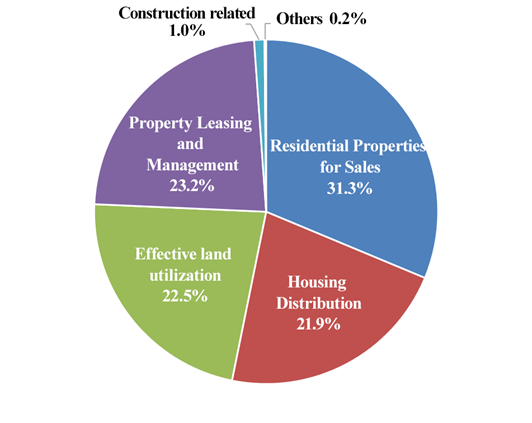
Residential Properties for Sales (accounting for 31.3% of total sales in 1H of FY 3/26)
With its base of operations in Osaka Prefecture and the surrounding areas, the company sells freely designed new detached houses, built-for-sale houses, and condominiums, and also undertakes the construction of custom houses. It specializes in “development of a town” with 50 to 200 homes and offers “free-design house” in which customers themselves participate in building their homes, as well as its unique ventilation system “Sumi no Ie (a house with a system for purifying air with charcoal)/Pure Air,” which harnesses the self-purifying properties of charcoal.
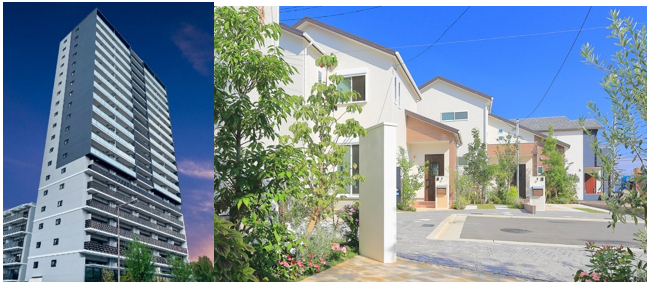
(Taken from the website of the company)
Housing Distribution (accounting for 21.9% of total sales in 1H of FY 3/26)
The company is engaged in the “business of purchasing and reselling used residential properties,” in which it purchases used residential properties, renovates them, and sells them, and the “used housing asset business,” in which it acquires existing condominiums with tenants and earns rental income and profit on the sale of the condominiums through resale. The company aims to further stabilize its earnings base by focusing on the highly competitive and profitable used housing asset business, while continuing the inventory optimization and strict procurement policy emphasizing profit, which were started in the previous fiscal year. By renovating aged residential properties and supplying them to the real estate distribution market, they contribute to a sustainable society and the vitalization of real estate in the Kansai area.
[Renovation example]
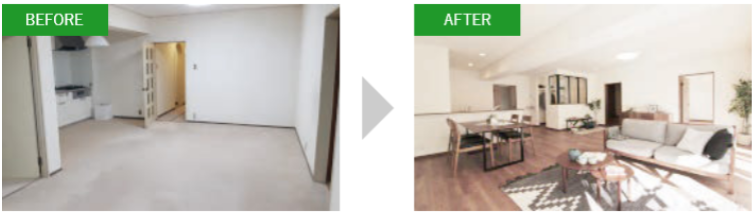
(Taken from the website of the company)
Effective Land Utilization (accounting for 22.5% of total sales in 1H of FY 3/26)
They undertake the construction of rental housing while giving proposals by utilizing the know-how of rental management. While operating the core business of selling rental apartment buildings for individual investors, in which they procure land and build and sell rental apartments, etc., they sell rental apartments for seniors with nursing-care services and undertake construction. Under a management policy of aiming to be “the most beloved effective land utilization business section in Japan,” the company has been able to exist solely in the closed market for many years, thanks to an extremely high repeat order rate and introduction of customers by its financing banks. The demand from investors is extremely strong, and the company expects the environment of strong demand to continue, leading to solid performance.
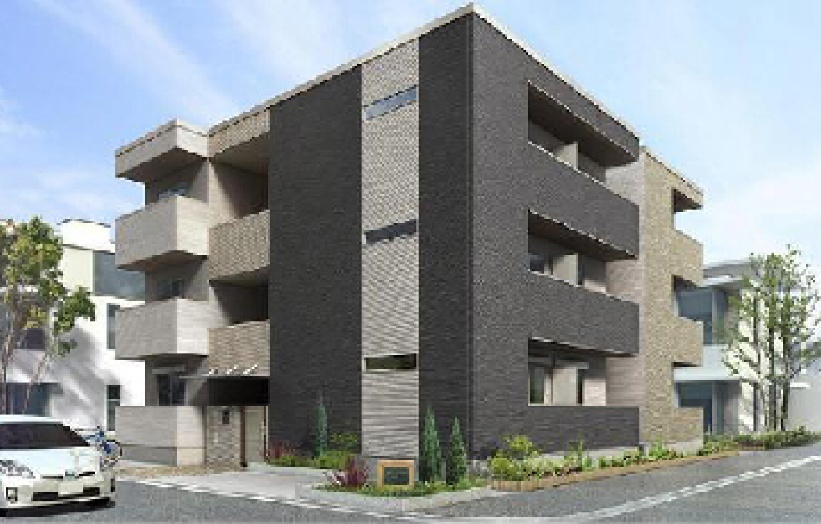
(Taken from the website of the company)
Property Leasing and Management (accounting for 23.2% of total sales in 1H of FY 3/26)
The company's wholly owned subsidiary Fuji Amenity Service Co., Ltd. provides management services such as the management of rental apartment buildings, tenant recruitment, and rent collection, as well as management of condominiums on consignment from their management associations. The company boasts the nation's largest number of affordable apartments for seniors with nursing-care services, which are operated only in the Kansai area. The company expects these operations to continue to be healthy in the current fiscal year and to become a key component of its long-term, stable earnings base, thanks to the strong synergetic effects of the construction contracts in the effective land utilization business, the sale and deliver of rental apartments for sale to individual investors and condominiums in the business of residential properties for sales.
Construction related (accounting for 1.0% of total sales in 1H of FY 3/26)
In January 2020, the company welcomed the Yuuken Construction Group, which has a proven track record in steel-framed and reinforced concrete construction work, as a partner, and is providing steel-framed housing for the “Fuji Palace Senior,” which is affordable apartments for seniors with nursing-care services, as well as carrying out public works projects, mainly architectural and civil engineering works. The company aims to expand its business lineup by carrying out steel-framed and reinforced concrete construction work all by itself and steadily expand its business performance.
Other business (accounting for 0.1% of total sales in FY 3/26)
This business segment is not included in segments to be reported, but includes the insurance agency business operated by the company.
1-3 Strengths of Fuji Corporation
◎ Creating customer-oriented homes that can take responsibility for meeting customer needs
The company’s name is derived from Mt. Fuji, with the aim of becoming "the most beloved company in Japan.” The company believes that a house is a once-or-twice-in-a-lifetime purchase, and that it must be a business that satisfies its customers to the very end. The company believes that providing safe and reliable products and services, and meeting the expectations and trust of its customers are of utmost importance, so that all its customers will be happy to say, "Fuji will take care of everything right through to the end, and I am glad I bought a house from Fuji." Since the company's founding, it has continued to build homes that are customer-focused and responsible. As a result, the company has been highly recognized by customers. This is evident through the many introductions of new customers by existing customers and cooperating companies and the repeat contracts from existing customers. Moreover, in the 2025 Oricon Customer Satisfaction ® Survey, the company has received high praise from customers, being ranked first in "Kinki" and "Osaka Prefecture."
In the division of residential properties for sale (new construction), 30.0% of orders received come from customers who have previously purchased a home from the company or through referrals from the company's affiliates. In the housing distribution division (used houses), 47.6% of orders for properties sold directly without intermediary agents also come from previous customers or referrals from company affiliates. In the effective land utilization division, owners who have signed contracts for 2 or more buildings (repeaters) account for around 40% of all owners who have signed contracts with them. This proves that customers are satisfied with the quality, rental management, etc. of rental apartment buildings.
* The number of contracts concluded through referrals for the division of residential properties for sale (new construction) is calculated based on the number of lots when multiple lots are purchased at the same time (excluding sales of land). (Taken from the reference material of the company)
◎ Stable Business Structure with Balanced Management
Although the company's sales area is limited to Osaka and parts of Hyogo and Wakayama Prefectures, each of its divisions boasts a national level or the largest market share within its sales area. In the business of residential properties for sale, the company was ranked first in the number of housing starts in Osaka Prefecture in the builder category released in February 2023, for 17 consecutive years until fiscal 2021 (although it has not been certified since fiscal 2022 as the survey was terminated, the company believes that it still maintains the largest share of the market). In the housing distribution business, it is ranked 8th in Japan for the number of used housing purchases and resales, and in the property leasing and management department, it is ranked first in Japan by a long way with 275 affordable apartments for seniors with nursing-care services.
Source: Ranked first among builders in Osaka Prefecture, excluding Osaka City, in terms of the number of housing starts. (The results in Osaka City were excluded) (Taken from “Collection of No. 1 Home Builders in 2023” by Jutaku Sangyo Kenkyusho Co., Ltd.)
Source: Ranking in terms of the number of residential properties purchased and resold in 2025, the Japan Journal of Remodeling (published on July 28, 2025), Source: Bumper issue of Elderly Housing Newspaper in the summer of 2025
In addition, (1) the ability to conduct business that meets the needs of a wide range of customers, (2) the expansion of business opportunities by responding to a wide variety of commercialization, and (3) a high tolerance for changes in the economy and market conditions are strengths of balanced management.
[Sales composition by business segment in balance (2Q of FY 3/26)]
◎ Sumi no Ie (House of Charcoal) / Pure Air
Pollens, bacteria, and viruses are becoming grave problems in addition to air pollution due to such factors as exhaust gas. Fuji Corporation’s “Sumi no Ie / Pure Air” was born through its efforts of putting together the technologies that it has cultivated and focusing thoroughly on air and quality. The company has gained the right to use the patented system “Sumi no Ie” within the corporate group’s sales area, and offers safe housing as a product that differentiates it from other companies and possesses added value.
Sumi no Ie (a house with a system for purifying air with charcoal)/Pure Air is a carbon air clean system that forcibly draws in outdoor air with a fan, and blocks minute harmful substances with a microparticle filter. By putting charcoal under the floor and passing air through it, clean air is supplied to each room.
In some lots of land for sale, they hold an event for experiencing a stay at “Sumi no Ie (a house with a system for purifying air with charcoal).” This event has been held since 2019, and many people have experienced a stay at “Sumi no Ie.” In this event, those who are thinking of buying a detached house and interested in the effects of charcoal stay at a model house of “Sumi no Ie,” a detached house, for a day free of charge, to experience the effects of charcoal and the latest housing equipment.
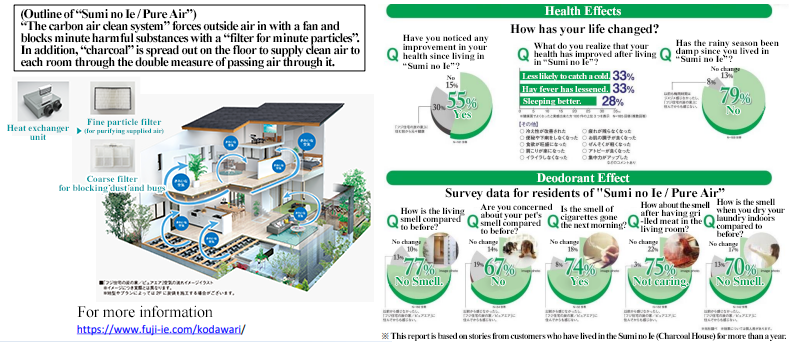
(Taken from the reference material of the company)
*Examples of the effects felt by customers
◎ Provision of high-performance housing
The company considers that its mission is to provide high-quality housing where people can live while being filled with a sense of satisfaction throughout life. As one of the approaches to the mission, Fuji has obtained the housing performance assessment report for all its free design houses, and this means that the company has established a corporate system that enables it to earn the highest grades for all the housing performance indication items (having six kinds). Furthermore, the company has adopted “TRC Damper”, a vibration control system that dampens seismic vibrations, to achieve more effective prevention of walls from being damaged and furniture from falling down.
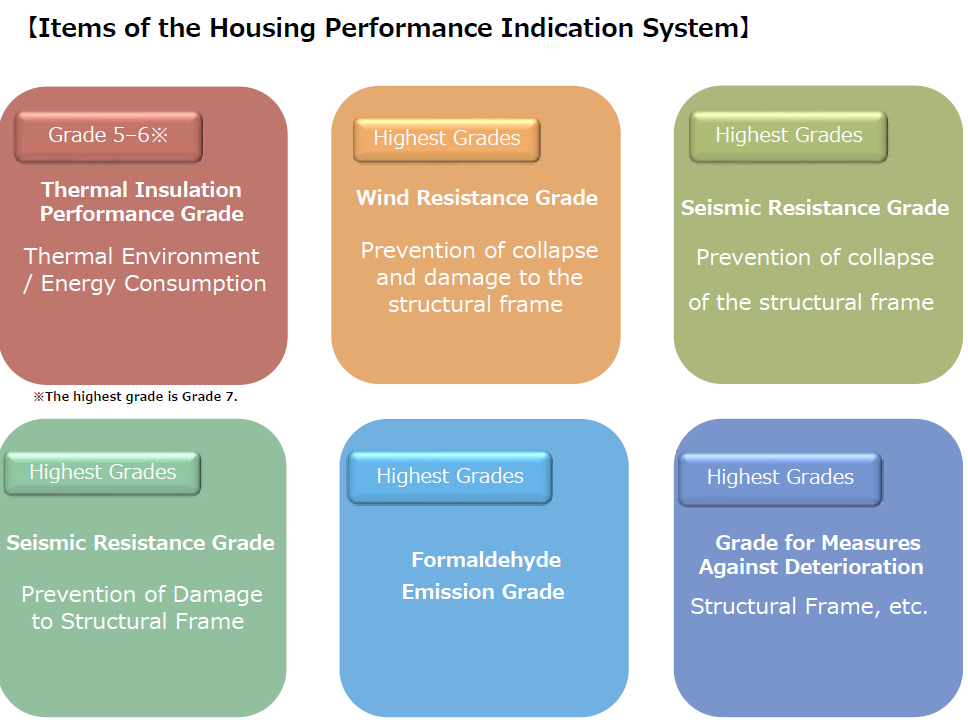
(Taken from the reference material of the company)
*The above contents are as of March 31, 2025.
*All housing units of the company got Grade 5 or higher grades for heat insulation performance, etc. according to the ZEH standards. The company also provides residential properties with Grade 6 to meet the needs of customers.
Considering the trends of the needs of customers and the market, the company plan to provide residential properties with Grade 7, too.
◎ Building a home that can be built because of their close ties to the local community
The company's founding spirit is to "keep taking care of a house after sold or built." The company is committed to continuing its dense business within the scope of its customers' face-to-face contact, and to ensuring a complete after-sales follow-up system, which is why it does not expand its business nationwide. In line with its founding spirit, the company aims to create high-quality housing that is community-based so that customers who have been with the company for decades can continue to live with peace of mind.
◎ Used asset business in collaboration with the leasing management division
The used asset business acquires used condominiums that are already rented. This business model profits by collecting rents until tenants move out, and then the company renovates and resells the properties by collaborating with the leasing management business division. The company is one of the leading companies in Japan in the property purchase and resale business that renovates and resells vacant, used houses. With this business model, the company owns 963 properties in the Kinki region. Namely, it holds a significant number of properties in Kansai, being comparable to the largest companies in the same industry. In addition, the company has diversified exit strategies, such as re-leasing properties with existing tenants as investment properties or selling them with the tenants living in them. Using the corporate group's leasing management division enables the company to manage the properties flexibly according to their attributes. The average area of properties owned as of the end of September 2025 is 58.43m2, and the average building age is about 25 years. Regarding the location of the properties, 64% of them are in Osaka prefecture, and 32% are in Hyogo prefecture, making them the regions with the largest number of properties.
Number of Owned Properties and Percentage of Owned Properties | ||
Region | Number of owned properties (houses) | Percentage of owned properties |
Osaka | 615 | 64% |
Hyogo | 311 | 32% |
Kyoto | 29 | 3% |
Nara | 8 | 1% |
Total | 963 | 100% |
*Properties owned at the end of September 2025
◎ No sales consignment. The company’s employees handle all sales.
The company sells about 1,000 new condominium units annually, and the company's employees conduct sales activities at all sales sites. The company's employees handle land purchase, sales, plan design, construction site management, and after-sales follow-up. The company conducts face-to-face sales activities in an intensive and responsible manner aiming for the best customer satisfaction in Japan and pursuing customer happiness. In the sales department, there are no sales performance graphs for individual employees, but customer reviews and report graphs. The company places great importance on the positive reviews it receives from its customers and is promoting its sales activities by upholding the principles of "a special relationship with customers that doesn’t end just after sell or build them a home."
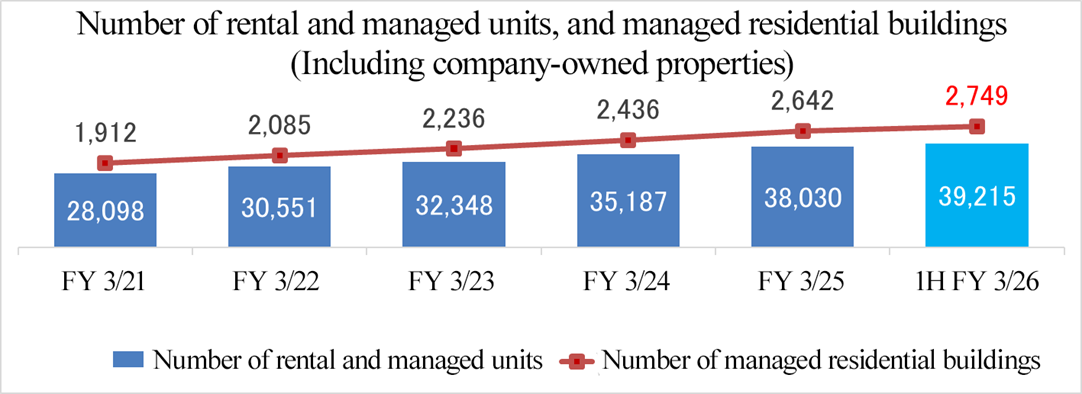
◎ Leasing management that has maintained a high occupancy rate of approx. 97% for the past five consecutive yearsAs of the end of September 2025, the number of rental housing units managed by the company is 39,215 (the number of rental residential buildings managed by the company is 2,749). The occupancy rate is 97.3% (excluding affordable apartments for seniors with nursing-care services). In the past 5 years, occupancy rate has been as high as approx. 97%. This is thanks to the company carefully selecting the location of each property so that its buyer can manage the property with peace of mind over the long term, as well as (1) the company's ability to attract customers through strong cooperation with brokerage companies, (2) its high level of property management, and (3) the rapid and flexible management system due to division of labor.
◎ Stable supply of high-quality housing based on deep trusting relationships with cooperative firms
In order to provide high-quality housing, the company holds a meeting of the council for safety and health every month and a conference of the association for on-site cooperation once a year, to share the management philosophy of the company and carry out the thoroughgoing management of safety and quality. At the conference of the association for on-site cooperation in fiscal year 2024, approx. 900 people of cooperative firms got together, and held a ceremony for commending companies and artisans who aim to “bring happiness to customers” together with Fuji Corporation. In addition, they hold a ceremony for offering letters of appreciation to cooperative firms that make daily efforts to satisfy customers three times a year to express their thanks. Fuji Corporation and cooperative firms join hands to provide high-quality housing in a stable manner.
(4) Comparison of markets
◎ Newly built residential properties for sale
The number of housing starts in Osaka Prefecture decreased significantly after the subsiding of special demand amid the coronavirus pandemic, but they flexibly responded to changes in the market, so their market share remains around 3%, unchanged from the pre-pandemic period. The number of housing starts is in the long-term downward trend around Japan, but they have absolute confidence in quality and after-sale services, as they have built a reputation through community-based business administration for many years and ranked first among builders of ready-built houses in Osaka Prefecture in the Kinki region in Oricon’s survey on customer satisfaction level for 6 consecutive years, and consider that it is not difficult to maintain the number of housing starts.
| FY 3/21 | FY 3/22 | FY 3/23 | FY 3/24 | FY 3/25 |
Number of housing starts in Osaka Prefecture | 24,300 | 24,661 | 25,530 | 21,471 | 21,802 |
Fuji Corporation | 694 | 850 | 670 | 560 | 627 |
Fuji Corporation’s shares in the number of housing starts in Osaka Prefecture | 2.9% | 3.4% | 2.6% | 2.6% | 2.9% |
(Taken from the reference material of the company)
* The number of housing starts (detached homes + condominiums) in Osaka Prefecture with reference to the monthly summary of “Report on the statistical survey on construction starts [Housing]” by the Ministry of Land, Infrastructure, Transport and Tourism
The result of Fuji Corporation means the number of delivered properties (freely designed houses + condominiums) in Osaka Prefecture in each fiscal year.
◎ Used residential properties
As the demand for used properties is growing nationwide due to the rise in prices of newly built houses, the company stably sells over 1,000 properties per year based on the strategy of selling “used condominiums” in urban areas and “used houses” in the suburbs. While they operate business mainly in Osaka and neighboring areas, the company has ranked in the top 10 in Japan in terms of the number of properties purchased and resold per year over the past 5 years, and ranked 8th in Japan in the last ranking.
| FY 3/21 | FY 3/22 | FY 3/23 | FY 3/24 | FY 3/25 |
Number of used residential properties sold by the company | 1,459 | 1,039 | 1,077 | 1,016 | 1,081 |
Ranking in the number of properties purchased and resold per year | 5th | 7th | 7th | 8th | 8th |
(Taken from the reference material of the company)
* The result of the company means the number of properties delivered (used detached houses + used condominiums) in the Kinki region in each fiscal year. The ranking of the company was taken from the Japan Journal of Remodeling.
◎ Rental apartments for seniors with nursing-care services
As the needs for housing where seniors can live with peace in mind are growing in the super-aged society, they have steadily increased buildings they manage mainly in Osaka Prefecture under the concept of “housing where you can have your parents live without worry.” As a result, they maintained an outstanding share in the number of buildings and the number of properties in Osaka Prefecture, and boast the largest number of buildings they manage in Japan.
| FY 3/21 | FY 3/22 | FY 3/23 | FY 3/24 | FY 3/25 |
In Osaka Prefecture | 768 | 781 | 803 | 828 | 843 |
Fuji Corporation | 171 | 190 | 200 | 217 | 230 |
Fuji Corporation’s shares in the number of buildings managed in Osaka Prefecture | 22.3% | 24.3% | 24.9% | 26.2% | 27.3% |
(Taken from the reference material of the company)
* The number of buildings managed in Osaka Prefecture was taken from “Situation of registration of rental apartments for seniors with nursing-care services” by Senior Housing Association.
The result of the company means the number of rental apartments for seniors with nursing-care services supplied in Osaka Prefecture in each fiscal year.
1-5 Efforts for ESG and SDGs
The Fuji Group has engaged in social contribution activities through business activities since the inauguration of business under the management philosophy of “managing the company for the benefit of employees, their family members, customers, business partners, shareholders, local communities, and the nation.” Fuji Corporation aims to become a corporate group that continues growing sustainably together with the society and builds up trust by contributing to the society while being conscious of the relationship of its community-based property management activities with Environmental, Social, and Corporate Governance (ESG) and the Sustainable Development Goals (SDGs).
Environment | ||
Activity | Fuji Group’s efforts | SDGs |
Environmentally friendly business activities | Efforts in the refurbished used residential properties business Renovation of used residential properties produces significantly less CO2 and waste than house reconstruction, which directly results in conservation of resources.
Total heat exchange system that comes with the indoor air quality (IAQ) control system Fuji’s “Sumi no Ie / Pure Air” is energy-saving houses equipped with the total heat exchange system that prevents loss of thermal energy due to ventilation.
Precut technique Fuji lightens environmental burdens by reducing waste materials with the precut technique in which wood, which is machined at factories in advance, is assembled on site.
Cellulose fiber (heat insulation) Cellulose fibers that Fuji adopts as heat insulation are made by recycling old newspapers that were not delivered and can be produced with significantly less energy than glass wool, the general internal heat insulation, and lighten environmental burdens.
Participation in OSAKA Zero Carbon Smart City Foundation The company participated in the OSAKA Zero Carbon Smart City Foundation to play a leading role in realizing a decarbonized society by 2050 by materializing even more ambitious and advanced initiatives related to the SDGs from Osaka and spreading them nationwide. | 6. Clean water and sanitation
7.Affordable and clean energy
9. Industry, Innovation and infrastructure
11.Sustainable cities and communities
12.Responsible consumption and production
13. Climate action
15.Life on land |
Office Environment Improvements with Consideration for Environmental Conservation | Various internal initiatives for environmental conservation: ・Adoption of hybrid vehicles for all cars for marketing ・Paperless internal documentation through an electronic approval system (abolishing the need for physical stamps) ・Switching of office lighting and the company's headquarters building signage tower to LED ・Energy saving through the promotion of "Cool Biz" ・Use of recycled paper by dissolving used office paper ・Installation of a demand monitoring system to monitor peak electricity usage and control power consumption | |
Environmental Conservation Activities by Employees | Voluntary Tree planting: "Fuji Jutaku no Mori (Fuji Housing Forest)” in Hidakagawa-cho, Hidaka-gun, Wakayama Prefecture A 2.16-hectare forest in Hidakagawa-cho, Hidaka-gun, Wakayama Prefecture has been designated as "Fuji Jutaku no Mori," where employees and their families from the company group participate in volunteer activities, including tree planting and forest cultivation. Through this initiative, the company contributes to the conservation of the local natural environment as a member of the regional community, while working to raise environmental awareness. On Saturday, November 1, 2025, the 7th tree-planting activity at "Fuji Jutaku no Mori" was held, with 42 employees and family members participating as volunteers. They planted 300 saplings and performed underbrush clearing. | 6. Clean water and sanitation
7.Affordable and clean energy
9. Industry, Innovation and infrastructure
12.Responsible consumption and production 13. Climate action
15.Life on land |
Establishment of TCFD Working Group | Promotion of initiatives with an awareness of the relationship between ESG and SDGs and the Company's business activities with community-based management TCFD Working Group was established on April 12, 2022. Based on the framework proposed by the TCFD recommendations regarding the impact of climate change on the company's business, the group is examining future changes in the external environment and promoting initiatives based on the Basic Sustainability Policy. | |
Social | ||
Activity | Fuji Group’s efforts | SDGs |
Establishment of a comfortable work environment (1) | Health Management Initiatives “A company’s performance is determined by its personnel. Without the health and happiness of employees, customer satisfaction or company growth cannot be achieved.” The company has believed this since its establishment, and for its customers to be truly happy, it is important for its employees to be healthy in mind and body, to take pride in their work, to have a sense of fulfillment, and to lead fulfilling lives both in their professional and personal lives. The company was selected three times, in 2016, 2018, and 2019, for the "Health and Productivity Stock Selection," a program jointly conducted by the Ministry of Economy, Trade and Industry and the Tokyo Stock Exchange. In addition, in March 2025, the company has been recognized 8 time by the Ministry of Economy, Trade and Industry (METI) in collaboration with the Japan Health Council as the "Outstanding Health and Productivity Management Organization 2025 Large Enterprise Category (White 500)." Furthermore, the company has been recognized for the third consecutive year as an "Outstanding Company in Cancer Control Promotion" by the Ministry of Health, Labour and Welfare.
Specific Health Management Measures The company's Board of Directors has adopted a policy of priority measures for health promotion. For priority initiatives and measures, the company has set target figures and indicators for health-oriented business administration, and consider the health checkups for all employees as an important issue. The company has achieved a 100% health checkup rate for over 10 consecutive years, including part-time employees. In addition to the legally required medical checkups above, many additional items are added (tumor marker test, H. pylori test, breast cancer echo test for all female employees, and CA19-9 cancer marker test to detect pancreatic cancer, bile duct cancer, and gall bladder cancer starting in April 2022). The company covers the entire cost of employees undergo health examinations that are not specified by law, re-examinations, etc. The company aims to improve long-term business performance through ongoing efforts to maintain and promote employee health. | 1. No Poverty
3. Good Health & Wellbeing
4. Quality Education
5. Gender Equality
8. Decent Work and Economic Growth
10. Reduced Inequalities
|
Establishment of a comfortable work environment (2) | Promoting Workplace Reform through the Introduction of Telework The Company promotes telework as a flexible work style that is not restricted by location or time, utilizing ICT (Information and Communication Technology), and received the "Minister of Internal Affairs and Communications Award for the 100 Pioneers of Telework" in 2018 and selected for the "Telework Promotion Award for Excellence" in 2020 and 2022. In 2024, the company received “the 25th Special Award in the practical section of the Telework Promotion Award.” The company believes that the promotion of telework will lead to the balancing of work and childcare/nursing care, help people with disabilities who have difficulty commuting, secure excellent human resources in rural areas, and establish a business continuity plan (BCP), which will lead to the enhancement of their corporate value.
A proactive approach to sports In support of the idea that the inherent value of sports is that they support "people's lifelong commitment to a healthy and cultured lifestyle in both mind and body," the company has been involved in a variety of sports-related initiatives, including the installation of a box-type hyperbaric oxygen box (maximum capacity of 10 people) for stretching and training, holding walking events, and encouraging people to walk to work in sneakers (the company was recognized as Bronze of "Sports Yell Company 2025" on January 31, 2025). | 1.No poverty
3.Good health and well-being
4.Quality education
5.Gender equality
8. Decent work and economic growth
10.Reduced inequalities
|
Establishment of a comfortable work environment (3) | Operation of Shirahama Recreation Center The company owns a recreation facility in Shirahama-cho, Nishimuro-gun, Wakayama Prefecture, which can be used by all employees, including part-time and temporary employees, including those of group companies. The sanatorium is conveniently located just a 2-minute walk from Shirahama Beach, and offers a hot spring with natural spring water and delicious food using local specialties at a reasonable price. The facility is operated with the aim of "for employees and their families" so that employees can spend a relaxing time with their families and loved ones. | |
Residential development with consideration for safety and security, beautiful scenery, and local community revitalization
| Safe and secure community development The open exterior of the house gives an open, bright, and beautiful impression. In addition, it has the advantage in terms of crime prevention that it is difficult for suspicious people to enter the house because it has a sweeping view. The roads in the town are curved lines based on gentle curves, which naturally reduce the speed of cars and make the town safer.
Community Revitalization Town parks and meeting places have been established as community spaces where anyone, from children to the elderly, can casually drop by, aiming to create a "connected" town where the smiles of the people who live there abound. | 1. No Poverty
2. Zero Hunger
3. Good Health & Wellbeing
10. Reduced Inequalities
11. Sustainable Cities and Communities |
Development of health-oriented homes | Fuji Charcoal House/Pure Air In contrast to the general 24-hour ventilation system of "natural air supply + forced exhaust," Fuji employs a "forced air supply + forced exhaust" system with a fan. In addition, the house is equipped with a double measure to block harmful substances by using a "filter for minute particles" when supplying air, and to pass air through charcoal installed under the floor to remove harmful substances with a particle diameter of 0.5 μm or greater (PM2.5, yellow sand, bacteria, pollen, etc.), keeping clean and clean air in the house 24 hours a day. The company strives to build houses that are healthy and comfortable. | |
Cooperation in support activities for Asian countries | Support activities through Asia Child Support In January 2025, the company received a letter of appreciation from Asian Child Support. The company has set up donation boxes at its head office building and offices, and sends donations received from employees, customers who visit the company, and subcontractors. The company plans to continue its support for the relief efforts. | |
Efforts against the aging society | Development of affordable apartments for seniors with nursing-care services The birthrate has been decreasing and the population has been aging rapidly in recent years, and the ratio of people aged 65 and older to the total population is expected to exceed 35% in 2040. Under these circumstances, how houses as final abodes should be and enrichment of such services as nursing care and medical treatment are crucial social issues. The corporate group provides affordable and quality affordable apartments for seniors with nursing-care services based on a concept of housing at which people can entrust their parents with a sense of safety, and the number of the rental housings that it operates is 275 and No. 1 in Japan. It aims to continue building rental housings in which elderly can continuously lead safe, healthy, and enriched life.
Use of ESG Target Setting Loan "Try Now" On December 24, 2021, the company received a 500 million yen loan from Minato Bank, using the "ESG Target Setting Loan Try Now." This loan was set with the goal of increasing the number of serviced senior housing units supplied above a certain number, with the aim of contributing to the spread of safe and secure housing in an aging society.
Utilization of Sustainability Linked Loans The company received a loan of 1 billion yen from Kiyo Bank on October 31, 2022, and a Sustainability Linked Loan of 500 million yen from Chugoku Bank on April 3, 2023 and 500 million yen from Senshu Ikeda Bank on March 29, 2024. On July 31, 2024, the company borrowed 500 million yen from Kansai Mirai Bank, and on December 25, 2024, the company borrowed 500 million yen from The 77 Bank, Ltd. in the form of “Sustainability Linked Loan.” The company aims to enhance its sustainability management by setting a target value for sustainability activities aimed at contributing to the resolution of social issues, which is "To increase the number of houses for the elderly that provide services (such as nursing care) by approximately 5% annually."
Utilization of “Positive Impact Finance” On June 30, 2025, they received a loan of 1 billion yen from the Kiyo Bank through “Kiyo Positive Impact Finance.” By utilizing this loan, they will increase the positive impact of business activities on the environment, society, and economy and reduce the negative impact, to advance their sustainability-oriented business administration. | 3. Good Health & Wellbeing
11. Sustainable Cities and Communities |
Contribution to local community | Blue crime prevention patrol Fuji Corporation has formed the Fuji Blue Crime Prevention Patrol Team in cooperation with Kishiwada Police Station with the aim of protecting the safety of the children in the area and eliminating street crimes, and strives to prevent local crimes in the school zones in Kishiwada City as a company. For this activity contributing to crime prevention, the company was commended by the chief of Osaka Prefectural Police and Osaka Federation of Associations for Crime Prevention in the occupational section on September 30, 2023. On June 17, 2024, the company received a letter of gratitude under the joint names of the chief of Kishiwada Police Station and the head of Kishiwada Association for Preventing Crimes in Workplaces.
Donation to the Osaka Nursing Association Fuji gratefully donated to healthcare workers who have been devoting themselves to providing medical services and those who have been committed to continuing the medical system amid the COVID-19 pandemic.
Environmental beautification activities Fuji’s employees clean the roads around the headquarters building, Higashi-Kishiwada building, and “Ouchi Kan” main shop, including the roads in front of the buildings and shops. As a result, the company's contributions to road beautification and community clean-up activities were recognized, and Osaka Prefecture officially designated its sidewalk cleaning efforts around the Higashi-Kishiwada building as part of the "Adopt Road Habu-cho 2-chome" program and by Kishiwada City as "Family Road Fuji Jutaku."
Promotion of e-Tax The Regional Taxation Bureau proactively promotes e-Tax, a system that allows its users to file final tax returns using the Internet. Fuji encourages all its officers and employees to use e-Tax for filing tax returns and received a letter of appreciation for the effort from the superintendent of Kishiwada Tax Office in May of 2021 and in May of 2025. | 4. Quality education
11.Sustainable cities and communities
15.Life on land |
Governance | ||
Activity | Fuji Group’s efforts | SDGs |
Governance enhancement based on the organizational structures | The Board of Directors, the Audit & Supervisory Board, and other organizational structures for enhancing corporate governance Fuji’s Board of Directors consists of seven directors (including two outside directors) and its Audit & Supervisory Board is composed of three auditors (including two outside auditors), and the company has set up a risk compliance promotion committee and an internal control promotion committee, established an internal reporting system, and TCFD working group. | 4.Quality education
5.Gender equality
8.Decent work and economic growth
12.Responsible consumption and production
16. Peace, justice and strong institutions |
Governance enhancement through human resources development | Booklet of the management philosophy and policies Exactly as stated by the words “The enterprise is its people,” Fuji Corporation gives the top priority to development of human resources. It requires all its employees to carry the booklet of the management philosophy and policies so that they can move forward unwaveringly toward the same goal and purpose, and strives to develop human resources so that all the officers and employees fully understand and follow the management philosophy and policies and to raise the ratio of such human resources.
Direct dialogue between the management and the employees Fuji regularly holds meetings for asking questions for the chairman and the president in which employees can have direct dialogue with the chairman and the president. The chairman and the president themselves are committed to settling not only the employees’ work-related issues, but also troubles and issues in their private life through telephone meetings with each employee who has questions. The company believes that direct dialogue between the employees and the management helps cement the relationship of trust and increase a sense of belonging among its employees, and thus it is essential for enhancing corporate governance through understanding and implementation of the management philosophy and policies.
360-degree personnel assessment system Believing that development of human resources that have excellent insight, boldness, and judgment, and thoroughly follow the management philosophy and policies contributes to long-term improvement of its corporate value, Fuji has adopted a fair and equitable personal assessment system, 360-degree personnel assessment system, that assesses the employees from all viewpoints, including not only their direct bosses but their co-workers, subordinates, and the officers in other departments. | |
Governance enhancement through customer satisfaction improvement | Insatiable pursuit of customer satisfaction Fuji records words of joy and appreciation from customers on its “Bravo Card” and “Thank You Report,” and complaints and words of scolding on the “Yellow Card.” They are shared among the internal departments concerned and used for resolving issues arising in the worksites and assessing personnel, and the company believes that these efforts to gain greater customer satisfaction with a focus on the worksites will help identify true needs and fundamental issues and problems, and will directly result in enhanced governance.
"2021-2025 Oricon Customer Satisfaction® Survey": No. 1 in Builders of Built-for-Sale Housing in the Kinki Region, "2020-2025 Oricon Customer Satisfaction® Survey": No. 1 in Builders of Built-for-Sale Housing in the Kinki Region, Osaka Prefecture. | 4.Quality education
8.Decent work and economic growth
10.Reduced inequalities
12. Responsible consumption and production
16. Peace, justice, and strong institutions |
Proactive dialogue with the stakeholders | Holding IR events and dialogue with the shareholders and institutional investors Fuji holds company information sessions for individual investors and for analysts and institutional investors as necessary in Osaka and Tokyo, accepts requests from its institutional investors and other parties concerned for interviews and telephone meetings to a reasonable extent, and holds an online session for describing the company, which is hosted by a securities firm, several times per year. It endeavors to give as clear explanations as possible in understandable words to inquiries from its individual investors, and has proactive dialogue with them via the shareholder questionnaire enclosed in the shareholder newsletters published twice a year. Fuji Corporation believes that constructive dialogue with the shareholders and investors will contribute to its medium- and long-term corporate value enhancement and sustainable growth. | |
Strengthening relationships with business partners | Holding a Briefing Session in Preparation for the Start of the Consumption Tax Invoice System Due to the revision of the Consumption Tax Act, the invoice system was introduced in October 2023. Ahead of the system's implementation, the company held a briefing session in September 2022 for its business partners. A representative from the Kishiwada Tax Office was invited to explain the system and dispel concerns regarding the new invoice requirements. Approximately 200 people attended the session, which helped strengthen ongoing cooperative relationships with the company's business partners. | |
1-6 DX (Digital Transformation) Initiatives
To promote next-generation system construction projects to dramatically accelerate the improvement of duplicated operations through overall optimization and the improvement of operational efficiency through information sharing, with the aim of building a system infrastructure that is resistant to change.
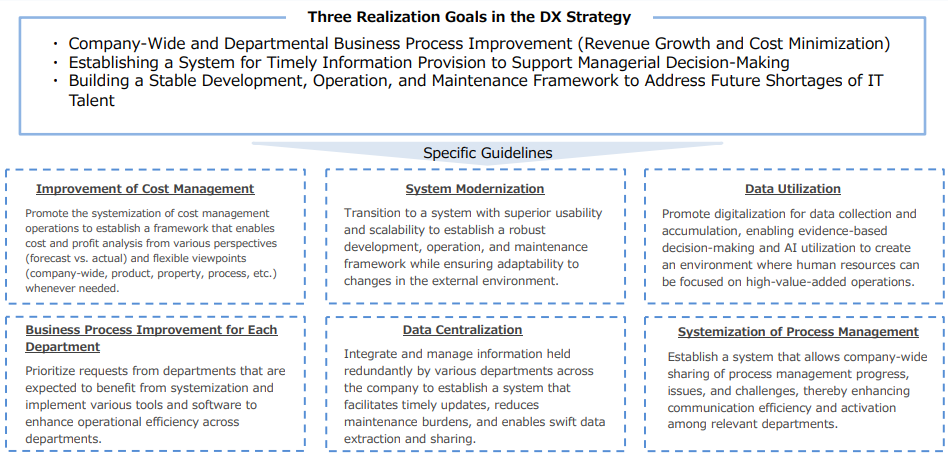
(Taken from the reference material of the company)
In November 2022, the company adopted the "ITANDI Service" operated by Itandi, Inc. Ltd. This allows the entire process, from property search to application and contract conclusion, to be completed online, reducing the burden on customers to visit in person, enabling faster customer services, and significantly improving operational efficiency for both the company and partner real estate agencies. Additionally, the company adopted the electronic contract and document management service "Release" for various business operations in sales contracts in the business of residential properties for sale in February 2023, and in lease agreements for rental apartments for seniors with nurse care services in June 2024.
Moreover, in December 2023, the company adopted the "egaku" cloud-based housing specification confirmation service, and it has achieved seamless management in the business of purchasing and reselling used residential properties, by digitalizing operations in collaboration with partner companies.
Furthermore, they adopted “Cyber Incident Guard,” which is provided by MS&AD InterRisk Research & Consulting, Inc. in October 2024, and strengthened their information security management system. In addition, they adopted “SmartHR,” a system for personnel and labor affairs, in May 2025, digitizing procedures for labor affairs, including employment, social insurance, and workflows for personnel affairs. Through this, they became possible to manage scattered information on personnel affairs in a unified manner, streamlining business operations significantly, realizing paperless operation, and reducing costs for business operations.
2. New Medium-Term Management Plan (FY 3/26 to FY 3/28)
In the real estate industry, land prices continue to rise, and the cost of supplying new housing has further increased due to surging construction material prices and labor costs. Additionally, the Bank of Japan's measures for normalizing policy interest rates have made the business environment even more challenging for real estate companies. On the other hand, economic recovery and wage growth are supporting consumers' willingness to purchase homes, and the real estate market as a whole remains relatively firm. In particular, the steep rise in new housing prices has invigorated the used house resale market, and the market of properties for investment, including rental housing, is also performing well. In response to these market changes, the corporate group has formulated a medium-term management plan (FY 3/26 to FY 3/28) centered on expanding recurring-revenue businesses, to optimize its business portfolio and strengthen its stable revenue base. This plan seeks to secure the company's growth path by maximizing synergies across five business areas, further enhancing its proposal and product development capabilities, driving operational innovation through DX and generative AI, and optimizing financial management. The plan also aims to contribute to the realization of a sustainable society by developing human resources.
◎ Vision for the New Medium-Term Management Plan (FY 3/26 to FY 3/28)
Medium- to Long-Term Trends in the External Environment | |||
Policy
| ◆Continuous support for homeownership ◆Mandatory energy efficiency standards; promotion of ZEH (Net Zero Energy Houses) and BELS (Building-Housing Energy-efficiency Labeling System) evaluations ◆Tax reform-related risks in the real estate sector | Society | ◆Declining birth rate, aging population, and an increase in single-person and senior households ◆Growing demand for health-conscious and safety-oriented housing ◆Diversification in work styles and housing preferences |
Economy | ◆Gradual increases in policy interest rates ◆Persistently high prices for materials, labor, and land ◆Polarization of purchasing behavior between real demand for homes and demand for investment | Technology | ◆Promoting the distribution of ZEH, smart homes, and renewable energy equipment ◆Expanded use of generative AI and cloud-based core systems in operations ◆Advanced operational efficiency and training support through IT and DX |
Company Strengths |
◆Community-based management and high customer satisfaction ◆Strong product appeal offering health, safety, and high performance ◆Stable earnings through recurring-revenue businesses ◆Capability of gathering land information by leveraging a multi-business network ◆Business diversification to meet all housing-related needs, with flexible responsiveness through cross-departmental collaboration |
Vision for the New Medium-Term Management Plan |
◆Enhance service quality by delivering products that meet the needs of the times and providing tailored proposals to each customer. ◆Build a long-term, stable earnings base by optimally combining one-shot-revenue businesses (sales) and recurring-revenue businesses (rent and management of properties). ◆Improve productivity and create a fulfilling workplace by advancing operational improvement, DX, and the use of generative AI. ◆Balance financial soundness and efficiency through optimization of capital composition, profit distribution, and inventory strategy. ◆Deepen community-based management and customer satisfaction by addressing social issues through business and contributing to local communities. |
The company believes that having as many employees as possible understand and embody its management philosophy is the foundation for enhancing all aspects of corporate value, productivity, profitability, credibility, and sustainability.
◎ Profit Plan
Under this medium-term plan, sales are projected to reach record highs for three consecutive fiscal years, with profit also expected to grow steadily. Through investment in human capital and cost absorption, key financial indicators such as ROE and equity ratio are expected to remain at stable levels, striking a balance between growth and financial soundness.
[Consolidated performance plan]
| FY 3/26 Mid-Term Plan | FY 3/27 Mid-Term Plan | FY 3/28 Mid-Term Plan |
Sales | 126,000 | 127,200 | 131,900 |
Operating Income | 7,200 | 7,300 | 8,200 |
Ordinary Income | 5,700 | 5,300 | 6,200 |
Net Income | 3,700 | 3,500 | 4,100 |
ROE | 6.6% | 6.0% | 6.6% |
Capital adequacy ratio | Over 25% | ||
*Units: million yen
<Consolidated Net Sales>
Sales are projected to reach record highs for three consecutive fiscal years, maintaining a stable growth trend.
◆Recurring revenue from property leasing and management is expected to grow steadily by approximately 7% annually, forming a stable revenue base.
◆One-shot revenue from the selling of residential properties, housing distribution, and effective land utilization is also expected to be healthy.
◆Condominium developments: Plans call for the completion and handover of 9 buildings totaling approximately 850 to just under 900 units over the period of three fiscal years
◆With steady performance across all segments, net sales are expected to exceed 130 billion yen in the third fiscal year of the plan, marking a strong growth path.
<All Kinds of Profits >
Ordinary income is expected to be impacted by an increased interest burden in the second fiscal year, but is expected to recover and return to a growth trend.
◆Human capital investment: integrating recruitment, development, and retention processes to strengthen organizational capabilities and on-site business execution
◆Advertising expenses will be strategically optimized, while DX investments will be carried out in a planned manner.
◆The impact of policy interest rate hikes is expected to peak in the second year, with expansion in net sales offsetting the effect in the third year.
<ROE & Equity Ratio>
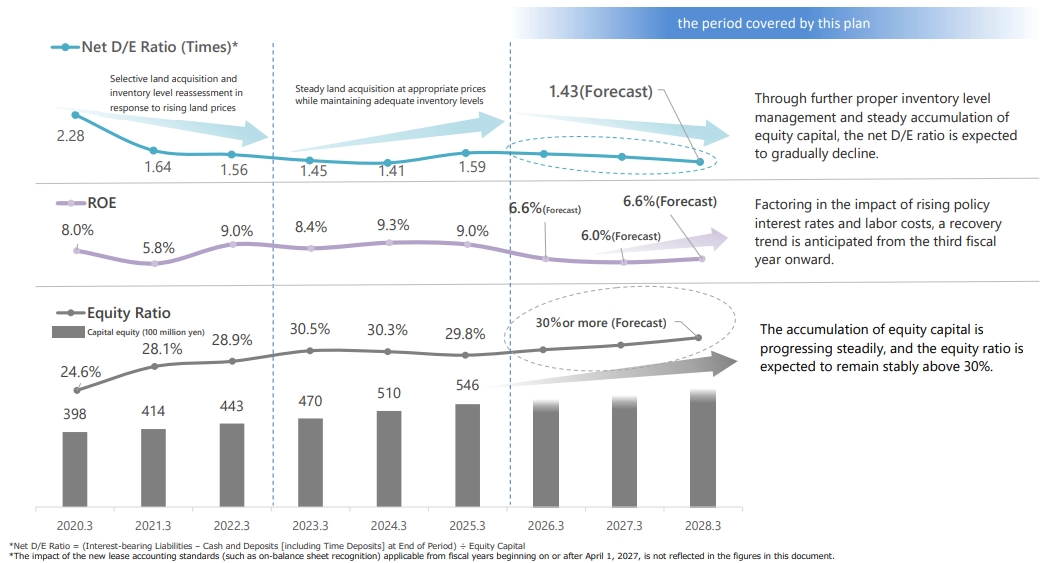
Equity ratio is expected to be 30% or higher, ensuring financial soundness.
◆ROE is projected to temporarily decline to around 6% in the second fiscal year, when rising borrowing costs and personnel expenses are taken into account.
◆However, steady accumulation of equity capital, combined with increased sales and improved profitability, is expected to support a recovery trend from the third fiscal year onward.
◆Net D/E ratio is expected to gradually decline through appropriate management of inventory levels and interest-bearing debt, along with steady capital accumulation.
◆Equity ratio is expected to remain stable, maintaining a healthy financial standing.
[Performance Trends]
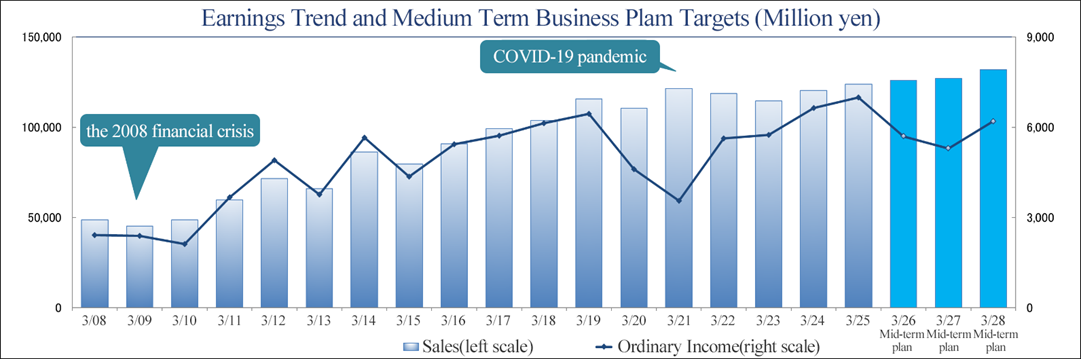
Since its listing on the stock market, the company has maintained steady sales growth by flexibly responding to changes in the external environment. Despite ongoing external pressures such as persistently high construction and land costs and rising interest rates, the company is committed to appropriate inventory management and disciplined investment decisions through selection and focus. During the current medium-term plan period, the company aims to achieve record-high sales for three consecutive fiscal years.
[Pursuit of the Recurring-revenue Business]
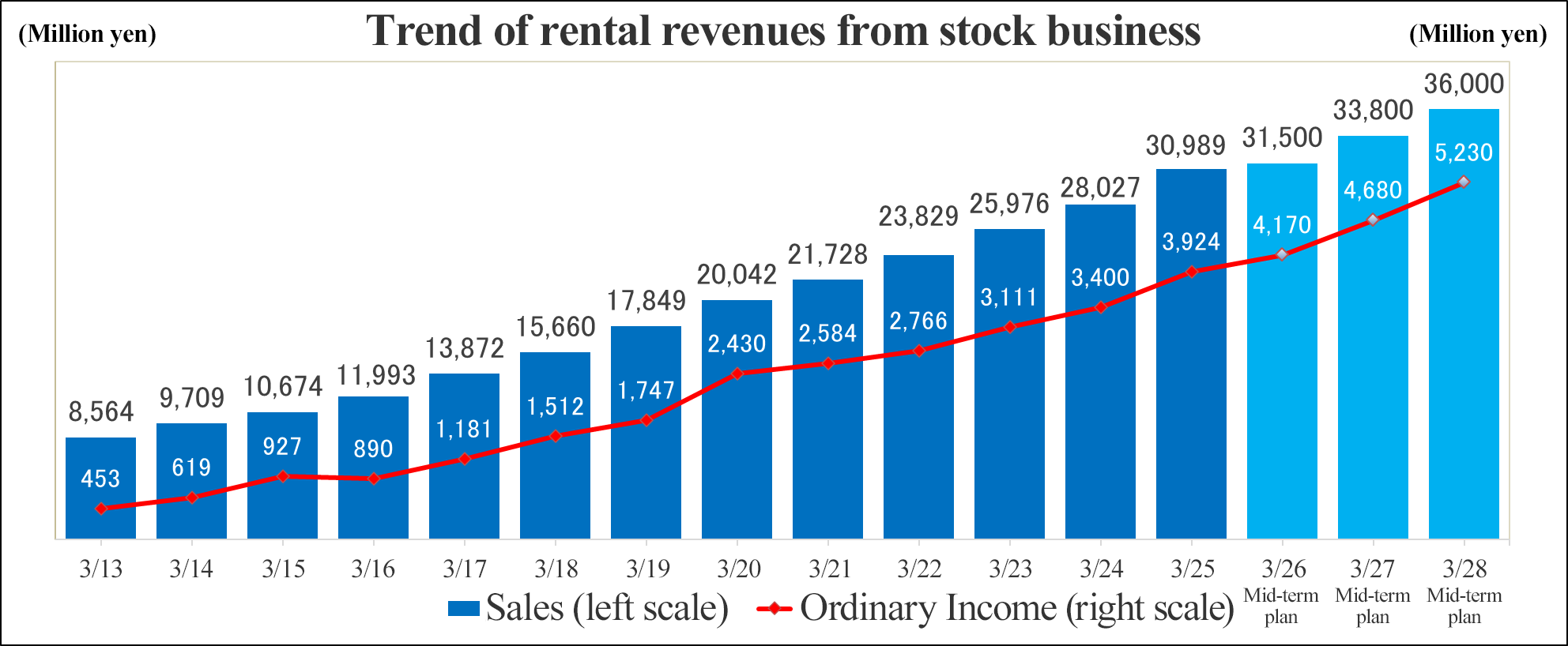
During the current plan period, the company aims to hand over approximately 600 rental apartment buildings over a three-year period. This is expected to result in an increase in the number of properties under management and an expansion of leasing and management revenue. The occupancy rate is projected to remain at a high level of around 97%, and the company will continue to ensure revenue stability through a high-quality property management system.
[Trends and Projections for Key Financial Indicators (Equity Ratio, ROE, and Net D/E Ratio)]
During the current plan period, as all kinds of profits recover, equity capital is expected to accumulate, resulting in stable trends of key financial indicators.
(Taken from the reference material of the company)
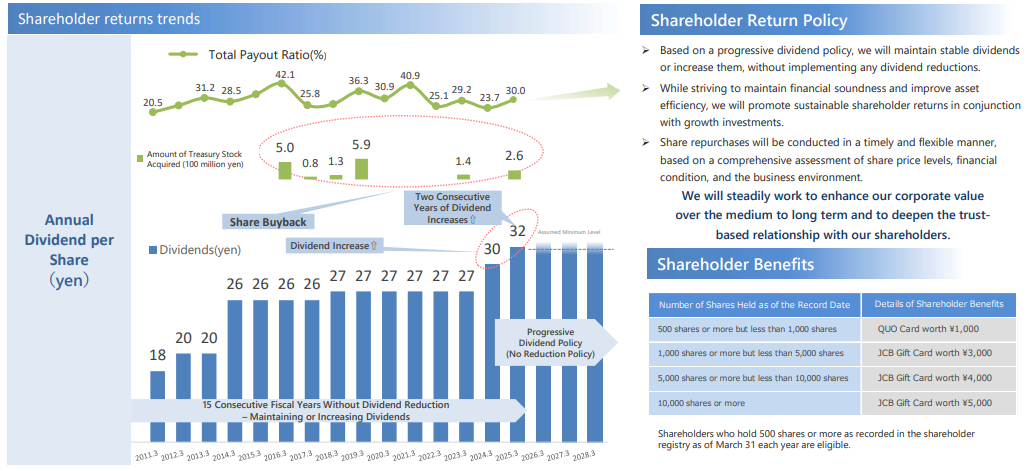
[Sustainable Shareholder Return Through a Progressive Dividend Policy]
The company has consistently maintained stable dividends, with no dividend reductions, for 15 consecutive fiscal years, while expanding its earnings base and strengthening its financial foundation. In the fiscal year ended March 2024, it adopted a progressive dividend policy and plans to implement dividend increases for two consecutive years. The company will continue to provide flexible shareholder returns in line with business performance, aiming for stable dividends and the sustainable enhancement of corporate value.
(Taken from the reference material of the company)
◎ Business strategies in each segment
[Residential Properties for Sales Business]
| FY 3/26 Mid-Term Plan | FY 3/27 Mid-Term Plan | FY 3/28 Mid-Term Plan |
Sales | 38,800 | 37,500 | 39,600 |
Segment Profits | 1,870 | 1,550 | 1,840 |
* Units: million yen
During the current plan period, supply will expand for both detached houses and condominiums, with steady performance expected throughout the three fiscal years. Although the fiscal year ending March 2027 is projected to see a temporary decline in revenue and profit due to a reactionary drop in the number of units delivered for a large-scale condominium project, supply is expected to recover in the fiscal year ending March 2028, leading to a rebound in both net sales and segment profit.
In the residential properties for sales business, the company offers three brands: the custom-built "Sumi no Ie/Pure Air" (a house with a system for purifying air with charcoal) which emphasizes air quality and health, the price-conscious "S.O.U" series; and "HIRANAGI," a single-story home line focused on design and livability. Through this diverse product lineup, the company aims to respond precisely to the evolving lifestyles and values of its customers, while also balancing operational efficiency with profitability and maximizing its proposal capabilities. In the southern area (including Sakai City, southern Osaka, Minami-kawachi, and northern Wakayama), the focus is on maximizing proposal provision capabilities and sales efficiency by leveraging all three brands. In the northern area (Osaka City, the Hanshin region, Hokusetsu, Keihan area, and Higashi-Osaka), the strategy is to maximize added value and profitability through offerings tailored to urban living.
In addition, the company provides homes that earn customer trust and satisfaction through three pillars: custom design, air quality, and earthquake resistance. With recent changes in work styles and rising land and construction costs, consumer preferences regarding housing have diversified, and consumers are becoming increasingly more likely to base their purchasing decisions on price. In response to these evolving needs, the company launched two new product lines, "S.O.U" and "HIRANAGI," in November 2022. These are new types of standardized housing that expand customer options while maintaining quality.
<Condominium Development>
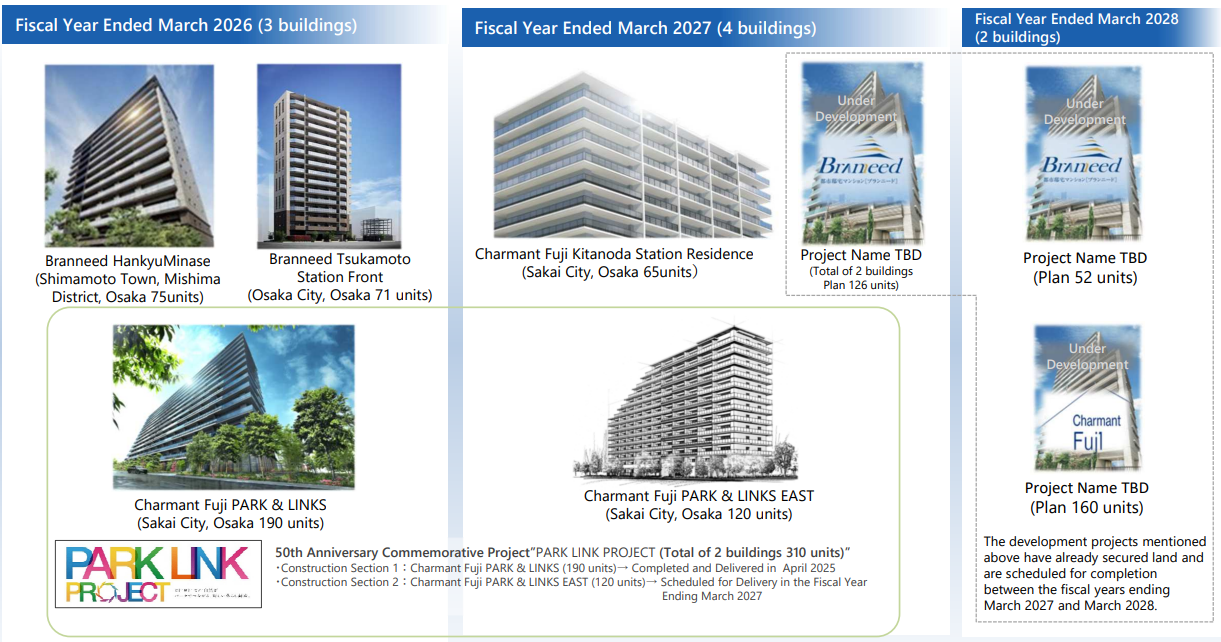
Under this plan, the company aims to complete and hand over 9 condominium projects totaling approximately 850 to just under 900 units over three years, forming a key pillar of the company's overall earnings base. The handover schedule includes 3 buildings in the fiscal year ending March 2026, 4 buildings in the fiscal year ending March 2027, and 2 buildings in the fiscal year ending March 2028.
(Taken from the reference material of the company)
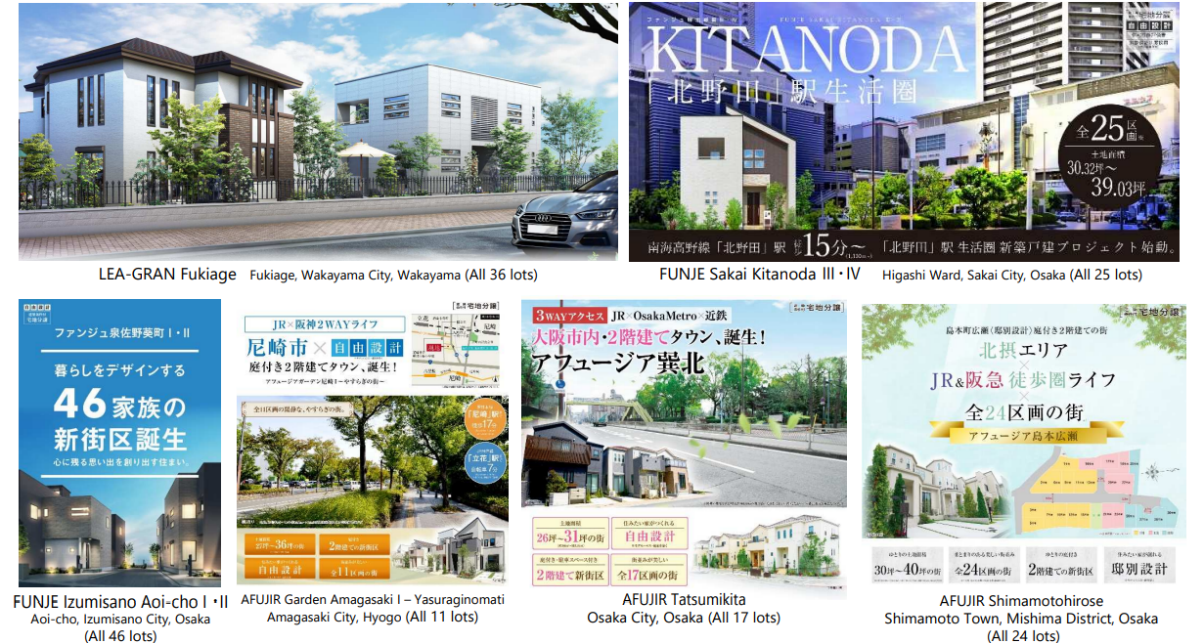
<Detached Housing>
Examples of ongoing sales projects linked to the sales plan from the fiscal year ending March 2026 onward (excerpted from currently available properties)
(Taken from the reference material of the company)
[Housing Distribution Business]
| FY 3/26 Mid-Term Plan | FY 3/27 Mid-Term Plan | FY 3/28 Mid-Term Plan |
Sales | 24,900 | 25,500 | 25,800 |
Segment Profits | 420 | 480 | 520 |
* Units: million yen
During the current plan period, the company will focus on used condominiums as the core of its business, while improving its product lineup based on profitability and market potential. For used detached houses, the strategy will involve a selective approach, focusing on highly profitable properties. Furthermore, in the used property housing business, the company will leverage its competitive edge in property acquisition and implement flexible sales strategies, accompanied by careful inventory management. This is expected to lead to both net sales and segment profit growing steadily.
Amid expectations for continued steady growth in the used residential property market within the Kinki region, the company aims to secure stable earnings through diverse exit strategies that carefully manage inventory levels. In the housing distribution business, the company is also developing a “used housing asset model,” a recurring-revenue approach that leverages collaboration with the rental division. This model involves acquiring and holding used residential properties with existing tenants, generating revenue from both rental income and resale profits. Compared to the highly competitive buy-and-resell market, this model features higher barriers to entry, offers greater flexibility in exit strategies, and enables risk diversification. As such, it is positioned as a strategic business domain that contributes to enhancing earnings stability.
[Effective Land Utilization Business]
| FY 3/26 Mid-Term Plan | FY 3/27 Mid-Term Plan | FY 3/28 Mid-Term Plan |
Sales | 29,600 | 29,600 | 30,000 |
Segment Profits | 3,019 | 2,920 | 3,020 |
* Units: million yen
* The amount of internal transactions between segments is included.
During the current plan period, both net sales and segment profit are expected to remain generally flat, indicating that overall business operations will continue steadily and stably. In the construction contracting segment, a strong order intake from the previous fiscal year is expected to contribute to performance in the first year. However, for the second year onward, the company is adopting a conservative outlook, assuming stable order intake while taking into account potential changes in the external environment and the risk of rising construction costs.
As of now, order trends remain steady, with no significant fluctuations in the business's growth potential or earnings base. Stable revenue generation is expected to continue. With growing interest in inheritance and asset succession, the company has been steadily building its track record by supplying rental apartment buildings that emphasize "security and stability" as a means of asset formation capable of generating stable returns. Even as the investment environment shifts following the end of prolonged monetary easing, the company will continue to meet the needs of owners who prioritize long-term stable income and effective asset utilization, supported by its strong supply capabilities. During the current plan period, the company plans to hand over approximately 420 rental apartment buildings and around 180 buildings through construction contracts. Amid rising construction material costs, wooden rental apartments, which offer an excellent balance between cost and profitability, are once again drawing attention. The company's Fuji Palace series leverages design expertise cultivated through its detached housing business to minimize initial investment while achieving both profitability and asset value. These properties are also well regarded from tax and financing perspectives, contributing to stable rental business operations.
[Property Leasing and Management Business]
| FY 3/26 Mid-Term Plan | FY 3/27 Mid-Term Plan | FY 3/28 Mid-Term Plan |
Sales | 31,500 | 33,800 | 36,000 |
Segment Profits | 4,170 | 4,680 | 5,230 |
* Units: million yen
During the current plan period, the company anticipates stable growth driven by the expansion of recurring revenue, primarily through its rental apartment brand, Fuji Palace, and Fuji Palace Senior, which offers rental apartments for seniors with nurse care services. Sales are projected to increase from 31.5 billion yen in the fiscal year ending March 2026 to 36 billion yen in the fiscal year ending March 2028, with segment profit expected to rise steadily each year, exceeding 5 billion yen in the final year of the plan.
The company's property leasing and management business, which serves as its foundation for recurring revenue, is steadily expanding through the continuous increase in the number of units under management, due to construction contracting and handover of rental apartments for sale to individual investors and condominiums. The profit from this business continues to account for an increasing share of the company's total profit, solidifying its position as a core business that supports mid- to long-term earnings stability. In addition to community-based rental apartments for seniors with nurse care services, the property leasing and management business centered on company-owned properties, subleased units, and condominium management is contributing to the steady expansion of its recurring revenue base. The company is expected to maintain a high occupancy rate of around 97%, supported by strong partnerships with brokerage firms, rigorous quality control, and on-site operation capabilities built through close collaboration between employees and subcontractors.
[Construction-related Businesses]
| FY 3/26 Mid-Term Plan | FY 3/27 Mid-Term Plan | FY 3/28 Mid-Term Plan |
Sales | 2,900 | 2,600 | 2,800 |
Segment Profits | 32 | 28 | 65 |
* Units: million yen
* The amount of internal transactions between segments is included.
In the first year of the plan, several in-house projects are scheduled, including the renovation of Fuji Palace Senior, new construction and demolition of Fuji Palace rental apartments, and other initiatives. These are expected to contribute to stable performance. In the second year, revenue and profit are projected to decline temporarily due to project scheduling delays. However, in the third year, profitability is expected to improve through the end of goodwill amortization and a recovery in order volume.
During the previous plan, the company was involved in a variety of in-house projects, including new condominium developments and renovations of affordable apartments for seniors with nursing-care services, thereby expanding its track record of construction through interdepartmental collaboration. Through the collaboration from the planning and design stages, the company has advanced cost, quality, and schedule optimization, generating synergies across one-shot revenue and recurring-revenue businesses.
3. Second Quarter of Fiscal Year ending March 2026 Earnings Results
3-1 Consolidated Results
| FY 3/25 2Q | Ratio to sales | FY 3/26 2Q | Ratio to sales | YoY | Company’s forecast | Ratio to forecasts |
Sales | 59,958 | 100.0% | 71,723 | 100.0% | 19.6% | 66,700 | +7.5% |
Gross Income | 9,933 | 16.6% | 11,111 | 15.5% | 11.9% | - | - |
SG&A | 5,817 | 9.7% | 6,224 | 8.7% | 7.0% | - | - |
Operating Income | 4,115 | 6.9% | 4,886 | 6.8% | 18.7% | 4,200 | +16.3% |
Ordinary Income | 3,678 | 6.1% | 4,414 | 6.2% | 20.0% | 3,700 | +19.3% |
Profit attributable to owners of parent | 2,478 | 4.1% | 2,969 | 4.1% | 19.8% | 2,400 | +23.7% |
* Data in this table and other parts of this report include figures which have been calculated by Investment Bridge, and may differ from those of the Company (same as below)
* Units: million yen
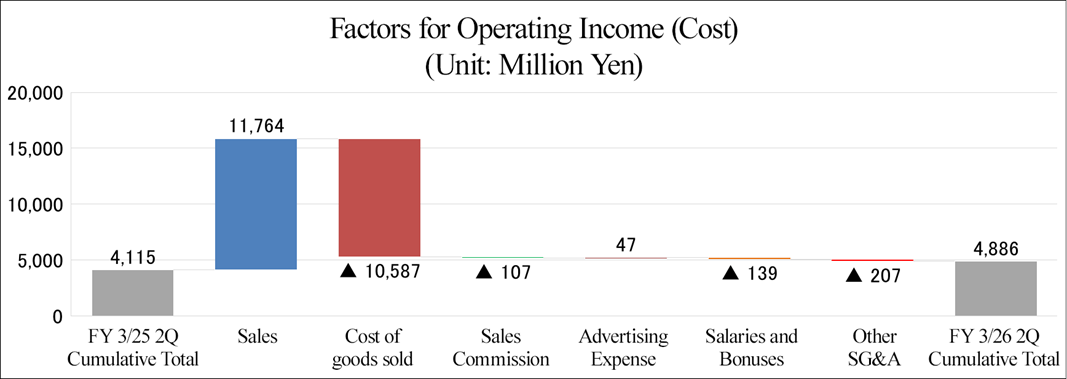
*Created by Investment Bridge based on disclosed material of the company.
*▲ of expense account indicates that the expense has increased.
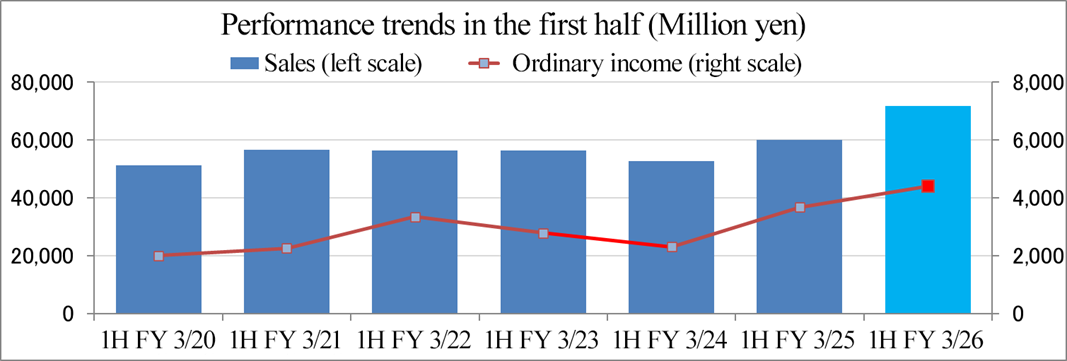
Sales increased 19.6% year on year, and ordinary income grew 20.0% year on year
In the cumulative second quarter of FY 3/2026, sales grew 19.6% year on year to 71,723 million yen. In terms of sales, they progressed healthily with the completion and delivery of large-sized condominiums and the delivery of freely designed houses in the Segment of Residential Properties for Sale. In the Housing Distribution Segment, they secured plenty of inventory by enhancing procurement in the previous fiscal year, and the number of delivered used condominium units increased significantly thanks to the strong demand for them. Also in the Effective Land Utilization Segment, they saw the steady progress of the entrusted construction of rental housing, etc. as well as rental apartment buildings for individual investors, which kept performing well. The sales in the Property Leasing and Management Segment, which is linked to the Effective Land Utilization Segment, increased as assumed. Namely, all segments performed well.
Ordinary income rose 20.0% year on year to 4,414 million yen. The profits in all segments excluding construction-related ones, where profit declined due to the drop in profitability and internal sales, increased year on year. Gross profit margin declined 1.1 points year on year to 15.5%. This is mainly because the sale of profitable large land was posted in the same period of the previous year. The real gross profit margin excluding this factor in the same period of the previous year was almost equal to that in the second quarter of the current fiscal year, showing stability. Operating income rose 18.7% year on year to 4,886 million yen, as sales commissions, salaries, bonuses, consumption tax, etc. augmented, but the year-on-year increase in SGA was only 7.0%. Operating income margin declined 0.1 points year on year to 6.8%. The increase rate of ordinary income exceeded that of operating income, as interest expenses augmented in the section of non-operating expenses, but dividends received and the revenue from subsidies increased in the section of non-operating revenues. As there was no significant extraordinary gain or loss, interim profit attributable to owners of parent increased 19.8% year on year. The sales and operating income in the first half of the fiscal year hit a record high. In the first half of the fiscal year, both sales and all kinds of profits exceeded their respective initial forecasts.
In addition, order backlog, which is a leading indicator of sales, stood at 60.3 billion yen, hitting a record high as of the end of the second quarter. Capital-to-asset ratio and net D/E ratio, which are financial soundness indicators, remain healthy.
3-2 Segment Earnings (Cumulative second quarter of FY3/26)
Results by Segment and Topics
| Sales | Share | YoY | Segment Profits | Share | YoY |
Residential Properties for Sale | 22,433 | 31.3% | +20.3% | 1,373 | 23.2% | +0.9% |
Housing Distribution | 15,716 | 21.9% | +46.8% | 571 | 9.7% | +92.0% |
Effective Land Utilization | 16,146 | 22.5% | +8.7% | 1,717 | 29.0% | +20.8% |
Property Leasing and Management | 16,619 | 23.2% | +9.9% | 2,190 | 37.0% | +14.7% |
Construction Related | 698 | 1.0% | +28.8% | -26 | -0.4% | - |
Others | 108 | 0.2% | +26.8% | 84 | 1.4% | +39.1% |
Adjustment | - | - | - | -1,024 | - | - |
Total | 71,723 | 100.00% | +19.6% | 4,886 | 100.00% | +18.7% |
* Units: million yen
*Sales mean sales to external clients, while segment profit means operating income.
*The composition ratio of segment profit means the ratio to operating income before adjustments.
*The revenue from the insurance agency business had been posted in “non-operating revenue,” but they adopted the method for posting it in “sales” in the first quarter of FY3/24, and is shown in the Other segment.
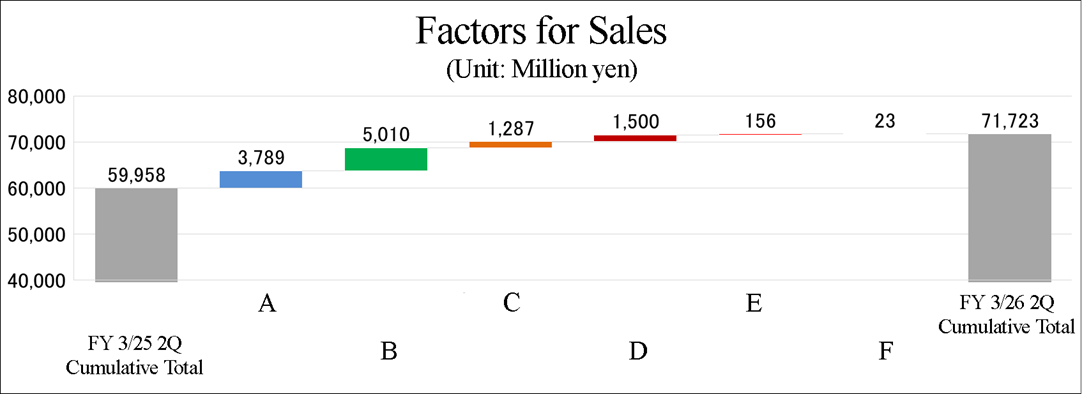
*A: Residential Properties for Sale, B: Housing Distribution, C: Effective Land Utilization, D: Property Leasing and Management, E: Construction Related, F: Other
*Created by Investment Bridge based on disclosed material of the company.
In the segment of residential properties for sale, sales grew 20.3% year on year to 22,433 million yen and profit rose 0.9% year on year to 1,373 million yen.
In the segment of residential properties for sale, the number of units delivered for freely designed houses and residential condominiums for sale increased, so sales and profit grew year on year.
Sales grew 20.3% year on year, as the number of condominiums delivered increased significantly through the completion and delivery of “Charmant Fuji Park & Links” and the number of freely designed houses delivered, too, increased.
The year-on-year increase rate of profit was only 0.9%, despite the sales growth. This is because of the sale of undeveloped land with a high profit margin posted in the same period of the previous year. If this effect is excluded, profitability has improved year on year in the second quarter of this fiscal year.
| FY 3/25 2Q (Cumulative Total) | FY 3/26 2Q (Cumulative Total) | |||
Volume | Value | Volume | Value | YoY | |
Free-design Houses, etc. | 207 homes | 8,639 | 251 homes | 10,674 | +23.6% |
Condominiums for Sales | 209 homes | 8,518 | 264 homes | 11,231 | +31.8% |
Sale of Residential Land | 26 homes | 717 | 24 homes | 527 | -26.5% |
Land sales | 1,270㎡ | 768 | -㎡ | - | - |
Net Sales in the Residential Properties for Sales Segment | 442 homes 1,270㎡ | 18,644 | 539 homes -㎡ | 22,433 | +20.3% |
Profit in the Residential Properties for Sales Segment | 1,361 | 1,373 | +0.9% | ||
* Units: million yen
Large-scale project for delivering detached houses in FY 3/26 | |
LEA-GRAN FUKIAGE | 36 houses (Wakayama City, Wakayama Prefecture) |
AFUJIR CITY Daito Fukono | 61 houses (Daito City, Osaka) |
Projects for delivering condominiums in FY 3/2026 | |
Charmant Fuji PARK & LINKS | 14F 190 units, completed and delivered on April 15, 2025 |
Branneed Hankyu Minase | 13F 75 units, completed and delivered on August 22, 2025 |
Branneed Tsukamoto Station Front | 15F 71 units, to be completed and delivered on December 12, 2025 |
(Taken from the reference material of the company)
In the housing distribution segment, sales grew 46.8% year on year to 15,716 million yen and profit rose 92.0% year on year to 571 million yen.
In the housing distribution segment, sales and profit grew considerably year on year, because the number of used condominiums delivered increased significantly and the average selling price per unit rose.
Sales grew considerably by 46.8% year on year, as they were able to secure a sufficient number of properties through procurement, which was enhanced in the previous fiscal year, and there is growing demand for used residential properties, which are affordable compared with newly built residential properties, whose prices are rising steeply.
Profit increased considerably by 92.0% year on year, as sales grew and profitability improved.
| FY 3/25 2Q (Cumulative Total) | FY 3/26 2Q (Cumulative Total) | |||
Volume | Value | Volume | Value | YoY | |
Used Residential Properties (Detached Houses) | 44 homes | 1,081 | 54 homes | 1,236 | +14.3% |
Used Residential Properties (Condominiums) | 375 homes | 9,621 | 548 homes | 14,474 | +50.4% |
Others | - | 3 | - | 5 | +69.9% |
Net Sales in Housing Distribution Segment | 419 homes | 10,705 | 602 homes | 15,716 | +46.8% |
Profit in Housing Distribution Segment | 297 | 571 | +92.0% | ||
*Units: million yen
According to Japan Journal of Remodeling’s Annual Ranking of Resale Units Sold 2025 (issued on July 28, 2025), the company ranked eighth in Japan in the annual ranking of resale units sold. The company's housing distribution business takes place mainly in Osaka and the Hanshin region, and although its sales activities are limited to this area, it boasts one of the largest purchase and resale volumes in Japan.
Fuji Home Bank operates the used assets business with a significant competitive advantage, buying and reselling used condominiums and acquiring used condominiums occupied by tenants as real estate for investment and renovating and reselling them after occupants move out. As of the end of September 2025, the company holds 963 units.
[Variation in the used housing asset business]
| FY3/21 | FY3/22 | FY3/23 | FY3/24 | FY3/25 |
No. of units held [contracts] | 946 | 891 | 845 | 848 | 989 |
Acquisition price [million yen] | 12,985 | 13,043 | 13,867 | 15,025 | 22,020 |
Annual revenues from rents [million yen] | 1,050 | 1,000 | 993 | 996 | 1,242 |
In addition, each “Ouchi Kan” store is a general housing exhibition hall that always displays information on more than 1,000 properties and is arranged by area, new construction, and used house to make it easier to search for properties.
In the effective land utilization segment, sales increased 8.7% year on year to 16,146 million yen and profit rose 20.8% year on year to 1,717 million yen.
In the effective land utilization segment, both sales and segment profit increased year on year.
Sales (external sales) grew 8.7% year on year, as they received new orders for construction of rental housing, etc., ordered construction progressed steadily, and the number of delivered rental apartment buildings for individual investors was healthy like in the same period of the previous year.
Profit increased 20.8% year on year, thanks to the improvement in profitability as well as sales growth.
| FY 3/25 2Q (Cumulative Total) | FY 3/26 2Q (Cumulative Total) | |||
Volume | Value | Volume | Value | YoY | |
Contract Construction of Rental Properties | 17 contacts | 2,333 | 23 contacts | 3,524 | +51.0% |
Affordable Apartments for Seniors with Nursing-care Services | 8 contacts | 2,021 | 6 contacts | 1,671 | -17.3% |
Rental Apartments for Sale to Individual Investors | 70 buildings | 10,504 | 71 buildings | 10,950 | +4.2% |
Net Sales in the Effective Land Utilization Segment (External Sales) | 25 contacts 70 buildings | 14,859 | 29 contacts 71 buildings | 16,146 | +8.7% |
Intersegment Sales and Transfers | - | 848 | - | 516 | -39.1% |
Net Sales in the Effective Land Utilization Segment | 25 contacts 70 buildings | 15,708 | 29 contacts 71 buildings | 16,662 | +6.1% |
Profit in the Effective Land Utilization Segment | 1,421 | 1,717 | +20.8% | ||
* Units: million yen
Regarding rental apartments for sale to individual investors, the company rigorously selects and procures rare profitable buildings based on abundant information accumulated as a general real estate industry, and keeps occupancy rate as high as 97.6%* as of the end of September 2025, based on the advanced management and tenant attracting capabilities of group companies. Owners highly evaluate their capabilities of developing products, managing properties in good faith, and attracting tenants as well as the contents of contracts beneficial for owners.
*Occupancy rate of properties they rent in bulk and manage, excluding rental apartments for seniors with nursing-care services
Construction Cases from the Fuji Palace Series | |
Fuji Palace Stairwell Type | Urban compact designers' residential rental housing. |
Fuji Palace Senior (The largest number of residential buildings for elderly people with nursing-care services in Japan) | A new form of land utilization in an aging society Housing for the elderly with nursing care services |
Fuji Palace Detached Homes for Rent | A savior of suburban land utilization that opens new possibilities for valuable assets that had almost been disregarded for utilization. |
Fuji Palace Three Herbs | All-unit maisonette-type rental housing that achieves high occupancy and high profitability. |
Fuji Palace Loft Type | A loft type to meet the new needs of single people. |
(Taken from the reference material of the company)
Sales in the property leasing and management segment increased 9.9% year on year to 16,619 million yen, and profit increased 14.7% year on year to 2,190 million yen.
The number of managed properties increased through the delivery of rental residential properties in the effective land utilization business and the operation of their own affordable apartments for seniors with nursing-care services progressed. Furthermore, the number of used assets in stock increased year on year in the housing distribution segment, so sales and profit increased year on year, as initially expected.
The number of managed properties as of the end of Sep. 2025 stood at 39,215, up 1,185 from the end of the previous fiscal year, and the number of rental apartment buildings for seniors with nursing-care services was 276, up 6 from the end of the previous fiscal year, showing a steady growth. Accordingly, their recurring-revenue base has been fortified further.
| FY 3/25 2Q (Cumulative Total) | FY 3/26 2Q (Cumulative Total) | |
Value | Value | YoY | |
Rental Income | 10,948 | 12,080 | +10.3% |
Income from Affordable Apartments for Seniors with Nursing-care Services | 3,632 | 3,99.3 | +9.9% |
Management Fee Income | 538 | 545 | +1.4% |
Net Sales in the Property Leasing and Management Segment | 15,120 | 16,619 | +9.9% |
Profit from Property Leasing and Management | 1,909 | 2,190 | +14.7% |
*Units: million yen
While the number of leased and managed units has been increasing at an average annual pace of over 2,000 units since 2020, occupancy rate has remained stable at around 97%. In addition, as of the end of September 2025, the company boasts operating 276 affordable rental apartment buildings for seniors with nursing-care services and managing 9,173 units. In addition, according to the Summer 2025 Special Edition of the Senior Citizens Housing Weekly Newspaper, the company has Japan's top ranking in the number of affordable rental apartment buildings for seniors with nursing-care services in operation, with 275 buildings in operation.
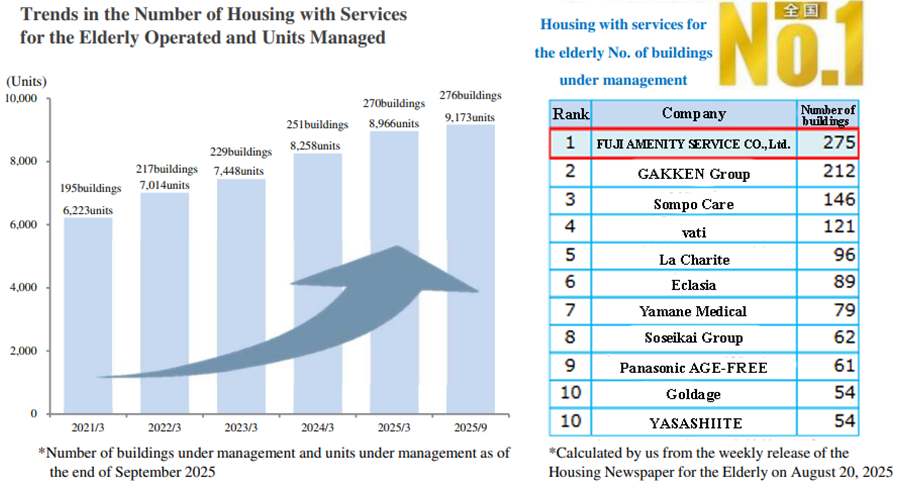
* Taken from the reference material of the company
In the construction-related segment, sales increased 28.8% year on year to 698 million yen, while the segment loss worsened by 29 million yen year on year to 26 million yen.
External sales grew significantly by 28.8% year on year, as entrusted construction ordered in the previous fiscal year progressed steadily. On the other hand, internal sales declined as there were no large-scale projects like the renovation of rental apartments for seniors with nursing-care services in the same period of the previous year, so overall sales dropped slightly.
This segment fell into the red, due to the drop in profitability caused by the skyrocketing of prices of materials and the decline in internal sales.
| FY 3/25 2Q (Cumulative Total) | FY 3/26 2Q (Cumulative Total) | |
Value | Value | YoY | |
Construction Related Segment | 542 | 698 | +28.8% |
Intersegment Sales and Transfers | 713 | 507 | -28.9% |
Net Sales in the Construction Related Segment | 1,255 | 1,205 | -4.0% |
Profit in the Construction Related Segment | 3 | -26 | - |
* Units: million yen
* Table sales are before deducting intersegment sales or transfers.
In January 2020, the company welcomed the renowned Yuuken Kensetsu Group as a partner in constructing steel-framed and reinforced concrete structures. After that, the company worked on the construction of a new large-sized RC apartment for seniors with nursing-care services, renovated an old company-owned condominium building into an affordable apartment for seniors with nursing-care services, engaged in the construction of condominiums that will be sold by the corporate group and large-scale repairs of the company’s building, indicating a steady expansion of the scope of cooperation.
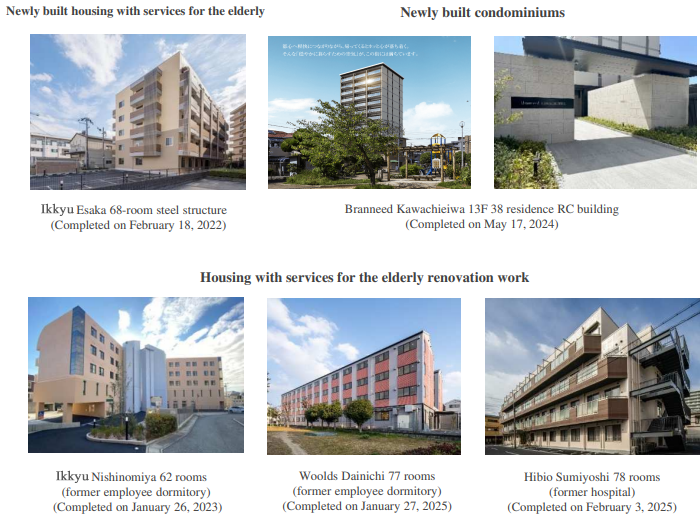
(Taken from the reference material of the company)
Sales in the other segment increased 26.8% year on year to 108 million yen, and profit increased 39.1% year on year to 84 million yen.
The other segment is a business segment not included in segments to be reported but includes the insurance agency business operated by Fuji Corporation.
The revenue from the insurance agency business had been posted in “non-operating revenue,” but they adopted the method for posting it in “sales” in the first quarter of fiscal year ended March 2024.
3-3 Quarterly Earnings Trends
Consolidated sales and ordinary income for the second quarter (July - September)
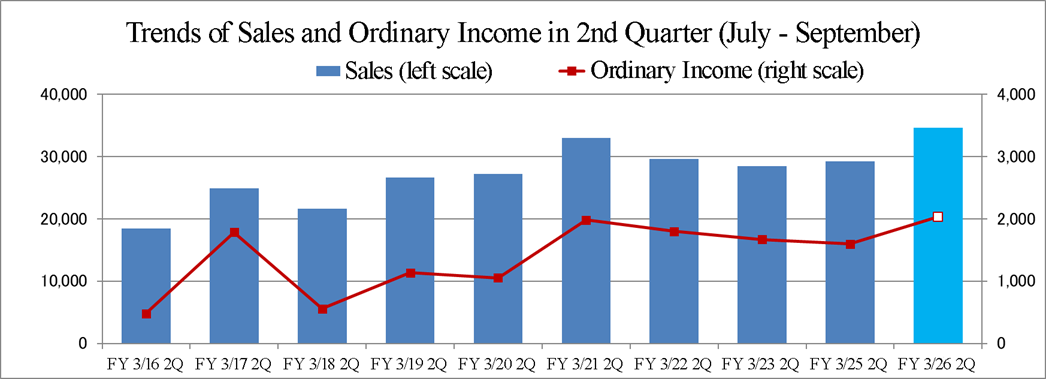
*Created by Investment Bridge based on disclosed material of the company.
In the second quarter (July to September), sales and all kinds of profits were very favorable compared with those in the past fiscal years, mainly due to the increase of delivered used condominiums and the steady progress of entrusted construction of rental housing, etc.
3-4 Status of order backlog
| End of 1H FY 3/25 (End of September 2024) | End of 1H FY 3/26 (End of September 2025) | |||
Volume | Value | Volume | Value | YoY | |
Free Design Houses, etc. | 373 homes | 16,375 | 405 homes | 17,169 | +4.8% |
Condominiums for Sale | 229 homes | 9,821 | 156 homes | 6,693 | -31.9% |
Sale of Residential Land | 16 homes | 443 | 9 homes | 147 | -66.7% |
Land Sales | - | - | - | - | - |
Residential Properties for Sales | 618 homes | 26,641 | 570 homes | 24,010 | -9.9% |
Used Residential Properties (Detached Houses) | 22 homes | 580 | 24 homes | 633 | +9.1% |
Used Residential Properties (Condominiums) | 118 homes | 2,749 | 157 homes | 4,080 | +48.4% |
Housing Distribution | 140 homes | 3,329 | 181 homes | 4,713 | +41.5% |
Contract Construction of Rental Properties | 78 contacts | 8,103 | 101 contacts | 10,522 | +29.8% |
Affordable Apartments for Seniors with Nursing-care services | 26 contacts | 5,791 | 26 contacts | 5,943 | +2.6% |
Rental Apartments for Sale to Individual Investors | 93 buildings | 14,717 | 91 buildings | 14,431 | -1.9% |
Effective Land Utilization | 104 contacts / 93 buildings | 28,612 | 127 contacts / 91 buildings | 30,896 | +8.0% |
Construction Related | 26 contacts | 1,020 | 25 contacts | 776 | -24.0% |
Total | - | 59,604 | - | 60,396 | +1.3% |
* Units: million yen
(Taken from the reference material of the company)
The order backlog as of the end of the second quarter of FY 3/2026 stood at 60.3 billion yen, up 1.3% year on year, hitting a record high as of the end of the second quarter.
In the segment of residential properties for sale, they completed and delivered a large condominium building in April, so the order backlog of condominiums dropped considerably, but they received a healthy number of orders for freely designed houses, so the year-on-year decrease rate was only 9.9%. In the housing distribution segment, they received a favorable number of orders for used condominiums, so order backlog increased considerably by 41.5% year on year. In the effective land utilization segment, the needs of wealthy individuals for effective utilization of real estate are strong, so the order backlog of entrusted construction of rental housing, etc. increased 29.8% year on year, and the order backlog of rental apartments for seniors with nursing-care services rose 2.6% year on year, so overall order backlog grew 8.0% year on year. In the construction-related business, entrusted construction progressed steadily, decreasing order backlog by 24.0% year on year.
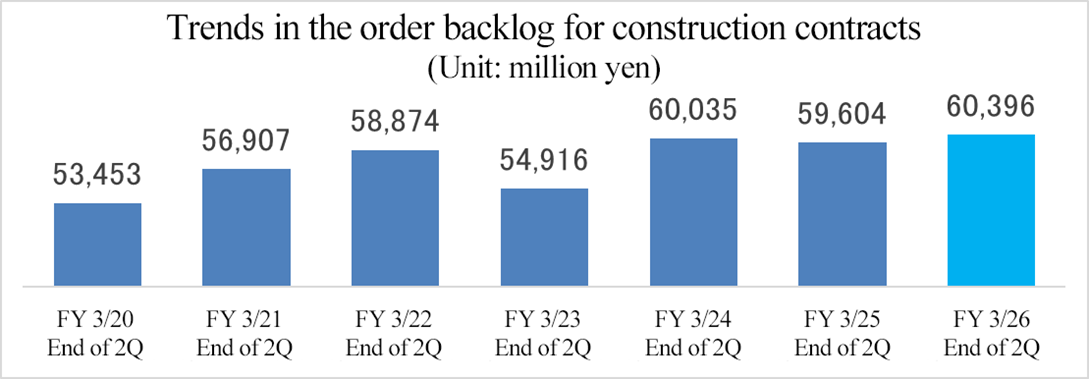
3-5 Financial Conditions and Cash Flow (CF)
Financial Conditions
| Mar. 2025 | Sep. 2025 |
| Mar. 2025 | Sep. 2025 |
Cash, Equivalents | 21,578 | 20,582 | Payables | 4,377 | 4,380 |
Inventories | 93,877 | 96,064 | ST Interest Bearing Liabilities | 35,633 | 34,222 |
Current Assets | 119,108 | 119,963 | Unpaid Taxes | 1401 | 1,504 |
Tangible Noncurrent Assets | 58,331 | 59,602 | Advance payment | 3,369 | 3,176 |
Intangible Noncurrent Assets | 582 | 527 | LT Interest Bearing Liabilities | 73,078 | 75,709 |
Investments, Others | 5,188 | 5,797 | Liabilities | 128,535 | 128,765 |
Noncurrent Assets | 64,101 | 65,927 | Net Assets | 54,674 | 57,124 |
Total Assets | 183,210 | 185,890 | Total Interest-Bearing Liabilities | 108,711 | 109,931 |
* Units: million yen
* Inventories = Real estate for sale + Real estate for sale in progress + Real estate for development + Payments for uncompleted construction + Inventories
* Interest bearing liabilities = Loans + Lease liabilities + Debenture
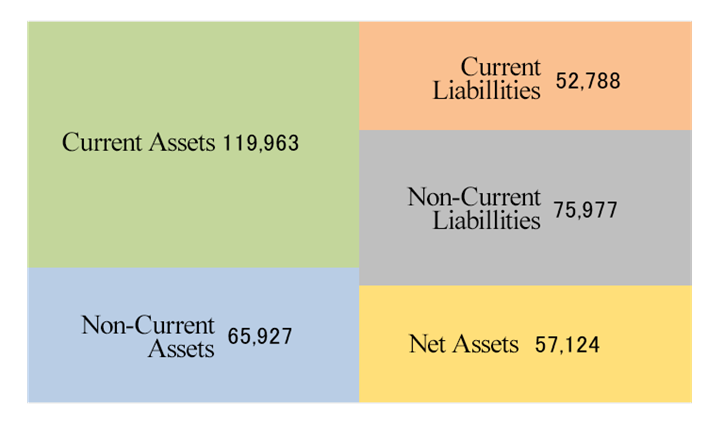
*Created by Investment Bridge Co., Ltd. based on disclosed material of the company.
The total assets as of the end of September 2025 stood at 185,890 million yen, up 2,680 million yen from the end of the previous fiscal year. The major factors in increasing assets were real estate for sale, land, investment securities, long-term deposits, etc., while the major factors in decreasing assets were cash & deposits, real estate for sale in process, deferred tax assets, etc. The major factors in increasing liabilities or net assets were electronically recorded obligations, long-term debts, retained earnings due to the posting of interim profit attributable to owners of parent, etc., while the major factors in decreasing liabilities or net assets were short-term debts, advances received, provision for share-based remuneration, etc. Inventory assets were composed of real estate for sale amounting to 32.48 billion yen (28.26 billion yen as of the end of the previous fiscal year), real estate for sale in process amounting to 27.23 billion yen (29.09 billion yen as of the end of the previous fiscal year), real estate to be developed amounting to 36.29 billion yen (36.47 billion yen as of the end of the previous fiscal year), and used assets amounting to 22.59 billion yen (22.05 billion yen as of the end of the previous fiscal year).
Inventory real estate increased 2.1 billion yen from the end of the previous fiscal year. This is mainly because the inventory of detached homes increased 3.7 billion yen through steady procurement, the inventory of used residential properties grew 3.3 billion yen as they enhanced procurement of used residential properties, which are in high demand, and the inventory of condominiums decreased 4.9 billion yen due to the completion and delivery of large-scale properties.
As of the end of the second quarter of this financial year, the number of detached homes and condominiums for sale in stock stood at 2,792 (including 562 already ordered ones). The number of properties in stock to be ordered is sufficient for dealing with orders for about 3 years. The number of used residential properties in stock after enhanced procurement is 709 (including 181 already ordered ones), so the number of properties in stock to be ordered is sufficient for dealing with orders for about 6 months. The number of buildings in stock in the effective land utilization business is 268. Among them, 83 buildings (10 billion yen) are for ownership for a certain period of time, and 185 buildings are in stock for sale (they have already received orders for 91 buildings). The number of buildings in stock that are still to be ordered is sufficient for dealing with orders for about 8 months. These values are all appropriate.
Cash Flow |
|
|
| |
| FY 3/25 2Q (Cumulative Total) | FY 3/26 2Q (Cumulative Total) | YoY | |
Operating Cash Flow (A) | -1,903 | 5,559 | 7,463 | - |
Investing Cash Flow (B) | -8,012 | -7,253 | 759 | - |
Free Cash Flow (A + B) | -9,915 | -1,693 | 8,222 | - |
Financing Cash Flow | 7,882 | 192 | -7,689 | -97.6% |
Cash and Equivalents at Term End of Quarter | 21,718 | 20,061 | -1,657 | -7.6% |
* Units: million yen
Regarding cash flows, there was a cash inflow from operating activities due to a rise in interim net income before taxes and other adjustments, a decline in inventory assets, an increase in accounts payable, etc. In addition, the cash outflow from investing activities shrank due to a drop in expenditures for acquiring tangible noncurrent assets, etc., so the deficit of free cash flow shrank. On the other hand, the cash inflow from financing activities decreased due to a decline in short-term debts, an augmentation of expenditures for acquiring treasury shares, etc. Accordingly, the balance of cash and cash equivalents as of the end of the interim period dropped 7.60% year on year. The year-end balance of cash and cash equivalents remained above 20 billion yen like in the previous fiscal year.
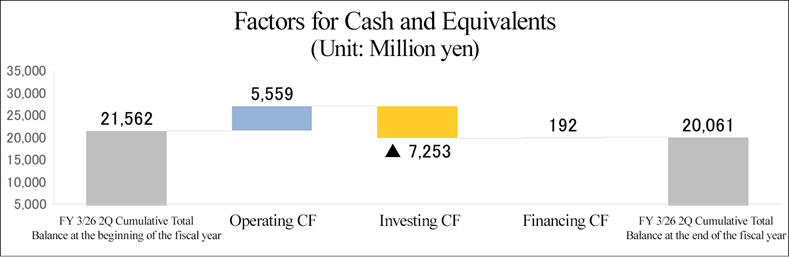
There was a cash inflow of 5.5 billion yen from operating activities, as profit was posted in the first half of the fiscal year and they collected funds steadily. Inventory real estate grew 2.1 billion yen, but in the business of used assets, the purpose of ownership was changed from ownership to sale in the second quarter of the current fiscal year, so 4.1 billion yen was transferred from the category of tangible noncurrent assets to the category of inventory real estate. Accordingly, the inventory assets in cash flows decreased 1.9 billion yen. There was a cash outflow of 7.2 billion yen from investing activities. This is because they spent 4.9 billion yen for acquiring used condominiums for strengthening the business of used assets and 1.1 billion yen for acquiring rental apartments for seniors with nursing-care services. In addition, they put 1 billion yen in banks as time deposits in the second quarter. There was a cash inflow of 190 million yen from financing activities, as they repaid existing debts, but they procured funds for procuring land and acquiring tangible fixed assets.
3-6 Trends in Tangible Noncurrent Assets
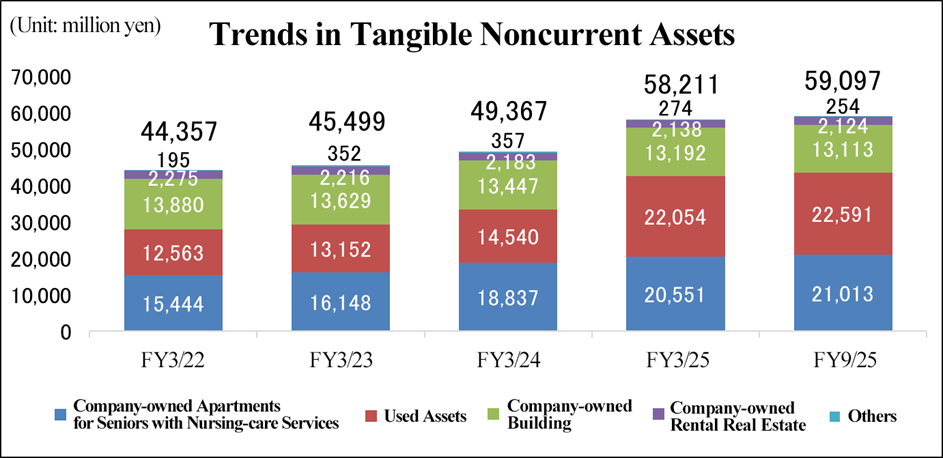
* Tangible noncurrent assets are the total value of buildings & structures, machinery, equipment & vehicles, tools, furniture & fixtures, and land, excluding leased assets and construction work-in-progress assets.
In order to establish a stable revenue base, they are proceeding with the acquisition of rental apartments for seniors with nursing-care services and used condominiums already occupied by tenants (used assets). The number of used assets reached the target at the end of the previous fiscal year, so they plan to maintain the current number of used assets while reshuffling them for the foreseeable future.
3-7 Trends in Management Indicators
[Equity Ratio / ROE]
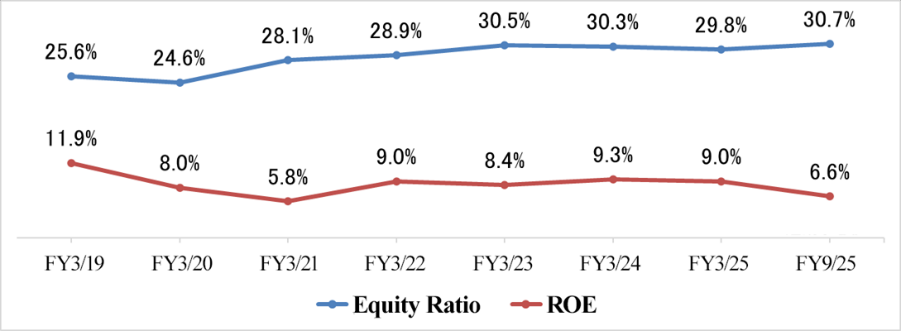
[Interest-Bearing Debts, Equity, and Net D/E Ratio]
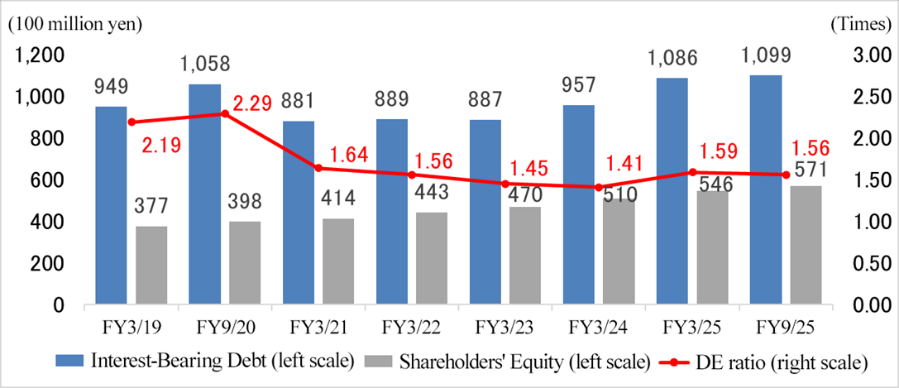
*Net D/E rati (Interest-bearing debt - Cash and cash equivalents at end of period) / Equity
From the fiscal year ended March 2016 to the fiscal year ended March 2020, the company actively purchased land for large-scale sites (detached houses and condominiums) to secure inventory while actively purchasing land for its own properties (apartment for seniors with nursing care services). The period from the fiscal year ended March 2021 has been a period in which the company carefully has selected its land purchases due to the surge in land prices, and it also has reviewed inventory levels (improved inventory turnover rate) by responding flexibly to sales prices. In addition, they have put importance on the realization of stable growth by securing inventory while considering financial rules since the fiscal year ended March 2024.
(8) Recent topics
◎ Adoption of “GMO Rental DX,” an app for owners
Fuji Amenity Service Co., Ltd. of the Fuji Group manages over 35,000 rental apartments in the Kansai area. They have so far communicated with owners by using paper documents for managing properties rented in bulk, so there have been issues about the shift to paperless operations and the streamlining of business processes. In order deal with these issues, they started offering a service by adding their unique functions to “GMO Rental DX,” an app for owners, which is provided by GMO ReTech, Inc. on August 1, 2025. This enabled the digitization of documents, such as reports on incomes and expenses, the approval of documents with the app, and unified management of documents, significantly improving the convenience for owners and the company. Going forward, they will prepare for the increase of properties they manage and strive to improve the customer satisfaction level further by utilizing this service.
◎ An interview about Fuji Palace Senior published in Sankei Shimbun
The Osaka Head Office edition of Sankei Shimbun published on August 7, 2025 carried an interview about their rental apartments for seniors with nursing-care services. In the interview article, they mentioned the concept for operating Fuji Palace Senior, their system for supporting occupants and nursing-care providers, and their ambition about jobs.
They proactively operate rental apartments for seniors with nursing-care services under the concept of “housing to which you can entrust your parents without worry.” Each facility has a dedicated cooking space to serve high-quality meals with a good nutritional balance, and they regularly taste meals to check seasoning, plating, etc. from the viewpoint of occupants, to monitor services and give feedback. In order to support smooth facility operation, they offer high-quality services by holding training sessions for nursing-care providers to share successful cases and know-how.
◎ Ranked 10th in Japan in the ranking in the total capacity of welfare facilities and housing for seniors and ranked 1st in Japan in the ranking in the number of rental apartments for seniors with nursing-care services by Weekly Newspaper on Housing for Seniors
The Fuji Group ranked 10th in the ranking in the total capacity of welfare facilities and housing for seniors by Weekly Newspaper on Housing for Seniors published on August 20, 2025, so an interview with the company was featured.
The Fuji Group provides rental apartments for seniors with nursing-care services only in the Kinki region, mainly the Hanshin area, and ranks 1st in Japan in the number of apartment buildings they manage and ranks 3rd in Japan in the total capacity. They will make continuous efforts to expand business proactively. In the featured interview, they mentioned the outline of their business for seniors, the steady increase of such apartment buildings, and their future outlook.
4. Fiscal Year ending March 2026 Earnings Estimates
4-1 Consolidated Earnings
| FY 3/25 Act. | Ratio to sales | FY 3/26 Est. | Ratio to sales | YoY |
Sales | 123,927 | 100.0% | 126,000 | 100.0% | +1.7% |
Operating Income | 7,894 | 6.4% | 7,200 | 5.7% | -8.8% |
Ordinary Income | 6,987 | 5.6% | 5,700 | 4.5% | -18.4% |
Net Income attributable to owners of the parent | 4,764 | 3.8% | 3,700 | 2.9% | -22.3% |
*Units: million yen
Sales are expected to grow 1.7% year on year, while ordinary income is projected to decline 18.4%.
As the second quarter has ended, the company’s forecast for FY 3/2026 has been left unchanged, calling for sales increasing 1.7% year on year to 126.0 billion yen and ordinary income decreasing 18.4% year on year to 5.7 billion yen.
Regarding the performance in the interim period of the current fiscal year, the delivery of large-scale condominiums and the increase of sale in the housing distribution business contributed, so sales and all kinds of profits increased year on year, exceeding the initial forecasts. Regarding the environment surrounding the housing industry, it is difficult to say that the willingness to purchase housing is increasing, although it is steady, due to the skyrocketing of prices of newly built housing, the rise in mortgage rates, and the growth of momentum toward defending daily life in response to the rise in commodity prices, and the company and housing buyers are concerned about the rise in policy interest rate in the future. In the Business of Sale of Newly Built Residential Properties, they will secure a sufficient number of properties for sale, and are expected to receive a healthy number of orders for detached homes. The Housing Distribution Business, in which they sell residential properties at lower prices than newly built ones, is projected to keep performing well. Also in the Effective Land Utilization Business, they have received a favorable number of orders for construction, and the order backlog as of the end of the interim period hit a record high. The sales and profit of the Property Leasing and Management Business, too, are growing as expected, and progressing steadily toward the full-year consolidated earnings forecast.
Regarding dividends, the company also plans to maintain the same level as the previous year, in which they increase the dividend amount by 5 yen/share, at 32 yen/share annually (an interim dividend of 16 yen/share and a year-end dividend of 16 yen/share), with a projected dividend payout ratio of 31.2%.
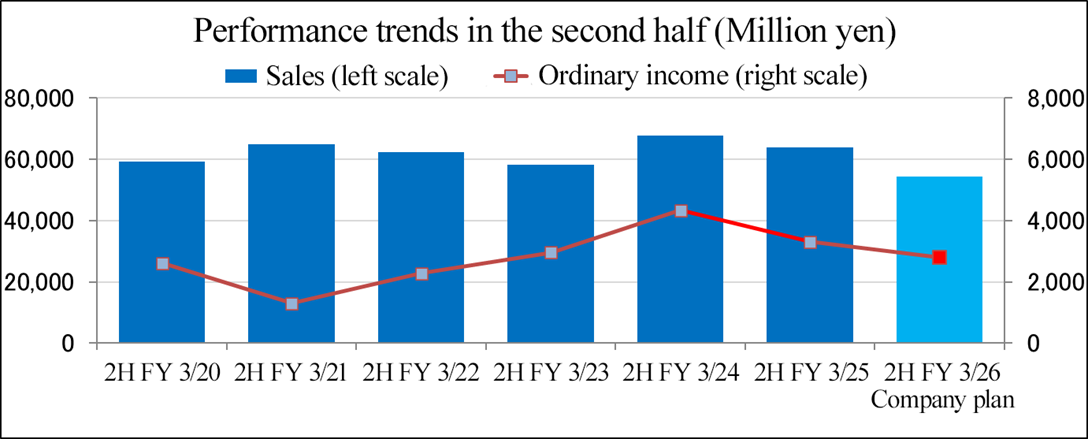
4-2 Progress toward the consolidated earnings forecast
| FY 3/26 2Q Cumulative Total | FY 3/26 Full-year forecast | Rate of progress toward the full-year forecast |
Sales | 71,723 | 126,000 | 56.9% |
Operating Income | 4,886 | 7,200 | 67.9% |
Ordinary Income | 4,414 | 5,700 | 77.4% |
Quarterly Net Income | 2,969 | 3,700 | 80.2% |
*Units: million yen
In the second quarter of the current fiscal year, the progress rate toward the full-year earnings forecast was over 56% for sales and as high as around 70% for all kinds of profits. The sales in the second quarter stood at 71.7 billion yen, with 54.3 billion yen left before achieving the annual sales forecast: 126 billion yen. Out of order backlog, sales of 33.9 billion yen are expected to be posted in the period under review and the rental & management business is projected to earn sales of 16.8 billion yen, so a total of 50.7 billion yen is forecast to be posted as sales in this fiscal year, but still 3.6 billion yen smaller than the annual forecast. They consider that it is quite feasible to achieve the full-year earnings forecast, by selling ready-built houses, completed condominiums, and used residential houses and receiving additional orders for construction in the effective land utilization business.
4-3 The company’s policy about capital costs and share price
The purpose of the company’s business administration is to continue its business stably and repay all stakeholders for their support on a permanent basis in accordance with the management philosophy.
The real estate business is easily influenced by changes in market conditions, so business operation using financial leverage is indispensable. Accordingly, financial strategies are extremely important, so the company has a policy of enriching IR activities for improving expected values while aiming to strengthen equity capital through retained earnings and improve the financial soundness by improving the efficiency of asset use and increase profitability by investing in growing fields while paying more attention to capital costs and share price.
① Current situation |
◆The ROE in fiscal year ended March 2025 was 9.0%, exceeding capital costs*1, but PER was as low as 5.27, and PBR*2 was 0.47, falling below 1.0. ◆In order to improve financial soundness, they have made efforts to decrease net D/E ratio, but it rose as they have procured properties steadily in all segments recently. ◆They have maintained stable dividend payment, but payout ratio has been around 25% in the past 4 fiscal years, which is less attractive compared with the average of companies listed in the Prime Market of TSE. |
② Issues |
◆Whether the company can keep the increase rate of EPS*4 above the increase rate of BPS*3 ◆Whether the company can deepen investors’ understanding the down-to-earth, stable business model of the company ◆Whether the company can secure an optimal balance among the maintenance and improvement of financial soundness, investment for growth, and the dividend policy |
③ Initiatives |
◆To enhance the investment in the effective land utilization business and the property leasing and management business, which have a high degree of asset efficiency, with the aim of stabilizing the revenue base and surefire growth ◆Their dividend policy is stable dividend payment, and they had not decreased the dividend amount for 15 consecutive fiscal years until a recent fiscal year. Since FY 3/2018, they have paid a dividend of 27 yen/share since FY 3/2018 regardless of EPS, but in October 2023, they announced the adoption of a progressive dividend policy, and paid a special dividend of 3 yen/share in addition to a common dividend of 27 yen/share in FY 3/2024, and paid a common dividend of 32 yen/share in FY 3/2025. Like this, they clearly demonstrated their stance of caring for shareholder return. ◆ Since August 2025, they have been acquiring treasury shares with the upper limit being 600,000 shares. ◆ By enhancing IR activities, they will promote the understanding of their unique business model, which is not used in any other companies. ◆ Regarding net D/E ratio, they will strive to secure funds for equity capital, and focus on the balance between equity capital and investment amount and the balance between the investment with a high asset efficiency and the investment that would contribute to stable growth, to make net D/E ratio start decreasing. |
*1: Capital cost means the cost of shareholder’s equity (Risk-free rate + β value × Market risk premium), *2: PBR (price-book value ratio), *3: BPS (book value per share), *4: EPS (earnings per share)
4-4 Dividends and shareholder benefits
◎ Dividend
| FY 3/22 | FY 3/23 | FY 3/24 | FY 3/25 | FY 3/26 Est |
EPS | 107.68 | 106.65 | 126.69 | 131.61 | 102.63 |
DPS | 27.00 | 27.00 | 30.00 | 32.00 | 32.00 |
Dividend payout ratio | 25.1% | 25.3% | 23.7% | 24.3% | 31.2% |
◎ Benefits for shareholders
Benefits are offered to shareholders holding 500 or more shares written or recorded in the shareholder registry as of March 31 every year.
No. shares held as of the record date | Description of benefits for shareholders |
500-999 | QUO Card worth 1,000 yen |
1,000-4,999 | JCB Gift Card worth 3,000 yen |
5,000-9,999 | JCB Gift Card worth 4,000 yen |
10,000 or over | JCB Gift Card worth 5,000 yen |
(5) Acquisition of treasury shares
At the meeting of the board of directors held on August 5, 2025, they made resolutions about the acquisition of treasury shares.
(1)Type of shares to be acquired: Common shares
(2)Total number of shares to be acquired: Up to 600,000 (accounting for 1.65% of the total number of outstanding shares excluding treasury shares)
(3)Total share acquisition price: Up to 450 million yen
(4)Acquisition period: August 6 to November 26, 2025
The cumulative total of treasury shares acquired by October 28, 2025 is 560,900 shares and 449,982,100 yen, so they finished the above-mentioned acquisition of treasury shares.
5. Conclusions
The financial results of Fuji Corporation in the first half of FY 3/2026 were favorable, as sales grew 19.6% year on year and ordinary income rose 20.0% year on year. In the first half, sales and all kinds of profits hit a record high, exceeding the company’s forecast for the first half significantly. As the results in the first half were favorable, the progress rate toward the full-year earnings forecast is 56% for sales and 77% for ordinary income. The sales in the first half stood at 71.7 billion yen, with 54.3 billion yen left before achieving the annual sales forecast: 126 billion yen. Out of order backlog, sales of 33.9 billion yen are expected to be posted in the period under review and the rental & management business is projected to earn sales of 16.8 billion yen, so a total of 50.7 billion yen is forecast to be posted as sales in this fiscal year, just 3.6 billion yen smaller than the annual forecast. The remaining sales to achieve the annual forecast will be earned by selling ready-built houses, completed condominiums, and used residential properties and receiving additional orders for construction in the effective land utilization business. It is unlikely that the favorable trend in the first half will change abruptly, so sales are expected to exceed the forecast considerably. In terms of profit, there are uncertainties over the rise in raw material prices, procurement prices, personnel expenses, and interest rates, but profit is projected to exceed the forecast significantly due to the surplus in the first half and future sales growth. They plan to decide whether or not to revise the full-year forecast upwardly after studying the trend of performance in the third quarter, which is noteworthy to see how much they earn before revising the full-year earnings forecast upwardly.
In order to improve performance from the next fiscal year, it is indispensable to increase inventory real estate and order backlog, which is a leading indicator. Reflecting the favorable number of orders received, the order backlog as of the end of the first half of the fiscal year hit a record high. Inventory assets increased from the end of the previous fiscal year, but are somewhat low, as they control inventory thoroughly. The procurement environment has improved due to the rise in interest rate, the sluggish performance of competing small and medium-sized enterprises, etc., so they are expected to procure more properties. It is noteworthy whether they can increase order backlog and inventory real estate for growth from now on.
The company's ongoing medium-term plan outlines five key goals for the company's future:
1. Enhance service quality to deliver products that meet evolving societal needs and provide tailored proposals to each customer.
2. Build a stable, long-term profit base by optimally combining transaction-type (sales) and subscription-type (rent and property management) businesses.
3. Enhance productivity and create a rewarding workplace through operational improvements, DX, and generative AI.
4. Achieve both financial soundness and efficiency through the optimization of capital structure, profit distribution, and inventory strategy.
5. Contribute to solving social issues through the company's core businesses and deepen ties with local communities.
We will continue to keep an eye on the progress of this newly launched medium-term management plan.
<Reference: Regarding Corporate Governance>
◎ Organization type, and the composition of directors and auditors
Organization type | Company with auditors |
Directors | 7 directors, including 2 external ones (including 2 independent executives) |
Auditors | 3 auditors, including 2 external ones (including 2 independent executives) |
◎ Corporate Governance Report
The company submitted its latest corporate governance report on November 17, 2025
Basic Policy
Our basic policy on corporate governance is to maximize corporate value from the standpoint of our shareholders while improving management efficiency and transparency and achieving steady business results. We regard this as one of the most important management issues.
(1) To Maximize Shareholder Value
This corporate group was founded with the business objectives of “building homes that bring happiness” and “making our customers happy after they buy homes,” and with the desire to become “the most loved company in Japan, like Mt. Fuji.” The company’s main areas of operation are the entire Osaka Prefecture, southern Hyogo Prefecture and northern Wakayama Prefecture, and its business is based on the management principle of building trustworthy houses with a customer-facing approach that does not ignore them after the completion and sale of houses. Therefore, instead of seeking temporary profits and business expansion, the company believes it is important to establish a company that will survive based on long-term stable management. For long-term stable management, human capital is essential, and it is important to develop respectable leaders with excellent knowledge, boldness, and insight, and thus, the corporate group has adopted the following management ethos and corporate philosophy, by using the expression “human capital” rather than “human resources,” based on the belief that people are assets.
“Management Ethos”
The company operates for the sake of:
・Employees,
・Employees’ families,
・Customers and business partners,
・Shareholders,
・Local communities, and
・Ultimately, the nation.
“Corporate Philosophy”
・We are employees of Fuji Corporation Limited.
・We shall engage in our work with enthusiasm and good faith.
・We shall recognize the responsibilities and importance of our own work.
・We shall work in a spirit of gratitude and service.
・We shall do a job that will be appreciated by our customers and business partners.
The company’s management ethos starts with “For the benefit of employees” and “employees’ families.” This is because the company believes that they cannot do a job that truly pleases their customers if their employees or their families are not happy. When the company values its employees and their families and all employees have a sense of appreciation, pride in their work, a sense of achievement, and a sense of purpose in life, the employees get more motivated and can care about their customers from the bottom of their hearts. The company believes that this will lead to the happiness of all stakeholders, including customers, business partners, shareholders, local communities, and consequently, the nation.
While utilizing the above management ethos and policy and expanding business in line with the growth of human capital, the company aims to become a corporation that is always trusted by its customers, business partners, and shareholders, and that can serve society through its business, by further cultivating the business areas it has been operating from the past, actively expanding into Osaka City, the largest market in the Osaka Prefecture, as well as the northern Osaka Prefecture and southern Hyogo Prefecture, and by promoting the improvement of profitability and strengthening the financial structure.
(2) Meetings of the Board of Directors
In order to formulate highly competitive strategies according to changes in the business environment and carry out quick decision-making, the Board of Directors meets once a month in principle. The Board meets based on a resolution in writing if there are urgent matters. The Board of Directors is currently composed of seven Directors (including two Outside Directors), and strives to ensure that there is a lively debate at meetings of the Board of Directors and that decisions are made quickly through a collegial system.
(3) Corporate Auditors and the Board of Corporate Auditors
The company has adopted a corporate auditor system. The Board of Corporate Auditors consists of one full-time Corporate Auditor (Mr. Hitoshi Kawade) and two Outside Corporate Auditors (Mr. Shinsuke Takatani and Mr. Inao Harato). In principle, the Board of Corporate Auditors holds regular meetings three times a year with the Representative Director and President to exchange views and opinions, and each Corporate Auditor attends the Board of Directors’ meetings and meetings of department managers and expresses his or her opinions. In addition, they conduct a wide range of audits, including assessing the appropriateness and efficiency of the Directors’ execution of duties and the status of the development and operation of internal control systems, through attending audits and exchanging information with the Internal Audit Office and auditing firms.
(4) To Strengthen the Internal Information Disclosure System
In order to ensure the timeliness, accuracy and fairness of information disclosure, the corporate group has established “Information Disclosure Rules” to restructure and standardize the group-wide information disclosure system, and has been working to raise awareness within the company in relation to timely disclosure.
The “Information Disclosure Rules” designate the head of the IR Office as the person responsible for handling information, and clarifies the roles and responsibilities of each department in relation to timely disclosure. In addition, when disclosing information, each relevant department within the company examines and scrutinizes the information to be disclosed and mutually checks the disclosure documents prepared by each department, thereby establishing a system to ensure the appropriateness of the disclosure process starting from information gathering to disclosure.
(5) To Improve the Quality of IR Activities
The company is committed to IR activities based on its basic policy of disseminating information to shareholders and investors in a timely, appropriate, prompt, and easy-to-understand manner
Specifically, the company strives to actively disclose information on corporate details through the publication of financial statements and supplementary materials as well as other materials disclosed by the stock exchange on the company’s website, the posting of electronic public notices, the active holding of company briefings for analysts and institutional investors and for general investors, also through its participation in IR events.
Further, in order to fairly disclose the medium/long term direction of the company to shareholders and investors, the company publishes management indicators, which are published in the IR section of its website. Moreover, shareholder newsletters are prepared in an easy-to-understand manner to provide individual shareholders with a better understanding of the company’s management philosophy and policies, as well as its management situation and direction.
In principle, the company’s financial results are announced before the end of the following month after the closing date, to accelerate and decentralize the announcement of financial results.
(6) To Strengthen Internal Control
The company believes that internal control is one of the most important mechanisms supporting corporate governance for a company to adequately fulfill its social responsibilities, and that the efforts to strengthen this internal control are the most significant initiatives for a company to adequately fulfill its social responsibilities, recognizing that such efforts are the responsibility of the management itself. As a specific effort to strengthen internal control, the company established the Internal Control Promotion Committee in February 2007, and has been actively exchanging opinions at its meetings held on a regular basis. To achieve 4 objectives of internal control: [1] effectiveness and efficiency of operations, [2] reliability of financial reporting, [3] compliance with laws and regulations related to business activities, and [4] preservation of assets, the company established an organization and corporate culture with a focus on the control environment in internal control.
In addition, in order to further enhance monitoring activities, the Internal Audit Office is assigned as a complementary organization to maintain and strengthen compliance and risk management, which continuously perform internal checks on business execution in accordance with laws and internal regulations.
<Reason for Non-compliance with the principles of the Corporate Governance Code (excerpts)>
Principles | Reasons for not implementing the principles |
[Supplementary Principle 2-4-1 Ensuring diversity within the company, including promotion of women’s activities] | To ensure the long-term stability of the corporate group’s operations, the company believes it is important to hire talented human capital who are both capable and enthusiastic and who share the corporate group’s management philosophy, policies, and values, and to create an environment in which such human capital can work comfortably, cheerfully, vigorously, and stress-free, while feeling a sense of achievement over the long term. With regard to establishing the comfortable working environment, the company is creating a working environment where they respect diversity and employees can work comfortably and maintain good health, by actively encouraging the use of a health consultation hotline that allows employees to call for advice anytime, promoting flexible work styles through teleworking, conducting substantial health checkups with a full range of diagnostic items for all executives and employees including part-time employees, and installing hyperbaric oxygen chambers in the offices available for meetings and breaks. In addition, the company promotes the acquisition of various business qualifications by enhancing its qualification acquisition support system to help employees acquire specialized and advised knowledge. Furthermore, the company believes that the driving force for improved performance is the understanding and practice of its management philosophy and policies and the development of human capital who share the same values. The company has adopted a personnel evaluation system in which all employees and part-time employees, including executives, are evaluated by everyone not only their immediate supervisors, but also subordinates and colleagues, as well as those in other departments, in a 360-degree fair and impartial personnel evaluation and assessment, to appoint employees to positions based on their abilities and performance, regardless of age, gender, nationality, or mid-career employment. As such, the company has not set measurable numerical targets for ensuring diversity in appointment of core human capital, including the appointment of women, non-Japanese, and mid-career hires, to management positions. However, the company has diverse human capital actively working in management positions. In addition, a female Outside Director was appointed at the Ordinary General Meeting of Shareholders in June 2016. |
[Supplementary Principle 3-1-3. Sustainability Initiatives, etc.] | The corporate group’s Board of Directors adopted the following Basic Sustainability Policy on December 14, 2021. “Since its founding, the company has been committed to social contribution activities through its business activities, based on the corporate group’s management philosophy that states that the company operates for the benefit of its employees and their families, its customers and business partners, shareholders, local communities, and ultimately, the nation.” Companies are becoming more involved in addressing social issues, such as the Sustainable Development Goals (SDGs) that have been adopted by the United Nations. We will keep working to grow sustainably alongside society and establish a reliable corporate group by working to make a positive impact on society and by understanding the relations among ESG (Environment, Society, and Corporate Governance), the SDGs, and community-based property management, which is our business operation. To continuously ensure the long-term stability of the corporate group’s operations, the company believes it is important to hire talented human capital who are both capable and enthusiastic and who share the corporate group’s management philosophy, policies, and values, and to create an environment in which such human capital can work comfortably, cheerfully, vigorously, and stress-free, while feeling a sense of achievement over the long term. The company holds “Session for Asking the Chairman or the President Questions” on a regular basis, where all executives and employees including part-time employees can have direct dialogue with the Chairman or the President. The Chairman or the President personally holds a telephone meeting with each individual who asks a question, and works together to solve not only work-related issues, but also personal problems and issues in their private lives. The company believes that the driving force for improving business performance is the understanding and practice of its management philosophy and policies and the development of human capital who share the same values. The company has adopted a personnel evaluation system in which all employees and part-time employees, including executives, are evaluated by everyone, not only their immediate supervisors but also by subordinates and colleagues, as well as those in other departments, in a 360-degree fair and impartial personnel evaluation and assessment, to appoint employees to positions based on their abilities and performance, regardless of age, gender, and without limiting the scope of their duties. In addition, the company promotes the acquisition of various business qualifications by its qualification acquisition support system to help employees acquire specialized and advanced knowledge. With regard to establishing a comfortable working environment, the company is creating a working environment where diversity is respected and employees can work comfortably and maintain good health, by actively encouraging the use of a health consultation hotline that allows employees to call for advice anytime, promoting flexible work styles through teleworking, conducting substantial health checkups with a full range of diagnostic items for all executives and employees including part-time employees, and installing hyperbaric oxygen chambers in the offices available for meetings and breaks. Regarding investment in intellectual property, etc., the company does not believe it is necessary to disclose or provide specific information because it is not positioned as the core of its business and the amount of investment is small at the moment. Currently, the company does not make disclosures as recommended by TCFD, however, in order to respond to the recommendations from TCFD, the Board of Directors resolved with the cooperation of relevant internal departments and group companies., on April 12, 2022, to establish a Working Group (the “Group”) for TCFD as a subcommittee of the Internal Control Promotion Committee. The following matters are discussed in the Group. (1) To assess the impact of climate change on the company’s business activities, and formulate content of information disclosure based on TCFD’s recommendations (2) To review the status of initiatives based on the Basic Sustainability Policy, and promote the initiatives |
[Principle 4-8. Effective use of Independent Outside Directors] | Currently, the Board of Directors consists of seven Directors and three Corporate Auditors. Of these, four are Outside Officers (two Outside Directors and two Outside Corporate Auditors) and all of them are independent outside officers as stipulated by the Tokyo Stock Exchange. All outside officers attend all board meetings in principle. Two Outside Directors are certified public accountants and certified tax accountants, one of the two Outside Corporate Auditors is a certified public accountant and a certified tax accountant, and the other is a lawyer. They all have affluent experience and profound insight to check the effectiveness and efficiency of the Directors’ business execution when necessary, from an independent and fair standpoint, and contribute to ensuring management transparency and legal compliance. Outside Directors provide advice on deliberations at meetings of the Board of Directors from an objective and neutral standpoint, attend important meetings other than meetings of the Board of Directors (meetings of department managers) to express their opinions, and exchange opinions and information with Corporate Auditors as necessary. Based on the above, the company believes that the roles and responsibilities of the company’s Independent Outside Directors are adequately satisfied, and the monitoring and supervision of management is appropriately functioning with the four Independent Outside Directors even though the number of Independent Outside Directors does not reach one third of the Board. Therefore, at this point, the company does not intend to appoint Independent Outside Directors to increase the ratio to more than one third, or does not plan to increase the number of Independent Outside Directors. |
<Disclosure Based on the Principles of the Corporate Governance Code (excerpts)>
Principles | Disclosure contents |
[Principle 1-4. Strategically held shares] | In all of the company’s business, the company carries out comprehensive transactions with financial institutions, such as borrowing funds for acquisition of real estate, acquiring information on real estate purchases, and introducing customers in the effective land utilization business. Cooperative relationships with financial institutions are essential for business expansion and sustainable development. In order to attain the medium/long-term goal of improving corporate value, we plan to discuss the economic rationality of shares of financial institutions that are considered to be able to have comprehensive transactions with our company after understanding our management philosophy and stance, and then hold them. The maximum number of shares to be held for each individual issue is 500,000 and no more than 2% of the company’s shareholders’ equity. The company continuously monitors transactions with financial institutions and financial position and operating results of financial institutions in which it holds shares, and once a year, the Board of Directors meets to review the reasonableness for holding these shares based on factors such as share price trends, dividend amounts, and transaction status. With respect to the exercise of voting rights pertaining to the strategically held shares, the company makes decisions to approve or disapprove individual proposals after carefully reviewing them based on whether the proposals will enhance the corporate value of the company and its investee companies and whether they are compatible with the company’s objectives for holding such shares. |
[Principle 5-1. Policy on constructive dialogue with shareholders] | The IR Division is in charge of dialogue with shareholders, which is overseen by the executive officer in charge of IR. The IR Office works closely with the Corporate Planning Department, the General Affairs Department, the Legal Department, the Human Resources Division, the Finance Department, and the Internal Audit Division on a daily basis, and necessary information is reported to the IR Office. The IR Office holds company briefings for individual investors, financial institutions, analysts, and institutional investors in Osaka and Tokyo, not only explaining the company’s business and performance in financial results presentation materials, but also explaining the company’s management philosophy, management policies, and ESG and SDGs initiatives, which provide the background for the company’s business and performance. In addition, in order to communicate with shareholders, the company conducts shareholder questionnaires twice a year and have established an IR inquiry mail system, whereby the IR Office responds to inquiries (questions, etc.) from shareholders and investors. Questions from shareholders are accepted at the Ordinary General Meeting of Shareholders regardless of the agenda, and are basically handled by the President personally. In addition to the Ordinary General Meeting of Shareholders, Outside Directors and full-time Corporate Auditors are also available to respond to questions as necessary. Shareholder Opinions and concerns identified through shareholder questionnaires and other dialogue with shareholders are reported to Directors and the Board of Directors. |
[Principle 5-2 Measures to implement management that is conscious of cost of capital and stock price] | The company operates a wide range of business, including the sale of detached homes and condominiums and rental management, mainly in Osaka, and has realized stable business administration based on recurring revenues. ROE has been around 9%, being healthy, and the company will strive to rationalize net D/E ratio, achieve both stable profit growth and financial soundness, and improve corporate value sustainably. While continuing total return combining dividend payment and the acquisition of treasury shares, the company aims to improve PER by optimizing the balance between shareholder return and internal reserve. In addition, the company will strive to improve medium/long-term shareholder value based on steady growth and stable revenues, by utilizing the strength of community-based business. For more details, please refer to the following. (Material for briefing financial results for the second quarter (interim period) of the fiscal year ending March 2026 (P19) https://ssl4.eir-parts.net/doc/8860/tdnet/2704290/00.pdf FiscalYearEndingMarch20262ndQuarter(Interim)FinancialResultsPresentationMaterials(P19) https://www.fuji-jutaku.co.jp/uldoc/topnews_ir_en/20251031140452_1.pdf |
This report is not intended for soliciting or promoting investment activities or offering any advice on investment or the like, but for providing information only. The information included in this report was taken from sources considered reliable by our company. Our company will not guarantee the accuracy, integrity, or appropriateness of information or opinions in this report. Our company will not assume any responsibility for expenses, damages or the like arising out of the use of this report or information obtained from this report. All kinds of rights related to this report belong to Investment Bridge Co., Ltd. The contents, etc. of this report may be revised without notice. Please make an investment decision on your own judgment. Copyright(C) Investment Bridge Co., Ltd. All Rights Reserved. |