


Bridge Report:(5290)Vertex the Second Quarter of the Fiscal Year Ending March 2026

 President Akihide Tsuchiya | Vertex Corporation (5290) |
 |
Company Information
Market | TSE Standard Market |
Industry | Glass, earthen, and stone products (manufacturing business) |
President | Akihide Tsuchiya |
HQ Address | 7th floor of Koujimachi-Kousai Bldg., 5-1 Kojimachi, Chiyoda-ku, Tokyo |
Year-end | March |
HP |
Stock Information
Share Price | Number of shares issued | Total market cap | ROE Act. | Trading Unit | |
¥1,255 | 49,316,722 shares | ¥61,892 million | 13.8% | 100 shares | |
DPS Est. | Dividend yield Est. | EPS Est. | PER Est. | BPS Act. | PBR Act. |
¥32.50 | 2.6% | ¥86.50 | 14.5x | ¥721.25 | 1.7x |
* Stock price is as of closing on November 28, 2025. The number of shares issued is the number of outstanding shares as of the end of FY3/25, excluding treasury shares. The figures are rounded.
* A 3-for-1 stock split was executed on July 1, 2022, and A 2-for-1 stock split was executed on September 1, 2025. This stock split was taken into account, when calculating dividend yield, PER and PBR.
*ROE and BPS are the actual results for FY 3/25, and EPS and DPS are forecasts for FY 3/26.
Earnings Trends
Fiscal Year | Net Sales | Operating Income | Ordinary Income | Net Income | EPS | DPS |
March 2022 Act. | 37,514 | 6,143 | 6,434 | 4,242 | 80.45 | 13.13 |
March 2023 Act. | 39,095 | 5,560 | 5,837 | 3,742 | 70.43 | 15.00 |
March 2024 Act. | 36,833 | 5,727 | 5,849 | 3,728 | 71.93 | 20.00 |
March 2025 Act. | 38,918 | 6,285 | 6,449 | 4,826 | 95.30 | 30.00 |
March 2026 Est. | 41,000 | 6,350 | 6,500 | 4,290 | 86.50 | 32.50 |
*Unit: Million yen. The estimated values were provided by the company. Net income is the net income attributable to owners of the parent company. The same applies below.
*A 3-for-1 stock split was executed on July 1, 2022, and A 2-for-1 stock split was executed on September 1, 2025. DPS and EPS are recalculated retroactively.
This Bridge Report overviews the business performance for the second quarter of the fiscal year ending March 2026, the earnings forecast for the fiscal year ending March 2026 and other information for Vertex Corporation.
Table of Contents
Key Points
1. Company Overview
2. Second Quarter of the Fiscal Year Ending March 2026 Earnings Results
3. Fiscal Year Ending March 2026 Earnings Forecasts
4. Progress of the Third Mid-Term Management Plan
5. Conclusions
<Reference 1: The Third Mid-Term Management Plan>
<Reference 2: Regarding Corporate Governance>
Key Points
- In the first half of the fiscal year ending March 2026, sales dropped 2.0% year on year to 17,653 million yen and operating income declined 3.6% year on year to 2,361 million yen. They compensated for the decrease of large-scale projects in the previous year, and sales and profit declined slightly year on year, but sales and operating income exceeded the forecasts. This is attributable to a number of orders for public-works projects. They do not consider it as an issue, as they pay attention to the cumulative results in the medium term.
- As of the end of the second quarter, the company’s forecast for the fiscal year ending March 2026 was left unchanged, calling for sales growing 5.3% year on year to 41 billion yen and operating income rising 1.0% year on year to 6,350 million yen. As they will secure a sufficient number of transactions to make up for the decrease of large-scale projects, sales and all kinds of profits except net income are expected to increase. Net income is projected to decline, due to the posting of the deferred loss on transfer in the previous fiscal year as a deductible expense.On September 1, 2025, they conducted a 2-for-1 stock split for common shares. Regarding dividends considering that stock split, they did not revise their plan to pay a common dividend of 32.50 yen/share, up 2.50 yen/share from the previous fiscal year. The expected payout ratio is 37.6%.
- The number of sewer conduits aged over 50 years exceeding the standard service life will increase significantly, and the demand for maintenance of sewer conduits is expected to grow steeply. The company already possesses various repair methods for maintaining sewer conduits, so their benefits are expected to be brought about. In addition, surveys, assessment, the increase of sewer conduits, and the installation of connecting conduits are likely to stir the demand for their products. It is noteworthy what kinds of business chances will be generated by the growing demand for maintenance of sewer conduits.
1. Company Overview
The core business of the company is to manufacture and sell a variety of precast concrete, which supports our daily lives.
(1) Company History
In 2014, three companies, NIPPON ZENITH PIPE CO., LTD., HANEX CO., LTD. (former name: HANEDA HUME PIPE CO., LTD.), and HANEDA CONCRETE INDUSTRIAL CO., LTD., merged into HANEDA ZENITH CO., LTD., which was then renamed HANEDA ZENITH HOLDINGS CO., LTD.
On October 1, 2018, HANEDA ZENITH HOLDINGS CO., LTD. and HOKUKON CO., LTD. (based in Fukui Prefecture) established Vertex Corporation through joint stock transfer (which made HANEDA ZENITH HOLDINGS CO., LTD. and HOKUKON CO., LTD. wholly owned subsidiaries).
The companies set up a new business group.
In April 2019, HANEDA ZENITH CO., LTD., as the surviving company, absorbed HANEDA ZENITH HOLDINGS CO., LTD. (a merged company).
On April 1, 2021, VERTEX Co., Ltd. was born through absorption-type merger carried out by HANEDA ZENITH CO., LTD. as the surviving company and HOKUKON CO., LTD. as the merged company, which were the core business companies affiliated with VERTEX Corporation.
VERTEX Corporation aims to achieve sales and profit growth by increasing its market share and boosting profitability in the mature markets of concrete and piles, and the growing market of disaster prevention through a multitude of approaches, including creation of business synergy and enhancement of business efficiency. They acquired some shares in IHI Construction Industrial Co., Ltd., making it a subsidiary on March 27, 2025, and acquired all shares in that company on October 1, and renamed it IKK Corp.
(2) Variation in performance
Even after the management integration, they have engaged in the development of the management base and profit generation, so the company keeps growing while securing the highest level of profitability in this industry. From the fiscal year ended March 2025, they will aim to enter the next growth phase.
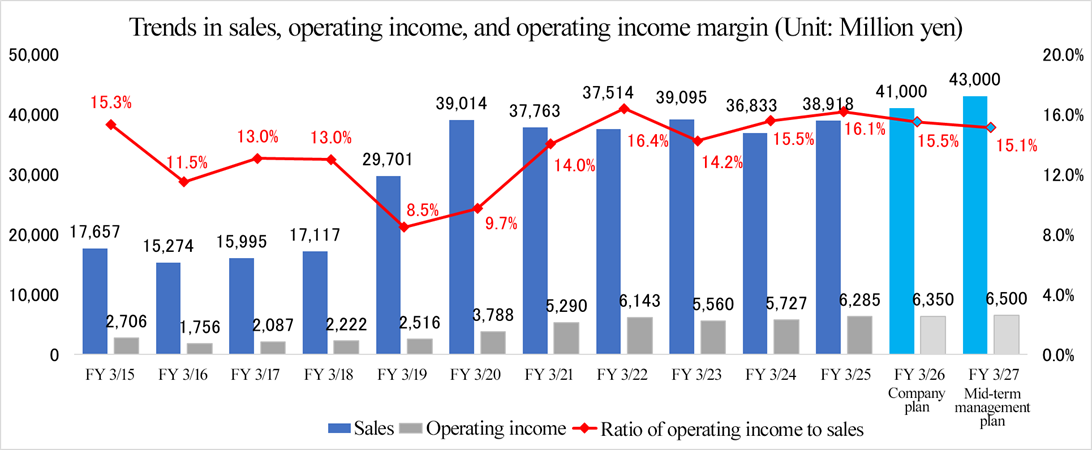
*ZENITH HANEDA HOLDINGS in FY3/15-FY3/18, Vertex Corporation from FY 3/19
(3) Long-term Vision
◎ Purpose
We offer new forms of security for the future of people worldwide with our unique ideas and one-of-a-kind technologies.
The corporate group has been creating new value and bringing peace of mind while facing changes in the natural environment and society. As a company that will continue to grow, it will strive to meet difficult needs with its one-of-a-kind technology and unique ideas and contribute to the realization of a sustainable society where people can live with peace of mind no matter where they live. The corporate group will continue to take on the challenge of creating new forms of security for the future of people around the world.
◎ VERTEX Vision 2034
The company has formulated the VERTEX Vision 2034 as well as its purpose to achieve in 10 years.
The first medium-term management plan (FY 3/20-FY 3/21) was a period to solidify the business and management foundations following the business integration, while the second medium-term management plan (FY 3/22-FY 3/24) was a period to strengthen the business and management foundations to ensure sustainable growth. In the subsequent third medium-term management plan (FY 3/25-FY 3/27), the company will focus on (1) strengthening the business portfolio, (2) promoting sustainability-oriented management, and (3) strengthening human capital, R&D, and digital transformation. After implementing the subsequent fourth and fifth medium-term management plans (FY 3/28-FY 3/33), the company aims to achieve sales of 100 billion yen and an operating income of 15 billion yen by 2034.
[The ideal state the company wants to realize in 10 years]
The company has also outlined the issues it must address in the next 10 years, such as the declining working population, aging infrastructure, global warming, and intensifying natural disasters, and has defined “the ideal sate it wants to realize in 10 years” as a countermeasure against these issues.
The ideal state the company wants to realize in 10 years | Measures |
MIRAI Factory | In light of the labor shortage, the company is promoting the creation of smart factories through automation and centralized management. |
One-stop Maintenance | To become a one-stop service provider by taking over the maintenance and management of infrastructure from the upstream |
Be precast ON-SITE | Precast concrete is to be precast onsite, instead of being delivered from the factory. |
Smart Slope Disaster Prevention | To realize smart slope-based disaster prevention by collecting a variety of data from satellites to detect and prevent disasters in advance |
[Long-term business portfolio concept]
The company will work to strengthen its business portfolio in order to achieve VERTEX Vision 2034.
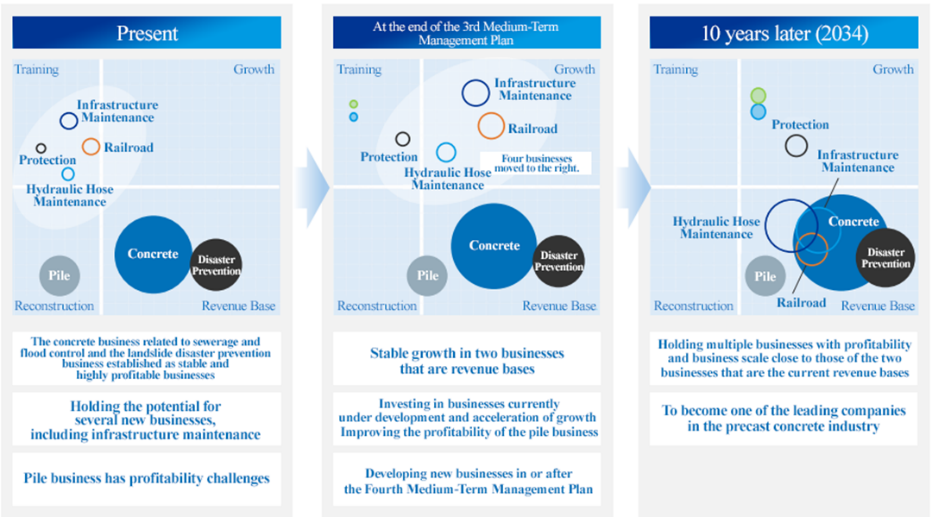
(Taken from the reference material of the company)
(4) Market Environment
The following are the points to keep in mind for understanding the company’s business environment:
◎ Demand for investment in disaster prevention and mitigation remains strong.
Public works-related expenditures, which are important in the construction industry, have remained stable for the past 10 years. In particular, a certain amount is allocated each year for infrastructure repairs and public works. In addition, as the proportion of existing infrastructure that is over 50 years old is projected to increase, it is expected that high levels of demand for investment in disaster prevention and mitigation will continue. In this environment, the company recognizes the importance of enriching its track record and increasing the market share of its products in line with its business model.
(Ratio of major social infrastructure that was constructed more than 50 years ago)
Agricultural drainage channels (approx. 50,000 km, core agricultural irrigation facilities) | 2019 | 2029 | - |
50% | 67% | - | |
Road bridges (approx. 730,000 bridges, bridges over 2 m) | 2020 | 2030 | 2040 |
30% | 55% | 75% | |
Sewer conduits (total length: approx. 470,000 km) | 2020 | 2030 | 2040 |
5% | 16% | 35% | |
Port wharf (approx. 5,000 facilities, water depth -4.5 m or deeper) | 2020 | 2030 | 2040 |
21% | 43% | 66% | |
Fire prevention water tanks (approx. 520,000 units) | 2020 | 2025 | 2035 |
35% | 40% | 58% |
(Taken from the reference material of the company)
◎ Revision to the plan for enhancing national resilience
In accordance with the basic plan for enhancing national resilience, which was adopted at the Cabinet meeting in July 2024, they announced a draft of the first medium-term plan for enhancing national resilience in April 2025. The scale of the project is up about 30% from the previous measure for accelerating the five-year plan, and this is favorable for their core business.
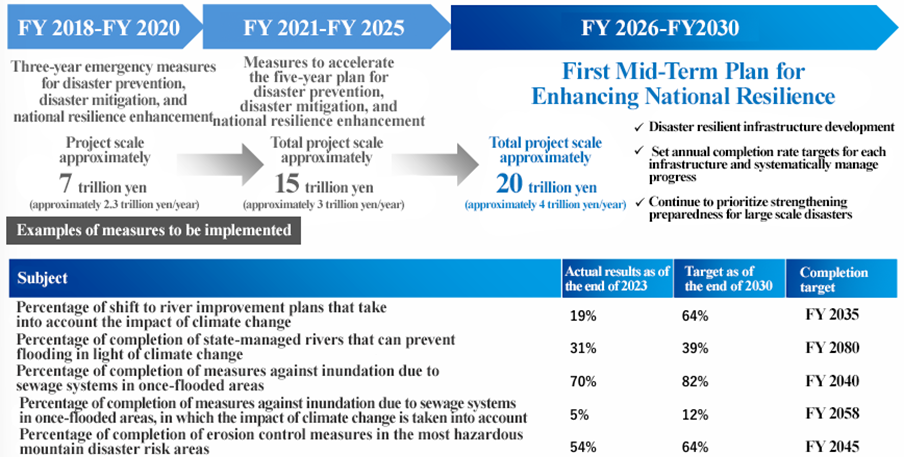
(Taken from the reference material of the company)
◎ Workstyle reform and labor shortages on construction sites: Expansion of precast construction methods
Precast concrete is a concrete product that is manufactured in advance in a factory. It is highly efficient in terms of workability and is expected to be a solution to the labor shortage and rising labor costs on construction sites. On the other hand, casting concrete in-situ is a construction method in which reinforcing bars are assembled at the construction site and ready-mixed concrete is poured. Precast concrete has the advantage of being about 1/2 to 1/5 as efficient in terms of on-site work efficiency as compared to casting concrete in-situ, but the disadvantage is that it must be transported from a factory, which generates restrictions on transport routes and can result in high transport costs depending on the distance. On the other hand, casting in-situ can be flexibly adopted for special and large structures without the restrictions of transport routes, but it also has the disadvantages of being inferior to precast in terms of work efficiency and its quality varies depending on weather conditions and workers. Currently, the majority of construction work is done by casting in-situ due to its economic advantage in terms of direct construction costs, and precast construction accounts for only 13% of the total. However, with the shortage of skilled workers and the need to improve construction efficiency in line with the reform of work styles at construction sites, it is expected that the use of precast construction will become more common in the long term than it is now. If the usage ratio reaches the same level as overseas, the ratio of precast construction methods may exceed 50% in the medium/long term.
(5) Business Details
The company has four reporting segments, which are Concrete Business, Pile Business, Disaster Prevention Business, and Other Business. The “Disaster Prevention Business” will be renamed “Slope Disaster Prevention Business” in the fiscal year ended March 2025.
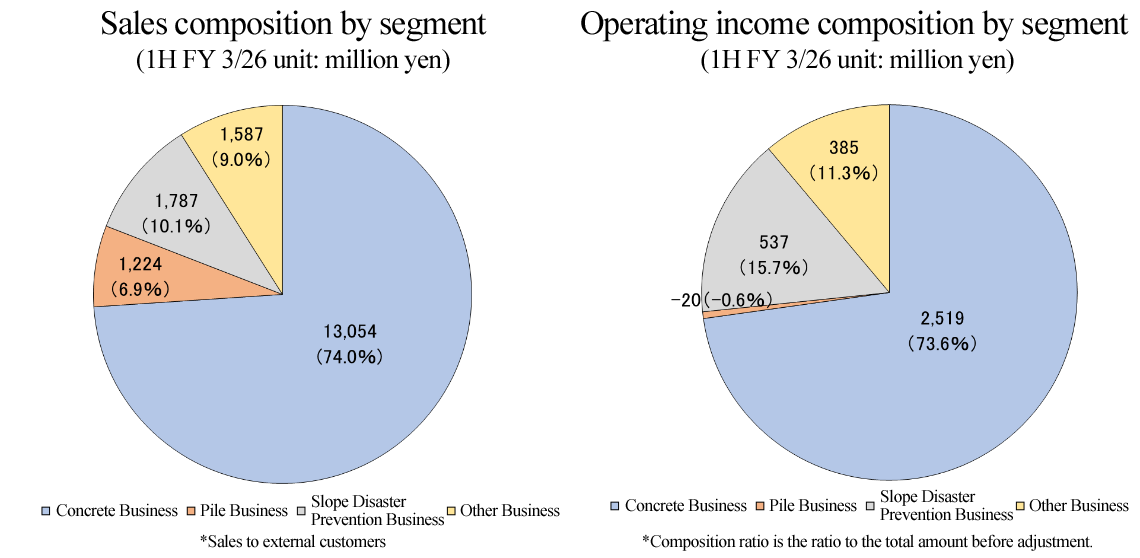
The following is a table showing the group companies operating each business segment:
Business | Group Companies |
Concrete Business | Vertex Co., Ltd. (Tokyo) Vertex Construction Co., Ltd. (Osaka) Hokukon Product Co. LTD (Fukui Pref.) Kyushu Vertex Co., Ltd. (Fukuoka Pref.) IKK Corp. (Tokyo) |
Pile Business | HOKUKON MATERIAL CO., LTD. (Fukui Pref.) |
Slope Disaster Prevention Business | Vertex Co., Ltd. (Tokyo) Vertex Construction Company (Osaka) Kyushu Vertex Co., Ltd. (Fukuoka Pref.) |
Other Business | WICERA Co., Ltd. (Gifu Pref.) iB Solution Corporation (Fukui Pref.) PROFLEX CO., LTD. (Saitama Prefecture) NX inc. (Tokyo; equity-method affiliate) |
(Based on the company's website)
[Concrete Business]
The company manufactures and sells precast concrete. This is the company's main business area, accounting for about 74% of both sales and operating income. In particular, the company's mainstay products are those for flood control and sewage, and the company boasts the industry's top performance in this area.
(Each photo is taken from the reference material of the company.)
Name of Business | Overview and Main Products |
Flood control and sewerage business | With their rich product lineup and one-of-a-kind technologies, which can meet needs, they offer the best proposal for “prevention and mitigation of disasters,” such as measures against flood disasters and the construction of earthquake-resistant sewage facilities.
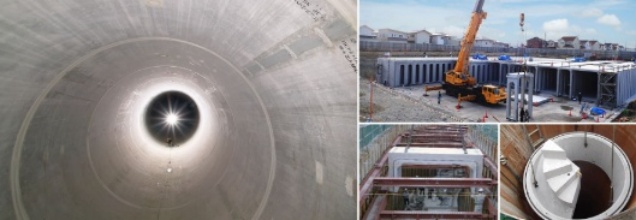 |
Road business | They not only construct road infrastructure, but also have a lot of products for safeguarding the lives of people. It contributes to the construction of “safe and reliable” roads.
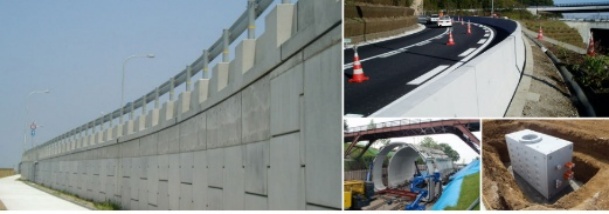 |
Maintenance business | They propose optimal products and construction methods while taking into account lifecycle costs, as a measure against the deterioration of infrastructure that cannot be postponed. It contributes to the extension of service life of infrastructure that supports affluent citizens’ lives, society, and economy.
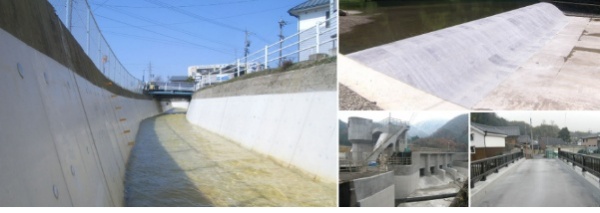 |
Railway business | Their lineup includes products made of rigorously selected materials, such as super-hard concrete and special mortar, to bring “safety and peace of mind” with outstanding technologies.
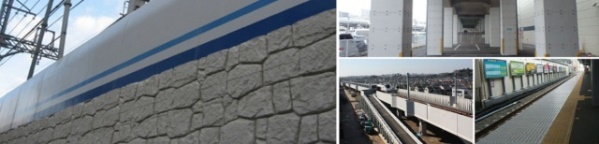 |
Housing and development business | Their lineup includes many products for withstanding large earthquakes, in order to develop towns resistant to earthquakes and disasters where people can live with peace of mind. In addition, they own earthquake-resistant water reservoirs of the No. 1 brand and unique toilets for disasters. 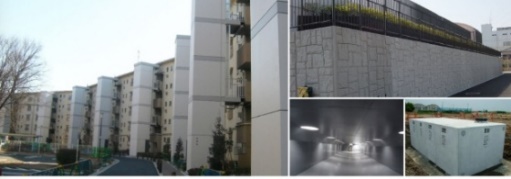 |
[Pile Business]
The company is developing a business that produces concrete piles used for building foundations. They manufacture and sell concrete piles, which are used for building foundations, and conduct piling.
[Slope Disaster Prevention Business]
The company manufactures and sells products for slope disaster prevention. Their lineup includes many construction methods and products developed in house through performance tests, for mountain roads and residential areas where disasters, such as the avalanche of rocks and mud, may occur.
[Other Business]
Other businesses include hydraulic hose maintenance, ceramics business, RFID business, concrete surveys & testing business, system development & sales business, and lactic acid bacteria business. They are operated by subsidiaries.
(6) Characteristics and Strength
◎ Characteristics of the Business Model
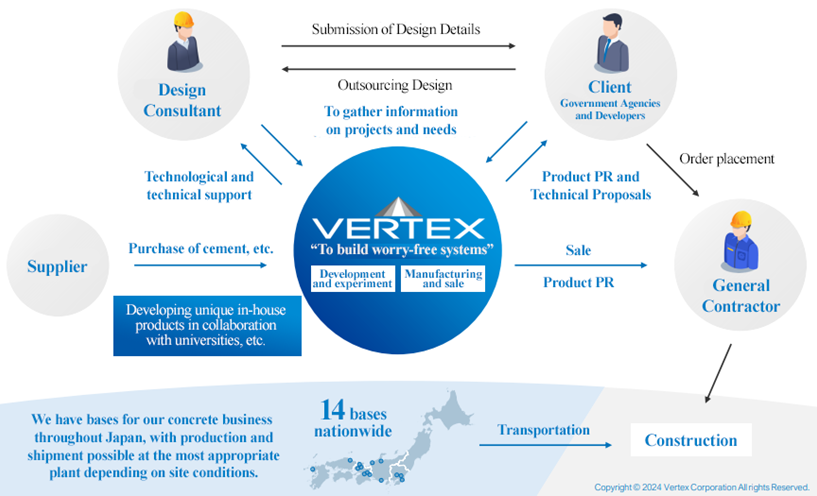
Although general contractors are the company's direct customers, this model allows the company to market its products by offering proposals and support to design consultants and clients (government agencies and developers) from the early stages of a project. It is also a model that allows the company to introduce new products to the market ahead of competitors as a measure to address social issues, build a track record as a leading manufacturer, cultivate the market, establish a brand in the field, and increase sales.
(Taken from the reference material of the company)
◎ Strengths
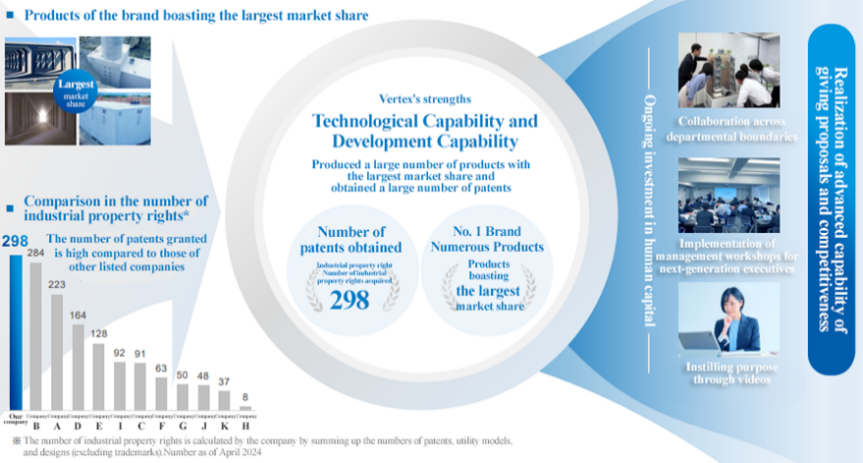
① Technical and development capabilities
The company has realized an advanced capability of giving proposals and competitiveness by systematically collaborating with all staff members, including sales and engineering staff, based on the technical and development capabilities shown by the number of patents acquired and the number of products ranked as No. 1 brand products.
(Taken from the reference material of the company)
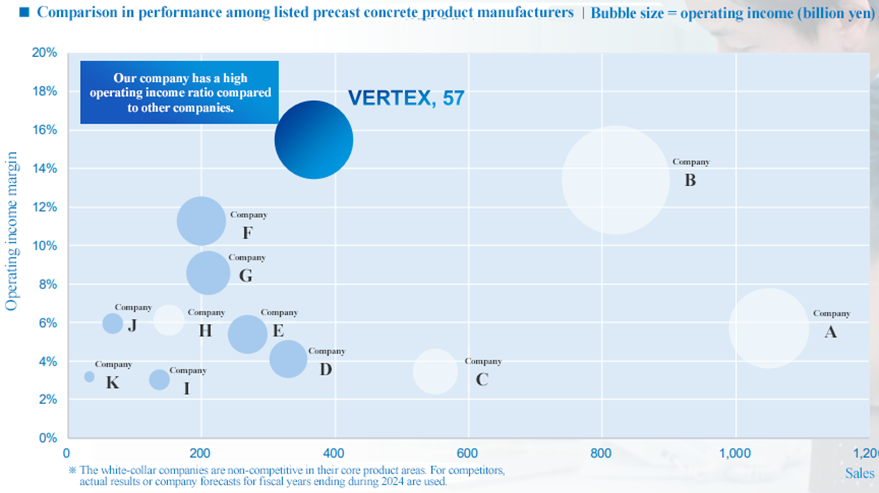
② Highest profit margin in the industry
By combining technical, development, sales and organizational capabilities, the company has achieved the highest profit margin in the industry.
(Taken from the reference material of the company)
(7) Shareholder Return
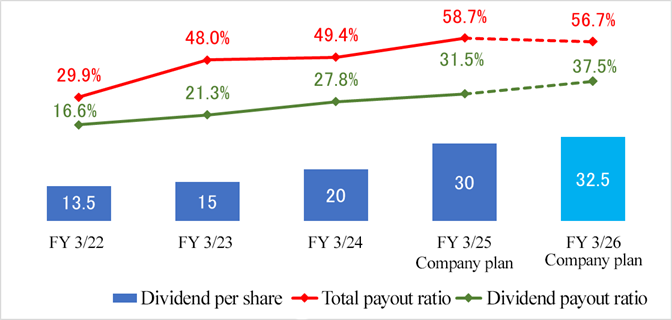
Regarding the dividends for fiscal year ended March 2025, they plan to upwardly revise the initial plan and pay 60 yen/share (disclosed on April 30). Payout ratio is 31.5% and total return ratio is 58.7%, nearly equal to the goals set in the medium-term management plan. In fiscal year ending March 2026, they plan to increase the dividend amount to 32.5 yen/share (after taking into account the stock split), while net income will decline. Regarding treasury shares, they plan to conduct a share buyback while keeping an eye on the market environment.
(8) Management that takes capital costs into consideration
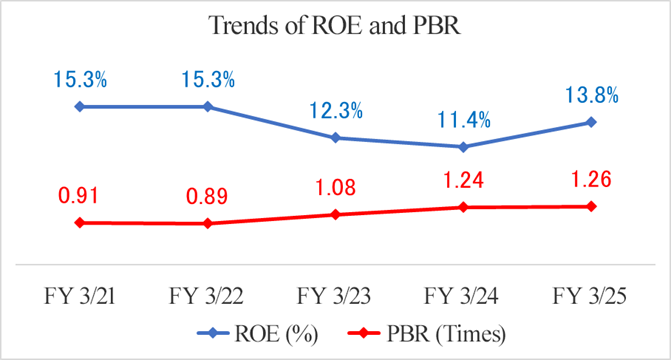
The company considers its current cost of capital to be 8-9% and continues to aim for long-term ROE improvement and curb capital costs in the long term.
In addition, during the period of the medium-term management plan, the company will be focusing on enhancing its IR activities, such as expanding English-support and disclosure, and will aim to improve corporate value through dialogue with shareholders and investors.
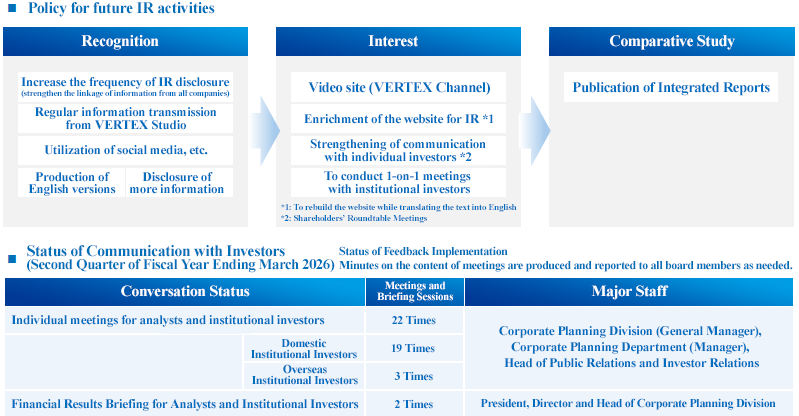
(Taken from the reference material of the company)
2. First Half of the Fiscal Year Ending March 2026 Earnings Results
(1) Consolidated results
| 1H FY 3/25 | Ratio to sales | 1H FY 3/26 | Ratio to sales | YoY | The company’s forecast | Compared to the forecast |
Sales | 18,006 | 100.0% | 17,653 | 100.0% | -2.0% | 16,800 | +5.1% |
Gross profit | 6,043 | 33.6% | 5,993 | 34.0% | -0.8% | - | - |
SG&A | 3,592 | 20.0% | 3,631 | 20.6% | +1.1% | - | - |
Operating income | 2,450 | 13.6% | 2,361 | 13.4% | -3.6% | 2,290 | +3.1% |
Ordinary Income | 2,539 | 14.1% | 2,428 | 13.8% | -4.4% | 2,360 | +2.9% |
Interim Net Income | 1,451 | 8.1% | 1,442 | 8.2% | -0.7% | 1,560 | -7.6% |
*The figures include those calculated by Investment Bridge Co., Ltd. as reference values, and may differ from actual values (the same applies hereinafter).
*Unit: Million yen.
Sales declined 2.0% year on year, and operating income dropped 3.6% year on year.
Considering the third medium-term management plan as the first phase of “VERTEX Vision 2034,” they promote the investment for growth in order to strengthen their business portfolio, and pursue the regrowth of the core business with a well-established foundation and the development of new business, which will serve as a long-term growth driver. They concentrated on the priority measures: “Strengthening the business portfolio,” “Strengthening promotion of human capital, R&D and DX,” and “Promoting sustainability-oriented management,” to improve their corporate value further. In the first half of the fiscal year ending March 2026, sales decreased 2.0% year on year to 17,653 million yen. Sales increased in the concrete business and the slope disaster prevention business, but dropped in the pile business and other businesses. Operating income decreased 3.6% year on year to 2,361 million yen. Profit increased in the concrete business, the slope disaster prevention business, and other businesses, but decreased in the pile business.
In the first half of the fiscal year ending March 2026, they compensated for the decrease of large-scale projects in the previous year, and sales and profit declined slightly year on year, but sales and operating income exceeded the forecasts. Regarding profit, the posting of highly profitable large-scale projects contributed.
This is attributable to a number of orders for public-works projects. They do not consider it as an issue, as they pay attention to the cumulative results in the medium term. Gross profit margin rose 0.4 points year on year to 34.0%. As the ratio of SGA to sales augmented 0.6 points year on year, the ratio of operating income to sales declined 0.2 points year on year to 13.4%. In addition, as they posted expenses for compensating for damage amounting to 43 million yen in the first half of the current fiscal year (4 million yen in the same period of the previous year) as non-operating expenses, the decrease rate of ordinary income exceeded that of operating income. Furthermore, as impairment loss decreased year on year from 306 million yen to 24 million yen in the first half of the current fiscal year, interim net income declined 0.7% year on year.
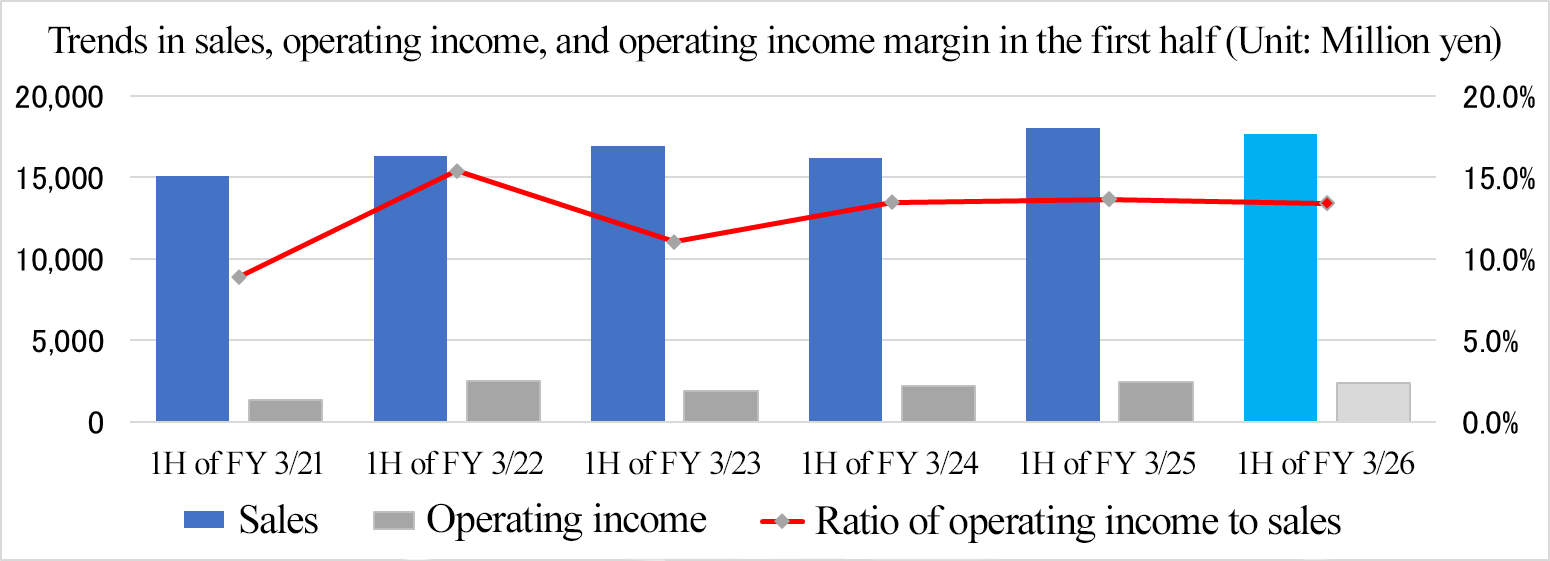
In the first half of the fiscal year ending March 2026, sales and profit dropped year on year, but sales, operating income, and operating income margin have been stably high.
(2) Trend of each segment
| 1H FY 3/25 | Composition ratio | 1H FY 3/26 | Composition ratio | YoY |
Concrete business | 12,824 | 71.2% | 13,054 | 73.9% | +1.8% |
Pile business | 1,970 | 10.9% | 1,224 | 6.9% | -37.9% |
Slope disaster prevention business | 1,539 | 8.5% | 1,787 | 10.1% | +16.1% |
Other business | 1,672 | 9.3% | 1,587 | 9.0% | -5.1% |
Total sales | 18,006 | 100.0% | 17,653 | 100.0% | -2.0% |
Concrete business | 2,351 | 18.3% | 2,519 | 19.3% | +7.1% |
Pile business | 223 | 11.3% | -20 | -1.7% | - |
Slope disaster prevention business | 446 | 29.0% | 537 | 30.0% | +20.3% |
Other business | 375 | 22.5% | 385 | 24.3% | +2.5% |
Adjustment amount | -946 | - | -1,059 | - | - |
Total operating income | 2,450 | 13.6% | 2,361 | 13.4% | -3.6% |
* Unit: thousand yen. The composition ratio of operating income means the ratio of operating income to sales.
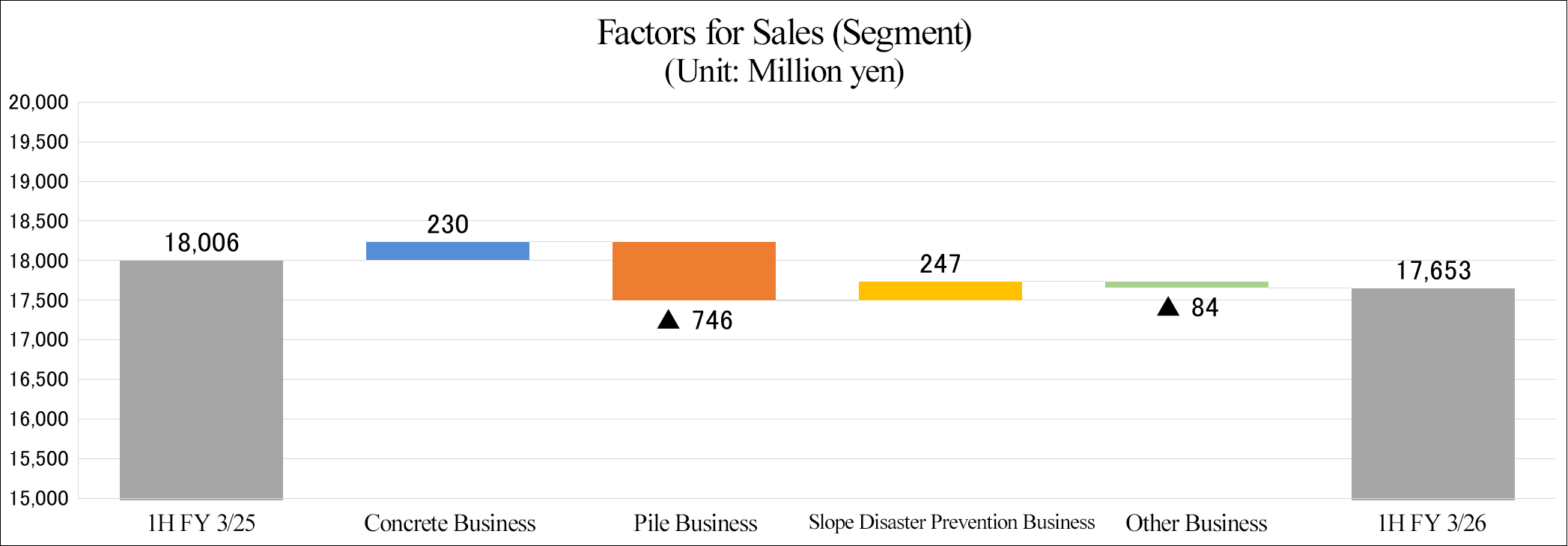
*Prepared by Investment Bridge Co., Ltd. based on disclosed material.
◎ Concrete Business (Sales and profit grew 1.8% and 7.1%, respectively, year on year.)
As they shipped products for large-scale projects for coping with inundation steadily and the sales of high value-added products were healthy, offsetting the decrease of large-scale projects in the Kyushu region in the first half of last fiscal year, profitability improved steadily. As a result, sales rose 1.8% year on year to 13,054 million yen and profit grew 7.1% year on year to 2,519 million yen. In addition, operating income margin rose 1 point year on year to 19.3%. The progress rate toward the full-year forecast was 46.5% for sales and 46.7% for profit.
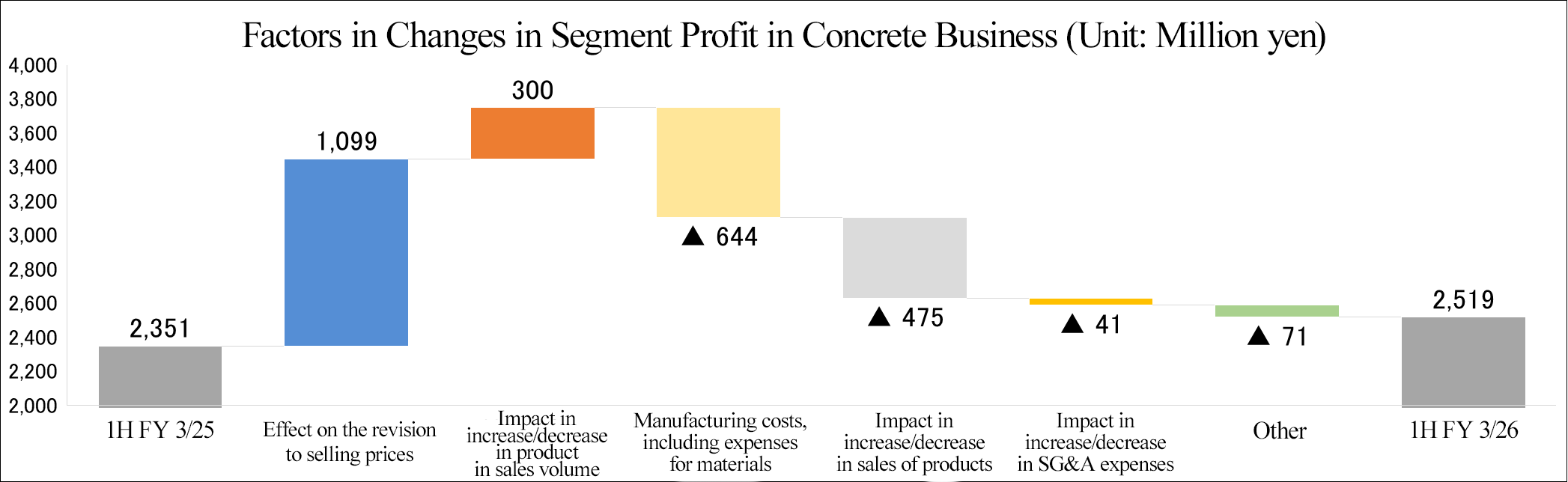
The factors in increasing profit include the steady shipment of products for projects for coping with inundation in each area and the revision to the selling prices of high value-added products, such as rainwater storage tanks and box culverts. The factors in decreasing profit include the decrease in sales of products for large-scale projects in the Kyushu region in the previous year.
◎ Pile Business (Sales declined 37.9% year on year, and profit declined 243 million yen year on year.)
Due to the U.S. tariffs, private investment became sluggish, and their performance was affected by the cancellation and postponement of private construction projects that were scheduled to be started at the beginning of the fiscal year. As a result, sales declined 37.9% year on year to 1,224 million yen and loss stood at 20 million yen (a profit of 223 million yen was posted in the same period of the previous year). In addition, operating income margin declined 13 points year on year to -1.7%. The progress rate toward the full-year forecast was 36.0% for sales, and profit was 260 million yen lower than the forecast.
◎ Slope Disaster Prevention Business (Sales and profit grew 16.1% and 20.3%, respectively, year on year.)
Some projects were completed in the first half of the fiscal year, earlier than initially scheduled. As a result, sales grew 16.1% year on year to 1,787 million yen and profit rose 20.3% year on year to 537 million yen. In addition, operating income margin rose 1.1 points year on year to 30.0%. The progress rate toward the full-year forecast was 32.5% for sales and 30.5% for profit.
◎ Others (Sales declined 5.1% year on year, and profit grew 2.5% year on year.)
The performance of the hydraulic hose maintenance business fell below the initial forecast, but in the ceramics business, the shipment of products related to semiconductor manufacturing equipment was healthy. As a result, sales declined 5.1% year on year to 1,587 million yen, and profit rose 2.5% year on year to 385 million yen. Operating income margin rose 1.8 points year on year to 24.3%. The progress rate toward the full-year forecast was 39.7% in sales and 45.3% in profit.
(3) Financial position and cash flows
Financial position
| Mar. 2025 | Sep. 2025 |
| Mar. 2025 | Sep. 2025 |
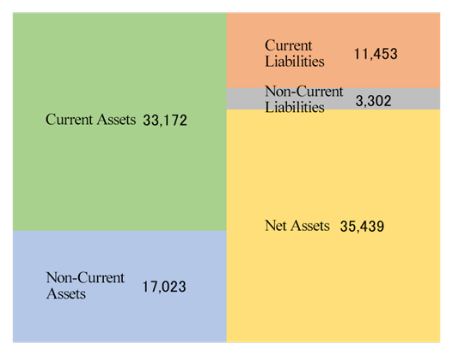
Cash and Deposits | 17,323 | 16,932 | Trade Payables | 6,103 | 5,240 |
Trade Receivables | 10,935 | 9,882 | ST Interest-Bearing Debts | 3,065 | 3,040 |
Inventories | 5,492 | 5,737 | Current Liabilities | 11,960 | 11,453 |
Current Assets | 34,690 | 33,172 | LT Interest-Bearing Debts | 844 | 745 |
Tangible Assets | 11,297 | 11,235 | Noncurrent Liabilities | 3,371 | 3,302 |
Intangible Assets | 3,424 | 3,226 | Net Assets | 36,534 | 35,439 |
Investment and Other Assets | 2,455 | 2,561 | Total Liabilities and Net Assets | 51,866 | 50,196 |
Noncurrent Assets | 17,176 | 17,023 | Total interest-bearing debt | 3,909 | 3,786 |
*Unit: Million yen. Trade receivables include electronically recorded ones, while trade payables include electronically recorded ones. Interest-bearing debt does not include lease obligations.
*Prepared by Investment Bridge Co., Ltd. based on disclosed material.
The total assets as of the end of September 2025 stood at 50,196 million yen, down 1,670 million yen from the end of the previous fiscal year. Major factors in decreasing assets include notes receivable, accounts receivable, contract assets, and goodwill. Major factors in decreasing liabilities and net assets include electronically recorded obligations, long-term debt, and the acquisition of treasury shares. The capital-to-asset ratio as of the end of September 2025 stood at 70.0%, unchanged from the end of the previous fiscal year.
Cash Flow
| 1H FY 3/25 | 1H FY 3/26 | YoY | |
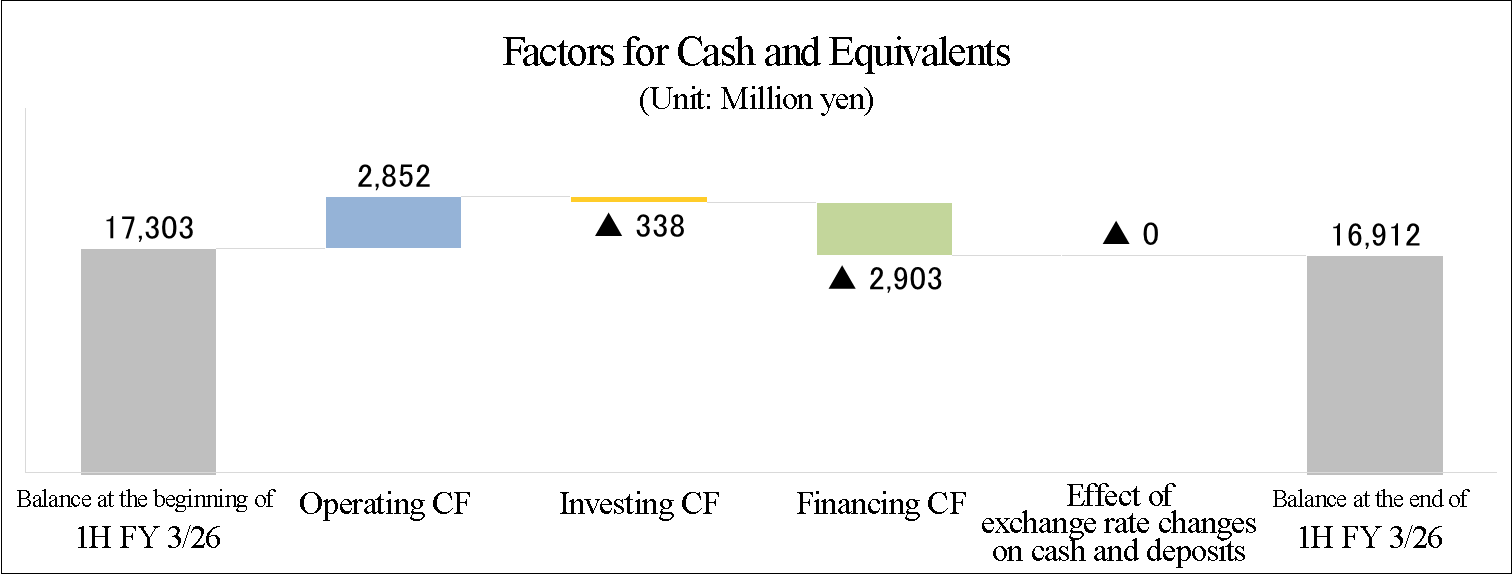
Operating CF | 2,592 | 2,852 | +259 | +10.0% |
Investing CF | 32 | -338 | -370 | - |
Free CF | 2,624 | 2,513 | -110 | -4.2% |
Financing CF | -2,847 | -2,903 | -55 | - |
Cash and equivalentsas of the end of the interim period | 13,673 | 16,912 | +3,239 | +23.7% |
*Unit: Million yen.
*Prepared by Investment Bridge Co., Ltd. based on disclosed material.
In terms of cash flows, the cash inflow from operating activities increased thanks to the growth of inventory assets, the decrease in the payment of income taxes, etc. On the other hand, due to the decrease in revenue from business transfer, the cash flow from investing activities turned negative, the surplus of free cash flow also decreased. The cash outflow from financing activities augmented, due to the increase in dividend payments, etc. As a result, the cash position as of the term-end was up 23.7% year on year.
(4) Shareholder return
◎ Policy for shareholder return (Period of the current medium-term management plan: FY 3/25 to FY 3/27)
◆ Dividend payout rati 30%
◆ Total return rati 50% or higher
◎ Dividend
They carried out a 2-for-1 stock split for common shares on September 1, 2025. Regarding dividends considering that stock split, the company plans to pay 32.5 yen/share, up 2.5 yen from the previous fiscal year, and payout ratio is expected to be 37.6%.
◎ To Acquire Treasury Shares
The company continuously purchased treasury shares, in order to enhance shareholder returns, improve capital efficiency, and implement a flexible capital policy in response to changes in the business environment.
◆ Acquisition period: (1) April 11 to July 31 (2) September 19
◆Total acquisition price: (1) 799,974,100 yen (367,600 shares) (2) 456,600,000 yen (300,000 shares)
3. Fiscal Year Ending March 2026 Earnings Forecasts
(1) Consolidated results
| FY 3/25 | Ratio to sales | FY 3/26 Est. | Ratio to sales | YoY |
Sales | 38,918 | 100.0% | 41,000 | 100.0% | +5.3% |
Operating Income | 6,285 | 16.2% | 6,350 | 15.5% | +1.0% |
Ordinary Income | 6,449 | 16.6% | 6,500 | 15.9% | +0.8% |
Net Income | 4,826 | 12.4% | 4,290 | 10.5% | -11.1% |
*Unit: Million yen.
Sales are projected to increase 5.3% year on year, and operating income 1.0% year on year.
As of the end of the first half of the fiscal year, the initial forecast was left unchanged, and the company’s forecast for the fiscal year ending March 2026 calls for sales growing 5.3% year on year to 41 billion yen and operating income rising 1.0% year on year to 6,350 million yen. On April 1, 2024, the company set the purpose of “We offer new forms of security for the future of people worldwide with our unique ideas and one-of-a-kind technologies.” In order to attain this purpose, the company formulated “the long-term vision VERTEX Vision 2034” to achieve in 10 years by 2034 and “the third medium-term management plan” for the period from 2024 to 2026. By implementing the management strategy set in the “the third medium-term management plan” without fail, they aim to ensure the peace of mind and improve corporate value further.
Sales, gross profit, operating income, and ordinary income are expected to grow, as they will secure projects to compensate for the decrease of large-scale projects. However, net income is expected to decrease due to the posting of deferred transfer losses in the previous year as deductible expenses. Operating income margin is assumed to be 15.5%, down 0.7 points from the previous fiscal year.
The initial dividend forecast was also left unchanged. They conducted a 2-for-1 stock split for common shares on September 1, 2025. Taking into account said stock split, they plan to pay a common dividend of 32.50 yen/share, up 2.5 yen/share from the previous fiscal year. The expected payout ratio is 37.6%. They purchase treasury shares while monitoring the market environment, just like they did swiftly when share price nosedived.
The acquisition of shares in IKK Corp. was completed on October 1. The impact of post-merger integration on the medium-term management plan is being assessed. After finishing the assessment, they plan to disclose the results, and figures regarding goodwill, etc. are confirmed, they plan to revise their plan for the current fiscal year.
(2) Trend in each segment
| FY 3/25 Act. | Composition ratio | FY 3/26 Est. | Composition ratio | YoY |
Concrete business | 26,918 | 69.2% | 28,100 | 68.5% | +4.4% |
Pile business | 3,689 | 9.5% | 3,400 | 8.3% | -7.8% |
Slope disaster prevention business | 4,890 | 12.6% | 5,500 | 13.4% | +12.5% |
Other business | 3,419 | 8.8% | 4,000 | 9.8% | +17.0% |
Total sales | 38,918 | 100.0% | 41,000 | 100.0% | +5.3% |
Concrete business | 5,410 | 20.1% | 5,400 | 19.2% | -0.2% |
Pile business | 246 | 6.7% | 240 | 7.1% | -2.6% |
Slope disaster prevention business | 1,659 | 33.9% | 1,760 | 32.0% | +6.1% |
Other business | 779 | 22.8% | 850 | 21.3% | +9.0% |
Adjustment amount | -1,810 | - | -1,900 | - | - |
Total operating income | 6,285 | 16.2% | 6,350 | 15.5% | +1.0% |
* Unit: million yen. The composition ratio of operating income means the ratio of operating income to sales.
* The disaster prevention business was renamed the slope disaster prevention business in the fiscal year ended March 2025.
In the concrete business, sales are expected to grow 4.4% year on year and profit is forecast to decline 0.2% year on year. Operating income margin is projected to drop 0.9 points year on year to 19.2%.
In the pile business, sales are projected to drop 7.8% year on year and profit is forecast to decline 2.6% year on year. Operating income margin is expected to rise 0.4 points year on year to 7.1%.
In the slope disaster prevention business, sales are expected to grow 12.5% year on year and profit is forecast to rise 6.1% year on year. Operating income margin is projected to decline 1.9 points year on year to 32.0%.
In the other businesses, sales and profit are expected to grow 17.0% and 9.0%, respectively, year on year. Operating income margin is projected to decrease 1.5 points year on year to 21.3%.
(3) Performance trend in the second half
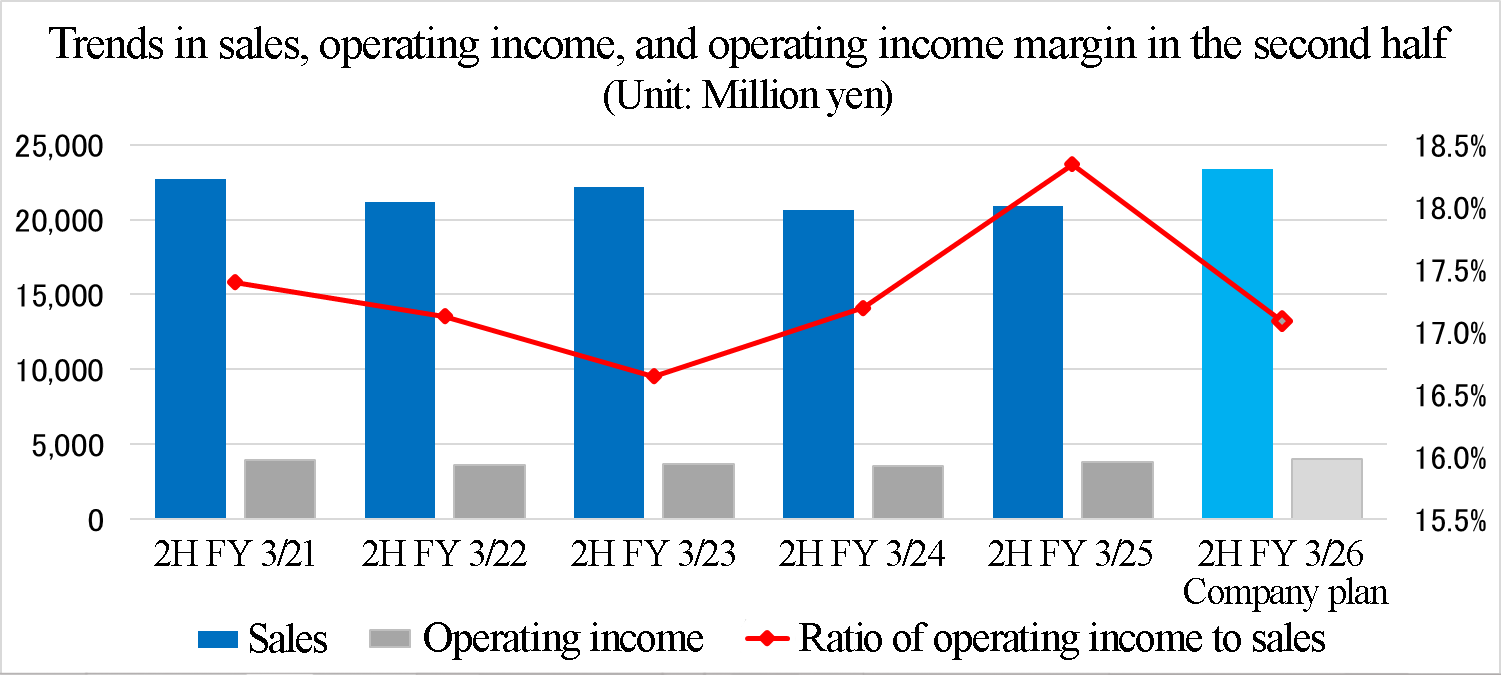
In the second half of the current fiscal year, sales and profit are expected to grow, but operating income margin is projected to decline as there will be no longer highly profitable large-scale projects that were launched in the second half of the previous fiscal year.
(4) Progress rate toward the earnings forecast
| 1H FY 3/26 (Act.) | FY 3/26 (Company plan) | Progress rate |
Sales | 17,653 | 41,000 | 43.1% |
Operating Income | 2,361 | 6,350 | 37.2% |
Ordinary Income | 2,428 | 6,500 | 37.4% |
Net Income | 1,442 | 4,290 | 33.6% |
*Unit: Million yen.
Regarding the performance in the first half of the fiscal year ending March 2026, sales and all kinds of profits fell below 50% of the full-year forecast. However, when it is considered that sales and all kinds of profits tend to be larger in the second half than in the first half and the performance in the first half exceeded the company’s forecast thanks to a number of orders for public-works projects, it can be said that the full-year forecast is achievable.
(5) Commencement of measures for applying for the switch to the Prime Market of Tokyo Stock Exchange
At the meeting of the board of directors held on November 13, 2025, they resolved to start full-scale measures for applying for the switch to the Prime Market of Tokyo Stock Exchange.
Going forward, they will develop systems, enrich constructive dialogue with stakeholders, including shareholders and investors, further strengthen their governance structure, disclose information in English, adapt to the recommendations of TCFD, promote sustainability-oriented management and risk management, and so on continuously, in order to satisfy the strict requirements for getting listed on the Prime Market. In addition, in order to maximize their corporate value and realize sustainability-oriented management, we will sincerely live up to the expectations of all stakeholders, including shareholders, investors, business partners, and employees.
4. Progress of the Third Mid-Term Management Plan
For the first phase of VERTEX Vision 2034, it is forecast that sales will be 43 billion yen and operating income will be 6.5 billion yen, when the effects of exchange rate fluctuations, etc. are excluded. As the first step for achieving sales of 100 billion yen and an operating income of 15 billion yen, the company will invest in the fortification of the business portfolio and engage in the development of new business, which will drive the regrowth and long-term growth of their core business based on the established business foundation.
[Numerical goals]
Numerical goals (as of the announcement of the plan)
| FY 3/24 (Act.) | FY 3/25 (Mid-term management plan) | FY 3/26 (Mid-term management plan) | FY 3/27 (Mid-term management plan) | 3-year Cumulative total | Vision 2034 |
Sales | 368 | 400 | 410 | 430 | 1,240 | 1,000 |
Operating Income | 57 | 60 | 62 | 65 | 187 | 150 |
ROE | 11% | - | - | 14% | - | 20% |
*Unit: 100 million yen.
[Measures]
Strengthening the business portfolio |
① To promote the expansion of stable revenues based on the market growth in their core businesses of concrete and slope disaster prevention ② To promote the investment for growth of the businesses of infrastructure maintenance, railways, defense, and hydraulic hose maintenance they are developing ③ To strengthen and expand their business portfolio through M&A in addition to organic growth |
Promoting sustainability-oriented management |
① To develop a structure for actualizing “MIRAI factory,” “one-stop maintenance,” “onsite precast,” and “smart slope disaster prevention” with the aim of realizing “an ideal state 10 years from now” ② To promote initiatives for carbon neutrality |
Strengthening promotion of human capital, R&D and DX |
① To further promote the programs for developing and recruiting human resources ② To promote the investment for growth while envisioning “an ideal state 10 years from now” in addition to the ordinary investment in R&D and equipment ③ To develop information systems and ICT infrastructure and further promote DX |
[Background of the market]
“The first medium-term plan for improving national resilience” announced by the Cabinet Secretariat in June this year indicates the numerical goals for measures that need to be promoted. One of the items related to the company is a measure against inundation. Among the inundated regions, etc. (370,000 ha in Japan as of the end of 2023), only 5% had undergone measures against inundation based on sewage systems, which were taken while considering the impact of climate change, in 2023. They set a major goal of raising the percentage to 100% by 2058. In addition, measures against the deterioration of sewer conduits are required to secure the soundness of large sewer conduits aged 20 years or older with a bore of 2 m or over. As of 2024, the ratio of sound large sewer conduits (the subjects of “a nationwide special intensive survey on sewer conduits”*: approx. 5,000 km), which carry a high risk of damage and would cause a significant social impact if an accident happens was 0%, but the government plans to boost the ratio to 100% by 2030. In particular, in the wake of the collapse of a road in Yashio City in February of 2025, measures against the deterioration of sewer conduits suddenly attracted attention as an imperative issue. Such national policies will serve as a tailwind for the company. Considering that it is impossible to catch up with the rapidly growing demand if they start measures after market needs become apparent, they have been developing products while predicting the changes of the times. This attitude of conducting R&D before the emergence of a trend can be said to be the most significant strength of the company, which can cope with the rapid market expansion without fail.
[Project for coping with rainwater in which they have engaged]
The shipment volume of hume pipes for foul water sewer conduits, which are their core products, reached 4.12 million tons in 1972, but it is now around 0.1 million tons, as demand declined due to the rise in the penetration rate of sewage systems in Japan. As systems for treating foul water were developed, the focus of national measures was gradually shifted to rainwater. In that situation, they focused on the development of rainwater-related products and released products early, while considering the decline in demand for hume pipes, which are used for foul water treatment systems, and the prediction that the focus of national measures would shift to rainwater.
They started the manufacturing and sale of S-HOLE (a prefabricated box-shaped manhole), which boasts the largest market share, in 1989, and the manufacturing and sale of M. V. P. System (an underground rainwater storage tank), which boasts the largest market share, in 1996, and the manufacturing and sale of SJ-BOX (a quake-resistant box culvert), which boasts the largest market share, in 2003.
Since the law regarding flood control in river basins was enacted in 2021, the necessity to establish rainwater storage facilities has been growing further. Rainwater storage facilities have the function to temporarily store an excessive volume of rainwater at the time of rainfall, to reduce the risk of flooding of downstream rivers. In 1997, the area of underground storage and infiltration facilities constructed by Vertex was approx. 100,000 m2, but it has grown about 10 times to approx. 950,000 m2. They started the manufacturing and sale of M. V. P. System (an underground rainwater storage tank), which boasts the largest market share, in 1996.
[Foray into the underground flood control reservoir business market]
The amount of rainfall, which has increased rapidly in recent years, is now difficult to handle with box culverts and rainwater storage facilities only. Then, metropolitan governments are planning to build underground tunnel-type reservoirs using segmented parts. They have not operated business in this field, but the scale of each project in this field is large, so this market is promising. Under these circumstances, they acquired IHI Construction Industrial Co., Ltd., which is a leading manufacturer of synthetic segmented parts, and renamed it IKK on October 1. To build a tunnel for rainwater, synthetic segments are often adopted, because they can tolerate internal water pressure, which is generated in conduits. In the field of synthetic segments, the number of competitors is small, and they estimate that the products of IKK have a cost advantage compared with competing products. They aim to engage in projects for underground tunnel-type reservoirs, which are expected to be in high demand, based on the synthetic segments by utilizing their own marketing network.
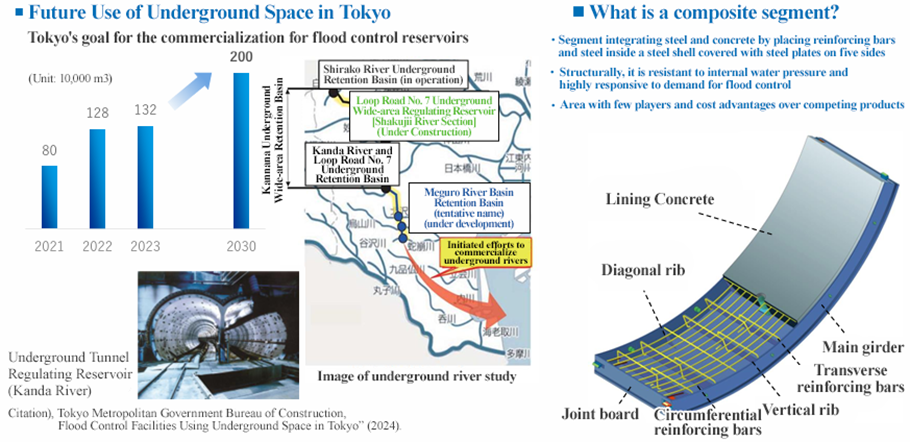
(Taken from the reference material of the company)
[Contribution to measures against sediment disasters]
They will construct a site for experiments on fences for preventing landslides in Nishiwaki City, Hyogo Prefecture for the purpose of enriching the product lineup further as one of measures for land restoration in mountainous areas where disasters may occur, which are mentioned in “the first medium-term plan for improving national resilience.” At this site, they will level a mountain to form a slope to cause a landslide toward a fence they set from the top of the experiment site, to study the performance of the fence. They hope to evolve this site into a leading landslide experiment site in Japan, by using the site not only for testing their own products, but also conducting joint experiments with other companies and allowing research institutes to use the site for contributing to society.
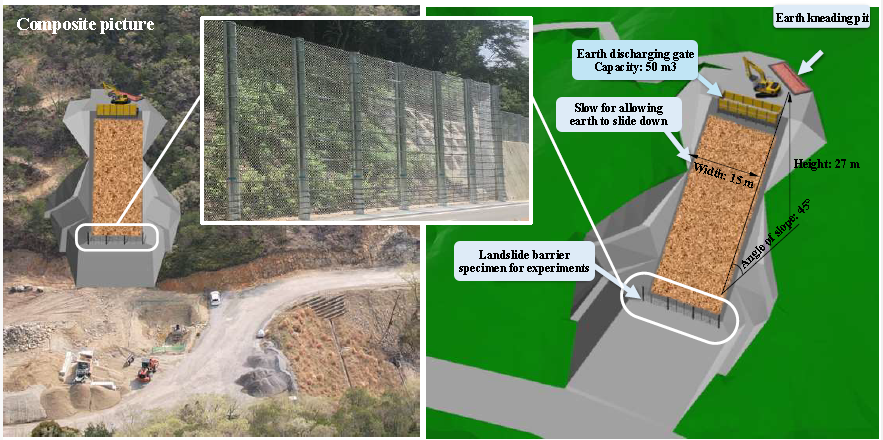
(Taken from the reference material of the company)
[Initiatives for coping with the deterioration of social infrastructures]
The total length of sewer conduits in Japan is approx. 500,000 km, and the total length of those aged over 50 years, exceeding the standard service life of sewer conduits, is approx. 40,000 km as of now, and is projected to reach approx. 100,000 km in 10 years, and approx. 210,000 km in 20 years. The national government positions the implementation of projects for planned maintenance, management, and renovation for securing sustainable sewerage functions as an important measure, and it is expected that the maintenance of sewer conduits will become more common than the construction of sewer conduits. The Ministry of Land, Infrastructure, Transport and Tourism requested this industry to sophisticate the technologies for maintaining sewer conduits and put them into practice, so full-scale technological innovation for maintaining sewer conduits is expected to be realized.
[Promotion of the maintenance business]
In the maintenance business, too, they have actively engaged in the development of new construction methods and new materials, so they already possess excellent maintenance methods. They organized the Association of Maintenance Technology for Infrastructure together with around 60 companies, including secondary concrete product makers and construction companies, to promote the diffusion of methods and the sale of materials used for them.
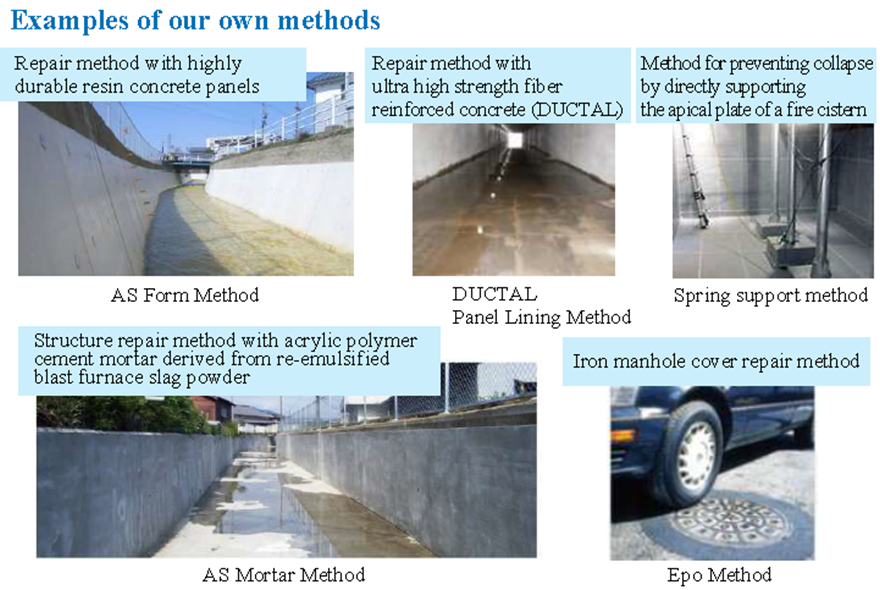
(Taken from the reference material of the company)
[Business of surveying and evaluating concrete structures]
In order to conduct maintenance, it is indispensable to accurately survey and evaluate conduits. The forte of Vertex is the possession of technologies for surveying and evaluating conduits. The company has advantages in not only commonly used technologies for surveys and evaluation, but also technologies, such as underground radar surveying, visual inspection of structures with fiber scopes and underwater drones, and surveying of shapes of scour holes with underwater ROVs and sonar. Furthermore, they actively engage in the development of next-generation technologies for surveys and evaluation for dealing with issues that cannot be settled with today’s technologies. They aim to secure great advantages in the sewage system maintenance field, where demand is expected to grow, by utilizing the strength of possessing diverse maintenance technologies for surveying and evaluating sewer conduits.
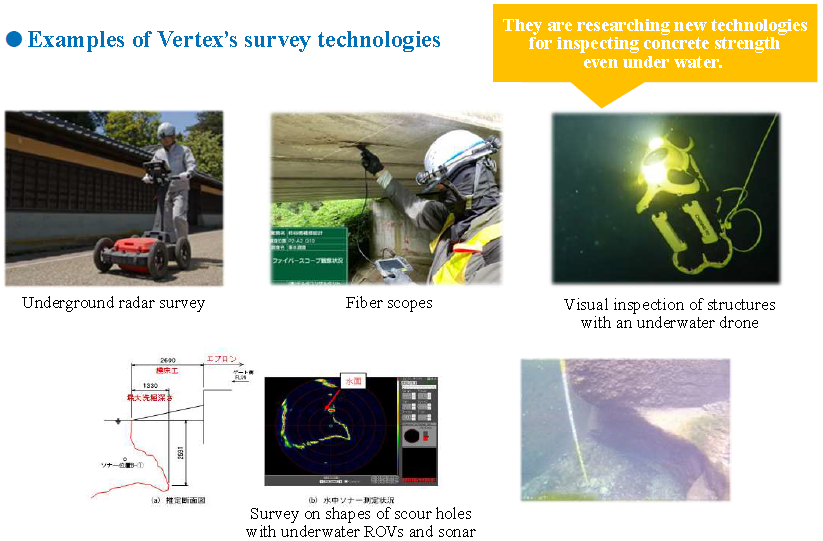
(Taken from the reference material of the company)
[Securing of redundancy]
At present, the Japanese government is strongly promoting the policy of redundancy. Redundancy means a system for maintaining the social functions of major infrastructures by securing alternate routes and leeway even if they become dysfunctional. From now on, it is expected that existing sewer conduits will increase and new connecting pipes will be installed, so the demand for prefabricated manholes “UNIHOLE” and “S-HOLE” will grow.
5. Conclusions
As of the end of the first half of the fiscal year, the progress rate toward the full-year forecast fell below 50% for sales and all kinds of profits. When it is considered that sales and all kinds of profits tend to be larger in the second half than in the first half and the performance in the first half exceeded the company’s forecast thanks to a number of orders for public-works projects, it can be said that the full-year forecast is achievable. In this situation, the acquisition of shares in IHI Construction Industrial Co., Ltd. was completed on October 1, and its corporate name was changed to IKK Corp. (hereinafter called “IKK”). The impact of post-merger integration on the medium-term management plan is being assessed. After finishing the assessment, they plan to disclose the results, and figures regarding goodwill, etc. are confirmed, they plan to revise their full-year forecast. We are looking forward to seeing what kind of full-year forecast will be announced. In addition, IKK has a cost advantage for meeting the demand for underground tunnel-type reservoirs constructed with segmented parts, which is expected to grow rapidly, compared with competitors. Vertex plans to induce synergetic effects by utilizing their marketing network based on the synthetic segments of IKK, and strongly promote the business related to underground tunnel-type reservoirs, as the demand for them is expected to grow. We would like to pay attention to the synergy with IKK.
Furthermore, it is projected that sewer conduits aged over 50 years, which is the standard service life, will increase significantly and the demand for maintenance of sewer conduits will grow rapidly. The company already possesses various repair methods for maintaining sewer conduits, so their benefits are expected to be brought about. In addition, significant benefits are expected from surveys, assessment, the increase of sewer conduits, and the installation of connecting conduits. It is noteworthy how they will meet the growing demand for maintenance of sewer conduits.
Furthermore, they still have a budget of around 8.5 to 13.5 billion yen for M&A after acquiring IKK. For M&A, they target (1) enterprises that could fortify the functions of their existing business and enter peripheral fields based on services for disaster prevention/mitigation and national resilience enhancement, (2) enterprises that provide products or services that contribute to the businesses to be developed by Vertex (in the fields of infrastructure maintenance, railways, and defense), (3) enterprises that provide products or services that are competitive in the public sector, and (4) enterprises that operate businesses that would strengthen and expand their business portfolio. We would like to continuously pay attention to how they will conduct M&A from now on.
<Reference 1: The Third Mid-Term Management Plan>
The company has formulated its third medium-term management plan covering the three-year period from the fiscal year ended March 2025 to the fiscal year ending March 2027.
As a plan for the first fiscal year based on VERTEX Vision 2034, the company plans to achieve 43 billion in organic sales and 6.5 billion in operating income. As the first step toward achieving 100 billion in sales and 15 billion in operating income in the future, the company will make growth investments to strengthen its business portfolio and work to regrow its core businesses, and nurture new businesses that will serve as a long-term growth driver.
[Numerical goals]
Numerical goals (Values as of the announcement of the plan)
| FY 3/25 (Mid-term management plan) | FY 3/25 (Act.) | FY 3/26 (Mid-term management plan) | FY 3/26 (Company forecast) | FY 3/27 (Mid-term management plan) | 3-year Cumulative total | Vision 2034 |
Sales | 400 | 289.1 | 410 | 410 | 430 | 1,240 | 1,000 |
Operating income | 60 | 62.8 | 62 | 63.5 | 65 | 187 | 150 |
ROE | - | 13.8% | - | - | 14% | - | 20% |
*Unit: 100 million yen.
[Priority Items]
Strengthening the business portfolio |
◆ Core business - Concrete and slope disaster prevention Aiming for stable profit expansion in line with market growth. ◆ Growing business - Maintenance, railway, defense, and hydraulic hose maintenance To make investments for growth with a view to making these domains the focus of the company in the future. |
Strengthening promotion of human capital, R&D and DX |
Promoting sustainability-oriented management |
◎ Measures for core businesses
[Concrete Business]
The company will further strengthen its core business, which is the concrete business, in the area of rainwater flood prevention, where the market environment is healthy. The product portfolio has been established through the previous medium-term business plan, and the company will work to increase sales and profit by strengthening sales and adding more value to its products.
(Main efforts)
◆ Strengthening the sales of existing and new products
<New products in the concrete business>
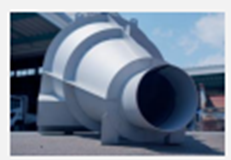
Vortex valve |
 | Spiral hole |
 |
A device that controls the flow rate from the storage tank according to the water level without power, improving the storage capacity of rainwater harvesting facilities by up to 20% compared to conventional methods. | A manhole that allows rainwater to fall in a spiral along the inner wall, avoiding noise and vibration and allowing it to flow smoothly into the outflow pipe. |
◆ Further adding value to selected products
◆ Improving efficiency through consolidation and closure of concrete plants
The company has begun consolidating or closing factories and bases owned through past business integrations. In light of the problem with logistics in 2024 and market trends, the company will work to respecify the range of transportation from each plant and improve efficiency.
[Slope Disaster Prevention Business]
In recent years, awareness of disaster prevention and mitigation and national resilience has been on the rise as a measure against natural disasters that have become increasingly severe. In addition, more measures are to be taken to strengthen national resilience. In this environment, the company will continue to work on expanding sales of products for measures against landslides and rockfalls, while engaging in further research and development and value-adding activities.
<Main Products>
Loop Fence Landslide prevention, debris flow and driftwood prevention |
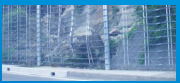 |
◆ High maintainability ◆ Flexible placement by adjusting cable mounting position ◆ To withstand soil, falling rocks, and snow accumulation |
◎ Measures for Growing Businesses
The company will promote investments in the infrastructure, railway, defense, and hydraulic hose maintenance in the concrete business as domains to be focused on in the future. By the end of the third medium-term management plan, the company aims to achieve total sales of approximately 8 billion yen.
Business | Main measures |
Infrastructure maintenance | ◆ Strengthen sales by focusing on fire protection water tanks and agricultural water use, which have the largest share of the installation market ◆ Expand and deepen the customer base through one-stop services, including investigation, diagnosis, maintenance and management |
Railway | ◆ The company will cement the collaboration among itself, general contractors, and railway operators, and utilize its new materials to promote product development that meets customer needs. |
Hydraulic hose maintenance | ◆ PROFLEX, which will become a wholly owned subsidiary in 2023, has the advantage of excellent operations with an abundance of product numbers in stock and the ability to immediately deliver any quantities from a single unit nationwide, as well as the ability to design its own original caulking machines. The company will horizontally expand its business model, which has already been successful in the Kanto region by leveraging its strengths, to other regions. |
◎ M&A Strategy
In addition to organic growth, the company aims to strengthen and expand its business portfolio through M&A.
Strategic investment budget for M&A for the medium-term management plan period |
◆ The M&A investment budget is expected to be 10 to 15 billion yen, and a strategic M&A investment budget will be set up mainly using debt financing. |
Internal structure for strengthening M&A |
◆ Increase the quantity and quality of project information by strengthening M&A-related personnel ◆ Quantity: Collect project information using all channels ◆ Quality: Build good relationships and aim to collect high-quality information |
Direction for target companies of M&A |
◆ Companies that are expected to strengthen existing businesses and expand into peripheral areas based on disaster prevention, disaster mitigation, and national land resilience ◆ Companies that have products and services to offer to the growing businesses selected by the company (infrastructure maintenance, railways, and defense) ◆ Companies that provide strong products and services to government agencies ◆ Companies with businesses that are expected to strengthen and expand their business portfolio (businesses that can leverage the strengths of existing businesses and generate synergies) |
[Envisioned growth in existing businesses and growth through M&A]
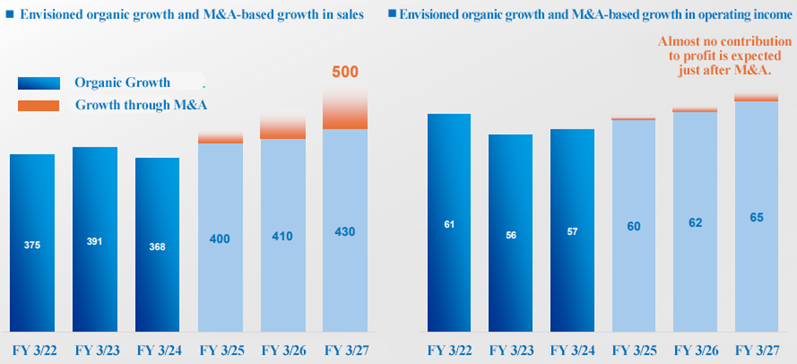
During the period of the third medium-term management plan, while there is great potential for sales growth through M&A, it is expected that profit will mainly come from organic growth (no profit contribution is expected in the initial stage of M&A, but improvements are expected during the PMI phase).
(Taken from the reference material of the company)
◎ Financial Strategy
The company has formulated a cash allocation plan for the current medium-term plan with the aim of achieving a balance sheet focused on capital efficiency.
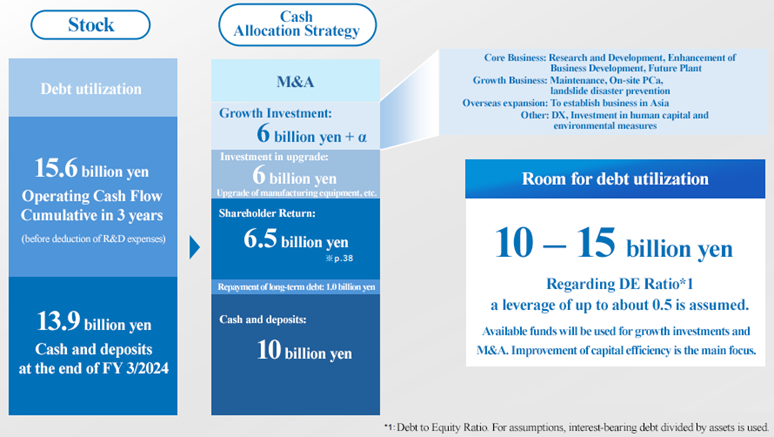
(Taken from the reference material of the company)
[Details of investments for growth and upgrade]
In addition to the usual R&D and capital investments, the company has set an investment budget with an eye on “the ideal state it wants to achieve in 10 years.”
<Investment for growth: 6 billion yen + α> | |
Research and development, digital transformation and AI[1.5 to 2.5 billion yen] | ◆ Strengthen efforts in new materials development and innovative production technologies ◆ Productivity and business model innovation through DX and AI |
Realizing the Mirai (Future) Business[1.5 to 2.5 billion yen] | ◆ Strengthen efforts to realize the Mirai (Future) Business (online PCa, new material development and development of smart products) |
Realizing the MIRAI Factory [2.5 to 4 billion yen] | ◆ Strengthen efforts to realize the MIRAI Factory (production DX, AI and next-generation production optimization systems) |
Others [0.5 to 1 billion yen] | ◆ Strengthen efforts for growth, including environmental measures (CO2 reduction), human capital management, and overseas expansion |
<Investment for upgrade: 6 billion yen> | |
Production facilities[4 billion yen] | ◆ Improve competitiveness by strengthening the production base and improving cost and production efficiency |
Technology development[1 billion yen] | ◆ Improve profitability by improving existing products and developing new products based on customer needs |
Software and system related [1 billion yen] | ◆ Improve business operations through software and systems |
<Reference 2: Regarding Corporate Governance>
◎ Organization Type and the Composition of Directors and Auditors
Organization type | Company with audit and supervisory committee |
Directors | 7 directors, including 3 outside ones (including 3 independent executives) |
Audit and supervisory committee members | 4 directors, including 3 outside ones (including 3 independent executives) |
◎ Corporate Governance Report
Last updated in July 1, 2025
<Basic policy>
Our company’s basic policy regarding corporate governance is to strive to play active roles in management of the company group, and to enhance its corporate governance by establishing strategies and directions for the group, as well as to provide guidance and advice provided for the group companies, based on the recognition of the significance in establishing a corporate governance structure that brings efficient decision-making process, while securing transparency and soundness of the business.
<Reasons for Non-compliance with the Principles of the Corporate Governance Code>
Vertex Corporation follows all of the principles of the Corporate Governance Code.
<Disclosure Based on the Principles of the Corporate Governance Code (Excerpts)>
Principles | Disclosure contents |
[Principle 3-1: Enhancement of disclosure of information] | (i) Management principles, strategies, and plans Our company discloses its management plan and other information on its website. (ii) Basic Approach to Corporate Governance and Basic Policies Our company discloses on its website the guidelines that set forth its basic approach to corporate governance. (iii) Policies and Procedures for the Board of Directors in Determining the Compensation of Senior Management and Directors Remuneration for Directors (excluding Outside Directors) consists of base remuneration as fixed remuneration and stock options as non-monetary remuneration whose number is calculated based on performance indicators ("performance-linked non-monetary remuneration"). In light of their duties, outside directors receive only base remuneration. The standard remuneration ratio for each type of director (excluding directors who are members of the Audit Committee) is as follows: base remuneration: performance-linked non-monetary remuneration, etc. (short-term incentives): performance-linked non-monetary remuneration (long-term incentives) = 70:15:15 (if 100% of the performance indicators are achieved). The Compensation Committee deliberates and reports to the Board of Directors on the amount of remuneration for each director, and the Board of Directors respects and decides the amount of remuneration based on the report of the Committee. The compensation of directors who are members of the Audit Committee shall be decided by the Compensation Committee after deliberation and report to all directors who are members of the Audit Committee, and all directors who are members of the Audit Committee shall respect and discuss the content of such report. (iv) Policies and Procedures for Election and Dismissal of Senior Management and Nomination of Candidates for Directors (Policy) Regarding candidates for Directors who are not Audit and Supervisory Committee members, we appoint personnel with a wide range of perspectives and experience that can contribute to the development of the group, as well as management skills and sense to improve the group's corporate value. Candidates for Directors who are Audit and Supervisory Committee Members are selected from individuals who can fairly audit and supervise the execution of duties by Directors who are not Audit and Supervisory Committee Members based on their extensive experience and knowledge. (Selection Procedures) We established a discretionary Nominating Committee. The Nominating Committee deliberates on proposals for the election and dismissal of directors and makes recommendations on candidates for directors. Based on the respective recommendations, the committee reports to the Audit Committee the proposed candidates for directors who are not Audit Committee members, and the Board of Directors resolves the proposed candidates for directors who are Audit Committee members after obtaining the consent of the Audit Committee. (v) Explanation on the Election, Dismissal, and Nomination When Electing and Dismissing Senior Management and Nominating of Candidates for Directors In the case of the election and dismissal of Directors, we will publish in the Reference Document for the Notice of the General Meeting of Shareholders the biographies of the candidates for new directors determined by the Board of Directors based on the recommendation of the Nominating Committee, and the reasons for their election and dismissal. Management Plan: https://www.vertex-grp.co.jp/ja/ir/management/plan.html Corporate Governance Guidelines: https://www.vertex-grp.co.jp/ja/ir/management/governance.html |
[Supplementary Principle 3-1-3: Initiatives for Sustainability] | In order to realize our management philosophy (brand vision) "To build safe society," we recognize that one of our management challenges is to balance "contributing to the realization of a sustainable society" and "achieving sustainable corporate growth," and we will identify issues of materiality and promote specific measures and goal-setting. We will continue to strengthen our efforts to realize a sustainable society and aim to be a company that earns the satisfaction and trust of society and stakeholders through the creation of new value. Please refer to our website for details of our sustainability initiatives and disclosures based on the TCFD. Our website: |
[Principle 5-1 Policy for constructive dialogue with shareholders] | We recognize that it is important for us to hold constructive dialogue with shareholders and investors aside from general meetings of shareholders to achieve sustainable growth and improve the medium/long-term corporate value, thus we assigned our Public Relations and IR Office in the Business Planning Department to be responsible for IR to handle individual meetings, post our company information on our website. In addition to disclosing information through the voluntary disclosure of the Tokyo Stock Exchange, we have established an internal system in which individual interviews are handled by appropriate persons selected from among the directors depending on the shareholder's wishes and the importance of the content of the interview. Furthermore, we hold semi-annual financial results briefing in which our executives including our Representative Director and President attend to present the financial results, business strategies, etc. |
[Measures for realizing business administration conscious of capital costs and share price] | For information on our initiatives for realizing business administration conscious of capital cost and share price, please refer to the third medium-term management plan in our website. The third medium-term management plan: |
This report is not intended for soliciting or promoting investment activities or offering any advice on investment or the like, but for providing information only. The information included in this report was taken from sources considered reliable by our company. Our company will not guarantee the accuracy, integrity, or appropriateness of information or opinions in this report. Our company will not assume any responsibility for expenses, damages or the like arising out of the use of this report or information obtained from this report. All kinds of rights related to this report belong to Investment Bridge Co., Ltd. The contents, etc. of this report may be revised without notice. Please make an investment decision on your own judgment. Copyright (C) Investment Bridge Co., Ltd. All Rights Reserved. |