

Bridge Report:(6537)WASHHOUSE the 2Q of Fiscal Year ending December 2026

 Yasutaka Kodama President | WASHHOUSE Co., Ltd.(6537) |
 |
Company Information
Market | TSE Growth, FSE Q-Board |
Industry | Service business |
President | Yasutaka Kodama |
HQ Address | 86-1, Shinei-cho, Miyazaki-shi, Miyazaki prefecture |
Year-end | End of December |
HOMEPAGE |
Stock Information
Share Price | Shares Outstanding | Total market cap | ROE Act. | ROA Act. | |
¥293 | 6,925,400 shares | ¥2,029 million | 0.6% | 1.5% | |
DPS Est. | Dividend yield Est. | EPS Est. | PER Est. | BPS Act. | PBR Act. |
¥0.00 | - | ¥12.47 | 23.5x | ¥251.53 | 1.2x |
*The share price is the closing price on September 16. The total market cap was obtained by multiplying the closing price on September 16 by the number of shares outstanding and rounding the product. ROE, ROA, BPS, and PBR were the actual results in FY 12/25. DPS, EPS, and PER are as per the forecast for FY 12/26.
Earnings Trend
Fiscal Year | Sales | Operating Income | Ordinary Income | Net Income | EPS | DPS |
Dec. 2022 Act. | 1,921 | -54 | 61 | 11 | 1.70 | 0.00 |
Dec. 2023 Act. | 1,914 | 13 | 26 | -33 | -4.83 | 0.00 |
Dec. 2024 Act. | 2,083 | 22 | 24 | 31 | 4.53 | 0.00 |
Dec. 2025 Act. | 2,529 | 19 | 63 | 10 | 1.55 | 0.00 |
Dec. 2026 Est. | 3,439 | 195 | 181 | 86 | 12.47 | 0.00 |
*Unit: million yen.
This Bridge Report presents earnings results for the second quarter of the fiscal year ending December 2026 of WASHHOUSE Co., Ltd.
Table of Contents
Key Points
1. Company Overview
2. 2Q of Fiscal Year ending December 2026 Earnings Results
3. Fiscal Year ending December 2026 Earnings Forecasts
4. Conclusions
<Reference: Regarding Corporate Governance>
Key Points
- In the interim period of the fiscal year ending December 2026, sales decreased 17.6% year on year to 1,036 million yen. In the self-service laundry business, sales declined as the number of newly opened laundromats in the FC division was only one while the sales of the laundromat operation division were unchanged from the same period of the previous year. The sales of the shipping container business, too, decreased year on year. Under these circumstances, they promoted the sponsored advertisement business, in which they offer effective ad spots, by taking advantage of a characteristic of self-service laundromats, that is, inevitable waiting time. While installing the original washing and drying machines they developed, they are strengthening “the self-service laundry business as a platform.” Inside Japan, they not only looked for new franchise owners and land for opening new laundromats, but also concentrated managerial resources on the establishment of a marketing office in Kansai, the recruitment of talent who can start working effectively upon employment, and the design of a new laundromat package. Outside Japan, they are operating laundromats in China, and making preparations for opening laundromats in Thailand, such as market surveys, the selection of land for establishing laundromats, and the local procurement of equipment and systems. Gross profit margin dropped year on year from 32.2% to 31.9%, and SG&A expenses augmented 10.7%, so they posted an operating loss of 94 million yen (an operating income of 21 million yen in the same period of the previous year).
- The full-year forecast has been left unchanged. For the fiscal year ending December 2026, it is forecast that sales will grow 36.0% year on year to 3,439 million yen and operating income will rise 918.6% year on year to 195 million yen. They will keep promoting the acceleration of the growth of “the self-service laundry business as a platform.” The FC division will expand the network of laundromats mainly in Kyushu, Shikoku, and Kansai regions. In China, they will make preparations for establishing a business base that enables the operation of multiple laundromats. The laundromat operation division plans to keep offering value other than laundry services in Japan while holding a campaign of presenting gifts from sponsors to customers under a lottery system. In China, they will operate laundromats while adding a service of receiving clothes from customers and washing them, the sale of products, etc. step by step. In the self-service laundry business, they plan to open 30 franchised laundromats, and are expected to have 72 directly managed laundromats and 529 franchised laundromats as of the end of the fiscal year ending December 2026. In the shipping container business, they aim to establish a new revenue source by installing equipment for renewable energy, etc. for mainly dormitories for workers and resort hotels.
- In the interim period, sales dropped and an operating loss was posted, but they are due to mainly seasonal factors and their upfront investment. The operation of laundromats equipped with the original washing and drying machines they developed by themselves has just started. In the fiscal year ending December 2026, they plan to open 30 franchised laundromats, so the opening of laundromats is expected to be accelerated steeply in the second half of the fiscal year. In addition, the number of downloads of the WASHHOUSE app is increasing healthily, and the strengthening of the customer base is progressing steadily. Their share price has been sluggish for a long period of time, significantly lower than the IPO price. However, their efforts to reform the revenue structure have paid off, so sales and profit grew year on year in the fiscal year ended December 2024. In the fiscal year ended December 2025, profit declined, but both sales and profit are expected to grow significantly in the fiscal year ending December 2026. Going forward, the improvement in not only sales, but also profit margin can be expected, as they will install washing machines they developed in-house in more laundromats. Their overseas business operation will become full-scale. While they will build up a track record, the evaluation on the company in the stock market is expected to be changed significantly.
1. Company Overview
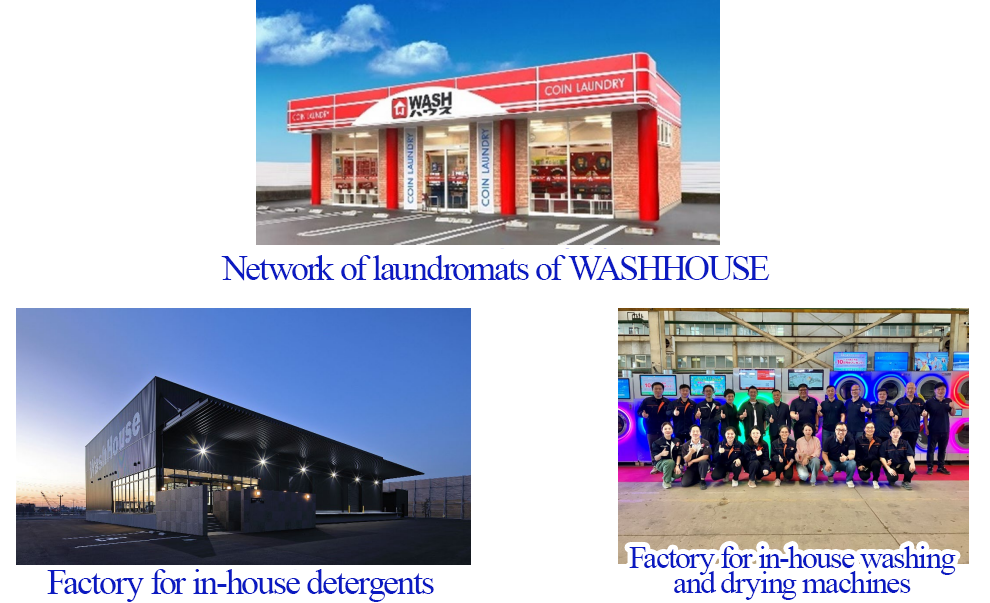
WASHHOUSE operates laundromats mainly based on the franchise system, with the aim of creating the global standard in the self-service laundry industry. The company has developed an unprecedented franchise chain (FC) business system, which unifies the quality of laundromats by managing and operating all laundromats concurrently, so that both the FC headquarters and franchised shops can thrive. As a great advantage, the company has a stable earning structure with recurring revenue. In addition, the company is promoting the self-service laundry business as a platform, which is based on the self-service laundry business, and striving to provide added value that goes beyond laundry services by utilizing its laundromat network as a medium and combining ad delivery through its app, cashless payments, the booking system, and the like. It is also endeavoring to create new revenue opportunities, such as capabilities as a manufacturer and income from advertisements, by installing washing and drying machines it has developed originally and increasing app subscribers.
The company will begin to open laundromats in earnest across Japan as it has made inroads into Osaka and Tokyo, and it is propelling forward business expansion in overseas markets as well, mainly in China, with an eye to Thailand.
As of June 2026, 566 laundromats (484 franchised ones and 82 directly managed ones) are in operation in Tokyo, Osaka and 25 other prefectures.
Furthermore, the company started the shipping container business under which it develops and operates accommodations and facilities for long-term stay using shipping container houses in the fiscal year December 2025 with the aim of inducing synergy with the self-service laundry business and expanding new business domains.
[1-1 Corporate History Until listing]
When starting up this business, President Kodama pondered over how to keep increasing sales and profit eternally in the age that will certainly witness the decreased birthrate and aging and declining population, whether the business has social meanings, whether there are any forerunners, whether the company can survive competitions, whether the business can be imitated easily, whether it is possible to achieve recurring revenue, and so on from various aspects, and decided to do the self-service laundry business.
For expanding the scale of business, the FC system is effective, but the FC business is accompanied by the problem of the conflict between the FC headquarters and franchised laundromats. In order to solve this problem, the company immediately introduced a call center that is in operation 24 hours a day all year round and the “system for managing and operating all laundromats at the same time,” which is composed of the swift support based on management webcams and remote control, etc. and reduced the burdens of franchised laundromats considerably. Its business grew steadily, partially thanks to the expansion of needs due to the increase in the number of working females.
From the Kyushu area, including Miyazaki Prefecture, where the business was launched, the company expanded its sales territory, entering Osaka in Dec. 2015 and Tokyo in Jul. 2016.
Then, in Nov. 2016, WASHHOUSE got listed on Mothers of Tokyo Stock Exchange and Q-Board of Fukuoka Stock Exchange. The company moved to the TSE Growth Market in April 2022.
[1-2 Management Philosophy]
The ethos of WASHHOUSE is “to think about all matters from the viewpoint of customers and keep being demanded by society.”
Under this ethos, the company considers what is important is that technological innovation and product development should not be just for the company’s own satisfaction. The company will aim to establish an international standard without being bound to conventional ways of thinking or business practices.
[1-3 Market Environment]
◎ Social background of needs for a self-service laundry
As the patients of allergic diseases are increasing and customers increasingly want to reduce housework hours due to the increase of double-income households, self-service laundromats, which can contribute to health and hygiene and enable customers to use time efficiently, are expected to be demanded and used by more people.
Many families also face laundry-related challenges at home. Some cannot set up washers and dryers in their apartments. Others have machines that are too small to accommodate large items like futons or cannot hang their laundry out on balconies. Double-income households may lack the time to manage laundry at home. Families with children tend to generate too much of laundry to handle. A self-service laundry has come to play an increasingly important part in our lives for these reasons. Furthermore, the added values offered by the company, such as washing and drying in large amounts for a short period of time and sterilization effects by hot air with industrial washing and drying equipment, is highly regarded as they cannot be provided by household washing and drying machines, and these advantages, coupled with the growing public awareness of hygiene, are opening up more opportunities for using laundromats. In addition, the usage rate of self-service laundromats remains low in Japan, so there is ample room for raising the number of users in the future.
◎ Potential of a self-service laundry
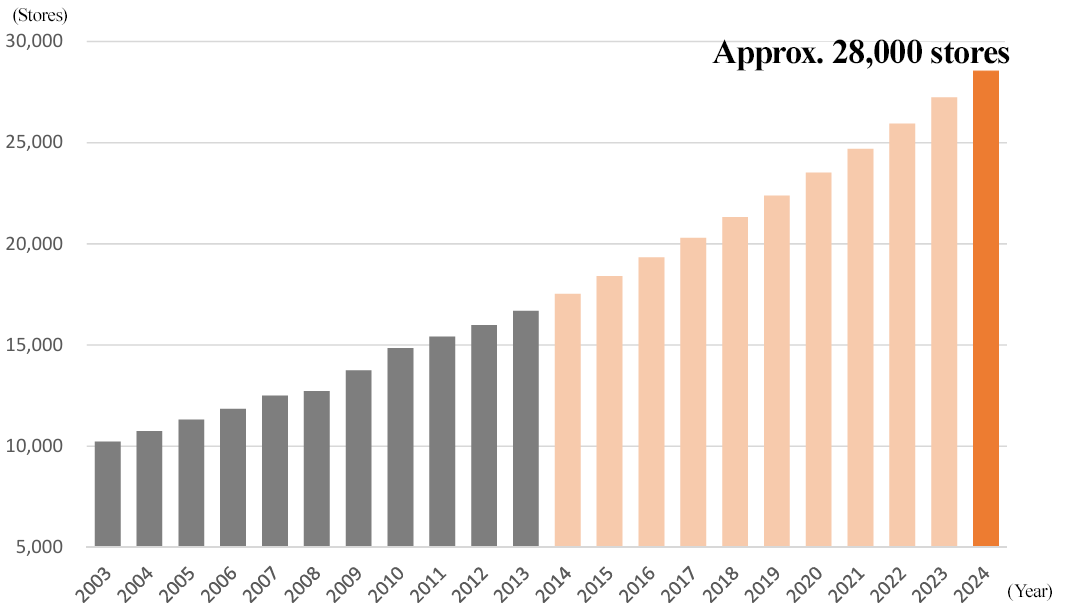
According to a survey of the Ministry of Health, Labour and Welfare, the number of self-service laundromats in Japan is increasing at an annual rate of around 5%, and the company estimates that there are currently around 28,000 such laundromats. In the background of such growth, there are women’s needs for “the reduction in cleaning time” due to the increase of double-income households, measures against allergies, such as the allergy to pollen, decrease in the use of cleaning services due to the increase of low-priced high-quality clothes, and enhancement of awareness of cleanliness, and so on.
Furthermore, self-service laundromats serve as basic infrastructure; thus, there is sufficient room for expanding the business not only in Japan but also overseas, and it is expected that global market development will be a medium- and long-term growth driver for the company.
(Taken from the reference material of the company)
About 9% of Japanese citizens use a self-service laundromat (once or more times in 2 or 3 months), so this market still has significant room for increasing users.
Equipment for self-service laundromats has some advantages, including (1) the functions to wash and dry futons and blankets, (2) short washing or drying time compared with household washing and drying machines, (3) sterilization with hot air, and (4) the function to suck dust with vacuum. The company will fulfill central roles in this industry, increasing the ratio of users to citizens and opening more laundromats.
◎ Characteristics of the Business and Market Players
The self-service laundromat is a unique business unlike any other. The equipment start operating once the usage fee is paid, and since the system uses detergent and gas, no inventory or losses are generated. This makes the business unique in that it can be profitable with a small number of users. In addition, because they are unmanned laundromats, business operations are not dependent on the abilities of individuals, and labor costs can be kept to a minimum. Furthermore, most of the businesses are privately owned and operated, which means that it is an industry with outdated practices, with a low level of management awareness and delayed compliance with laws and regulations.
The number of main players in the self-service laundry market is said to be 4 to 5. WASHHOUSE has the largest number of laundromats with the same brand, and is the only listed company in this field.
Although many enterprises carry out the FC business for growth (increasing in the number of laundromats), WASHHOUSE possesses an unparalleled “system for managing and operating all laundromats at the same time,” which was developed in pursuing the streamlining of business operation and unification of quality. (For details, see “1-5 Characteristics and Strengths.”)
[1-4 Business Description]
◎ Self-Service Laundry Business
1. Composition
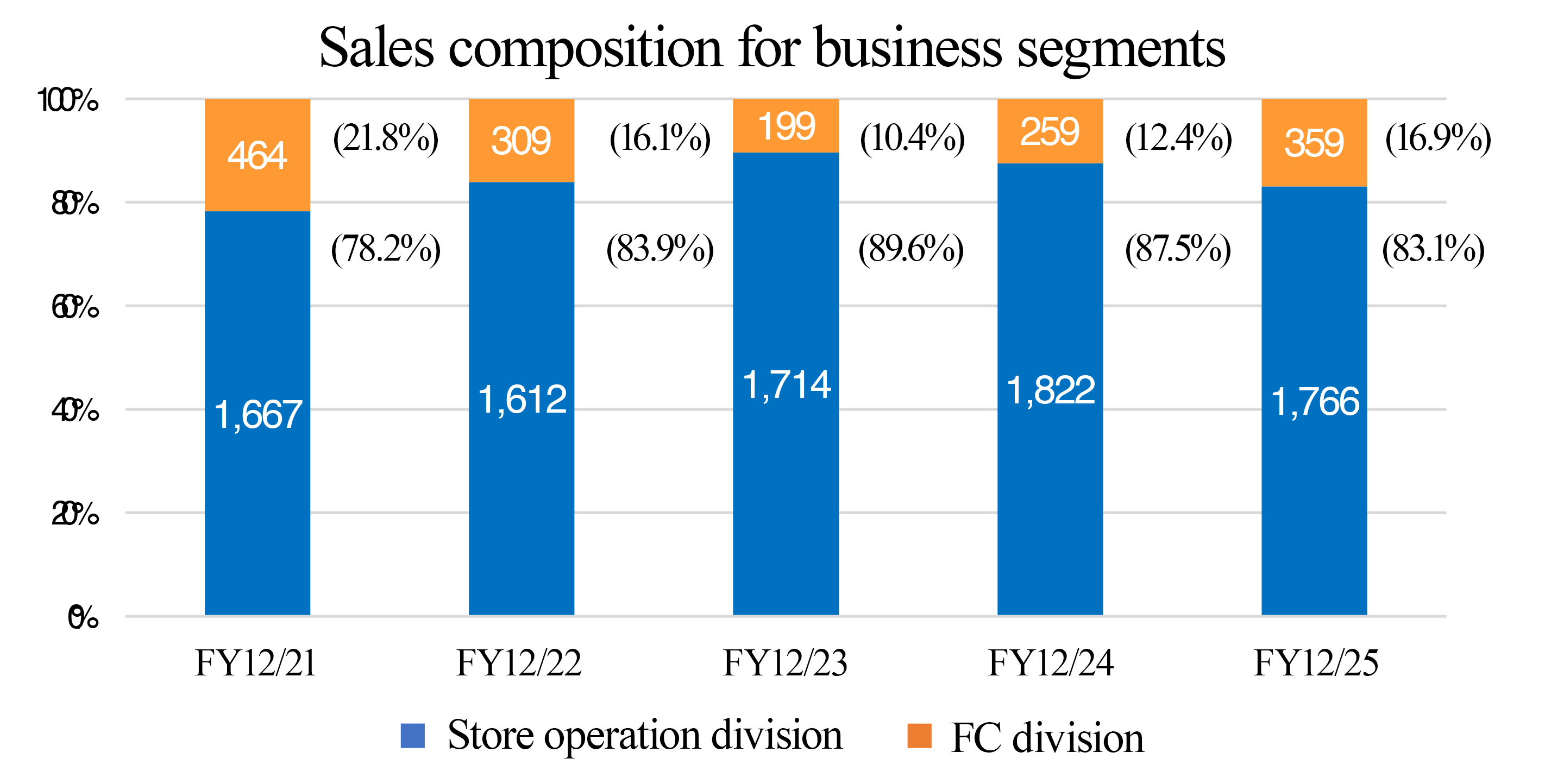
There are two divisions: FC division, store operation division.
*This figure is created by Investment Bridge Co., Ltd. based on disclosed materials.
(1) FC division
WASHHOUSE has a unique operation-supported FC system.
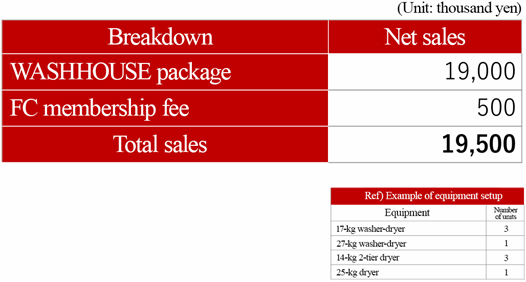
They design a plan of opening a laundromat, and sell “Washhouse Package,” including all of necessary items for opening a laundromat, including equipment for a self-service laundromat and decorations. In addition, the company receives the preparation fees for opening laundromats, including advertisements, and fees for franchise rights.
Revenue structure of the FC division at the time of laundromat opening
 *Standard example, actual situation may vary among properties. | An example of owner’s expenditure at the time of laundromat opening
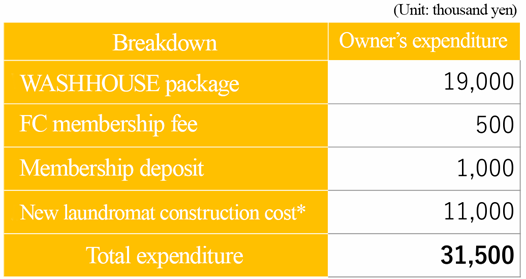 *Standard example, the actual situation may vary depending on construction conditions and tenant property status. |
Monthly operating revenue model for FC laundromats
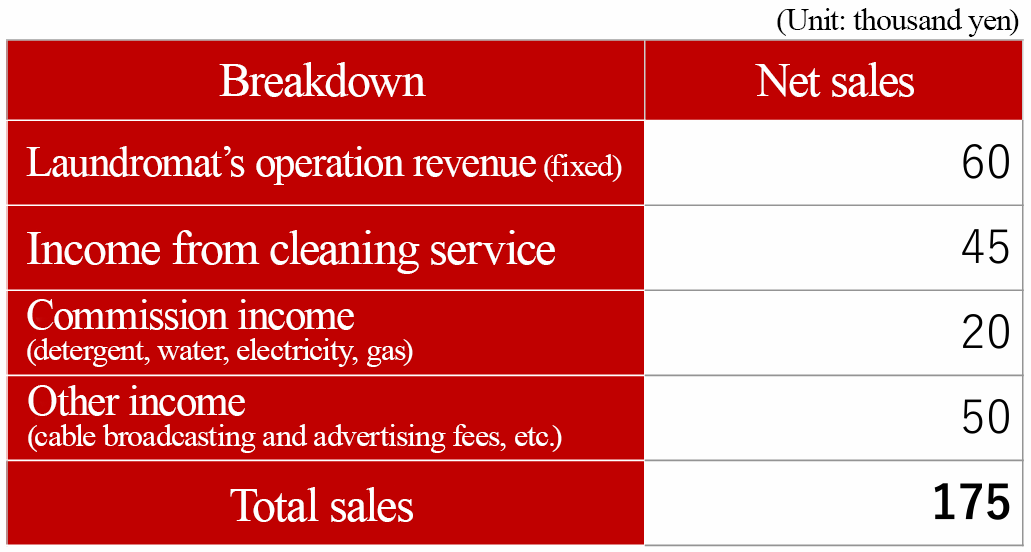 *Monthly revenue structure model. | Owner’s monthly income and expense model
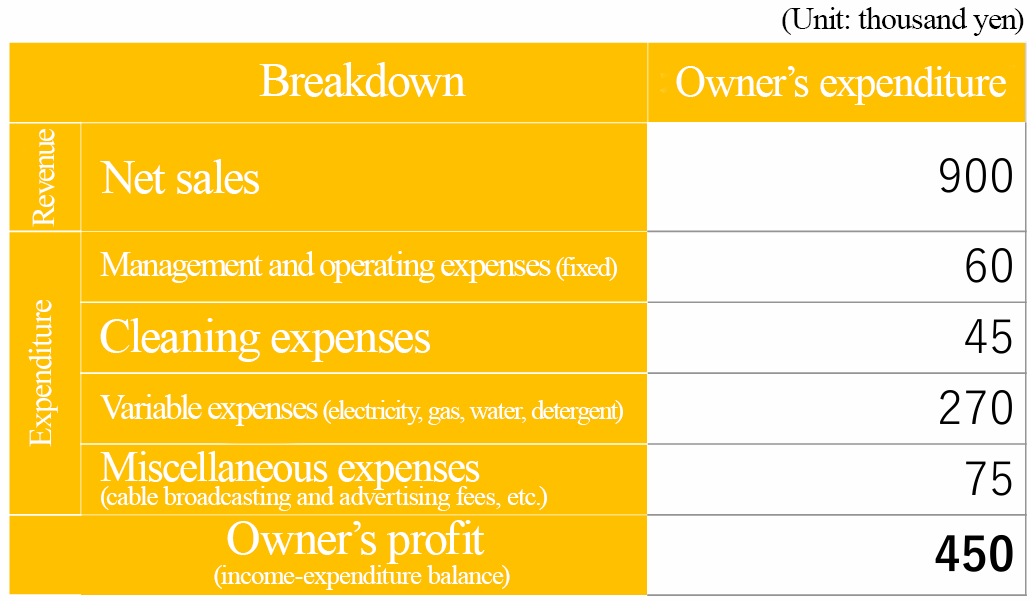 *Monthly revenue structure model. |
(Taken from the reference material of the company)
For increasing franchisees, the company adopts the division system where business simulation, contract production, etc. are conducted by other staff than sales staff, so that sales staff can devote themselves to “footwork.” Furthermore, by concluding business matching contracts with financial institutions, etc., the company is accumulating information on sites for building laundromats and candidate owners and developing a “system” for increasing laundromats.
WASHHOUSE designs a plan to open new laundromats for each term based on the accumulated data on correlative relations of “the number of years of career of sales staff and achievements of opening franchised laundromats.”
(2) Store operation division
By adopting an integrated management and operation system in all laundromats, including franchised and directly managed ones, they offer unified quality. They provide franchised laundromats with a 24/7 call center, swift support based on management cameras and remote control, daily inspection & cleaning, the replenishment of detergents, maintenance, and advertisement services, and receive compensation for these services from the owners of franchised laundromats. Regarding directly managed laundromats, they collect the charges for use of washing and drying machines from users of the laundromats. They also receive the revenue from “WASHHOUSE app.”
A directly managed laundromat is opened mainly when entering a new area. It takes the roles as an antenna shop, such as popularizing the “WASHHOUSE” brand as a “reliable, safe, and clean” self-service laundromat, promoting possible users to use it, and offering a laundromat model to franchisees and landowners (individuals and corporations that are thinking of utilizing their real estate).
Since franchisees need not manage their laundromats, if they can bear initial investment costs, they can own multiple laundromats, increase revenue, and reduce the risk of revenue fluctuation with laundromats being operated in different regions.
2. Laundromat operation
As of June 2026, WASHHOUSE operates 484 franchised laundromats and 82 directly managed laundromats, that is, a total of 566 laundromats in 27 prefectures. The company will continue nationwide business operations.
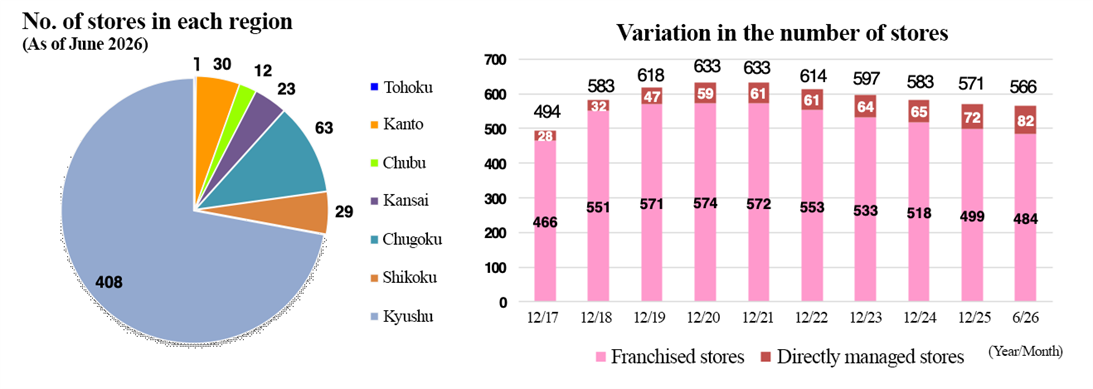
*This figure is created by Investment Bridge Co., Ltd. based on disclosed materials.
[1-5 Characteristics and strengths]
(1) Creation of a new FC business system
WASHHOUSE can be characterized most by its unique FC business model.
In ordinary FC business, a conflict between the FC headquarters and franchisees tends to emerge.
While franchisees pay franchise fees and royalties to the FC headquarters, the FC headquarters permit them to use a brand name, offer know-how to them and supply products to them, but laundromat operation, staffing, etc. must be carried out by franchisees on their own responsibility.
For franchisees, the operation and management of laundromats are significant burdens. If their business performance is favorable, there are no problems, but if sales are sluggish, the franchisee complains, “the system of the headquarters is poor,” while the FC headquarters blames, “the education in the franchisee is poor,” and these complaints lead to a lawsuit in many cases.
Meanwhile, WASHHOUSE introduced the “system for managing and operating all laundromats at the same time.” As mentioned above, the company conducts all the necessary tasks for operating and managing franchised laundromats: As mentioned above, 24/7 Call centers, Swift support based on management webcams and remote control, Daily inspection and cleaning, Replenishment of detergents, Maintenance patrol, Advertisement. As a consequence, franchisees are free from the burdens of laundromat operation.
In addition, since the company targets real estate that would have sales of over 1 million yen, it has meticulously surveyed the market, including local population, age distribution, income state, etc. and accumulated know-how for cultivating profitable property.
Thanks to the combination of the system for fully managing laundromats and the capability of cultivating profitable real estate, the satisfaction level of franchisees is very high, contributing to outstanding results of no closing laundromats caused by poor performance up until now.
(2) Bright, clean, easy-to-use laundromats
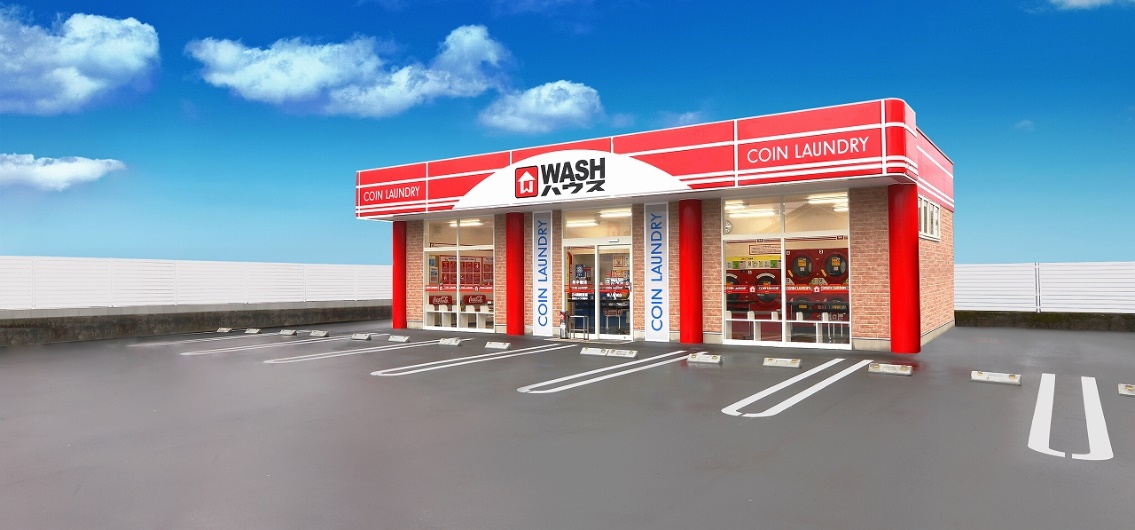
A self-service laundry generally reminds us of a “dimly-lit, eerie and dirty” place, but self-service laundry WASHHOUSE operates “reliable, safe, and clean” laundromats with the unified brand targeting women and families including children.
(Taken from the reference material of the company)
In the past, using a self-service laundry was considered as one of “sloppy acts in homemaking.” However, there is a growing interest in self-service laundries, which can wash and dry a larger amount of clothes in a shorter period of time than household washing machines, as the employment rate for women rose, high-rise condominiums increased, and the life-work balance changed. Especially, the washing of large items, such as futons and carpets, for removing ticks and allergens is attracting attention, due to the rising health consciousness.
In addition, the needs for self-service laundromats mounted with equipment for washing and drying kids’ sneakers are getting stronger.
In these circumstances, the company installs the following equipment for meeting the needs of consumers:
*Washing machines with a capacity of 22 kg, which can wash a full-sized futon, and dryers with a capacity of 25 kg (in standard laundromats),
*Sneaker laundry equipment, which can wash sporting shoes, sneakers for commuting to school, etc.
*Devices for removing stains free of charge (Spot remover)
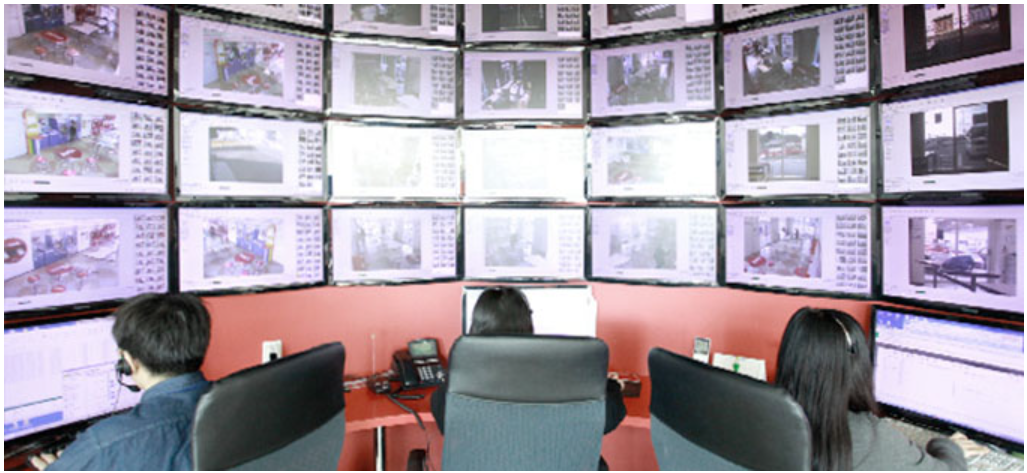
Furthermore, all laundromats are monitored by management webcams 24 hours a day, and mounted with IoT laundry equipment, which can be controlled remotely by the headquarters, so as to offer real-time support like manned laundromats, although the laundromats are unmanned. Like this, the company has established a system that can be used by users without worry.
(Taken from the website of WASHHOUSE)
The company also indicates the components of detergents and the temperature in each dryer, to dispel the worries of consumers. In order to keep laundromats clean, the company cleans laundromats every day, including the cleaning of the filters of dryers and the sterilization of washing machines.
In addition, in April 2020, the company released the WASHHOUSE app, a smartphone payment application for self-service laundries.
The app is aimed at strengthening the self-service laundry business as a platform and is equipped with cashless payment functions and information distribution functions such as special coupons, and it was installed in all WASH House laundromats at the end of May 2020.
The company has also incorporated functions to create collaborations with a wide variety of other industries and will continue to work to create laundromats that are needed by users by providing them with meaningful information and highly convenient services that are closely related to their daily lives.
(3) Stable earning structure with recurring revenue
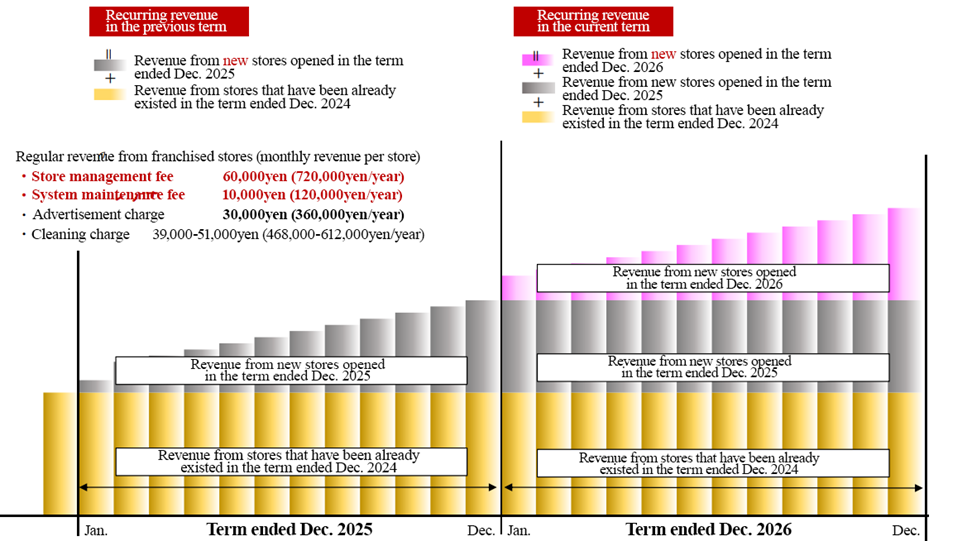
The sales from the laundromat management business are composed of the monthly laundromat management fee (60,000 yen per laundromat), the fee for system maintenance (10,000 yen), ad charge (30,000 yen), cleaning charge (39,000 – 51,000 yen), etc., that is, a total of about 140,000 – 150,000 yen/month.
(Taken from the reference material of the company)
Like this, sales from the laundromat management business grow steadily, as the sales from new laundromats are added to those from existing laundromats, year by year.
Meanwhile, the satisfaction level of franchisees is very high, as seen by the fact that no laundromats have been closed because of poor performance up until now. Therefore, there is a low possibility that the number of laundromats will decrease.
The revenue from Washhouse Financial is stable and recurring. This fortifies the stable revenue structure of the company.
(4) Efforts for improving the soundness of the self-service laundry market
Although the self-service laundry market is growing, president Kodama mentioned that there remain a lot of problems, including the issue of compliance with the law.
For example, the dryers in a self-service laundry consume a large volume of gas, and so the Fire Service Act, the Building Standards Act, etc. specify the materials for exhaust ducts, how to install them, etc. in detail, for safety reasons. However, there are many illegal installations.
Some self-service laundry operators try to reel in users by offering to wash clothes on behalf of customers as a measure for differentiating their services from competitors, but they are very likely to be violating the dry cleaning business law.
The dry cleaning business law enforced in 1950 set forth the following provisions from the viewpoint of maintaining public health.
(Excerpt from the dry cleaning business law)
Section | Provision | In other words | |
Article 2 | 2 | In this law, a “dry cleaning business operator” means a person who operates dry cleaning business (including a person who does not wash clothes but receives and delivers the laundry). | A person who folds up clothes, too, is recognized as a dry cleaning business operator. |
3 | In this law, a “dry cleaner” means a person who has obtained a license described in Article 6. | In order to conduct dry cleaning business, it is necessary to obtain a dry cleaner’s license. | |
4 | In this law, a “dry cleaning shop” means a facility of a dry cleaning business operator for handling, receiving, and delivering the laundry. | In order to open a dry cleaning shop, it is necessary to notify the governor of the prefecture. In addition, the dry cleaning shop needs to undergo the governor’s inspection before use. A dry cleaner need to be employed at each dry cleaning shop. | |
In a nutshell,
*Even if a self-service laundry operator obtains a dry cleaner’s license, he/she cannot offer services of handling and folding up the laundry, etc. at a self-service laundry, which is not a dry cleaning shop.
*The washing machines and dryers inside a facility registered as a dry cleaning shop is exclusively for dry cleaning business operators, and so they cannot be used by others (users of self-service laundries) from the viewpoint of hygiene.
Despite the existence of these laws, in order to avoid the guidance from a public health center, some business operators set a counter inside their laundromats, install washing machines, explain “We use this washing machine,” but actually they wash the laundry of users with unregistered self-service laundry equipment outside the counter (not installed ones), and fold up the laundry.
In this situation, president Kodama considered that in order to promote the use of self-service laundries, it is indispensable to develop “reliable, safe, and clean” self-service laundries inside his company and improve the soundness of the self-service laundry industry, therefore established the National Association of Laundromat Operators in Dec. 2003.
This association specified the operation standards for equipment and hygienic management complying with laws, regulations, etc. At present, the directly managed laundromats and franchised laundromats of WASHHOUSE belong to this association, which takes the roles of improving the soundness of this industry and educating general consumers (about the usefulness of self-service laundries, etc.).
[1-6 Business developments]
After the listing of WASHHOUSE in 2016, there emerged a trend of opening self-service laundromats.
The number of laundromats has increased from 20,000 to 28,000, indicating clearly that the habit of using a self-service laundry is spreading.
Under these circumstances, the company has been insisting “We have no intention of being a mere laundry business operator,” since the inauguration of business, because they had a vision of offering “charge-free” laundry and drying services.
Then, they conducted experiments of charge-free services and finally succeeded in monetization with ads.
Customers can wash and dry clothes “free of charge,” drink coffee “free of charge,” and get Miyazaki Beef or Lychees by lottery!! Customers can wash clothes at a lower cost than washing at home!
Furthermore, customers can get useful information and purchase products at affordable prices!
The concept of laundry will be changed.
For 22 years, WASHHOUSE has been preparing for charge-free services and pursued thoroughgoing cost reduction, while assuming that price-cutting wars will break out in the fields of detergent factories, in-house washing and drying machines, and mission-critical systems. While looking ahead to global business operation, they researched and developed washing and drying machines and systems unique to WASHHOUSE, and strove to install digital signages in them.
[1-7 New Products]
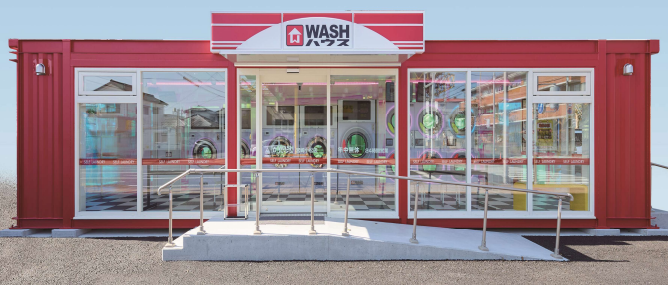
The development of the company’s original washing and drying machines, which it had been working on in order to realize its goal of offering free laundry services since establishment, has now been completed. Through this development, they will brush up their capabilities as a manufacturer. In addition, bringing this new laundry equipment to the market will not only expand the group’s business in the future, but will also significantly change the conventional standards of the industry.
In addition, in December 2024, they opened their first shipping container-type self-service laundromat, WASHHOUSE Miyazakikomatsu, equipped with their original washing and drying machines. Since then, they have been introduced this type when opening new laundromats and renovating existing laundromats.
(Taken from the reference material of the company)
[1-8 WASHHOUSE App]
Advertisement system
Accepting applications for advertisements in ad spots, they distribute video ads and banner ads via WASHHOUSE app. They plan to offer laundry services free of charge by collecting revenue from the advertisement system. The users of self-service laundromats would see ads in the app at the time of checking the time of completion of washing, at the time of completion, etc. Accordingly, advertisers can post ads with a high response rate.
Brewery companies, movers, food makers, government agencies, and others have posted ads via WASHHOUSE app so far.
Cashless payment system
By reading the code with the app, users can choose services, such as washing and drying, and payment methods. Accordingly, users can settle payment without using any coins. Currently, 13 payment methods are available.
Booking system
Users can book a service by choosing a laundromat and a machine in the “window for booking laundry” in WASHHOUSE app, selecting a washing course, drying time, and date and time. Users scan the displayed QR code with the equipment in the laundromat at the scheduled time, settle payment with WASHHOUSE app, and then start washing.
By using the booking system, users can avoid the situation in which “they bring the laundry, but no washing machines are available.” It can significantly contribute to the alleviation of congestion inside each laundromat.
Mutual promotion system
Just after starting washing at Washhouse, the user gets a coupon that can be used at a nearby supermarket or the like. The user can go shopping at a nearby store at discount prices while waiting for the completion of washing/drying. Nearby supermarkets, etc. print a coupon for Washhouse on a receipt. By scanning the code with the app, customers can wash the laundry at a discount price.
With this system, Washhouse and nearby stores mutually promote the visit of customers, increasing the number of users and the popularity for each other.
The number of downloads of the app has grown steadily, and reached 1 million in May 2025. They aim to achieve 1.4 million downloads by the end of 2026.
Provision of value beyond laundry services
hey plan to implement campaigns, etc. for all laundromats using WASHHOUSE app. Then, they will pursue value beyond self-laundry services.
For example, they will conduct a campaign in which consumers may get Miyazaki beef by lot after downloading the app.
As of August 2026, the number of download counts of the WASHHOUSE app was 1,300,000, with the number of members exceeding 1.13 million. The number of downloads is increasing by 30,000 per month.
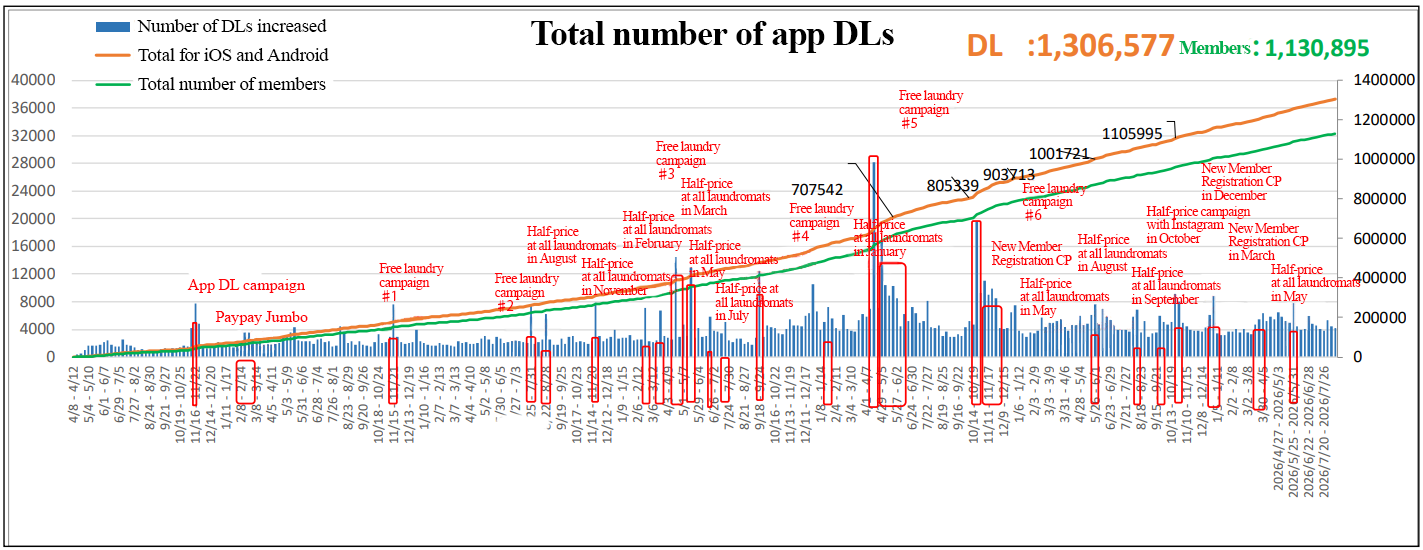
(Taken from the reference material of the company)
[1-9 Overseas Expansion]
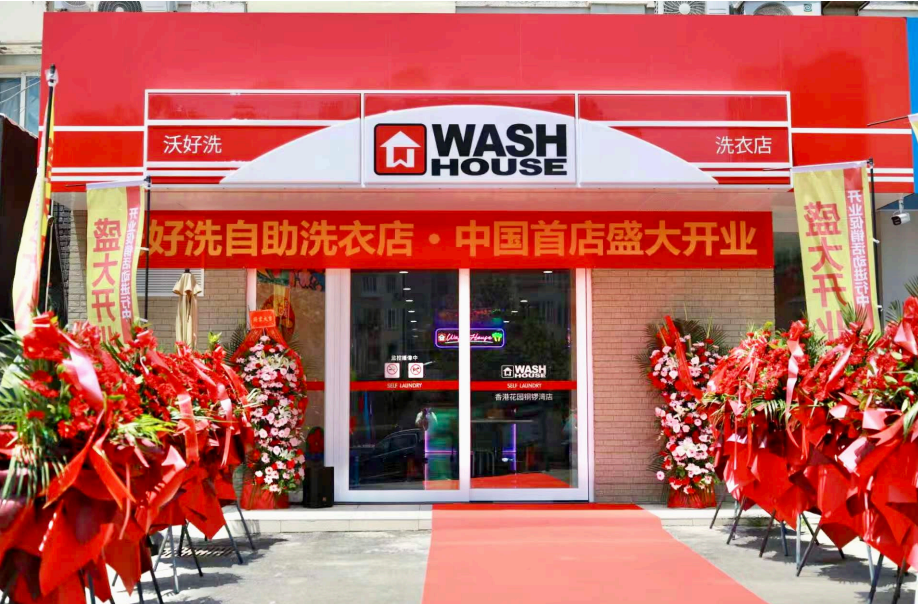
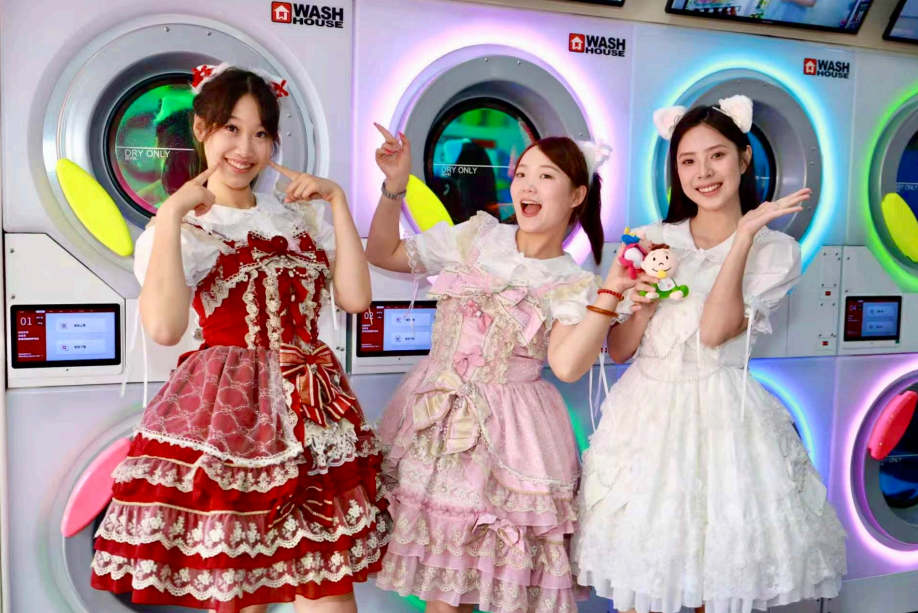
In China, they have released new services, including delivery and cafes, according to local cultures and preferences, while pursuing the same level of quality and services of clothes washing as those in Japan.
They are reviewing each service and preparing for the operation of multiple laundromats.
 |
 |
(Taken from the reference material of the company)
The company localizes the original washing and drying machines completed last year for the Chinese market and is preparing to launch.
The company founded WASHHOUSE (Qingdao) CO., LTD., a wholly owned subsidiary, in December last year.
It will operate laundromats in China in accordance with the law, practice, and environment there, including electricity, water quality, and currency.
The Shinan District of Qingdao, China, where they opened the first overseas laundromat has several distinct characteristics: (1) it is easier to enlist cooperation from the government and administrative agencies; (2) people living there are familiar with the western culture; (3) a number of Japanese expats live in the district; and (4) there are almost no rival companies.
In accordance with the Chinese law, the company will operate laundromats by itself for a year and then look for people who hope to be the owners of franchised laundromats after the first year.
The company has already been conducting promotional activities, including events held in cooperation with the Shinan District in June.
In last October, two employees from Thailand completed the training in Japan and returned to Thailand. In ASEAN countries, advertising methods were developed uniquely, and the utilization of social media is effective for small shops. They conduct sound marketing by disseminating information to those who require them in areas where laundromats are demanded when necessary.
[1-10 Shipping container business]
The shipping container business is the business the company began on a full scale in the fiscal year ended December 2025. They are planning, developing, selling, and operating facilities utilizing containers.
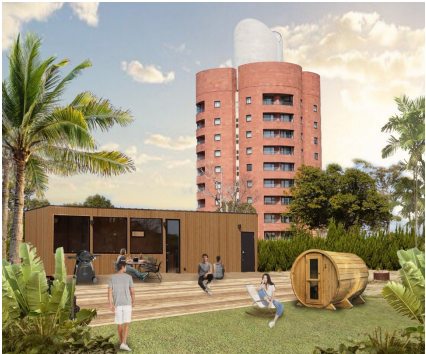 [Properties on sale] 1NLDK AIWA GOLF (Miyazaki City) (Conceptual image of four rooms of a shipping container hotel under construction) |
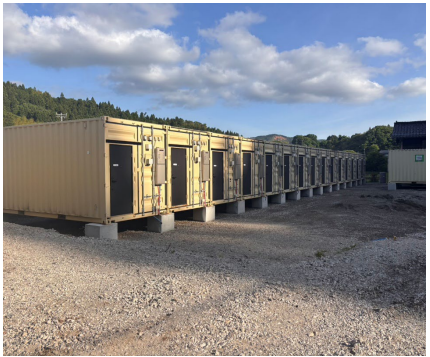 [Properties under management] Long-stay dormitory for workers for restoration in Wajima City, Ishikawa Prefecture |
(Taken from the reference material of the company)
[1-11 To expand their business by modifying their revenue structure]
・1st stage: To expand the network of laundromats for disseminating information as the media and grow the revenue base
・2nd stage: To develop software, hardware, etc. for realizing them
・3rd stage: The advertisement business, the cross-border EC business, the logistics/trading business, and the shipping container business
 |
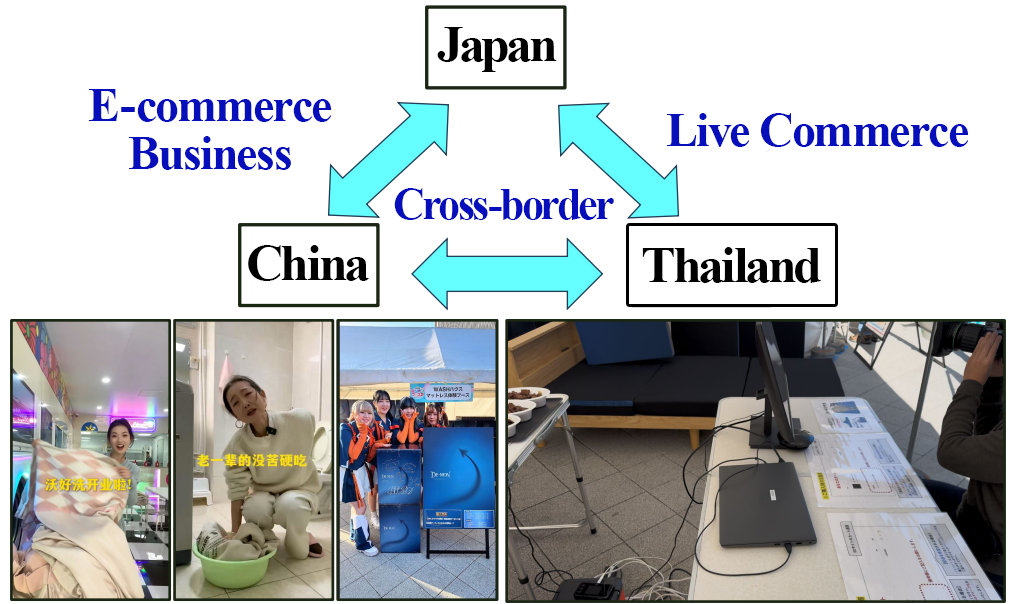 |
(Taken from the reference material of the company)
2. 2Q of Fiscal Year ending December 2026 Earnings Results
(1) Business Results
| FY 12/25 Interim period | Ratio to Sales | FY 12/26 Interim period | Ratio to Sales | YoY | The company’s forecasts | Compared with the forecasts |
Sales | 1,258 | 100.0% | 1,036 | 100.0% | -17.6% | 1,257 | -17.6% |
Gross profit | 405 | 32.2% | 330 | 31.9% | -18.5% | - | - |
SG&A | 383 | 30.5% | 424 | 41.0% | +10.7% | - | - |
Operating Income | 21 | 1.7% | -94 | - | - | -42 | - |
Ordinary Income | 21 | 1.7% | -102 | - | - | -49 | - |
Quarterly Net Income | 19 | 1.5% | -121 | - | - | -59 | - |
*Unit: million yen.
Sales decreased 17.6% year on year, and an operating loss of 94 million yen was posted
Sales declined 17.6% year on year to 1,036 million yen.
They promoted the sponsored advertisement business, in which they offer effective ad spots with the WASHHOUSE app ad system, by taking advantage of a characteristic of self-service laundromats, that is, inevitable waiting time. By producing original washing and drying machines by themselves and selling and installing them in Japanese and foreign markets, they are strengthening “the self-service laundry business as a platform.” For self-service laundromat operation in Japan, they looked for new franchise owners and land for opening new laundromats. In addition, they are discussing the feasibility of business in the Thai market, in addition to laundromat operation in China.
In the fiscal year ending December 2026 is considered as the year for concentrating on the launch of new business, including overseas business operation, and the reinforcement of the base for the franchise business. They concentrate managerial resources on the establishment of a marketing office in Kansai, the recruitment of talent who can start working effectively upon employment, and the design of a new laundromat package.
They posted an operating loss of 94 million yen (an operating income of 21 million yen in the same period of the previous year). In terms of profit, gross profit margin declined year on year from 32.2% to 31.9%, and SG&A expenses augmented 10.7%, so an operating loss was posted.
(2) Sales trend in each business segment
| FY 12/25 Interim period | Composition Ratio | FY 12/26 Interim period | Composition Ratio | YoY | |
Sales |
|
|
|
|
| |
Self-service laundry business | FC division | 149 | 11.8% | 110 | 10.6% | -26.2% |
Store operation division | 872 | 69.3% | 878 | 84.7% | +0.7% | |
Shipping container business | 235 | 18.7% | 46 | 4.4% | -80.1% | |
Total | 1,258 | 100.0% | 1,036 | 100.0% | -17.6% | |
Gross profit |
|
|
|
|
| |
Self-service laundry business | FC division | 41 | 27.9% | 13 | 12.6% | -68.3% |
Store operation division | 349 | 40.1% | 294 | 33.5% | -15.8% | |
Shipping container business | 13 | 5.9% | 21 | 46.4% | +61.5% | |
Total | 405 | 32.2% | 330 | 31.9% | -18.5% | |
*Unit: million yen. Composition of gross profit is gross profit ratio.
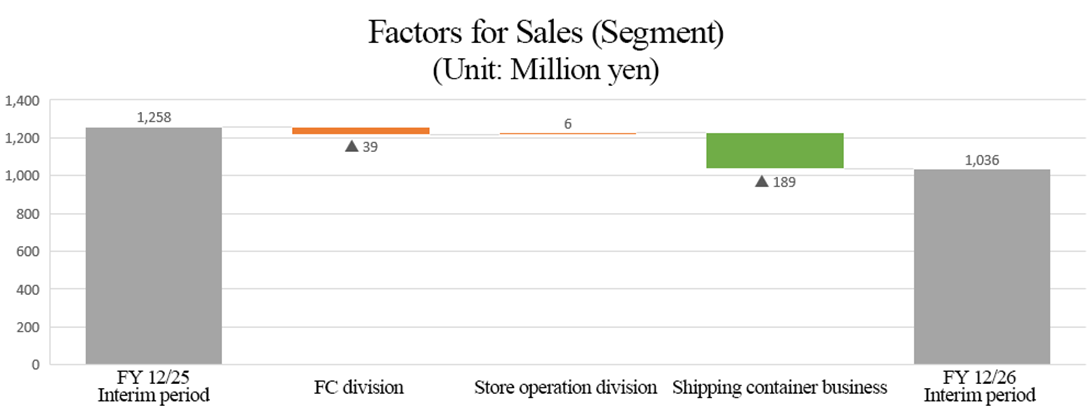
*This figure is created by Investment Bridge Co., Ltd. based on disclosed materials.
① Self-service laundry business
Sales were 989 million yen, down 3.2% year on year, and a loss of 115 million yen was posted (an income of 16 million yen in the same period of the previous year).
In addition to the decline in sales of the FC division, the recruitment of talent for new business and enhancement of the laundromat operation capability decreased profit.
a. FC division
Sales were 110 million yen, down 26.2% year on year. While building a marketing office and recruiting workers who can start working effectively upon employment in the Kansai area, they concentrated on the design of new self-service laundromat packages and preparations for overseas business operation. Accordingly, they installed more washing equipment and conducted full renovation in 10 existing laundromats, while opening only one new laundromat. The number of franchised laundromats as of the end of the interim period stood at 484, down 15 from the end of the previous fiscal year.
b. Store operation division
Sales were 878 million yen, up 0.7% year on year. This result was almost in line with the forecast.
From January to March, the number of rainy days was small, but from April to June, there was some amount of rainfall, so the number of unsunny days recovered to 84% of the average in the first half of the fiscal year.
② Shipping container business
Sales were 46 million yen, down 80.1% year on year, and profit was 21 million yen, up 301.3% year on year. The resort shipping-container hotel, which is under construction and to be sold, is expected to be completed in the third quarter due to the delay in supply of materials, so the sales in the interim period dropped significantly year on year. On the other hand, gross profit margin rose year on year from 5.9% to 46.4%, as they earned revenues from mainly hotel operation in the interim period. The profit of this segment increased, despite the drop in sales. Regarding the long-stay dormitory for workers for restoration in Wajima City, Ishikawa Prefecture, they started operation in July while adding 20 more rooms.
(3) Financial standing
◎ Main BS
| End of Dec. 2025 | End of Jun. 2026 |
| End of Dec. 2025 | End of Jun. 2026 |
Current Assets | 2,589 | 2,451 | Current liabilities | 1,464 | 1,560 |
Cash | 1,085 | 948 | Deposits received | 342 | 355 |
Receivables | 145 | 139 | Noncurrent liabilities | 1,085 | 1,163 |
Operating loans | 820 | 799 | Guarantee deposited | 743 | 715 |
Noncurrent Assets | 1,801 | 2,016 | Borrowing Ballance | 1,004 | 1,224 |
Tangible Assets | 1,254 | 1,378 | Total Liabilities | 2,549 | 2,723 |
Intangible Assets | 105 | 131 | Net Assets | 1,840 | 1,744 |
Investment, Others | 440 | 506 | Shareholder’s Equity | 1,696 | 1,575 |
Total Assets | 4,390 | 4,467 | Total Liabilities and Net Assets | 4,390 | 4,467 |
*Unit: million yen. Borrowing Balance = Long-term debt + Short-term debt + Current portion of long-term debt due within one year
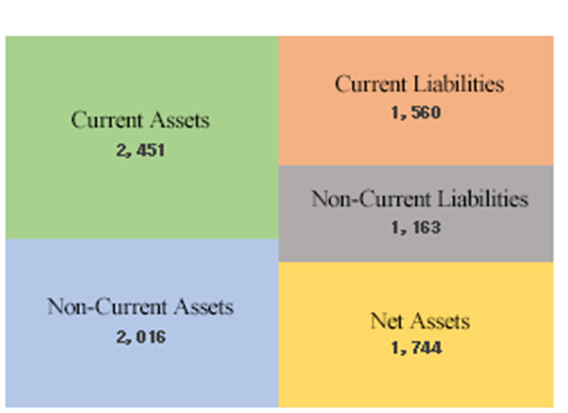
*This figure is created by Investment Bridge Co., Ltd. based on disclosed materials.
The total assets as of the end of the interim period stood at 4,467 million yen, up 77 million yen from the end of the previous fiscal year. This is mainly because of an increase in buildings.
While cash & deposits decreased 136 million yen and inventory assets declined 26 million yen, buildings increased 148 million yen and investments & other assets grew 65 million yen.
Total liabilities increased 173 million yen to 2,723 million yen, mainly due to an increase in short- and long-term borrowings.
Total net assets decreased 96 million yen to 1,744 million yen, mainly due to the recording of an interim net loss.
Due to the growth of debt and the decline in net assets, the equity ratio declined by 3.2 points from the end of the previous fiscal year to 36.5%.
◎ Cash Flow
They posted a cash outflow of 35 million yen from operating activities (a cash outflow of 135 million yen in the same period of the previous year).
The cash outflow due to the core business continued, but the cash outflow shrank 100 million yen year on year.
They posted a cash outflow of 327 million yen from investment activities (a cash outflow of 89 million yen in the same period of the previous year).
As they spent 193 million yen for acquiring tangible fixed assets and 47 million yen for acquiring intangible fixed assets, the investment in necessary equipment for business, etc. increased.
They posted a cash inflow of 207 million yen from financial activities (a cash inflow of 156 million yen in the same period of the previous year).
This is mainly due to an income of 140 million yen from long-term borrowing and a net increase of 100 million yen in short-term debt.
As a result, the cash and cash equivalents as of the end of the interim period stood at 948 million yen, down 136 million yen from the end of the previous fiscal year.
3. Fiscal Year ending December 2026 Earnings Forecasts
Forecasts of Consolidated Business Results
| FY 12/25 | Ratio to Sales | FY 12/26 Est. | Ratio to Sales | YoY |
Sales | 2,529 | 100.0% | 3,439 | 100.0% | +36.0% |
Operating Income | 19 | 0.8% | 195 | 5.7% | +918.6% |
Ordinary Income | 63 | 2.5% | 181 | 5.3% | +184.5% |
Net Income | 10 | 0.4% | 86 | 2.5% | +706.5% |
*Unit: million yen.
The full-year forecast has been left unchanged. For the fiscal year ending December 2026, it is forecast that sales will grow 36.0% year on year to 3,439 million yen and operating income will rise 918.6% year on year to 195 million yen. Net income is expected to grow 706.5% year on year to 86 million yen.
They will keep promoting the acceleration of the growth of “the self-service laundry business as a platform.” The FC division will expand the network of laundromats domestically, mainly in Kyushu, Shikoku, and Kansai regions. In China, they will make preparations for establishing a business base that enables the operation of multiple laundromats. The laundromat operation division plans to keep offering value other than laundromat services, including the provision of tips for purchasing Miyazaki beef at a special price and the distribution of helpful information for shopping at EC sites at affordable prices, in addition to present campaigns in which customers can get gifts provided by sponsors in Japan. In the self-service laundry business, they plan to open 30 franchised laundromats, and are expected to have 72 directly managed laundromats and 529 franchised laundromats as of the end of the fiscal year ending December 2026.
Regarding the overseas business, they will add a service of receiving clothes from customers and washing them, the sale of products, etc. step by step in China, where they opened the first overseas laundromat, and operate laundromats. They will define and narrow down services with an eye to the operation of multiple laundromats. They will make preparations for opening laundromats in Thailand, too.
In the shipping container business, they aim to establish a new revenue source by installing equipment for renewable energy, etc. for mainly dormitories for workers and resort hotels.
4. Conclusions
In the interim period of the fiscal year ending December 2026, sales declined, and an operating loss was posted. Sales declined, because the use of laundromat decreased due to the low rainfall between January and March, the number of newly opened franchised laundromats was only one, and the completion of a shipping container hotel for sale was postponed until the third quarter. On the other hand, they concentrated managerial resources on the development of a base for opening more laundromats, including the establishment of a marketing office in Kansai, the recruitment of talent who can start working effectively upon employment, and the design of a new laundromat package. They have just started the operation of laundromats equipped with their original washing and drying machines. In the fiscal year ending December 2026, they plan to open 30 franchised laundromats. As they opened only one laundromat in the first half, it is noteworthy whether they can accelerate the pace of opening laundromats in the second half. We would like to see whether the opening of new laundromats will lead to the resumption of the increase of laundromats and then the expansion of sales.
The cumulative number of downloads of the WASHHOUSE app as of the end of the interim period reached 1.27 million.
Going forward, it will be noteworthy whether they will be able to earn revenues from sponsored ads and online stores by promoting users, who are connected with the company through laundromats and the app, to access them. Outside Japan, they are reviewing the local service at the first laundromat in China, and making preparations for opening laundromats in Thailand. It is noteworthy in the medium/long term whether they can establish business models in both markets and earn revenues from the next fiscal year.
The company got listed in 2016, and its share price has been stagnant for a long period of time since 2017, currently significantly below the IPO price (1,150 yen after the retroactive adjustment). However, their efforts to reform the revenue structure have paid off, so sales and profit grew year on year in the fiscal year ended December 2024. Although profit declined in the fiscal year ended December 2025, revenue increased significantly thanks to new store openings. Both sales and profit are expected to grow significantly in the fiscal year ending December 2026. Going forward, the improvement in not only sales, but also profit margin can be expected, as they will install washing machines they developed in-house in more laundromats. Their overseas business operation will become full-scale. While they will build up a track record, the evaluation on the company in the stock market is expected to be changed significantly.
<Reference: Regarding Corporate Governance>
◎ Organization type and the composition of directors and auditors
Organization type | Company with an audit and supervisory board |
Directors | 6 directors, including 1 outside one |
Auditors | 3 auditors, including 2 outside ones |
◎ Corporate Governance Report
Last update date: March 30, 2026
<Basic policies>
Our company will comply with laws, carry out fair and transparent corporate activities, and contribute to the regional community by achieving growth. Additionally, we will strive to gain trust from all concerned stakeholders including shareholders, customers, clients, employees, and the regional community and plan to expand global corporate activities in the future. Furthermore, we aim to maximize our corporate value by improving the management’s fairness and transparency, making agile adaptation to environmental changes, strengthening our competitiveness, and striving to build a corporate governance structure according to our company’s growth.
<Reasons for Non-compliance with the Principles of the Corporate Governance Code (Excerpts)>
The company mentioned, “We will implement all of the basic principles.”
This report is not intended for soliciting or promoting investment activities or offering any advice on investment or the like, but for providing information only. The information included in this report was taken from sources considered reliable by our company. Our company will not guarantee the accuracy, integrity, or appropriateness of information or opinions in this report. Our company will not assume any responsibility for expenses, damages or the like arising out of the use of this report or information obtained from this report. All kinds of rights related to this report belong to Investment Bridge Co., Ltd. The contents, etc. of this report may be revised without notice. Please make an investment decision on your own judgment. Copyright(C) Investment Bridge Co., Ltd. All Rights Reserved. |